Choosing carton sealing tape is not simply a matter of finding the lowest price per roll. The adhesive must match the carton surface, shipping environment, package weight, sealing equipment, and storage conditions. A tape that performs perfectly in a small e-commerce warehouse may fail on recycled corrugated cartons or during long-distance transportation.
When comparing BOPP packing tape vs other carton sealing tapes, our recommendation is straightforward: BOPP tape is the best starting point for most everyday commercial carton-sealing applications. However, water-activated paper tape, PVC tape, filament tape, and specialized hot-melt products can offer better performance under particular conditions.
Quick Answer: Which Carton Sealing Tape Should You Choose?
BOPP packing tape is generally the most practical choice for standard corrugated cartons, e-commerce shipping, warehouse operations, and high-volume packaging because it offers a useful balance of price, strength, availability, and application convenience.
- Best overall value: BOPP packing tape.
- Best for paper-based sealing: Water-activated kraft paper tape.
- Best for heavy or reinforced packages: Filament tape or reinforced paper tape, depending on the application.
- Best for specialized premium applications: PVC packing tape where its handling and appearance characteristics justify the higher cost.
- Best for cold-storage or difficult surfaces: A purpose-designed cold-temperature or high-tack adhesive tape.
For most businesses shipping ordinary corrugated cartons, we recommend starting with a properly specified BOPP packing tape and upgrading only when actual packaging tests demonstrate a performance problem.
1. What Is BOPP Packing Tape?
BOPP stands for biaxially oriented polypropylene. BOPP packing tape is a pressure-sensitive packaging tape made using a polypropylene film backing that has been stretched in two directions during manufacturing to improve its physical properties.
The film backing is coated with an adhesive, allowing the tape to bond to corrugated cardboard and other packaging surfaces when pressure is applied.
Most commercial BOPP carton sealing tapes consist of three important components:
- Polypropylene backing: Provides the film structure, tensile strength, flexibility, and resistance to moisture.
- Adhesive coating: Creates the bond between the tape and carton surface. Common formulations include acrylic, hot-melt synthetic rubber, and solvent-based rubber adhesives.
- Release treatment: Helps the tape unwind from the roll without excessive resistance or adhesive transfer.
Common BOPP packing tape products include clear tape, brown carton sealing tape, colored packaging tape, printed logo tape, and customized industrial rolls.
Businesses can explore BOPP packing tape specifications and product options when comparing packaging materials for their operations.
Is BOPP Tape the Same as Ordinary Packing Tape?
Not necessarily. BOPP describes the backing material, while packing tape describes the product’s intended application. Many ordinary transparent carton sealing tapes use BOPP film, but not all packing tapes use the same adhesive or film thickness.
Two rolls may look almost identical while having significantly different adhesion, unwinding characteristics, and resistance to temperature changes.
From our experience, buyers should never evaluate a BOPP tape solely by its appearance. The adhesive formulation and actual performance on the intended carton are equally important.
2. How Does BOPP Packing Tape Work?
BOPP packing tape works through pressure-sensitive adhesion. Unlike water-activated tape, it does not require water, heat, or a separate curing process to create its initial bond.
When an operator applies the tape to a carton and presses it against the surface, the adhesive makes contact with the cardboard fibers and surface irregularities. The adhesive then develops a bond through intimate contact with the substrate.
The Three Factors Behind Reliable Carton Sealing
1. Adhesive performance
The adhesive determines how quickly the tape grips the carton and how well it remains attached. Initial tack is particularly important on fast-moving packing lines, while longer-term adhesion matters during storage and transportation.
2. Film strength
The BOPP backing helps resist tearing and supports the carton closure. However, film thickness alone does not determine the strength of the complete seal. Adhesive quality, film orientation, tape width, and application conditions all matter.
3. Application pressure
Pressure helps the adhesive establish proper contact with the carton. A tape with excellent laboratory adhesion can still fail if the operator applies it over dust, loose fibers, moisture, or an uneven carton flap.
3. BOPP Packing Tape vs Other Carton Sealing Tapes
The most useful comparison is not which tape has the highest theoretical strength. It is which product delivers reliable sealing at the lowest total packaging cost for a specific operation.
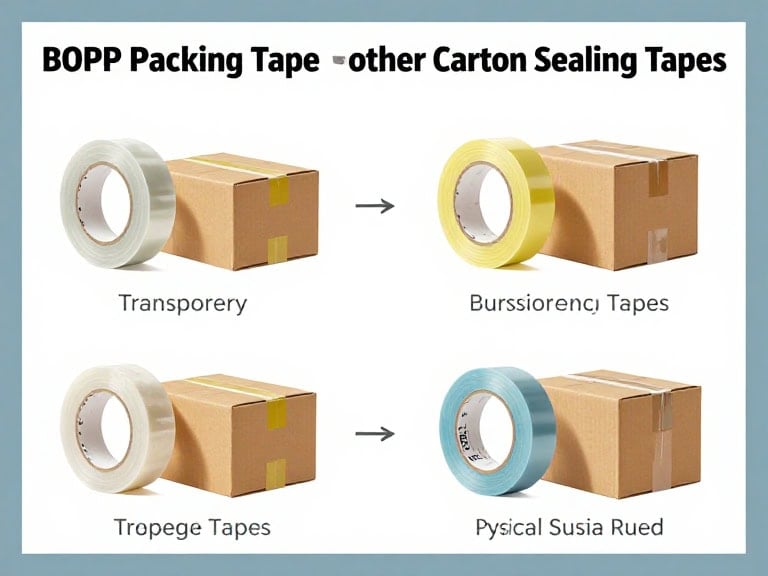
Below is a practical comparison of the five main carton sealing tape categories buyers are likely to encounter.
Quick Summary Table: Different Types of Carton Sealing Tape
| Tape Type | Backing Material | Typical Adhesive | Main Advantage | Best Application |
|---|---|---|---|---|
| BOPP tape | Polypropylene film | Acrylic or hot-melt rubber | Cost-effective and versatile | Everyday carton sealing |
| PVC tape | Polyvinyl chloride film | Rubber-based adhesive | Flexible and easy to handle | Specialized packaging operations |
| Kraft paper tape | Kraft paper | Pressure-sensitive adhesive | Paper-based appearance and handling | Light to medium carton sealing |
| Water-activated tape | Kraft paper | Water-activated starch-based adhesive | Strong carton bonding when correctly applied | Shipping and security-focused carton sealing |
| Filament tape | Polypropylene or polyester film with glass fibers | Pressure-sensitive adhesive | High tensile reinforcement | Heavy-duty bundling and reinforcement |
BOPP Packing Tape vs PVC Tape
PVC packing tape uses a polyvinyl chloride film backing instead of polypropylene. It is generally flexible and can offer a different unwinding and handling experience.
For many standard carton-sealing operations, BOPP tape is the more economical choice. Its widespread availability and competitive pricing make it particularly attractive for businesses purchasing packaging materials in bulk.
PVC tape may be worth considering when specific handling characteristics, application requirements, or existing packaging procedures justify the additional material cost.
Our recommendation: Choose BOPP for routine warehouse and e-commerce carton sealing. Consider PVC only when a production trial demonstrates a meaningful operational advantage.
BOPP Packing Tape vs Kraft Paper Tape
Kraft paper tape uses a paper backing and is available in both pressure-sensitive and water-activated versions. It is often selected by businesses that prefer paper-based packaging materials or want the carton closure to have a more integrated appearance.
Pressure-sensitive kraft tape can be applied without water. Water-activated kraft tape requires moisture to activate its adhesive and should be applied using an appropriate dispenser or application process.
For companies prioritizing simple application and low material costs, BOPP usually makes more commercial sense. Kraft paper tape becomes attractive when paper-based packaging presentation or a specific carton-bonding requirement matters more than the lowest tape purchase price.
BOPP Packing Tape vs Water-Activated Tape
Water-activated tape is particularly useful when a business needs a strong paper-based closure on suitable corrugated cartons. Its adhesive is activated with water and develops a bond with the carton surface.
Unlike conventional pressure-sensitive BOPP tape, water-activated tape requires additional equipment or preparation. Operators must also manage water application and appropriate activation conditions.
For high-volume businesses already equipped with water-activated tape dispensers, the extra process can be justified. For small e-commerce operations, the equipment and labor requirements may outweigh the advantages.
BOPP Packing Tape vs Filament Tape
Filament tape contains reinforcing glass fibers embedded in a film backing. This reinforcement provides additional tensile strength, making it useful for bundling, strapping, and specialized heavy-duty packaging tasks.
However, high tensile strength does not automatically make filament tape the best carton sealing solution. Standard carton closures usually do not need the same reinforcement as heavy industrial bundles.
For heavy-duty applications, we recommend evaluating the carton weight, closure design, transportation risks, and whether additional reinforcement is actually required.
Detailed Comparison Table: Which Tape Offers Better Commercial Value?
| Evaluation Factor | BOPP Tape | PVC Tape | Kraft Paper Tape | Water-Activated Tape | Filament Tape |
|---|---|---|---|---|---|
| Purchase cost | Generally low | Generally higher | Varies by construction | Varies by grade | Generally higher |
| Application convenience | Excellent | Excellent | Good | Requires water activation | Good |
| High-volume packing | Excellent | Good | Good | Good with suitable equipment | Limited to specific needs |
| Moisture resistance of backing | Good | Good | Limited | Limited | Depends on construction |
| Heavy-duty reinforcement | Limited | Limited | Depends on grade | Depends on reinforcement | Excellent |
| Paper-based packaging preference | No | No | Yes | Yes | No |
| Typical recommendation | General carton sealing | Specialized handling | Paper-based packaging | Secure paper carton closure | Reinforcement and bundling |
These are general application comparisons, not guaranteed performance ratings. Actual results depend on adhesive formulation, tape construction, carton surface, application method, and environmental conditions.
4. BOPP Packing Tape Pros and Cons
BOPP packing tape is popular because it solves a common packaging problem without requiring complicated equipment or expensive application processes. Nevertheless, buyers should understand its limitations before standardizing it across their operations.
| Pros | Cons |
|---|---|
| Competitive purchase price for general carton sealing | Performance varies significantly between adhesive grades |
| Lightweight film backing | Not a substitute for reinforced industrial tape |
| Available in clear, brown, colored, and printed versions | Some formulations become less suitable under extreme temperatures |
| Compatible with manual dispensers and many automatic systems | Adhesive performance can be affected by dust and poor carton surfaces |
| Good moisture resistance of the polypropylene backing | Does not make the entire carton waterproof |
| Easy to store and convenient for routine packaging | Low-quality products may split, unwind poorly, or lose adhesion |
What Are the Main Benefits?
Cost efficiency: BOPP tape is widely manufactured and available in many specifications. For companies sealing thousands of cartons, its competitive unit cost can create meaningful savings.
Operational convenience: It can be applied manually or through compatible carton-sealing equipment. No water activation or special curing procedure is normally required.
Product customization: Clear, brown, colored, and custom-printed options allow businesses to standardize packaging appearance, identify different product categories, or display branding.
Storage practicality: Polypropylene film offers good resistance to moisture compared with untreated paper backing. This is useful in ordinary warehouse environments, although the adhesive and storage conditions still require consideration.
What Are Its Limitations?
BOPP tape should not be treated as a universal industrial sealing material. It may be unsuitable when cartons are unusually heavy, surfaces are highly contaminated, temperatures fall outside the adhesive’s operating range, or significant reinforcement is needed.
Another common misunderstanding is that thicker BOPP tape is always better. Increasing film thickness may improve certain mechanical properties, but it does not automatically solve weak adhesive bonding or poor carton construction.
5. Main Benefits and Limitations: Is BOPP Tape Worth Buying?
For most commercial users, BOPP packing tape is worth buying because it provides an effective balance between performance and operating cost.
However, purchasing decisions should be based on the cost of a successfully sealed carton, not simply the price of one roll.
Understanding the Real Cost of Packing Tape
Consider a warehouse sealing 10,000 cartons per month. A cheaper tape might initially appear attractive, but suppose it requires more tape per carton, causes frequent application problems, or results in occasional package failures.
Even a small increase in tape consumption or labor can eliminate the apparent purchasing savings.
For a more accurate comparison, calculate:
- Cost per roll.
- Usable tape length per roll.
- Average tape consumption per carton.
- Labor time required per sealed carton.
- Application waste and defective seals.
- Replacement, rework, and transportation damage costs.
Practical formula:
Cost per sealed carton = Tape cost per carton + Application labor + Waste and rework cost.
In most professional situations, a consistent medium-grade BOPP tape can be more profitable than repeatedly switching between cheaper products that do not deliver predictable results.
When Should You Upgrade to a Better Tape?
We recommend upgrading when you can identify a repeatable packaging problem that the new product is designed to solve.
- If tape edges repeatedly lift from cartons, test a higher-tack adhesive suitable for the cardboard surface.
- If cartons experience seal failure in cold environments, test a cold-temperature adhesive formulation.
- If the backing splits during application, evaluate film construction and tensile performance.
- If heavy bundles require additional reinforcement, consider filament tape or an appropriate reinforced closure system.
- If paper-based packaging is a business requirement, compare suitable kraft tape alternatives.
Do not upgrade simply because a supplier describes a product as industrial grade or heavy duty. Request technical specifications and verify the improvement under actual packaging conditions.
6. Best Applications: Who Should Use BOPP Packing Tape?
E-Commerce and Online Retail Businesses
BOPP packing tape is a practical choice for online stores shipping clothing, accessories, household products, electronics accessories, and general merchandise in corrugated cartons.
It is easy to use, widely available, and suitable for operations that need to maintain consistent packaging costs.
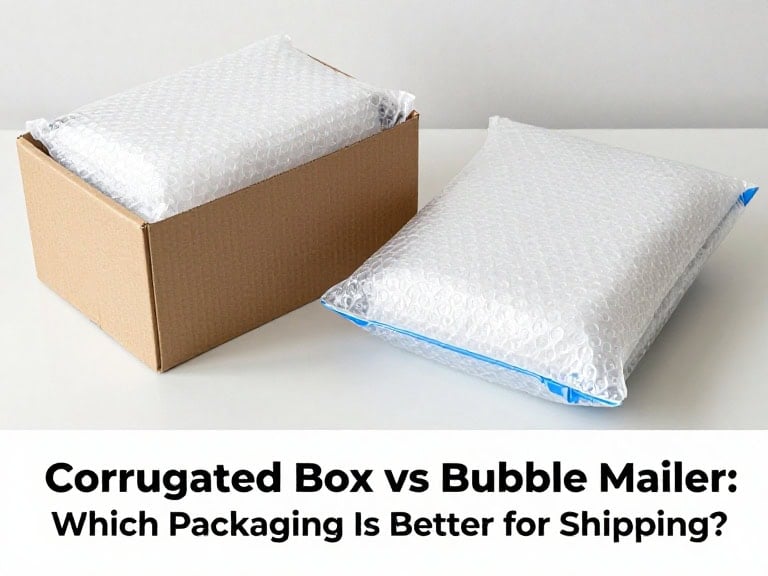
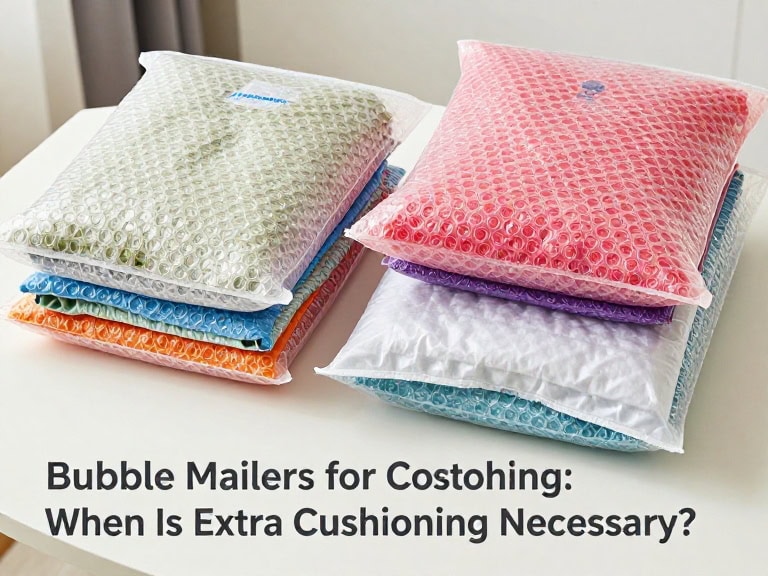
Businesses should also consider the complete shipping package. For lightweight products, a poly mailer or bubble mailer may be more economical than a corrugated carton, depending on product protection requirements and carrier pricing.
Our related guides explain USPS poly mailer shipping costs and the cost differences between boxes and bubble mailers.
Manufacturers and Industrial Suppliers
Manufacturers shipping spare parts, accessories, tools, and finished goods often need a dependable carton closure that works across multiple packaging sizes.
BOPP tape is suitable for many standard cartons. However, businesses shipping heavy machinery components or high-value products should evaluate the entire protective packaging system rather than relying on tape alone.
For products requiring cushioning and impact protection, consider combining carton sealing tape with EPE foam packaging or other protective materials.
Warehouses and Distribution Centers
Distribution centers often prioritize fast application, consistent roll quality, and compatibility with packing equipment.
BOPP tape is particularly suitable for standardized carton-sealing operations. However, automatic dispensers require consistent roll dimensions, core specifications, unwinding behavior, and adhesive performance.
Who Does Not Necessarily Need BOPP Tape?
Not every packaging operation benefits from using BOPP tape.
- Businesses requiring a paper-based carton closure may prefer kraft tape.
- Heavy industrial bundling operations may need reinforced filament tape.
- Operations with specialized security or carton-bonding requirements may benefit from water-activated tape.
- Companies sealing cartons exposed to extreme temperatures should evaluate purpose-designed adhesive formulations.
The correct decision depends on the packaging environment, not simply the popularity of the material.
7. How to Choose the Right BOPP Packing Tape
When purchasing BOPP packing tape in bulk, buyers should evaluate at least six technical and commercial factors. These specifications determine whether the tape will work reliably in real packaging conditions.
1. Film Thickness
Film thickness is commonly expressed in microns. A thicker backing may provide additional resistance to certain forms of mechanical stress, but the relationship between thickness and overall seal performance is not one-to-one.
Ask the supplier to distinguish backing thickness from total tape thickness, which includes the adhesive layer.
Do not compare products using total thickness alone if the backing and adhesive proportions are unknown.
2. Adhesive Type
Three common adhesive categories are:
- Acrylic adhesive: Often selected for general-purpose packaging where consistent performance and storage characteristics are important.
- Hot-melt rubber adhesive: Commonly used when strong initial tack and rapid bonding are priorities.
- Solvent-based rubber adhesive: Used in certain higher-performance formulations where specific adhesion and environmental requirements justify its selection.
No adhesive type is automatically best for every application. Ask for actual performance data under your intended operating conditions.
3. Tape Width and Length
Common carton sealing tape widths include 36 mm, 45 mm, 48 mm, and 50 mm, although other sizes are available.
Wider tape can provide greater coverage across carton flaps, while narrow tape may be sufficient for smaller packages.
Roll length should also be verified. A low-priced roll with less usable tape may have a higher cost per meter.
4. Adhesion and Tensile Performance
Buyers should request measurable specifications rather than relying on descriptions such as strong adhesion or premium quality.
Useful performance indicators include:
- Peel adhesion.
- Initial tack.
- Shear adhesion.
- Tensile strength.
- Elongation at break.
- Unwinding force.
ASTM D3330/D3330M provides test methods for measuring peel adhesion of pressure-sensitive tapes. ASTM D3654/D3654M addresses shear adhesion under constant load. These standards help establish more consistent testing procedures, although buyers must still select test conditions relevant to their carton materials and actual application.
5. Temperature and Storage Conditions
Consider the temperature during application, warehouse storage, and transportation.
For example, a business shipping products during winter may need a different adhesive formulation from one operating in a consistently controlled warehouse environment.
Always request the manufacturer’s recommended application temperature and service-temperature range. These are not necessarily the same measurement.
6. Customization and Packaging Requirements
Commercial buyers may need clear, brown, colored, or printed BOPP tape. Custom printing can support brand recognition, package identification, and warehouse management.
Before ordering customized products, confirm minimum order quantities, print colors, artwork requirements, production lead times, and sample approval procedures.
8. Common Mistakes When Buying Carton Sealing Tape
Mistake 1: Choosing the Cheapest Price Per Roll
A low purchase price does not guarantee a low packaging cost. Buyers must compare roll length, thickness, adhesive performance, and usable tape consumption.
We recommend comparing cost per meter and cost per successfully sealed carton.
Mistake 2: Confusing Film Thickness With Total Thickness
Some buyers compare total tape thickness without checking the backing thickness or adhesive coating. This can create misleading purchasing decisions.
Ask suppliers to disclose both measurements clearly.
Mistake 3: Ignoring the Carton Surface
Recycled corrugated cardboard, dusty surfaces, rough fibers, and high recycled-content cartons may behave differently from clean, smooth packaging boards.
Test the tape against the actual cartons instead of relying exclusively on standard laboratory test results.
Mistake 4: Assuming All BOPP Tape Uses the Same Adhesive
Acrylic and hot-melt BOPP tapes can have different adhesion and unwinding characteristics. A product suitable for one warehouse may not be suitable for another.
Always identify the adhesive type and request a technical data sheet.
Mistake 5: Using Standard Tape for Heavy-Duty Applications
Standard BOPP carton sealing tape should not be expected to replace reinforced strapping or filament tape when a package requires significant structural reinforcement.
For heavy packages, evaluate the carton construction, closure pattern, and additional reinforcement requirements together.
Mistake 6: Failing to Test Before Bulk Purchasing
Large-volume purchasing can reduce unit costs, but it also increases the financial impact of a poor material choice.
Approve a sample batch, test it on the production line, and establish acceptance criteria before placing a large order.
9. How to Choose a Reliable BOPP Packing Tape Manufacturer
For distributors, importers, wholesalers, and packaging companies, selecting a reliable BOPP tape manufacturer is just as important as selecting the correct tape specification.
A professional supplier should be able to explain the relationship between film construction, adhesive formulation, roll dimensions, and intended carton-sealing applications.
Evaluate Manufacturing and Quality Control Capabilities
Ask the manufacturer about its production processes, raw material sourcing, adhesive coating consistency, slitting accuracy, and finished-roll inspection procedures.
For repeat orders, batch consistency is particularly important. A product that performs well in the first shipment should maintain comparable characteristics in subsequent production batches.
Request a Complete Technical Specification
A useful supplier specification should include:
- Backing material and backing thickness.
- Total tape thickness.
- Adhesive type.
- Roll width and length.
- Core diameter and roll dimensions.
- Peel adhesion and tensile performance.
- Recommended application and storage conditions.
- Available colors and printing options.
Compare More Than the Quoted Price
For B2B buyers, the commercial evaluation should include minimum order quantity, sample availability, production capacity, delivery schedule, packaging specifications, and export experience.
Ask whether the supplier can support repeat orders with consistent product specifications. This matters more than a small initial discount when your business depends on regular packaging supply.
Consider Your Complete Packaging Supply Chain
Businesses sourcing multiple protective packaging products may benefit from working with suppliers that understand the complete carton protection process.
For example, a manufacturer shipping fragile products may need BOPP tape, cushioning materials, air pillow film, and corrugated cartons. Coordinating these materials can make packaging procurement and quality management more efficient.
Related purchasing resources include our guides to corrugated cardboard roll suppliers, protective packaging products, and air pillow film thickness selection.
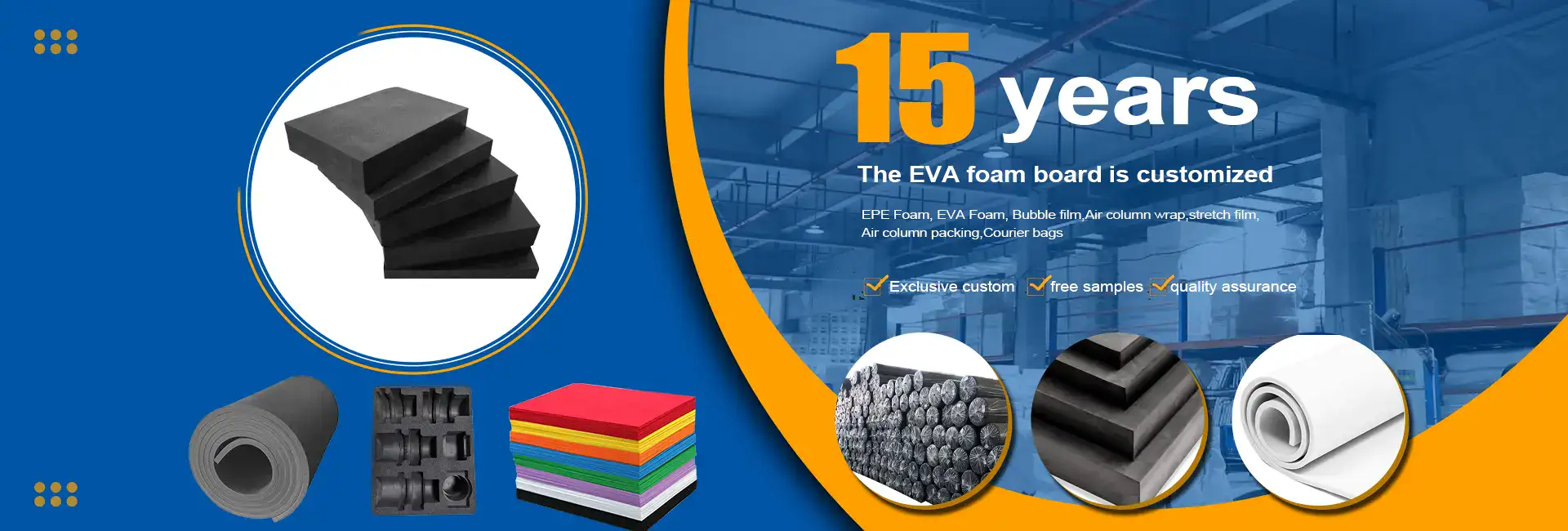
Mailong Packaging: Packaging Materials Manufacturing and Supply
Established in 2009, Mailong Packaging Co., Ltd. is a manufacturer and exporter of packaging materials, serving overseas markets in more than 30 countries.
Its product range includes inflatable bubble and pillow film, air column rolls, air column bags, EPE and EVA foam, poly mailers, stretch wrap, bubble mailers, BOPP tape, and corrugated boxes.
These products support businesses looking for packaging solutions that help reduce collision damage, abrasion, and other risks during logistics transportation.
For distributors, wholesalers, and commercial packaging buyers, Mailong Packaging offers a broader packaging-material sourcing option beyond individual carton sealing products.
Explore the Mailong Packaging product catalog or view BOPP packing tape to learn more about available packaging solutions.
10. Expert Recommendation: Which Carton Sealing Tape Is Best?
After comparing the main carton sealing tape categories, our recommendation is to use BOPP packing tape as the default option for most standard commercial packaging operations.
It offers a practical combination of affordability, availability, application convenience, and performance. For businesses sealing ordinary corrugated cartons every day, there is usually no reason to pay more for a specialized tape unless the packaging conditions demand it.
Our Recommendations by Business Type
| Business Type | Recommended Tape | Reason |
|---|---|---|
| Small e-commerce store | Standard BOPP tape | Simple application and cost control |
| High-volume warehouse | Machine-compatible BOPP tape | Consistent application and operational efficiency |
| Packaging distributor | Multiple BOPP grades | Supports different carton and customer requirements |
| Premium paper packaging brand | Kraft paper tape | Paper-based appearance and packaging presentation |
| Security-focused carton sealing | Suitable water-activated tape | Paper-based bonding with an appropriate carton closure system |
| Industrial bundling operation | Filament tape | Reinforcement for specific heavy-duty applications |
Should You Buy Standard or Premium BOPP Tape?
For beginners and smaller businesses, standard BOPP tape is a sensible starting point. It allows buyers to establish their actual packaging requirements without committing to unnecessarily expensive materials.
For commercial users, we recommend evaluating medium and higher-performance grades through controlled carton-sealing tests. Compare adhesion, tape consumption, unwinding performance, and total packaging costs.
For heavy-duty applications, do not automatically assume premium BOPP tape will solve every problem. If the carton requires additional reinforcement, a different sealing system may be the better investment.
Final Verdict
BOPP packing tape vs other carton sealing tapes is ultimately a decision about application suitability and total packaging cost.
BOPP tape is the strongest general-purpose purchasing choice for most standard carton-sealing operations. Kraft paper tape and water-activated tape are worth considering when paper-based closure is important. Filament tape is more appropriate when reinforcement is required, while PVC tape can serve specialized handling needs.
Our advice is to specify the carton, shipping environment, adhesive requirements, and application process before choosing a product. Test samples under real operating conditions, compare the cost per sealed carton, and select a manufacturer that can maintain consistent quality across repeat orders.
11. Frequently Asked Questions About BOPP Packing Tape
1. Is BOPP packing tape better than regular packing tape?
Many ordinary transparent packing tapes already use BOPP film backing. The important difference is usually the adhesive formulation, film thickness, and manufacturing quality. BOPP tape is an excellent general-purpose carton sealing option, but buyers should compare actual specifications rather than product names alone.
2. What is the difference between BOPP tape and acrylic tape?
BOPP describes the polypropylene film backing, while acrylic describes an adhesive type. A BOPP packing tape can use acrylic adhesive, hot-melt rubber adhesive, or another suitable formulation. They are not competing material categories.
3. Is BOPP packing tape suitable for heavy cartons?
It can seal many medium and heavy corrugated cartons when the correct width, adhesive, and application method are selected. However, unusually heavy packages may require reinforced tape, additional carton reinforcement, or a different closure design. Always test the complete packaging system.
4. Which is better: BOPP tape or water-activated kraft tape?
BOPP tape is generally better for convenient, economical, high-volume everyday carton sealing. Water-activated kraft tape is useful when paper-based carton bonding and a particular closure requirement are priorities. The best choice depends on the carton, equipment, labor costs, and shipping conditions.
5. Does thicker BOPP tape always provide stronger adhesion?
No. Thickness and adhesion measure different properties. A thicker film may improve certain mechanical characteristics, but adhesive chemistry, coating weight, carton surface, and application pressure determine how effectively the tape bonds. Compare total thickness and backing thickness separately.
6. What adhesive is best for BOPP carton sealing tape?
There is no universally best adhesive. Acrylic is commonly used for general-purpose packaging, while hot-melt rubber is often selected when strong initial tack is required. Solvent-based rubber formulations may be suitable for particular demanding applications. Select the adhesive based on actual carton and environmental testing.
7. Can BOPP packing tape be used in automatic carton-sealing machines?
Yes. Many BOPP packing tapes are designed for automatic carton-sealing equipment. However, buyers should confirm roll dimensions, core specifications, tape width, unwinding characteristics, and compatibility with the machine before ordering in bulk.
8. How do I evaluate BOPP tape quality before placing a bulk order?
Request samples and a technical data sheet. Check backing thickness, total thickness, adhesive type, roll length, peel adhesion, tensile performance, and unwinding behavior. Apply the samples to your actual cartons and evaluate the seals under realistic warehouse and transportation conditions.
9. Is BOPP packing tape waterproof?
The polypropylene backing has good moisture resistance, but the complete tape and carton closure should not be considered waterproof. Moisture can affect the cardboard, adhesive bond, and package integrity. Use packaging specifically designed for exposure to water when necessary.
10. What should wholesalers look for when choosing a BOPP tape manufacturer?
Wholesalers should evaluate production capacity, adhesive consistency, quality inspection, specification accuracy, customization options, MOQ, sample availability, lead times, and export experience. Repeat-order consistency is especially important for distributors supplying commercial customers.
12. Technical References and Industry Standards
The following technical resources help buyers understand pressure-sensitive tape performance and carton sealing requirements. They are useful starting points when establishing supplier specifications and quality-control procedures.
- ASTM International – ASTM D3330/D3330M: Standard Test Method for Peel Adhesion of Pressure-Sensitive Tape.
Provides test methods for evaluating peel adhesion and assessing consistency within rolls and between production batches.
- ASTM International – ASTM D3654/D3654M: Standard Test Methods for Shear Adhesion of Pressure-Sensitive Tapes.
Describes methods for evaluating the ability of pressure-sensitive tape to remain adhered under a constant load. Certain procedures specifically address fiberboard applications.
- 3M – Heavy Duty Water Activated Paper Tape 6143 Technical Data Sheet.
Provides a technical product example of water-activated paper carton sealing tape, including its paper backing, starch-based adhesive, and recommended packaging applications.
Note: Standards and product data sheets describe specific testing methods or products. They should not be interpreted as universal performance guarantees for every carton sealing tape.