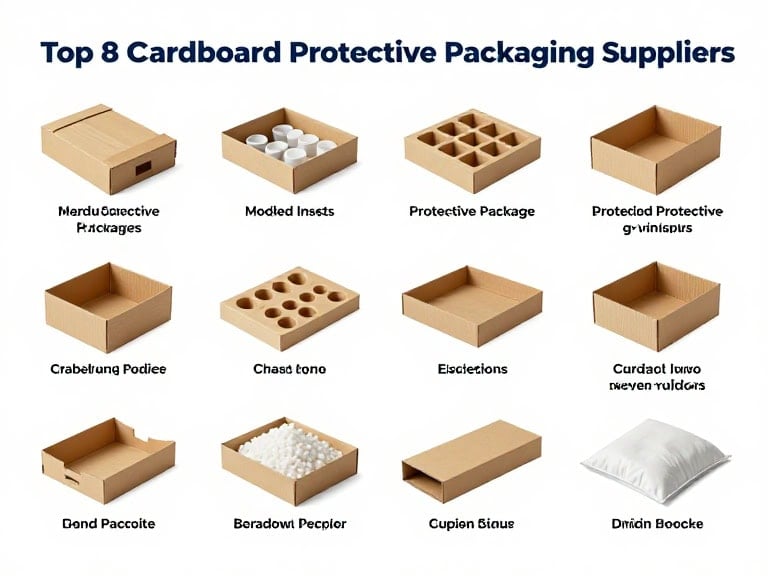
Clothing usually does not need the same impact protection as glassware or electronics. But that does not mean every garment should ship in a thin poly mailer. Embellishments, hardware, delicate fabrics, presentation requirements, and the way an order moves through the delivery network all affect the right packaging choice. The practical answer is to use bubble mailers selectively: add cushioning when it protects a feature that could otherwise be damaged, not simply because extra padding looks safer.
Quick Answer: Do Clothing Orders Need Bubble Mailers?
Bubble mailers for clothing are most useful when garments contain fragile trims, decorative details, metal accessories, structured components, or other features that could be scratched, crushed, or damaged during parcel handling. For ordinary T-shirts, sweatshirts, leggings, and other soft garments, a quality poly mailer is usually more economical and takes up less shipping space.
Our recommendation: Choose packaging according to the garment’s vulnerability and the delivery conditions. Use a standard mailer for flexible everyday apparel, a bubble mailer for selected higher-risk items, and a protective inner wrap or box when the product needs more than surface cushioning.
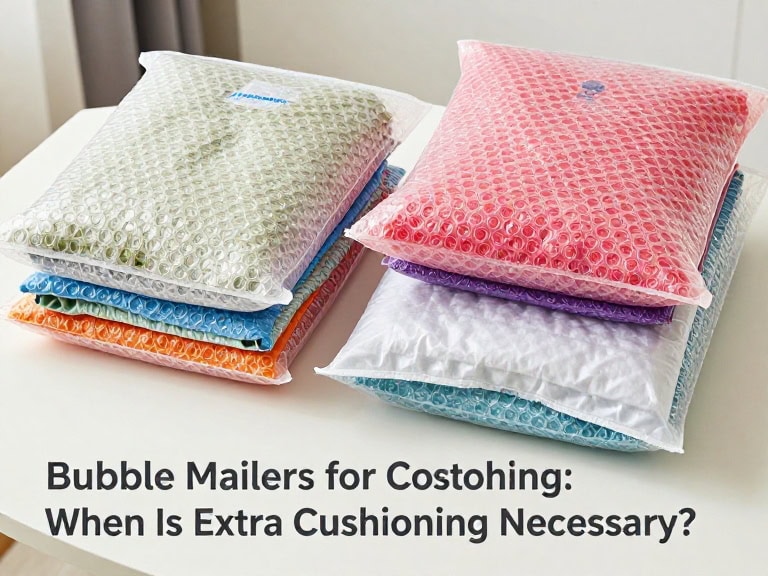
1. What Are Bubble Mailers for Clothing?
Bubble mailers are flexible shipping envelopes with a cushioning layer, commonly made from polyethylene bubble film, attached to an outer protective layer. They combine the compact format of a mailing envelope with a degree of impact absorption. Depending on the construction, the outer layer may be paper or plastic, while the inner bubbles provide cushioning against minor knocks and pressure.
For apparel sellers, the important distinction is that a bubble mailer protects the package differently from a regular poly mailer. A standard poly mailer mainly provides a lightweight enclosure against dirt, moisture, and routine handling. A bubble mailer adds a cushioning layer that can help protect delicate garment details and accessories from incidental impacts.
How Does a Bubble Mailer Work?
Air trapped inside the bubble structure compresses when the package experiences pressure or a minor impact. This can help reduce direct contact between the garment and the outside surface. The cushioning is particularly relevant around hard or protruding details, such as decorative studs, small buckles, or attached accessories.
However, bubble lining does not make a soft envelope equivalent to a rigid shipping box. It cannot reliably prevent severe crushing, sharp-object punctures, or damage caused by a heavy parcel stacked on top. It also does not automatically prevent moisture penetration, so the outer material and closure still matter.
What Bubble Mailers Can and Cannot Protect
- Can help with: Minor knocks, surface abrasion, light compression, and contact between delicate garment details and other parcel contents.
- May help with: Small attached accessories or decorative components, provided the mailer has enough internal space and appropriate cushioning.
- Cannot guarantee protection against: Severe crushing, punctures, liquid exposure through an unsuitable outer layer, or damage caused by poor internal packing.
- Cannot replace: A rigid box, shaped insert, or purpose-designed protective packaging when the item needs structural support.
2. When Is Extra Cushioning Necessary for Clothing?
Extra cushioning is worth considering when the garment has something that could be damaged independently of the fabric. In most professional situations, the question is not whether clothing is soft. It is whether the finished product contains vulnerable features that need protection during packing, sorting, transport, and delivery.
Clothing with Beads, Sequins, Rhinestones, or Decorative Studs
Embellished garments are among the strongest candidates for bubble mailers. Sequins can bend or detach, rhinestones can become scratched, and studs may press against surrounding fabric. A cushioning layer can reduce direct impact and rubbing against the exterior of the package.
For high-value embellished dresses or garments with extensive handwork, do not rely on the bubble mailer alone. First place the garment in a clean protective bag, use tissue or a suitable separator around exposed details, and select a mailer or box that prevents excessive movement.
Garments with Zippers, Buckles, Buttons, and Metal Hardware
Metal zippers, decorative chains, buckles, and large buttons can scratch other parts of a garment during transit. This is especially relevant when a parcel contains multiple items. A bubble mailer can add a buffer between the contents and the outer packaging, but it does not stop loose hardware from moving inside the package.
We recommend securing detachable belts, chains, and accessories separately. Wrap exposed hardware or place it in a small protective pouch before packing the garment.
Delicate Fabrics and Premium Garments
Silk blends, satin, fine knits, lace, and premium occasionwear may need more careful packaging than everyday cotton clothing. The main risks are often snagging, creasing, abrasion, and contamination rather than impact alone.
A bubble mailer may provide an additional outer cushion, but the garment should first be folded carefully and enclosed in a clean inner bag or tissue wrap. For structured jackets, formal dresses, and garments that must retain their shape, a suitably sized box may be the better choice.
Clothing Bundles with Small Accessories
Some apparel orders include brooches, pins, decorative clips, shoe accessories, or small promotional items. These objects can create concentrated pressure points or move around inside the package. Extra cushioning becomes useful when the accessories are securely contained and separated from the fabric.
Long-Distance Shipping and Multi-Stage Parcel Handling
International and cross-border orders may pass through several sorting facilities and transportation stages. More handling creates more opportunities for abrasion and incidental impact. That does not mean every international clothing order needs bubble lining. It means sellers should assess the packaging alongside the garment’s value, construction, and delivery route.
For international apparel shipments, a protective inner bag is often more important for keeping clothing clean and dry. Bubble mailers are an additional option when the garment also has vulnerable details. For broader protective packaging choices, review our guide to alternatives to bubble wrap.
3. When Is a Standard Poly Mailer Enough?
For many apparel businesses, using bubble mailers for every order is unnecessary. Ordinary clothing is flexible and generally does not need impact cushioning. Adding bubble lining to every parcel can increase packaging cost, material consumption, and storage requirements without delivering a meaningful reduction in damage.
A well-sized poly mailer is usually sufficient for:
- Basic T-shirts and polo shirts.
- Leggings, yoga pants, and other flexible activewear.
- Hoodies and sweatshirts without fragile trims.
- Socks, underwear, and other soft textile products.
- Lightweight cotton garments with no protruding accessories.
The key is to fold the garment neatly, protect it with an appropriate inner bag where needed, and select a mailer that is not so tight that seams or closures are under unnecessary tension.
4. Bubble Mailer vs. Other Clothing Packaging Options
There is no single best mailer for every apparel order. The right choice depends on the level of protection required, shipping cost, package dimensions, brand presentation, and the type of clothing being sold. The comparison below is a practical starting point for procurement decisions.
| Packaging Type | Protection Level | Best Use Cases | Main Limitation | Our Recommendation |
|---|---|---|---|---|
| Standard Poly Mailer | Basic enclosure and surface protection | T-shirts, leggings, socks, everyday apparel | Limited impact cushioning | Best default for ordinary soft garments |
| Bubble Mailer | Added cushioning against minor impacts | Embellished clothing, garments with hardware, small accessory bundles | Not rigid; limited protection against crushing | Use selectively for vulnerable garment features |
| Padded Paper Mailer | Light cushioning with a paper exterior | Lightweight apparel and orders where paper-based presentation is preferred | Protection varies by construction and lining | Consider when presentation and moderate cushioning both matter |
| Corrugated Box | Better structural protection when correctly sized | Structured jackets, premium outfits, multiple garments, gift sets | Higher dimensional weight and storage demand | Choose when shape retention or crush resistance matters |
| Garment Bag Plus Outer Mailer | Good separation from dirt and handling abrasion | Clean presentation, delicate fabrics, folded apparel | Inner bag alone provides little impact protection | Useful as an inner protection system |
| Protective Foam or Inserts | Targeted cushioning and separation | Garments shipped with fragile accessories or rigid components | More packing steps and material cost | Use for specific vulnerable components, not routine apparel |
Bubble Mailers vs. Poly Mailers: Which Is Better?
For standard clothing, poly mailers are generally the more efficient option. They are lightweight, flexible, and easy to store. Bubble mailers make more sense when the product contains a feature that benefits from cushioning. The additional material should solve a real packaging problem rather than simply make the parcel feel more substantial.
For businesses shipping thousands of basic apparel orders, switching every shipment to bubble mailers can add cost without a proportionate benefit. A mixed packaging policy is usually more commercially sensible.
Bubble Mailers vs. Corrugated Boxes
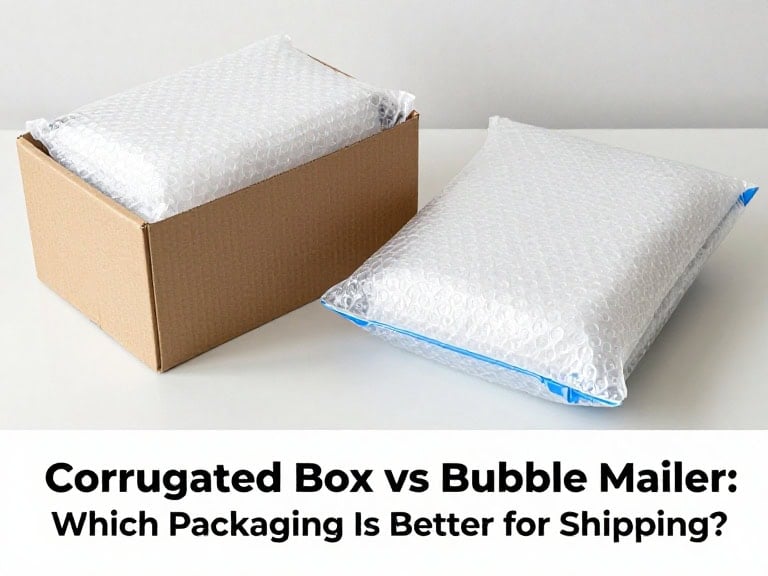
A bubble mailer is suitable when the garment can tolerate flexible packaging. A box is more appropriate when the product needs to retain its shape, cannot be folded tightly, or includes accessories that need to remain fixed in position. Premium coats, structured garments, and gift-ready clothing sets often justify a box, particularly when presentation is part of the product value.
5. Quick Summary: Which Packaging Should You Use?
Use this table as a practical first-stage packaging specification. Confirm the final choice with a sample shipment before applying it across your entire product range.
| Garment or Order Type | Recommended Packaging | Is Extra Cushioning Necessary? | Additional Packing Advice |
|---|---|---|---|
| Basic T-shirt | Poly mailer | Usually no | Fold neatly and use an inner bag if cleanliness is a concern |
| Hoodie or sweatshirt | Poly mailer or larger mailer | Usually no | Avoid over-compressing thick fabric |
| Sequined or beaded dress | Protected inner wrap plus bubble mailer or box | Often yes | Separate exposed embellishments from other surfaces |
| Jacket with metal hardware | Inner garment bag plus bubble mailer or box | Sometimes | Secure loose buckles, chains, and detachable parts |
| Silk or delicate blouse | Protective inner wrap plus suitable outer mailer | Depends on design | Prioritize snag prevention and clean presentation |
| Clothing gift set | Corrugated box or structured gift packaging | Usually targeted cushioning | Prevent products from shifting inside the box |
| Apparel with small accessories | Inner pouches plus bubble mailer or box | Often yes | Pack accessories separately to prevent contact damage |
| Multiple everyday garments | Large poly mailer or carton based on volume | Usually no | Choose dimensions that avoid excessive compression |
6. Pros and Cons of Bubble Mailers for Clothing
Bubble mailers are useful packaging tools, but their advantages depend on the products being shipped. They should be evaluated as one part of a packaging system rather than treated as a universal upgrade.
| Pros | Cons |
|---|---|
| Provide a cushioning layer for minor impacts and incidental contact. | Usually cost more than comparable standard poly mailers. |
| Help protect selected decorative details and small accessories. | Do not provide the structural strength of a rigid box. |
| Remain flexible and convenient for many small parcel operations. | Can add unnecessary packaging material for ordinary soft garments. |
| Can reduce direct contact between the garment package and external surfaces. | Do not eliminate risks from loose hardware, poor folding, or internal movement. |
| Available in different sizes and constructions for different shipping requirements. | Some multi-material constructions can complicate recycling, depending on local facilities. |
Our verdict: Bubble mailers are worth buying when they address a specific damage risk. They are not automatically better than poly mailers for clothing. For a business with a mixed product catalog, keeping both formats available is often the better procurement decision.
7. How to Choose the Right Bubble Mailers for Clothing
Once a bubble mailer is justified, the next decision is specification. Buyers should evaluate more than the envelope’s appearance or advertised thickness. Material construction, internal dimensions, closure performance, and consistency between production batches all affect the actual packaging result.
1. Select the Correct Internal Size
Measure the folded garment or inner bag, not just the unfolded clothing dimensions. The mailer should provide enough room for insertion and removal without stretching the seams or forcing the garment into a tight bundle. Oversized mailers can also be inefficient because excess space allows contents to move.
For apparel with embellishments or attached accessories, allow extra room around the most vulnerable features. Do not choose a size based only on whether the garment can physically fit inside.
2. Evaluate Bubble Structure and Cushioning
Bubble size, film quality, and construction influence cushioning performance. A thicker-looking liner is not automatically the best option. The right specification should match the expected handling risk and the weight of the packaged item.
For lightweight garments with small decorative parts, moderate cushioning may be sufficient. For products with more substantial hard accessories, use a tested protective insert or a box rather than assuming a thicker bubble liner will solve every problem.
3. Check the Outer Material
The outer layer needs to withstand normal handling without splitting or tearing at the seams. Consider resistance to abrasion, puncture, and moisture according to the shipping environment. If the package may be exposed to rain during last-mile delivery, evaluate the complete envelope and closure rather than assuming the bubble lining provides waterproof protection.
4. Test the Self-Seal Closure
A reliable adhesive strip is essential. A mailer that opens during transit can expose the garment to dirt, moisture, and loss. Test the closure on actual packed samples, including parcels filled to the maximum intended capacity. Check whether the flap bonds securely to the outer surface and whether the seal remains intact during handling.
5. Consider Material and Sustainability Requirements
Many bubble mailers use plastic-based cushioning and outer layers. Some are made from combinations of materials that are difficult to separate for recycling. If your brand has packaging sustainability targets, ask suppliers for the exact material composition, recycled-content information, and locally relevant end-of-life guidance.
Do not rely on vague claims such as “eco-friendly” without documentation. Compare the actual material specification and the recycling infrastructure available in your main sales markets. You can also evaluate eco-friendly bubble wrap options as part of a wider packaging review.
6. Request Samples Before Ordering in Bulk
For commercial users, samples are not optional. Pack representative garments, seal the mailers, and assess the finished parcel under realistic handling conditions. Include the most delicate product in your range rather than testing only an easy-to-pack T-shirt.
We recommend recording the mailer dimensions, material, closure type, packed weight, and test outcome. This creates a repeatable specification for future orders and makes supplier comparisons more objective.
8. Cost-Benefit Analysis: Are Bubble Mailers Worth the Extra Cost?
The purchase price of a mailer is only one part of packaging cost. Apparel sellers should consider material cost, packing labor, shipping weight, dimensional charges, damage-related refunds, replacement shipments, and customer experience.
A bubble mailer may cost more than a standard poly mailer, but the additional expense can be justified if it reduces damage to a garment with vulnerable features. On the other hand, using cushioning on every low-risk order can increase costs without a meaningful operational return.
Calculate the Real Cost Per Shipped Order
Use the following framework to compare packaging options:
- Packaging cost: Unit price of the mailer, inner bag, tissue, and any inserts.
- Labor cost: Time required to fold, wrap, insert, seal, and label the order.
- Shipping cost: Actual parcel weight and dimensions, including any carrier dimensional-weight rules.
- Damage cost: Expected cost of refunds, replacements, reshipping, and customer service.
- Brand impact: Whether the packaging protects product presentation and meets customer expectations.
For example, imagine a seller shipping two product categories. Basic T-shirts have very low transit-damage risk, while embellished occasionwear has more vulnerable details. Applying bubble mailers to both categories increases packaging expense across the entire order volume. A better policy is to use standard mailers for T-shirts and reserve bubble mailers or boxes for the higher-risk products.
Use Damage Data to Decide Whether to Upgrade
Track damage claims by SKU, packaging type, shipping route, and order configuration. If a particular garment repeatedly arrives with scratched hardware or damaged decorative components, test a packaging upgrade for that SKU. If damage is mainly caused by moisture, a bubble liner may not address the problem; improving the inner bag or outer moisture barrier may be more effective.
In our view, the best packaging specification is the least expensive option that consistently protects the product under the conditions it will actually face. That is a stronger purchasing standard than choosing the most heavily padded mailer available.
9. Common Mistakes When Using Bubble Mailers for Clothing
Mistake 1: Assuming More Cushioning Always Means Better Protection
Extra cushioning does not automatically solve problems caused by poor folding, loose accessories, or insufficient structural support. A fragile accessory moving freely inside a padded envelope can still damage the garment. Secure the contents first, then select the outer packaging.
Mistake 2: Packing Delicate Fabric Directly Against Rough Surfaces
Bubble mailers are designed to provide cushioning, not necessarily a smooth, garment-safe contact surface. Use a clean inner bag or tissue wrap for delicate fabrics, especially silk, lace, satin, and fine knits.
Mistake 3: Choosing a Mailer That Is Too Small
An undersized mailer can place pressure on seams, zippers, embellishments, and the closure flap. It can also make packing slower and increase the chance of tearing. Size the mailer around the packed garment with enough clearance for easy insertion.
Mistake 4: Using a Bubble Mailer for Products That Need a Box
Structured garments, premium gift sets, and products with rigid accessories may need a box. A flexible envelope cannot reliably maintain a fixed shape under heavy stacking or compression. Choose a box when structural protection is part of the requirement.
Mistake 5: Ignoring Moisture Protection
Bubble cushioning should not be confused with a guaranteed moisture barrier. For apparel that must arrive clean and dry, use an appropriate inner protective bag and confirm the outer mailer’s material and closure performance.
Mistake 6: Buying in Bulk Without Testing Samples
Small differences in dimensions, adhesive quality, film construction, and manufacturing consistency can affect packing performance. Test samples from the supplier before committing to a large production run. If possible, check samples from more than one production batch before setting a long-term specification.
Mistake 7: Ignoring the Full Packaging System
A mailer is only one component of the shipment. The inner wrap, garment fold, accessory pouch, closure, label placement, and parcel handling all contribute to the final result. A good packaging process should work as a system.
10. Expert Recommendations for Apparel Brands and Clothing Retailers
From our experience in protective packaging, the most effective approach is to segment clothing orders by risk instead of assigning one mailer type to every product. This keeps packaging costs under control while providing additional protection where it is genuinely useful.
For Beginners and Small Online Clothing Stores
Start with two packaging formats: standard poly mailers for everyday soft garments and bubble mailers for selected embellished or accessory-heavy products. Add a suitable inner bag for garments that need protection from dirt and moisture. This simple setup is usually easier to manage than stocking many mailer sizes and constructions.
For Established Apparel Brands
Build packaging specifications by product category. Record the packed dimensions, preferred mailer, inner protection, and special handling requirements for each SKU group. Use customer complaints and return data to identify products that need a packaging change.
For premium clothing, consider whether a bubble mailer is actually the right solution. If brand presentation, shape retention, or gift-ready delivery matters, a box with a suitable insert may provide better value.
For High-Volume E-Commerce Sellers
Standardize the most frequently used mailer dimensions and reduce unnecessary packaging variations. A consistent set of specifications can simplify warehouse storage, purchasing, and packing operations. Keep a separate protective option for products with fragile details rather than upgrading every shipment.
For Wholesale Buyers: What to Ask a Manufacturer
When choosing a bubble mailer manufacturer, compare product consistency and service capability, not just the quoted unit price. We recommend asking suppliers the following questions:
- What are the outer and inner dimensions, and what tolerances apply?
- What materials are used in the outer layer and bubble lining?
- What bubble structure and film specifications are available?
- How is adhesive closure performance checked?
- Can the manufacturer provide samples for testing with actual garments?
- Are custom sizes, printing, and packaging specifications available?
- What are the minimum order quantity, production lead time, and quality-control procedures?
- Can the supplier provide consistent specifications across repeat orders?
A dependable manufacturer should be able to explain the product construction clearly and help you select a suitable specification. Be cautious of suppliers who recommend the thickest or most expensive option without asking about your garments, shipping conditions, or packing process.
When Should You Upgrade Your Packaging?
Upgrade when there is a clear performance reason: recurring damage to embellishments, a change to heavier accessories, a new international shipping route, higher product value, or a requirement for improved presentation. Do not upgrade simply because a competitor uses padded envelopes.
For products that need targeted cushioning beyond a mailer liner, compare EPE foam packaging and EVA foam materials. For fragile products shipped alongside apparel accessories, purpose-designed bubble wrap pouches may offer better separation and protection than loose cushioning.
11. Mailong Packaging: Protective Packaging for E-Commerce and Export Businesses
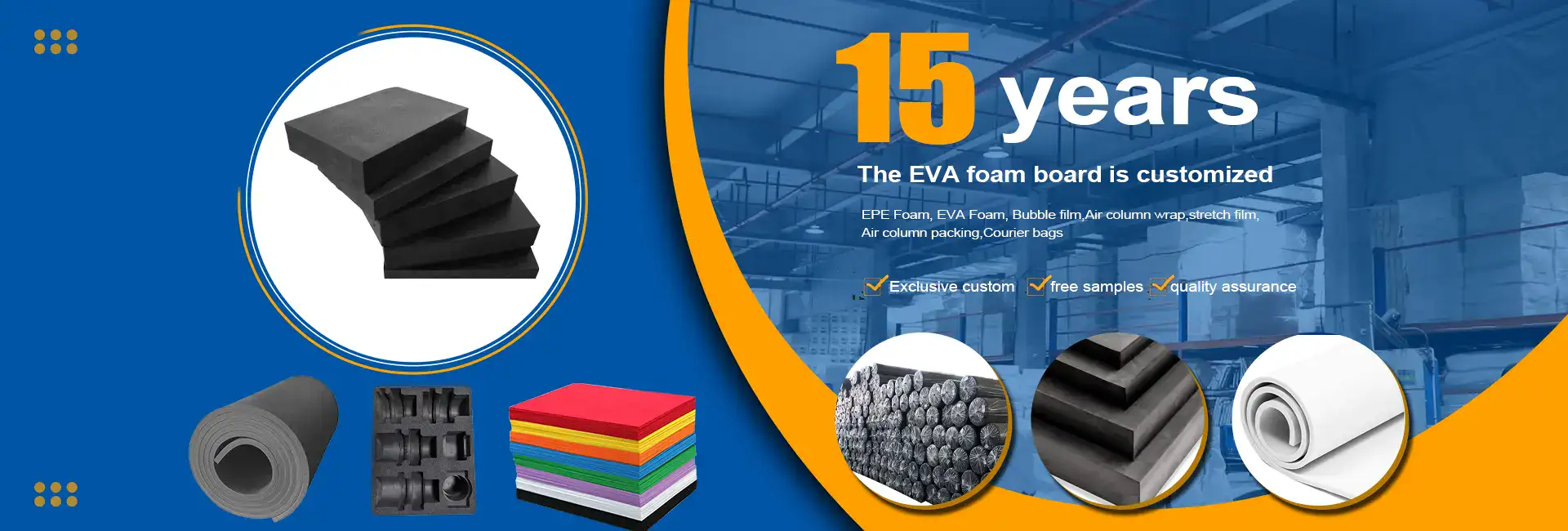
Mailong Packaging Co., Ltd.
Established in 2009, Mailong Packaging is a manufacturer and exporter of protective packaging materials, including inflatable bubble and pillow film, air column rolls, air column bags, EPE and EVA foam, poly mailers, stretch wrap, bubble mailers, BOPP tape, and corrugated boxes.
Its packaging products are used to help reduce collision damage, abrasion, and other transportation risks across logistics applications. Mailong Packaging serves overseas markets in more than 30 countries.
Explore Mailong Packaging’s product catalog to review available packaging solutions.
For clothing sellers, the most relevant starting point is the bubble mailer product range. Buyers should confirm available dimensions, material construction, adhesive options, and customization requirements against their actual apparel specifications before placing a bulk order.
For businesses that ship clothing together with other products, Mailong’s broader packaging range can also help consolidate procurement. The right combination may include poly mailers for everyday garments, bubble mailers for selected vulnerable items, and foam or corrugated packaging for products that need more structural protection.
12. Frequently Asked Questions About Bubble Mailers for Clothing
1. Are bubble mailers good for shipping clothes?
Yes, bubble mailers are useful for clothing with delicate embellishments, metal hardware, or small accessories that may benefit from added cushioning. For ordinary T-shirts, leggings, and other soft garments, a standard poly mailer is usually sufficient and more economical.
2. Do all clothing orders need bubble mailers?
No. Most everyday apparel does not need impact cushioning. Choose bubble mailers selectively for products with vulnerable details or specific handling risks. A risk-based packaging policy helps avoid unnecessary material and shipping costs.
3. Are bubble mailers waterproof?
Not necessarily. Moisture resistance depends on the outer material, seams, and closure. Bubble lining itself does not guarantee waterproof protection. If clothing must stay dry, use a suitable inner protective bag and verify the outer mailer’s moisture performance.
4. Are bubble mailers better than poly mailers for clothing?
They are better for some products, but not all. Bubble mailers add cushioning, while standard poly mailers are lighter and generally less expensive. Use poly mailers for ordinary soft garments and bubble mailers when the product has details that benefit from extra cushioning.
5. Should I use bubble mailers for hoodies and sweatshirts?
Usually not. Hoodies and sweatshirts are soft and flexible, so a suitably sized poly mailer is normally adequate. Consider a bubble mailer only if the garment includes fragile accessories, protruding hardware, or decorative elements that need additional protection.
6. What size bubble mailer should I use for clothing?
Choose a mailer based on the folded garment or inner-bag dimensions. It should allow easy insertion and enough clearance to avoid stressing seams, closures, or embellishments. Test the packed sample before finalizing the size for bulk purchasing.
7. Can bubble mailers protect delicate fabrics such as silk?
They can provide an outer cushioning layer, but they do not prevent every type of fabric damage. Silk and other delicate materials should first be wrapped in a clean, smooth protective layer to reduce snagging, abrasion, and contamination.
8. Are bubble mailers suitable for international clothing shipments?
They can be suitable for lightweight apparel orders, especially when selected details need cushioning. For international shipments, also consider moisture protection, parcel dimensions, carrier requirements, and the number of handling stages. Structured or high-value garments may be better shipped in boxes.
9. Are bubble mailers environmentally friendly?
It depends on the materials, recycled content, construction, and local recycling facilities. Some bubble mailers combine materials that are difficult to separate. Ask suppliers for documented material specifications and check whether the packaging is accepted by recycling programs in your main markets.
10. What should I check before buying bubble mailers wholesale?
Check dimensions, material construction, bubble quality, adhesive performance, sample consistency, customization options, minimum order quantity, lead time, and quality-control procedures. Test the mailer with actual garments before committing to a large order.
References
The following resources provide useful background for packaging material selection, plastic packaging considerations, and transport-related packaging performance. They should be used alongside supplier specifications and real shipment testing.
- ASTM International – Standards and testing methods relevant to materials and packaging performance.
- International Organization for Standardization (ISO), Packaging – International standardization work related to packaging.
- U.S. Environmental Protection Agency – Recycling – Guidance on recycling practices and material recovery considerations.
Final Recommendation: Use Cushioning Where It Protects Something Valuable
Bubble mailers for clothing are a practical option when garments contain fragile embellishments, exposed hardware, or accessories that need an additional buffer during delivery. They are not a necessary upgrade for every T-shirt, hoodie, or pair of leggings.
For most apparel businesses, the strongest approach is a simple packaging hierarchy: standard poly mailers for everyday soft garments, bubble mailers for selected products with vulnerable details, and boxes or purpose-designed inserts for structured or high-value items. Test each format with real orders, monitor damage data, and adjust specifications when the evidence supports a change.
That approach protects the customer experience without allowing packaging costs to grow unnecessarily. When you purchase bubble mailers wholesale, work with a manufacturer that can provide clear material specifications, consistent dimensions, reliable closures, and samples for evaluation before bulk production.