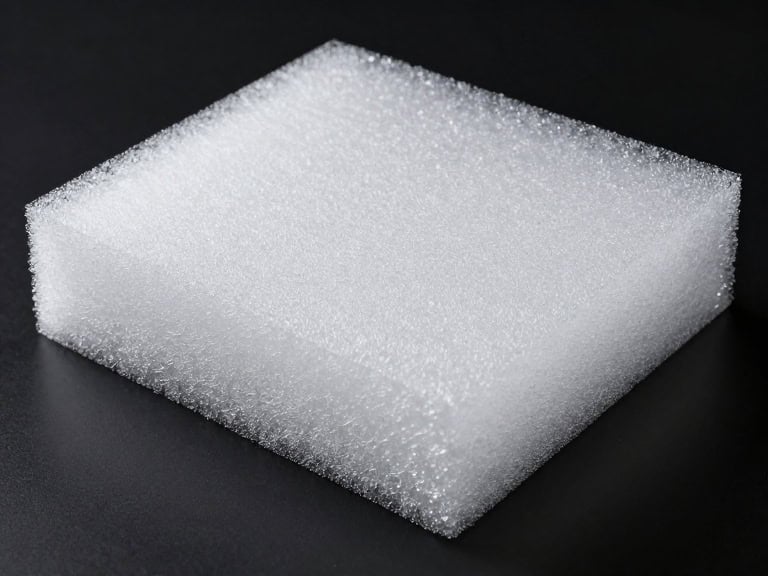
Protective packaging is not simply about wrapping a product in more material. It is about controlling the risks that occur between the packing line and the customer: impact, vibration, abrasion, compression, moisture, dust, punctures, and handling damage. The right packaging system prevents avoidable returns without making every shipment unnecessarily heavy or expensive.
For manufacturers, e-commerce businesses, distributors, and export companies, the most effective approach is to match the packaging material to the product’s actual failure risks. A fragile ceramic item needs a different solution from a carton of clothing, an electronic component, or a pallet of industrial goods. This guide compares 20 types of protective packaging products, explains where each performs best, and shows how to select a cost-effective combination.
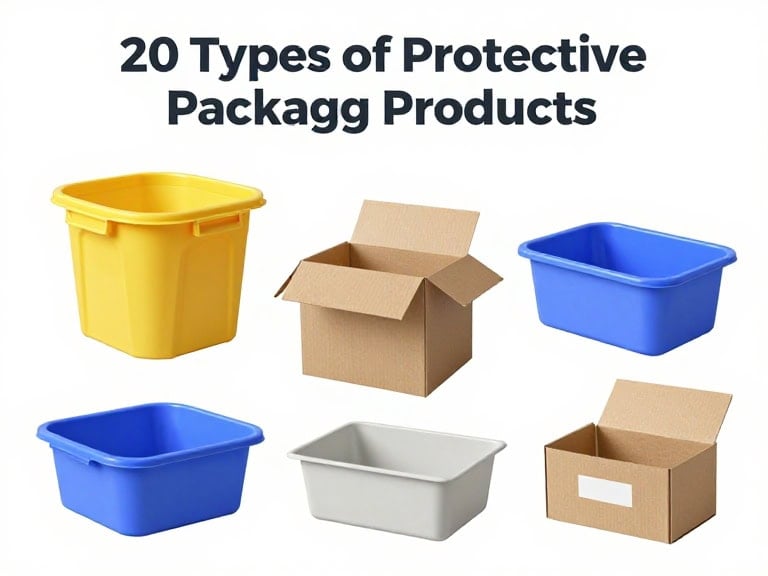
The 20 common types include air column bags, air column wrap, air pillow film, air bubble wrap, bubble pouches, bubble mailers, EPE foam, EVA foam, flexible PU foam, inflatable bubble wrap, corrugated boxes, rigid boxes, compostable bubble wrap, pallet stretch film, poly mailers, BOPP packing tape, protective foam inserts, molded cushioning, edge protectors, and paper-based cushioning. The best choice depends on product fragility, shipping distance, package weight, stacking pressure, moisture exposure, packing speed, and total landed cost—not just the unit price of the material.
Which Protective Packaging Products Should You Use?
Start with the product, not the packaging catalog. Identify what can go wrong during transportation and choose materials that address those risks. For a glass bottle, impact absorption and restraint are priorities. For apparel, moisture and dust protection may matter more than cushioning. For heavy equipment, compression resistance, blocking, and pallet stability are often more important than a soft outer wrap.
From our experience in protective packaging manufacturing, using several compatible materials is often more reliable than expecting one material to solve every problem. A fragile product may need a fitted foam insert, an inflatable cushioning layer, and a strong corrugated outer box. A clothing order may only need a moisture-resistant poly mailer. Adding unnecessary layers increases material consumption, labor, parcel dimensions, and disposal costs.
What Is Protective Packaging?
Protective packaging refers to materials and packaging structures designed to reduce the likelihood of product damage during storage, handling, fulfillment, and transportation. It can provide cushioning, restraint, surface protection, load stabilization, moisture resistance, or a combination of these functions.
Protective packaging includes flexible materials such as bubble wrap and poly mailers, engineered cushioning such as EPE and EVA foam, inflatable systems such as air column bags, and structural materials such as corrugated boxes. Some materials primarily protect an individual product; others stabilize an entire shipment or pallet.
It is useful to distinguish three packaging functions:
- Primary packaging: The packaging in direct contact with the product, such as a product pouch or bottle container.
- Secondary packaging: The grouping or protective layer around one or more primary packages, such as an inner carton or cushioning sleeve.
- Tertiary packaging: Packaging used for distribution and bulk handling, including shipping cartons, pallet wrap, and load restraints.
A successful protective packaging design coordinates these layers. A strong outer carton cannot compensate for a fragile product moving freely inside it, and thick cushioning cannot fully compensate for a weak or poorly sealed shipping box.
How Do Protective Packaging Materials Work?
Different protective packaging products manage different physical risks. Understanding the mechanism helps prevent material selection based on appearance alone.
Impact and shock absorption
Bubble wrap, foam, air pillows, and air column packaging compress or deform under impact, helping reduce the force transmitted to the product. Their effectiveness depends on material thickness, geometry, cushioning characteristics, and the severity of the drop or impact.
Movement control and restraint
Foam inserts, fitted partitions, molded supports, and properly packed void-fill materials limit movement inside the shipping carton. This is essential because a product that repeatedly moves and strikes the carton can be damaged even when surrounded by cushioning.
Abrasion and surface protection
Foam sheets, soft wraps, sleeves, and protective films separate product surfaces from one another and from rough packaging components. This is particularly important for polished metal, coated furniture, glass, and finished consumer products.
Moisture, dust, and contamination barriers
Poly mailers, suitable plastic films, and sealed bags help protect goods from rain, dust, and handling contamination. They should not be confused with complete moisture-control systems. Products sensitive to humidity may need additional barrier materials, desiccants, or controlled packaging procedures.
Load stabilization
Pallet stretch film and other load-securing materials help hold cartons together during warehouse handling and transport. They stabilize the shipment but do not replace correct pallet loading, suitable cartons, or mechanical restraints where required.
20 Types of Protective Packaging Products
1. Air Column Bags
Air column bags use connected inflatable chambers to cushion products from multiple directions. When one chamber is damaged, the remaining chambers may continue providing some protection, depending on the design. They are particularly useful for bottles, glass containers, electronics, appliances, and other fragile items with predictable dimensions.
For export shipments, air column bags can reduce the need for large quantities of loose cushioning while providing a fitted protective structure. They are most effective when the bag is designed around the product’s dimensions and the inflation pressure is controlled. See air column bag packaging and the Mailong air column bag solution.
2. Air Column Wrap
Air column wrap is a flexible inflatable cushioning material used to wrap products or create protective layers around them. It is useful when products have different shapes or when a packer needs a flexible alternative to a custom-fitted inflatable bag.
It can be suitable for ceramics, glassware, decorative items, and selected electronics. For irregular shapes, test the wrap around corners and protrusions to confirm that it does not leave vulnerable contact points. Explore air column wrap products and the air column wrap for ceramics.
3. Air Pillow Film
Air pillow film is inflated into individual cushions or connected air pillows. Packers use it mainly to fill empty spaces inside shipping cartons and reduce product movement. It is a practical choice for e-commerce fulfillment centers shipping products with varied dimensions.
Air pillows are not a universal replacement for fitted cushioning. They are most suitable for lightweight or moderately robust goods that need void fill rather than precise immobilization. For heavy or sharp-edged products, select a more appropriate cushioning system.
See air pillow film for material options.
4. Air Bubble Wrap Rolls
Air bubble wrap contains air-filled bubbles that provide cushioning and help protect products from scratches and minor impacts. It is versatile, easy to cut, and useful for wrapping irregular products, household goods, furniture components, and general warehouse packing.
Bubble size and film construction affect its performance. Small bubbles are convenient for surface protection and lightweight items, while larger bubbles can provide more cushioning volume. Do not assume that a thicker-looking roll automatically provides adequate protection for a heavy or fragile product. Compare the bubble wrap rolls guide and the range of bubble wrap types.
5. Bubble Pouches
Bubble pouches are preformed protective bags lined with bubble cushioning. They reduce the time required to cut and wrap individual products and are useful for small electronics, accessories, components, and fragile items with consistent dimensions.
The main advantage is packing convenience. The limitation is size flexibility: a pouch that is too tight may stress seams, while an oversized pouch may allow movement. Select dimensions that fit the product without forcing it into the opening.
6. Bubble Mailers
Bubble mailers combine an outer envelope with an internal cushioning layer. They are commonly used for small, relatively robust products such as accessories, non-fragile components, books, and selected retail items.
They are not a substitute for a shipping carton when the contents are highly fragile, heavy, or vulnerable to crushing. A padded envelope can protect against light handling impacts, but it offers limited structural protection under substantial compression. Browse bubble mailer packaging.
7. EPE Foam
Expanded polyethylene foam is a closed-cell foam material valued for its lightweight cushioning, flexibility, and resistance to moisture absorption. It can be supplied as sheets, rolls, blocks, profiles, or custom-cut inserts.
EPE foam is a strong choice for furniture, appliances, electronics, ceramics, and products that need separation or impact cushioning. It is also useful when a manufacturer needs repeatable foam shapes for a regular product line. Density, thickness, shape, and compression behavior should be selected for the actual product weight and shipping conditions.
Explore EPE foam packaging and its industrial and packaging applications.
8. EVA Foam
Ethylene-vinyl acetate foam is a flexible, resilient material available in different densities and hardness levels. It is often used for custom inserts, protective cases, sports equipment, tools, and products where a shaped fit and controlled cushioning are important.
EVA is worth considering when the package needs a more defined shape, a clean finish, or a specific balance of flexibility and support. It is not automatically superior to EPE: the right choice depends on the required compression behavior, cost, appearance, and manufacturing process. See EVA foam options.
9. Flexible PU Foam
Flexible polyurethane foam is commonly used for cushioning, padding, and separation. It can conform to product shapes and is available in different grades and densities. Typical applications include furniture components, consumer goods, equipment, and selected delicate products.
Its flexibility can be useful for irregular surfaces, but the correct grade must be selected for the load and repeated compression expected. Check whether the foam’s properties are suitable for the product’s storage conditions and required service life. See flexible PU foam.
10. Inflatable Bubble Wrap
Inflatable bubble wrap is supplied as film that is inflated before or during packing to create cushioning chambers. It can be useful for wrapping products, protecting corners, or building cushioning layers while reducing the storage space required for uninflated material.
Its value is strongest in operations where storage efficiency and packing speed matter. The system requires compatible inflation equipment and a reliable process for checking inflation quality. Explore inflatable bubble wrap products.
11. Corrugated Boxes
Corrugated boxes provide the structural outer layer for many protective packaging systems. Their fluted construction helps resist handling loads and provides a practical enclosure for storage and shipping.
Box performance depends on board grade, flute profile, dimensions, box design, manufacturing quality, and environmental conditions. A box that is too large can increase movement and dimensional shipping cost; one that is too small can place pressure directly on the product. Browse corrugated and rigid boxes.
12. Rigid Boxes
Rigid boxes are thicker, more stable packaging structures often used for premium products, gift sets, electronics, and presentation-focused retail packaging. They provide a strong structure and refined appearance, but their protective performance still depends on internal inserts and the outer shipping package.
For fragile products, do not confuse a premium rigid presentation box with a transport-tested shipping carton. If the product will travel through parcel networks, an additional protective outer box may be necessary.
13. Compostable Bubble Wrap
Compostable bubble wrap is designed as an alternative to conventional plastic cushioning, using materials intended to break down under specified composting conditions. It may suit brands with defined sustainability goals and suitable waste-management arrangements.
The important question is not whether a material is described as compostable, but under what conditions it composts and whether those conditions are available to the end user. Check the relevant certification, disposal instructions, local infrastructure, and protective performance before switching. Explore compostable bubble wrap.
14. Pallet Stretch Film
Pallet stretch film is an elastic plastic film wrapped around palletized cartons or products to help stabilize the load. It is widely used in warehouses, distribution centers, and export operations.
Film thickness, stretch characteristics, wrapping pattern, load geometry, and application tension all affect performance. Too little film can allow load movement; excessive tension can crush cartons or deform products. See pallet film.
15. Poly Mailers
Poly mailers are lightweight plastic shipping envelopes commonly used for clothing, textiles, soft goods, and products that do not require rigid impact protection. Their low weight and compact format can help reduce packaging and shipping costs compared with boxes.
They are not appropriate for fragile items that need crush protection. For apparel, choose suitable film thickness, strong seams, a reliable closure, and dimensions that do not force the contents. Explore poly mailer packaging and the clothing shipping packaging solution.
16. BOPP Packing Tape
Biaxially oriented polypropylene tape is widely used for sealing cartons and securing packaging closures. It is valued for its practical balance of strength, clarity, and availability in different adhesive systems.
Tape selection should consider carton surface, dust, temperature, storage time, application method, and package weight. A strong tape cannot compensate for an overloaded carton or poorly designed box flaps. For commercial packing lines, test the tape with the actual carton and sealing equipment rather than selecting it by width alone.
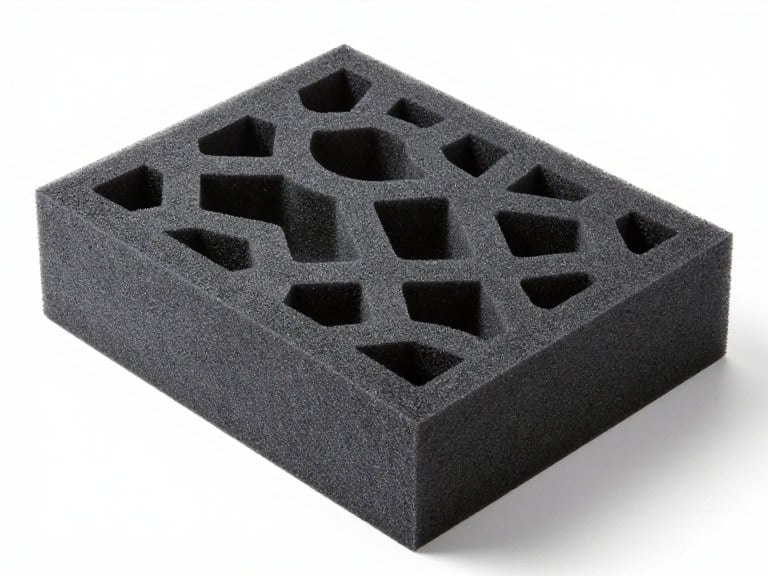
17. Custom Foam Inserts
Custom foam inserts are cut or formed to hold products in defined positions inside a box, case, or shipping container. They can prevent movement, separate components, and protect delicate surfaces or protruding parts.
They are particularly useful for instruments, tools, electronics, medical devices, and multi-component kits. The initial tooling or cutting cost can be justified when the product is high value, shipped repeatedly, or difficult to replace. A properly designed insert should support the product at appropriate points without creating damaging pressure concentrations.
18. Molded Pulp Cushioning
Molded pulp cushioning is formed from fiber-based material into shapes designed to hold and protect products. It is used for selected electronics, consumer goods, food packaging, and fragile products where a formed insert can replace some plastic cushioning components.
It can be a useful sustainability-oriented option, but it is not suitable for every product or environment. Moisture exposure, dimensional tolerances, surface finish, tooling cost, and cushioning requirements must be assessed before switching from foam or inflatable packaging.
19. Paper Cushioning and Kraft Paper Void Fill
Kraft paper cushioning can be crumpled, folded, or converted into paper pads to fill carton voids and limit product movement. It is a practical option for brands seeking paper-based packaging and for products that do not need highly engineered cushioning.
Paper is not automatically the best solution for heavy or fragile goods. It can settle under load and may provide less predictable protection than a fitted foam or inflatable system. Use it where the product and shipping conditions support the choice.
20. Edge and Corner Protectors
Edge and corner protectors shield vulnerable corners, distribute strapping pressure, and help prevent crushing or abrasion during pallet storage and transport. They may be made from paperboard, plastic, foam, or other materials depending on the application.
They are especially useful for furniture, panels, appliances, doors, sheet materials, and palletized cartons. For heavy-duty applications, combine suitable edge protection with correct strapping, pallet design, and stretch wrapping rather than relying on corner guards alone.
Comparison Table: Which Protective Packaging Material Is Best?
This comparison is a starting point, not a substitute for testing. Actual performance depends on dimensions, material grade, product weight, package design, and the distribution environment.
| Packaging type | Main protection function | Best applications | Relative cost position | Main limitation |
|---|---|---|---|---|
| Air column bags | Impact cushioning and restraint | Bottles, ceramics, electronics | Medium | Requires inflation and correct sizing |
| Air column wrap | Flexible impact protection | Fragile irregular products | Medium | Wrapping consistency matters |
| Air pillow film | Void filling | E-commerce cartons | Low to medium | Not ideal for precise immobilization |
| Bubble wrap | Surface and impact cushioning | General fragile goods | Low to medium | Can be bulky to store |
| Bubble pouches | Preformed cushioning | Small components | Medium | Limited size flexibility |
| Bubble mailers | Light cushioning and enclosure | Small, robust items | Low to medium | Limited crush protection |
| EPE foam | Cushioning and separation | Appliances, furniture, ceramics | Medium | Requires correct density and shape |
| EVA foam | Shaped support and cushioning | Cases, tools, equipment | Medium to high | Can cost more than basic foam |
| Flexible PU foam | Conforming cushioning | Irregular products | Medium | Grade selection is critical |
| Inflatable bubble wrap | Flexible impact cushioning | Fulfillment and export packing | Medium | Needs inflation equipment |
| Corrugated boxes | Structural protection | Most shipped products | Low to medium | Must be matched to load and size |
| Rigid boxes | Presentation and structure | Premium retail products | Medium to high | May need a shipping outer box |
| Compostable bubble wrap | Impact cushioning | Selected eco-focused shipments | Varies | Disposal conditions and certification |
| Pallet stretch film | Load stabilization | Warehouse and pallet shipping | Low to medium | Does not replace proper load design |
| Poly mailers | Moisture and dust barrier | Clothing and soft goods | Low | Minimal impact protection |
| BOPP tape | Carton closure | Shipping cartons | Low | Performance depends on adhesive and application |
| Custom foam inserts | Restraint and cushioning | High-value equipment | Medium to high | Design and setup costs |
| Molded pulp | Formed cushioning and restraint | Consumer products | Varies | Moisture and tooling constraints |
| Kraft paper cushioning | Void fill and separation | Light to moderate shipments | Low to medium | May settle under compression |
| Edge and corner protectors | Edge protection and load support | Palletized goods and panels | Low to medium | Needs correct placement and load restraint |
Pros and Cons of Protective Packaging Products
| Advantages | Limitations and trade-offs |
|---|---|
| Reduces the risk of impact, abrasion, and handling damage when correctly specified. | Incorrect material selection can create a false sense of security. |
| Can lower product returns, replacement shipments, and damage-related service costs. | Higher-performance materials may increase initial packaging costs. |
| Supports more consistent packing procedures in repeatable operations. | Custom sizes, inserts, and tooling may require setup investment. |
| Inflatable and flexible materials can reduce storage requirements before use. | Some systems need inflation equipment, training, and maintenance. |
| Multiple material options support different products and shipping channels. | Too many material types can complicate inventory and warehouse operations. |
| Some alternatives can support waste-reduction or sustainability targets. | Environmental claims depend on material composition, certification, and actual disposal routes. |
How to Choose the Right Type of Protective Packaging
Before requesting a quote, define the packaging job. A supplier can recommend a material more accurately when the product dimensions, weight, fragility, shipping route, and packing process are known.
1. Identify the Product’s Main Failure Risks
List the most likely damage modes: impact, vibration, compression, abrasion, puncture, moisture, dust, or movement inside the carton. A product may have more than one risk. Glass, for example, can break from impact or repeated contact with another item, while a finished metal component may be more vulnerable to scratches and corrosion.
2. Measure Product Dimensions and Weight
Record length, width, height, weight, protruding parts, and any surfaces that must not be compressed. These measurements guide foam thickness, insert design, air column dimensions, and outer carton sizing. If the product is shipped in several configurations, provide the supplier with each configuration rather than one approximate measurement.
3. Consider the Distribution Environment
Parcel shipments, export containers, pallet freight, and local courier deliveries create different handling conditions. A package may experience repeated sorting, drops, vibration, stacking pressure, or humidity changes. Long-distance export packaging should account for the entire route, not just the first warehouse transfer.
4. Match the Material to the Required Protection
Use fitted foam or air column packaging when restraint and cushioning are important. Use bubble wrap for flexible surface and impact protection. Use poly mailers for soft goods that do not require structural protection. Use corrugated cartons as the outer structure and stretch film to stabilize pallet loads.
5. Evaluate Packing Speed and Labor
A material that is inexpensive per unit may require more labor to cut, fold, wrap, and secure. Inflatable packaging can save storage space and speed up some workflows, but requires equipment and a repeatable inflation process. Preformed pouches and custom inserts can reduce handling time for high-volume products.
6. Test Before Standardizing
Run representative packaging trials before changing the specification across all shipments. Check whether the product shifts, whether corners are exposed, whether cushioning bottoms out, and whether the carton remains intact. For higher-risk products, use a documented distribution test plan instead of relying on a single successful shipment.
Best Protective Packaging Solutions by Industry
| Industry or product | Recommended packaging combination | Reason |
|---|---|---|
| Glassware and ceramics | Air column wrap or bags, foam separators, corrugated box | Combines cushioning, restraint, and outer structure. |
| Electronics | EPE or EVA inserts, suitable barrier bag where needed, corrugated carton | Provides fitted support; static-sensitive products may require qualified ESD packaging. |
| Clothing and textiles | Poly mailer or suitable paper-based mailer | Protects against dust and moisture without unnecessary rigid packaging. |
| Furniture and home products | EPE foam sheets, corner protectors, corrugated cartons, stretch film | Protects surfaces and vulnerable edges during handling. |
| Industrial tools and components | Custom foam inserts, corrugated boxes, pallet protection | Limits movement and supports organized packing. |
| Beauty and personal care products | Bubble pouches, air column bags, dividers, cartons | Reduces contact between containers and helps protect against breakage. |
| E-commerce mixed orders | Air pillows, bubble wrap, mailers, corrugated cartons | Allows flexible packing for varied order sizes. |
| Export pallet loads | Corrugated cartons, edge protectors, stretch film | Supports carton integrity and load stability. |
For online retailers, a well-designed e-commerce parcel packaging solution should balance product protection, parcel size, packing speed, and customer experience. For fragile products, do not choose a mailer simply because it is cheaper than a box.
Common Protective Packaging Mistakes to Avoid
Using too much cushioning without controlling movement
More material does not automatically mean better protection. Loose layers may compress or shift, leaving the product exposed. The package should hold the product in a stable position and provide suitable cushioning in likely impact directions.
Choosing packaging by price per piece alone
A low-cost material can become expensive if it increases packing labor, parcel dimensions, product damage, or returns. Compare total packaging cost per successfully delivered order, not just the material invoice.
Using bubble mailers for fragile or crush-sensitive goods
Bubble mailers provide limited structural strength. If the item can crack, bend, or deform under pressure, use a box with suitable internal cushioning.
Ignoring carton dimensions
Oversized cartons increase void fill and may raise dimensional shipping charges. Undersized cartons can compress the contents. Match carton dimensions to the product and protective layers.
Assuming every foam material performs the same
EPE, EVA, and flexible PU foam differ in resilience, hardness, density, and compression behavior. Ask for material specifications and test the selected grade with the actual product.
Making sustainability claims without checking disposal conditions
Compostable, recyclable, and biodegradable are not interchangeable terms. Confirm the applicable certification and disposal route before making environmental claims to customers.
Protective Packaging Cost-Benefit Analysis
The correct comparison is not the cheapest packaging material against the most expensive one. It is the total cost of delivering an undamaged product using each packaging system.
A practical cost model should include:
- Material cost per shipped unit.
- Labor time required to pack each order.
- Equipment investment and maintenance.
- Storage space for packaging inventory.
- Shipping cost affected by package weight and dimensions.
- Damage rate, replacement cost, return handling, and customer service workload.
- Waste handling and any verified sustainability requirements.
For example, a fragile ceramic manufacturer may pay more for fitted air column packaging than for a basic bubble wrap solution. If the fitted packaging reduces breakage and packing time enough to offset the material premium, it may be the lower-cost option overall. Conversely, a clothing seller may gain little from adding foam or a rigid carton when a properly specified poly mailer already provides sufficient protection.
Protective Packaging Testing and Quality Standards
Professional packaging selection should be based on repeatable evaluation, not assumptions. The right test depends on the distribution system, product sensitivity, packaging design, and customer requirements.
ISTA distribution testing
The International Safe Transit Association publishes test procedures used to evaluate packaged products under simulated distribution hazards. Depending on the shipment profile, a packaging program may consider drop, vibration, compression, and other distribution tests. Select the procedure that matches the actual supply chain rather than treating one test as universal.
ASTM packaging test methods
ASTM International publishes methods relevant to packaging performance, including test approaches for drop impact, vibration, and compression. These methods can help establish a consistent test plan and compare packaging designs. The appropriate method and test severity should be selected for the product and distribution environment.
Quality checks before shipment
At the production and packing stages, verify dimensions, material thickness or weight where specified, seal integrity, inflation consistency, foam condition, carton quality, and closure performance. Keep samples and records for critical packaging specifications. If the packaging changes, reassess whether the existing test evidence remains valid.
For more detail on production consistency, see Mailong Packaging’s quality control approach.
How to Choose a Protective Packaging Manufacturer
A reliable manufacturer should do more than quote a unit price. The supplier should understand your product, explain material choices, provide consistent specifications, and support testing or sample evaluation before a large production order.
Check product range and manufacturing capability
If you use several packaging formats, a manufacturer with a broad product range may simplify procurement and coordination. Confirm which products are manufactured in-house and which are sourced from other suppliers. Ask about production capacity, customization, lead times, and minimum order quantities.
Request measurable specifications
For foam, ask about density, thickness, dimensions, and relevant performance data. For films, clarify material composition, thickness, roll dimensions, and sealing requirements. For inflatable packaging, confirm chamber design, inflation requirements, and size tolerance. Avoid vague descriptions such as “extra strong” without a measurable specification.
Evaluate samples under real packing conditions
Test the sample with the actual product and shipping carton. Check whether the product moves, whether the packaging remains intact, and whether packers can use it consistently. A sample that looks good on a desk is not enough evidence for a high-volume packaging decision.
Assess export experience and communication
For international procurement, ask about export documentation, packing methods, production scheduling, quality records, and communication during order changes. A supplier should be able to explain how it manages product consistency across repeat orders.
Mailong Packaging Co., Ltd. was established in 2009 and manufactures and exports packaging materials including inflatable bubble and pillow film, air column rolls and bags, EPE and EVA foam, poly mailers, stretch wrap, bubble mailers, BOPP tape, and corrugated boxes. The company reports exporting to more than 30 overseas markets. Its range is relevant to buyers seeking multiple protective packaging formats from one supplier.
Expert Recommendation: Build a Packaging System, Not a Material Collection
For most businesses, the best protective packaging solution is a small, well-selected combination of materials rather than a large inventory of unrelated products.
For fragile glass, ceramics, and bottles, start by evaluating air column bags or air column wrap with a correctly sized corrugated carton. For electronics and equipment, consider EPE or EVA inserts where product restraint and repeatability matter. For clothing and other soft goods, a suitable poly mailer is usually more economical than a rigid package. For palletized shipments, combine strong cartons, edge protection, and correctly applied stretch film.
For beginners, do not overcomplicate the first packaging specification. Identify the main damage risk, measure the product, select one suitable material combination, and test it. For commercial users, track damage rates and labor time across multiple shipments before approving a change. For heavy-duty applications, use documented test procedures and make sure the entire package—not just the cushioning material—can handle the distribution environment.
Mailong Packaging is worth considering when your procurement requirements include several of these product categories and you want to evaluate them through one manufacturer relationship. The final decision should still be based on samples, specifications, quality consistency, lead time, and total delivered cost.
Quick Summary Table: 20 Protective Packaging Types
| No. | Product | Primary purpose | Best-fit application |
|---|---|---|---|
| 1 | Air column bags | Inflatable cushioning | Fragile bottles and electronics |
| 2 | Air column wrap | Flexible impact protection | Ceramics and irregular goods |
| 3 | Air pillow film | Void fill | E-commerce cartons |
| 4 | Bubble wrap rolls | Surface and impact protection | General fragile products |
| 5 | Bubble pouches | Preformed cushioning | Small components |
| 6 | Bubble mailers | Light cushioning | Small robust goods |
| 7 | EPE foam | Cushioning and separation | Furniture and appliances |
| 8 | EVA foam | Shaped support | Tools and equipment |
| 9 | Flexible PU foam | Conforming cushioning | Irregular products |
| 10 | Inflatable bubble wrap | Flexible cushioning | High-volume fulfillment |
| 11 | Corrugated boxes | Structural protection | Shipping cartons |
| 12 | Rigid boxes | Presentation and structure | Premium retail goods |
| 13 | Compostable bubble wrap | Alternative cushioning | Selected sustainability programs |
| 14 | Pallet stretch film | Load stabilization | Pallet freight |
| 15 | Poly mailers | Moisture and dust barrier | Clothing and textiles |
| 16 | BOPP tape | Carton sealing | Shipping boxes |
| 17 | Custom foam inserts | Restraint and cushioning | High-value equipment |
| 18 | Molded pulp | Formed cushioning | Consumer goods |
| 19 | Kraft paper cushioning | Void fill | Light to moderate shipments |
| 20 | Edge and corner protectors | Edge and load protection | Palletized goods |
Frequently Asked Questions About Types of Protective Packaging Products
1. What are the most common types of protective packaging?
Common types include bubble wrap, air pillows, air column bags, foam sheets and inserts, corrugated boxes, poly mailers, bubble mailers, stretch film, and paper cushioning. The best material depends on product fragility, weight, shipping method, and the protection required.
2. What is the best protective packaging for fragile products?
For fragile products, fitted cushioning is usually more reliable than loose wrapping alone. Air column bags, custom foam inserts, EPE foam, and bubble wrap can all be suitable depending on product shape and shipping conditions. Combine the cushioning with a properly sized corrugated carton and test the complete package.
3. What is the difference between EPE foam and EVA foam?
EPE is a lightweight closed-cell polyethylene foam commonly used for cushioning and separation. EVA is a flexible foam that can be supplied in different hardness levels and is often selected for shaped inserts, cases, and applications requiring a particular balance of support and flexibility. Compare the actual grade and performance requirements before choosing.
4. Is air column packaging better than bubble wrap?
Air column packaging can provide fitted, multi-directional cushioning for products with consistent dimensions. Bubble wrap is more flexible for general wrapping and mixed product shapes. Air column systems may reduce loose material and improve packing consistency, while bubble wrap can be simpler for small-scale operations. Test both against the product’s actual damage risks.
5. What protective packaging is best for e-commerce?
For soft goods such as clothing, poly mailers are often practical. For robust products, corrugated cartons with air pillows or paper void fill may be sufficient. Fragile products need more controlled cushioning, such as bubble wrap, foam inserts, or air column packaging. Standardize packaging by product category to improve packing speed.
6. What packaging materials are suitable for export shipping?
Export packaging commonly combines corrugated cartons, foam or inflatable cushioning, moisture barriers where needed, edge protection, and pallet stretch film. The correct combination depends on the product, route, handling conditions, and destination requirements. Test the package under a distribution profile representative of the shipment.
7. Is compostable bubble wrap better for the environment?
It may be a suitable alternative in a packaging program with verified material claims and access to the required composting infrastructure. Check the applicable certification, disposal instructions, local waste facilities, and protective performance. A compostable label alone does not prove that the material will be composted in the customer’s local system.
8. How do I calculate protective packaging costs?
Include material cost, labor, equipment, storage, parcel dimensions, shipping charges, damage rates, returns, and replacement costs. Compare the total cost per successfully delivered product rather than material cost per piece alone.
9. What should I ask a protective packaging manufacturer?
Ask about material composition, dimensions, thickness or density, tolerances, customization, production capacity, lead time, minimum order quantity, quality checks, sample availability, and export experience. Provide product dimensions and shipping conditions so the manufacturer can recommend a relevant specification.
10. Can one packaging material protect every product?
No. Bubble wrap, foam, air pillows, boxes, and stretch film perform different functions. A reliable packaging system combines materials according to the product’s impact, movement, compression, abrasion, and moisture risks.
References
- International Safe Transit Association (ISTA) – Distribution packaging testing procedures and resources.
- ASTM International – Standards and test methods relevant to packaging performance, including impact, vibration, and compression testing.
- U.S. Food and Drug Administration (FDA) – Food-contact substance information for packaging materials used in applicable food-related applications.
Always verify the current edition and applicability of any test method or regulatory requirement before specifying packaging for a commercial shipment.