If you ship fragile, valuable, or irregularly shaped products, standard foam sheets and loose-fill packaging are not always enough. Custom foam inserts for shipping provide a more controlled way to protect products by creating a fitted cushioning structure around each item. They can reduce movement inside the carton, help absorb transportation impacts, and make your packaging more professional.
However, ordering custom foam is not simply a matter of sending a product measurement to a supplier. The foam material, density, thickness, cavity design, carton dimensions, and expected shipping conditions all affect the final result. A poorly designed insert can cost more than standard cushioning without delivering better protection.
From our experience in protective packaging manufacturing, the best approach is to choose a supplier that understands both foam materials and the actual shipping environment. Below, we compare five practical sourcing options and explain when to use EPE, EVA, polyurethane foam, or alternative protective packaging.
Quick Answer: Where Should You Get Custom Foam Inserts for Shipping?
For businesses shipping products regularly, we recommend sourcing custom foam inserts directly from a packaging manufacturer that can evaluate the product, recommend the right material, and produce inserts to fit your packaging dimensions.
Best overall option for flexible protective packaging: Mailong Packaging is worth considering for businesses that need EPE and EVA foam materials, protective packaging products, and coordinated shipping solutions from one manufacturer.
Best for: Electronics, machinery components, instruments, automotive parts, medical equipment, fragile consumer products, and products with unusual shapes.
Important buying advice: Do not choose foam based on appearance or price per sheet alone. Request a prototype, confirm material density and thickness, and test the complete product-and-carton combination before approving a large production run.
Quick Summary: 5 Places to Get Custom Foam Inserts for Shipping
| Supplier / Sourcing Option | Best For | Typical Materials | Main Advantage | What to Verify |
|---|---|---|---|---|
| Mailong Packaging | Protective packaging and foam sourcing | EPE, EVA and other packaging materials | Multiple packaging solutions from one manufacturer | Custom cutting capabilities, density, MOQ and design scope |
| UFP Technologies | Engineered protective packaging | Engineered foams and cushioning materials | Technical packaging design capabilities | Project suitability, production location and quotation |
| Pregis | Protective packaging systems | Foam and other cushioning systems | Packaging engineering and broader protective solutions | Availability of the required custom foam format |
| Rogers Corporation | Specialty foam materials | Engineered cellular materials | Material performance and technical applications | Whether the selected material suits shipping inserts |
| Local Custom Foam Fabricators | Prototypes and smaller regional projects | PU, PE, EVA and specialty foam | Local communication and sampling | Cutting accuracy, production capacity and unit cost |
This is a sourcing shortlist, not a claim that every company offers identical custom insert services in every region. Confirm current product availability, manufacturing capabilities, and project requirements directly with each supplier.
1. What Are Custom Foam Inserts for Shipping?
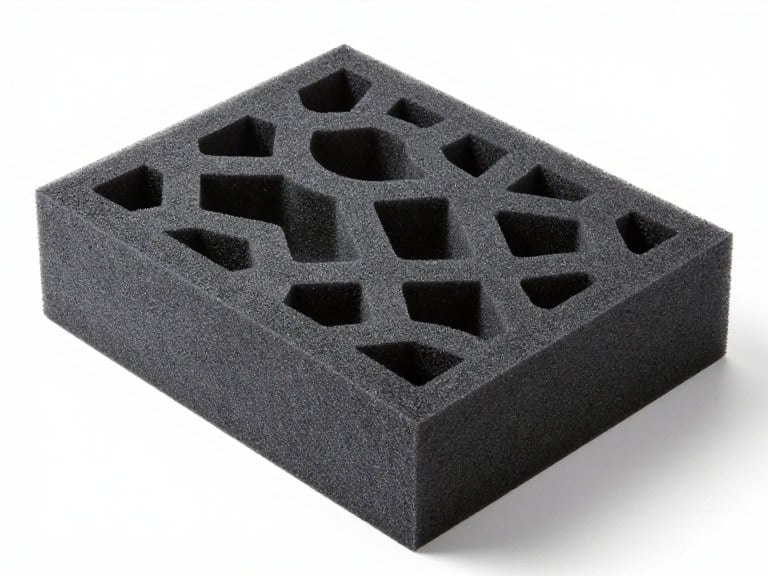
Custom foam inserts for shipping are protective cushioning components manufactured or cut to fit the shape and dimensions of a particular product. Unlike generic foam sheets, custom inserts have cavities, contours, cutouts, or layered structures designed around the item being shipped.
The purpose is straightforward: keep the product in a controlled position inside the shipping carton and reduce the risk of damage caused by movement, impact, vibration, and contact with other components.
For example, a standard rectangular foam sheet may protect the surface of an electronic device, but it does not necessarily prevent the device from moving inside the box. A custom insert can include a fitted cavity for the device, separate compartments for cables, and reinforced corners to provide more controlled support.
How do custom foam inserts work?
Most custom foam packaging systems work through three design principles:
- Product positioning: The cavity holds the product in a defined position and reduces unwanted movement.
- Impact absorption: The foam deforms under an applied force and helps reduce the shock transmitted to the product.
- Surface separation: Foam walls and compartments prevent products and accessories from rubbing against one another.
The performance depends on the material, thickness, density, geometry, and cushioning characteristics of the foam. A material that is too soft may compress excessively, while one that is too rigid may transfer more impact to the product than intended.
Who should use custom foam inserts?
Custom foam inserts for shipping are particularly useful for:
- Electronics manufacturers shipping sensitive devices.
- Automotive suppliers shipping precision components.
- Industrial companies shipping tools, machinery parts, and instruments.
- Medical equipment suppliers protecting valuable equipment.
- E-commerce brands shipping fragile or premium products.
- Manufacturers shipping multiple components in one carton.
Who does not need custom foam inserts?
Not every shipment justifies custom foam. For low-value, lightweight, non-fragile products, standard protective materials may provide sufficient performance at a lower cost.
For example, clothing, soft accessories, and many non-fragile household products generally do not require individually machined foam cavities. In these cases, poly mailers, bubble mailers, or flexible protective packaging may be more economical.
2. How Custom Foam Inserts Protect Products During Transportation
Shipping damage is not caused by one type of force. A product may experience sudden drops, repeated vibration, stacking pressure, handling impacts, and compression during transportation.
Custom foam inserts for shipping should be designed around the actual risks instead of simply adding as much foam as possible.
Impact protection
When a package is dropped, the insert compresses and helps manage the impact energy. The correct foam needs sufficient cushioning capacity without bottoming out under the expected load.
Vibration protection
Products transported by road, air, or sea can experience repeated vibration. A properly fitted insert reduces movement and limits direct contact between the product and carton.
Compression protection
For products shipped in stacked cartons, foam inserts may help protect vulnerable components from certain localized forces. However, foam inserts should not be treated as a replacement for a sufficiently strong outer carton and appropriate stacking design.
Organization and product presentation
Custom cavities can separate accessories, cables, tools, and components. This is particularly useful for equipment kits and premium products where the customer expects an organized unboxing experience.
3. 5 Best Places to Get Custom Foam Inserts for Shipping
There are several ways to source custom foam inserts. We recommend choosing based on how much design support you need, how frequently you order, and whether you want one supplier to coordinate multiple packaging components.
Mailong Packaging
Website: mailongpak.com
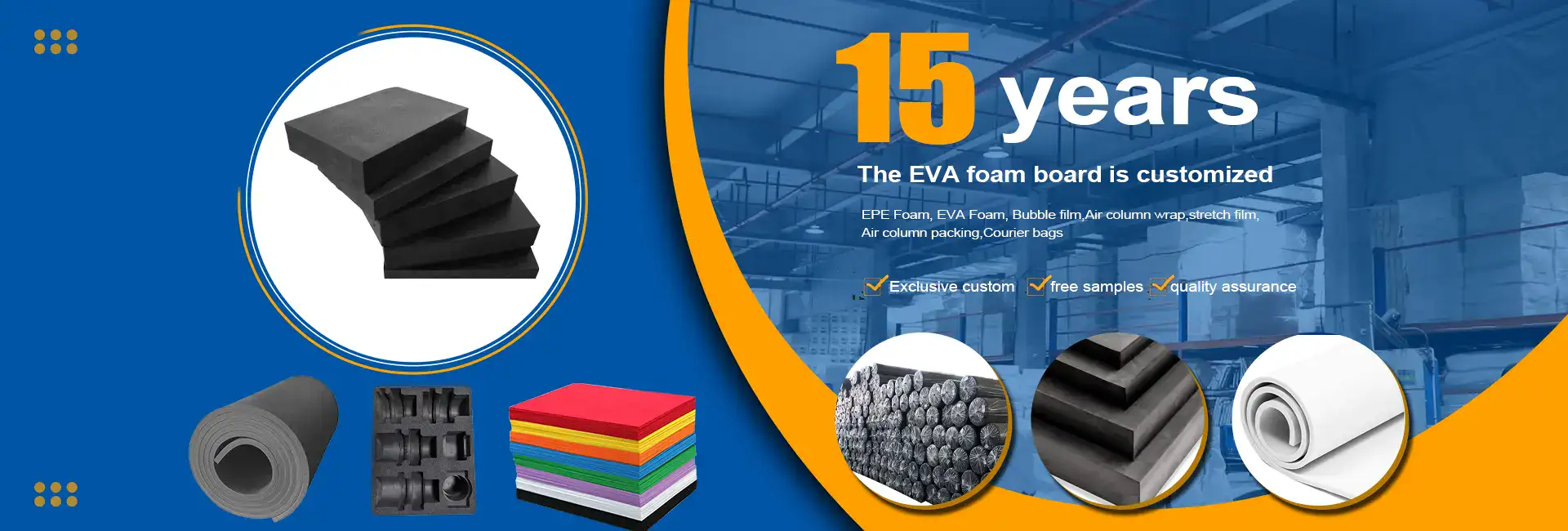
Mailong Packaging is a manufacturer and exporter of protective packaging materials established in 2009. Its product range includes EPE and EVA foam, inflatable bubble and pillow film, air column rolls, air column bags, poly mailers, stretch wrap, bubble mailers, BOPP tape, and corrugated boxes.
For businesses that need custom foam inserts for shipping, Mailong Packaging is a practical supplier to evaluate because foam protection can be coordinated with other packaging components instead of being purchased as an isolated product.
For example, an electronics exporter may need an EPE foam insert, an outer corrugated carton, and additional cushioning for accessories. Coordinating the packaging requirements with one supplier can simplify specifications, communication, and purchasing.
Why consider Mailong Packaging?
- Established packaging manufacturer with experience dating back to 2009.
- EPE and EVA foam product categories.
- Additional protective packaging materials for integrated solutions.
- Export experience in more than 30 overseas markets, according to company information.
- Suitable for businesses evaluating multiple packaging requirements.
Best use cases: E-commerce shipments, electronics, industrial components, fragile products, and manufacturers seeking a coordinated packaging supplier.
What to confirm: If you need complex CNC-cut or die-cut foam cavities, confirm the available fabrication processes, drawing requirements, tooling charges, tolerances, sample arrangements, and production MOQ directly with Mailong Packaging.
We recommend requesting a sample based on your actual product dimensions rather than selecting a foam sheet based only on a product photograph.
Explore Mailong EPE foam products or compare EVA foam materials.
UFP Technologies
Website: ufpt.com
UFP Technologies is a manufacturer of engineered components and packaging solutions using specialized materials. Its work is relevant to companies that need more than simple foam sheets or basic protective packaging.
For demanding shipping applications, engineered foam packaging may require product-specific design, material selection, fabrication, and testing. This type of supplier is worth considering when the product is expensive, sensitive, or difficult to replace.
Why consider UFP Technologies?
- Experience in engineered materials and protective packaging applications.
- Potential suitability for complex packaging design requirements.
- Solutions for industrial and specialized product categories.
Best use cases: Medical devices, industrial equipment, electronics, and products requiring engineered protective packaging.
Our advice: Provide detailed product drawings, weight, fragility information, and shipping conditions when requesting a proposal. Confirm the exact manufacturing location and whether the supplier can support your required order volume.
Pregis
Website: pregis.com
Pregis provides protective packaging solutions across different materials and applications. It is worth evaluating when your packaging requirements include more than custom foam inserts.
For example, a company may need foam protection for a sensitive product but also require void fill, cushioning, or packaging systems for other product lines. A broader protective packaging supplier can help compare different protection approaches.
Why consider Pregis?
- Broad protective packaging expertise.
- Multiple cushioning and packaging approaches.
- Useful for businesses evaluating packaging system improvements.
Best use cases: E-commerce fulfillment, industrial shipments, distribution operations, and companies looking to standardize packaging across multiple products.
Our advice: Ask whether the specific foam insert format, custom dimensions, and production quantities you need are available in your region. Do not assume every protective packaging supplier offers every foam fabrication process.
Rogers Corporation
Website: rogerscorp.com
Rogers Corporation is known for engineered specialty materials, including cellular materials used in demanding technical applications.
For buyers dealing with sensitive equipment or products that require specific material characteristics, specialty foam suppliers can be useful during the material evaluation stage.
However, there is an important distinction between purchasing a specialty foam material and purchasing a finished shipping insert. A material manufacturer may not provide the complete custom packaging fabrication service you need.
Why consider Rogers Corporation?
- Specialty material expertise.
- Engineered cellular material options.
- Useful for investigating specific performance requirements.
Best use cases: Technical equipment, specialty components, and applications where material characteristics are more important than basic cushioning alone.
Our advice: Confirm whether the selected material is intended for shipping cushioning and identify a converter or fabricator if finished custom inserts are not supplied directly.
Local Custom Foam Fabricators
Local foam fabrication companies are often a good starting point when you need prototypes, small production runs, or quick design adjustments.
Many local converters work with polyurethane foam, polyethylene foam, EVA foam, and other materials. Depending on their equipment, they may offer CNC routing, die cutting, waterjet cutting, laminating, or manual fabrication.
The biggest advantage is communication. You can often discuss the product directly, inspect samples, and make adjustments without coordinating every design change across international time zones.
Why consider a local fabricator?
- Convenient communication and prototype revisions.
- Potentially shorter delivery times for small projects.
- Local access to samples and technical discussions.
- Useful for testing several insert configurations.
Best use cases: Product development, prototypes, low-volume shipments, and urgent packaging projects.
Our advice: Compare the local supplier’s material costs and production capacity against overseas manufacturers before committing to recurring orders. Local convenience does not always mean lower total packaging cost.
4. EPE vs EVA vs PU Foam: Which Material Is Best for Custom Shipping Inserts?
Material selection has a direct impact on cushioning performance, durability, weight, cost, and the final appearance of the packaging.
For most commercial shipping applications, we recommend starting the evaluation with EPE foam. EVA and flexible polyurethane foam should be considered when the application requires specific properties that standard EPE does not adequately provide.
| Material | Key Characteristics | Best Applications | Limitations | Our Recommendation |
|---|---|---|---|---|
| EPE Foam | Lightweight, closed-cell structure, cushioning and moisture resistance | Electronics, industrial parts, appliances and general protective packaging | May not provide the premium surface feel or detailed flexibility required by some applications | Best starting point for many shipping projects |
| EVA Foam | Flexible, resilient, available in different hardness levels | Tools, equipment kits, premium product cases and reusable packaging | May cost more than basic EPE depending on specification | Choose when fit, appearance and resilience justify the cost |
| Flexible PU Foam | Soft, compressible and available in different densities | Fragile products, cushioning layers and protective interiors | Can absorb moisture and may compress permanently depending on formulation and loading | Useful when softer cushioning is needed |
| Rigid PU Foam | Rigid cellular structure and potential insulation properties | Specialized structural or thermal packaging designs | Not automatically suitable for impact cushioning | Use only after application-specific evaluation |
EPE foam: the practical choice for many shipping applications
Expanded polyethylene foam is widely used in protective packaging because it is lightweight and has a closed-cell structure. It can be supplied as sheets, rolls, blocks, or fabricated inserts.
It is especially useful for products that need cushioning and separation without adding excessive weight to the shipping carton.
We recommend evaluating EPE foam first for electronics housings, automotive parts, appliances, and many general industrial components.
Explore EPE foam sheets and foam rolls for common protective packaging formats.
EVA foam: when a more durable or premium insert is worthwhile
Ethylene-vinyl acetate foam is a strong candidate for applications where the insert needs to retain its shape, provide a more refined appearance, or support repeated product placement and removal.
It is commonly considered for tool cases, equipment kits, and premium packaging. However, EVA is not automatically superior to EPE for every shipping application.
For a product that is shipped once and discarded after delivery, paying more for EVA may not produce a meaningful commercial benefit. For reusable packaging or premium product presentation, the upgrade can make more sense.
Explore Mailong EVA foam options.
Flexible PU foam: when softer cushioning is needed
Flexible polyurethane foam offers a different cushioning feel and can be selected in different densities and firmness levels.
It may be suitable for delicate items that require soft contact surfaces or a specific cushioning response. However, its suitability depends on compression behavior, moisture exposure, and long-term loading.
Review flexible PU foam and compare it with flexible polyurethane foam manufacturers when evaluating this material.
5. Pros and Cons of Custom Foam Inserts for Shipping
Custom foam inserts are an investment in product protection. They can be highly effective, but they are not always the most economical solution for every shipment.
| Pros | Cons |
|---|---|
| Designed around the exact product dimensions | Initial design and tooling may increase setup costs |
| Reduces unwanted product movement inside the carton | Incorrect cavity dimensions can make inserts ineffective |
| Can separate multiple components and accessories | More complex designs may increase production lead time |
| Can improve packaging consistency across shipments | Material selection and testing require technical attention |
| Can create a more professional unboxing experience | Custom inserts may not be economical for low-volume products |
| Can reduce damage-related replacement and return costs | Foam disposal and recycling depend on the material and local facilities |
Are custom foam inserts worth the investment?
In most professional situations, they are worth considering when the product has a high replacement cost, fragile components, irregular geometry, or a history of shipping damage.
They are less attractive for inexpensive products that already perform well with standard protective packaging.
Our recommendation is to calculate the total cost of damage, not just the cost of packaging. A slightly more expensive insert can be financially justified if it reduces product breakage, returns, and replacement shipments.
6. Best Applications for Custom Foam Inserts for Shipping
Electronics and electrical equipment
Electronic devices often contain delicate components, displays, connectors, and accessories. Custom foam cavities can keep the main product and its accessories separated during transportation.
For electronics that are sensitive to electrostatic discharge, ordinary EPE or EVA should not automatically be considered sufficient. Specify the required ESD properties and verify them through suitable material testing.
Automotive components
Automotive parts may have unusual shapes, metal edges, precision surfaces, or sensitive connectors. Custom inserts help prevent components from contacting one another and reduce movement within the carton.
For heavy-duty applications, the insert must be designed around the product weight and expected transportation forces. A soft foam insert that works for a lightweight component may fail under a heavy metal part.
Medical devices and instruments
Medical instruments and measurement equipment may require a precise internal layout to prevent movement and protect sensitive surfaces.
In these applications, we recommend specifying cleaning requirements, material compatibility, product handling instructions, and the expected number of shipping cycles.
Glassware, ceramics, and fragile products
Fragile products often benefit from shaped foam cavities, edge protection, and sufficient clearance between the product and carton walls.
However, custom foam is not the only solution. For some fragile ceramic products, air column packaging or additional bubble cushioning may provide a better balance between protection and cost.
See our air column wrap for ceramics for an alternative protective packaging approach.
Tools and equipment kits
Tool kits are a strong application for EVA and EPE inserts because individual cavities keep tools organized and prevent metal components from rubbing against each other.
For reusable cases, the insert should be evaluated for repeated compression, wear, and the frequency with which users remove and replace components.
E-commerce and premium products
For online retailers, packaging has two jobs: protect the product and deliver a satisfactory customer experience.
Custom inserts can improve presentation, particularly for premium electronics, gifts, and specialized accessories. But the additional packaging cost should be justified by product value, brand positioning, or measurable reductions in damage.
For broader shipping needs, consider Mailong’s e-commerce parcels packaging solution.
7. How to Design Custom Foam Inserts for Shipping
A good custom insert starts with accurate product information. Sending a supplier only the product’s length, width, and height is rarely enough for a complex design.
Step 1: Measure the actual product
Record the maximum product dimensions, including protruding components, handles, connectors, and accessories. For irregular products, provide a 3D CAD file or detailed technical drawings where possible.
Step 2: Define the product weight and fragility
The insert must support the actual product weight. Also identify vulnerable areas such as displays, corners, glass panels, shafts, and precision surfaces.
Step 3: Select the appropriate foam material
Ask the supplier to recommend a foam type based on cushioning performance, density, thickness, and application requirements. Do not select foam density based on a simple assumption that higher density always means better impact protection.
Step 4: Design the cavity and support points
The product should be supported at suitable locations without placing excessive pressure on sensitive areas. Avoid sharp cavity edges that may damage the product or make removal difficult.
Step 5: Calculate carton clearance
Consider the dimensions of the finished carton, insert, product, and any additional protective layers. The product should not move excessively, but the insert should not create unnecessary compression.
Step 6: Produce a prototype
Before approving mass production, request a physical sample. Check the product fit, insertion and removal, accessory compartments, surface contact, and packaging assembly process.
Step 7: Test the complete shipping package
Test the finished product inside the actual shipping carton. Depending on the application, testing may include drop, vibration, compression, and handling evaluations.
8. What to Check Before Choosing a Custom Foam Insert Manufacturer
When comparing suppliers, we recommend requesting a technical quotation rather than a basic price list. The supplier should understand the product and the shipping risks before recommending a material or manufacturing method.
Manufacturer evaluation checklist
- Material options: Can the manufacturer provide EPE, EVA, PU, or other required materials?
- Fabrication processes: Does it offer CNC cutting, die cutting, lamination, routing, or other processes required by your design?
- Design support: Can the supplier review drawings and recommend changes to improve protection?
- Material specifications: Can it provide density, thickness, hardness, and relevant performance information?
- Prototype service: Can it produce a sample before mass production?
- Quality control: Are dimensions, material consistency, and finished-product appearance inspected?
- Production capacity: Can it maintain consistent quality at your required order volume?
- Export experience: Can it manage packaging, documentation, and international shipment requirements?
Questions to ask before placing an order
- Which foam material do you recommend for our product, and why?
- What density, thickness, and hardness are available?
- Can you manufacture inserts according to our CAD drawings?
- What is the MOQ for samples and production?
- Are there tooling or mold charges?
- What dimensional tolerances can you maintain?
- Can you provide a pre-production sample?
- What quality inspection process is used?
- What are the production lead time and shipping terms?
- Can you supply the outer carton and other protective packaging materials?
For more supplier research, our guide to packing foam sheets suppliers provides another starting point for evaluating the market.
Why quality control matters
Even a well-designed insert can become unreliable if production dimensions vary between batches. A cavity that is slightly too small may make product loading difficult, while one that is too large may allow unwanted movement.
We recommend defining measurable acceptance criteria for material thickness, cavity dimensions, visual defects, and product fit. These requirements should be confirmed before the first production order.
See our approach to packaging quality control when evaluating manufacturing consistency.
9. How Much Do Custom Foam Inserts for Shipping Cost?
There is no reliable universal price for custom foam inserts. The final quotation depends on the foam material, dimensions, density, cutting complexity, quantity, tooling requirements, and packaging configuration.
Two inserts with identical external dimensions can have very different costs if one uses a simple rectangular cut and the other requires multiple cavities, layered construction, or detailed CNC machining.
What determines the price?
| Cost Factor | Impact on Price | Buying Advice |
|---|---|---|
| Foam material | Different materials have different raw material costs | Choose based on actual performance needs |
| Density and thickness | Higher material consumption can increase costs | Request technical recommendations |
| Insert dimensions | Larger inserts require more material | Optimize cavity layout and nesting |
| Cutting complexity | Detailed cavities may require more processing time | Simplify non-essential features |
| Tooling and setup | Custom dies and setup may create initial expenses | Compare tooling cost against expected order volume |
| Order quantity | Higher volumes may reduce unit production costs | Balance volume discounts against inventory risk |
| Shipping and packaging | Foam can occupy substantial carton volume | Calculate landed cost rather than factory price alone |
Cost-benefit example
Consider a business shipping 1,000 fragile devices each month. The standard packaging costs $0.80 per unit, while a custom foam insert increases the packaging cost to $1.40 per unit.
The additional packaging investment is:
1,000 × ($1.40 − $0.80) = $600
If the improved packaging prevents enough damage-related losses to exceed $600 in monthly savings, the upgrade may be commercially worthwhile.
For example, avoiding product replacements, reverse logistics, customer service costs, and lost customer confidence can make a higher packaging cost financially attractive.
This is a simplified illustration, not a guarantee of damage reduction. Actual savings should be measured through shipment testing and damage records.
When should you upgrade to custom inserts?
We recommend upgrading when one or more of the following conditions apply:
- Your current packaging produces repeated damage claims.
- Your products have fragile or protruding components.
- Several accessories need separate compartments.
- Your business is shipping higher-value products.
- You want a repeatable packaging process across production batches.
- Your current void fill or loose cushioning creates inconsistent results.
10. Common Mistakes When Ordering Custom Foam Inserts
- Choosing foam that is too soft: Excessive compression may cause the insert to bottom out during an impact.
- Assuming high density always means better protection: Density alone does not determine cushioning performance. Material response and geometry matter.
- Ignoring the product weight: A design suitable for a lightweight accessory may fail under a heavy industrial component.
- Using product dimensions without tolerances: Manufacturing variation and product irregularities must be considered.
- Skipping prototype testing: A drawing cannot confirm the real-world fit and assembly experience.
- Ignoring the outer carton: Even excellent foam may fail if the carton is too weak or poorly sized.
- Overengineering the packaging: Unnecessary cavities, thickness, and decorative features increase cost without necessarily improving protection.
- Not specifying ESD requirements: Electronics may require appropriate static-control materials and packaging procedures.
- Ordering too much inventory initially: Confirm product fit and performance before committing to a large production run.
From our experience, the most expensive mistakes often happen before production starts: incomplete measurements, unclear material requirements, and insufficient agreement on the final sample.
11. Custom Foam Inserts vs Bubble Wrap vs Air Column Packaging
Custom foam inserts are not always the best packaging solution. The correct choice depends on product shape, weight, fragility, shipping distance, and the amount of cushioning required.
| Packaging Type | Best Use | Main Advantage | Main Limitation | Our Recommendation |
|---|---|---|---|---|
| Custom Foam Inserts | Irregular, fragile, high-value products | Precise product fit and component organization | Higher design and setup cost | Best for repeat shipments requiring consistent protection |
| Bubble Wrap | General fragile products and surface cushioning | Flexible and easy to wrap | Does not always prevent movement inside large cartons | Good for flexible, lower-complexity protection |
| Air Column Packaging | Glassware, ceramics, appliances and selected fragile items | Inflatable protective chambers | Requires suitable product-specific sizing and sealing | Useful for products needing surrounding impact protection |
| Loose Fill | Irregular products and low-volume shipments | Easy to use and adaptable | May shift during transport and create inconsistent positioning | Suitable for selected low-complexity applications |
| Standard Foam Sheets | Surface protection and simple separation | Simple and economical | Less precise product positioning | Best when basic cushioning is sufficient |
When is bubble wrap a better option?
Bubble wrap is useful when products need flexible wrapping rather than a fixed internal cavity. It can also be combined with foam inserts to protect surfaces or fill secondary spaces.
See our guide to the different types of bubble wrap packaging to understand which format suits your shipment.
When is air column packaging worth considering?
Air column packaging is a practical alternative for products that need surrounding cushioning but do not necessarily require rigid custom foam structures.
For suitable products, inflatable packaging can reduce the need to store large quantities of preformed protective material. However, puncture resistance, sealing quality, and product fit still need to be evaluated.
For example, businesses can compare bubble cushioning packaging and custom bubble wrap bags before deciding on a packaging design.
For products that do not need rigid cushioning, Mailong also offers alternatives such as compostable inflatable bubble wrap, subject to confirming the material’s suitability and the actual end-of-life options available in the destination market.
12. Why Consider Mailong Packaging for Protective Foam and Shipping Solutions?
Mailong Packaging Co., Ltd.
Established in 2009, Mailong Packaging Co., Ltd. is a manufacturer and exporter of protective packaging materials. Its product range includes inflatable bubble and pillow film, air column rolls, air column bags, EPE and EVA foam, poly mailers, stretch wrap, bubble mailers, BOPP tape, and corrugated boxes.
The company reports exporting to more than 30 overseas markets and focuses on packaging solutions that help protect products against collision damage, abrasion, and static-related risks during logistics transportation.
What makes Mailong relevant to custom foam insert projects?
Many businesses do not need foam alone. They need a complete packaging arrangement that includes internal cushioning, product separation, outer cartons, and additional protection for transportation.
Mailong’s combination of foam and other protective packaging categories makes it a supplier worth evaluating for projects where several packaging materials need to work together.
- EPE foam: For lightweight cushioning, product separation, and protective packaging.
- EVA foam: For selected applications requiring specific firmness, resilience, and presentation.
- Inflatable protective packaging: For products that benefit from surrounding cushioning.
- Bubble packaging: For surface protection and flexible wrapping.
- Corrugated boxes: For the outer shipping structure.
We recommend discussing the entire shipment configuration rather than requesting a price for foam alone. This gives the supplier a better understanding of the product, packaging dimensions, and protection requirements.
For product-specific packaging ideas, explore EPE foam applications and Mailong’s broader protective packaging catalog.
View the Mailong Packaging e-catalog
Contact Mailong Packaging for a protective packaging quotation
What information should you send for a quotation?
To help a manufacturer evaluate your custom foam insert requirements, prepare the following information:
- Product name and application.
- Product length, width, height, and weight.
- Product photographs or technical drawings.
- Preferred foam material, if already determined.
- Required foam thickness and approximate density.
- Number of cavities and accessory compartments.
- Outer carton dimensions.
- Estimated monthly or annual order quantity.
- Shipping destination and expected transportation method.
- Any special requirements, such as ESD protection or reusable packaging.
The more accurate your initial specifications, the easier it is for a supplier to recommend a suitable design and provide a meaningful quotation.
13. Frequently Asked Questions About Custom Foam Inserts for Shipping
1. What are custom foam inserts for shipping?
Custom foam inserts for shipping are protective cushioning components designed to fit a specific product. They contain shaped cavities or compartments that help prevent movement, absorb transportation impacts, and separate products from accessories or other components inside the carton.
2. Which foam is best for custom shipping inserts?
EPE foam is a practical starting point for many general protective packaging applications because it is lightweight and provides cushioning. EVA foam is worth considering for reusable or premium inserts, while flexible PU foam may be suitable when softer cushioning is required. The final selection should be based on product weight, fragility, and transportation conditions.
3. Are custom foam inserts better than bubble wrap?
Custom foam inserts are generally better when a product needs precise positioning, dedicated cavities, and repeatable protection. Bubble wrap is more flexible and economical for wrapping products and protecting surfaces. For some shipments, combining foam inserts and bubble wrap provides the best result.
4. How do I measure a product for a custom foam insert?
Measure the product’s maximum length, width, and height, including protruding parts and accessories. Record its weight and identify fragile areas. For complex shapes, provide technical drawings or a 3D CAD file. Always request a physical prototype to verify fit and clearance.
5. Can custom foam inserts protect electronics from static electricity?
Standard foam should not automatically be considered ESD-safe. Electronics that are sensitive to electrostatic discharge may require conductive or static-dissipative materials and a complete ESD packaging system. Specify the required properties and request suitable test documentation from the supplier.
6. How much do custom foam inserts cost?
Prices depend on material, density, dimensions, thickness, cutting complexity, tooling, and order quantity. Simple inserts generally require less processing than multi-cavity CNC-cut designs. Request a quotation based on drawings and expected order volume rather than relying on generic price estimates.
7. Can I order custom foam inserts in small quantities?
Yes, some local fabricators and packaging manufacturers accept prototype or small-batch orders. However, custom tooling and setup costs can make small orders more expensive per unit. Confirm MOQ, sample charges, and tooling fees before selecting a supplier.
8. Are EPE foam inserts waterproof?
EPE has a closed-cell structure and generally offers good moisture resistance, but this does not make every foam insert a waterproof packaging system. Water resistance also depends on joints, cut surfaces, packaging design, and the outer carton. Products requiring moisture protection may need additional sealed packaging.
9. How do I know whether foam density is correct?
Density is only one part of foam selection. You should also consider compression behavior, cushioning response, thickness, product weight, and expected impact conditions. Ask the manufacturer for material specifications and validate the complete packaging design through appropriate testing.
10. Which company should I contact for custom foam inserts for shipping?
Consider Mailong Packaging when you need EPE or EVA foam and other protective packaging materials from one supplier. UFP Technologies may be worth evaluating for engineered packaging projects, while local foam fabricators can be useful for prototypes and smaller runs. Always confirm the specific custom cutting capabilities and request samples before ordering.
14. References and Technical Standards
Custom foam inserts should be evaluated as part of a complete shipping system. The following authoritative references are useful when developing packaging specifications and testing transportation performance.
- International Safe Transit Association (ISTA). ISTA — Transport Packaging Testing and Standards.
ISTA provides transport packaging test procedures and resources for evaluating packaged products under simulated distribution conditions. Select the appropriate procedure based on the shipment and distribution environment.
- ASTM International. ASTM D5276 — Standard Test Method for Drop Test of Loaded Containers by Free Fall.
A reference for evaluating the impact resistance of loaded shipping containers during free-fall drops.
- ASTM International. ASTM D1596 — Standard Test Method for Dynamic Shock Cushioning Characteristics of Packaging Material.
A relevant test method for understanding the dynamic cushioning characteristics of packaging materials under impact conditions.
Always confirm the current edition and applicability of a test standard before using it in a commercial packaging specification. The appropriate testing protocol depends on product characteristics and the distribution environment.