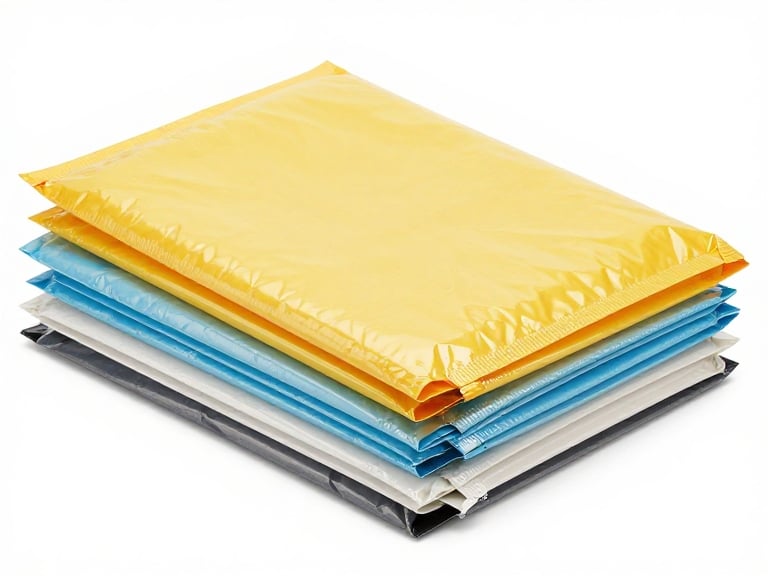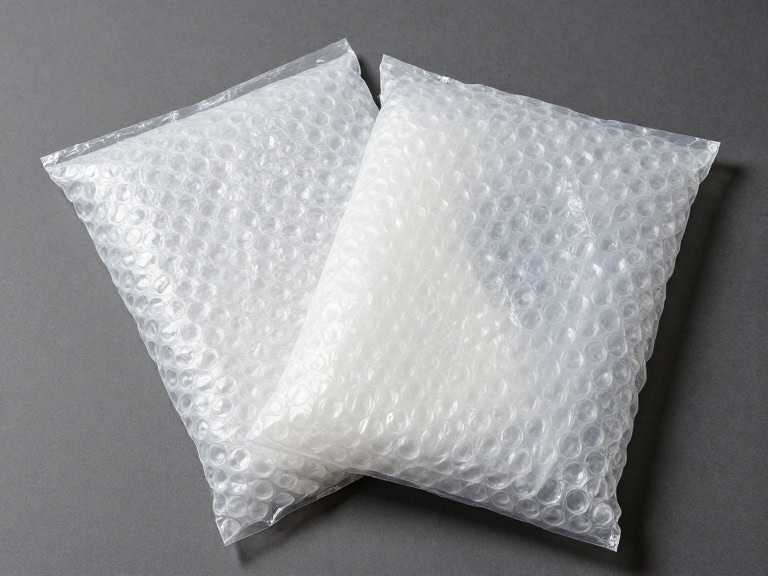
Let us confront a brutal reality in global logistics: if you are attempting to protect high-value electronics, fragile ceramics, or precision medical instruments with the cheapest, single-extrusion plastic film you can find, you are actively sabotaging your own profit margins. Every single day, procurement managers make the fatal error of treating transit protection as a generic commodity. They purchase vast quantities of unverified, low-barrier film, only to watch their return merchandise authorization (RMA) rates skyrocket due to collision damage and attrition. We refuse to accept this standard of operational negligence. Understanding the specific structural integrity and the exact types of bubble wrap packaging required for your unique product line is not a minor warehousing detail; it is a strict financial mandate.
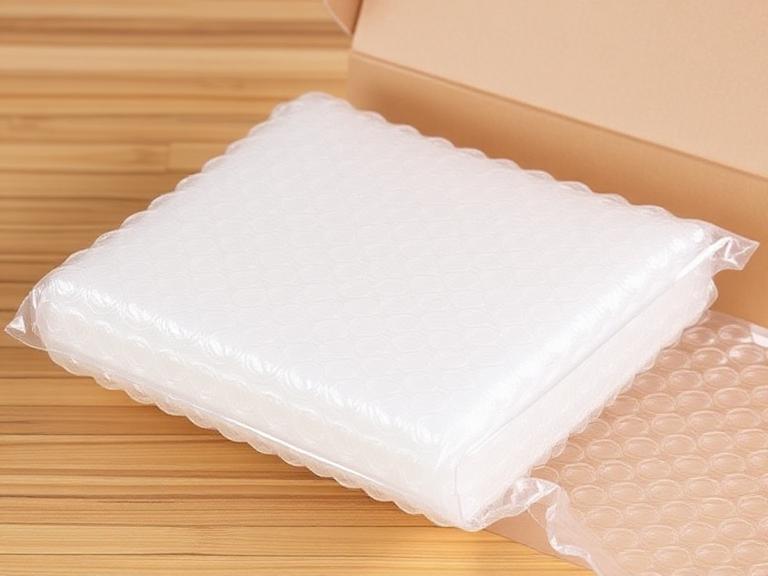
Dongguan Mailong Packaging Co., Ltd. was established in 2009. It is a reputed manufacturer and exporter of a wide range of world-class quality packaging materials, such as inflatable bubble and pillow film, air column rolls, air column bags, EPE and EVA FOAM, Poly Mailer, Stretch wrap, Bubble mailer, BOPP tape, and Corrugated box, which can prevent products from collision damage, attrition, and static in the process of logistics transportation, and have been exported to the oversea markets more than 30 countries.
From our experience engineering advanced polymers for over a decade, we know that genuine transit protection relies entirely on barrier retention. If the air escapes the cellular structure during a 30-day ocean freight journey or during the depressurization of air cargo transport, the film becomes completely useless. You must deploy materials equipped with a co-extruded nylon barrier. In this uncompromising guide, we will aggressively dissect the 6 critical types of bubble wrap packaging dominating the industry in 2026. We will expose the flaws of outdated void-fill methods, analyze the kinetic absorption rates of modern inflatable columns, and provide a definitive roadmap for hardening your supply chain against the violence of global shipping networks.
Table of Contents
1. The Physics of Impact and Barrier Retention
Before we categorize the specific types of bubble wrap packaging, you must understand the metallurgical and chemical realities of the materials you are purchasing. Traditional, low-cost bubble wrap is manufactured using a single or double layer of low-density polyethylene (LDPE). While LDPE is cheap and flexible, it is highly porous at a microscopic level. Over a period of weeks, the pressurized air trapped within the cells slowly permeates through the plastic film. This phenomenon is known as “creep.” If your product is sitting in a fulfillment center for three months wrapped in basic LDPE, by the time it reaches the consumer, it is wrapped in deflated plastic skins that offer absolutely zero kinetic shock absorption.
To combat this, elite manufacturers engineer a nylon (Polyamide) co-extrusion barrier directly into the center of the film layers. This completely seals the cellular pockets, locking the air inside for years, regardless of extreme temperature fluctuations or atmospheric pressure changes in cargo holds. When evaluating the different types of bubble wrap packaging on the market, you must demand barrier-sealed technology. We absolutely refuse to supply non-barrier films for long-term industrial transit because the resulting product damage is mathematically inevitable.
2. The 6 Critical Types of Bubble Wrap Packaging
Procuring the correct transit armor requires matching the physical geometry of your product to the specific kinetic defense mechanisms of the packaging material. Here are the 6 uncompromised types of bubble wrap packaging you must consider for your operations.
2.1 Standard Air Bubble Wrap and Pouches
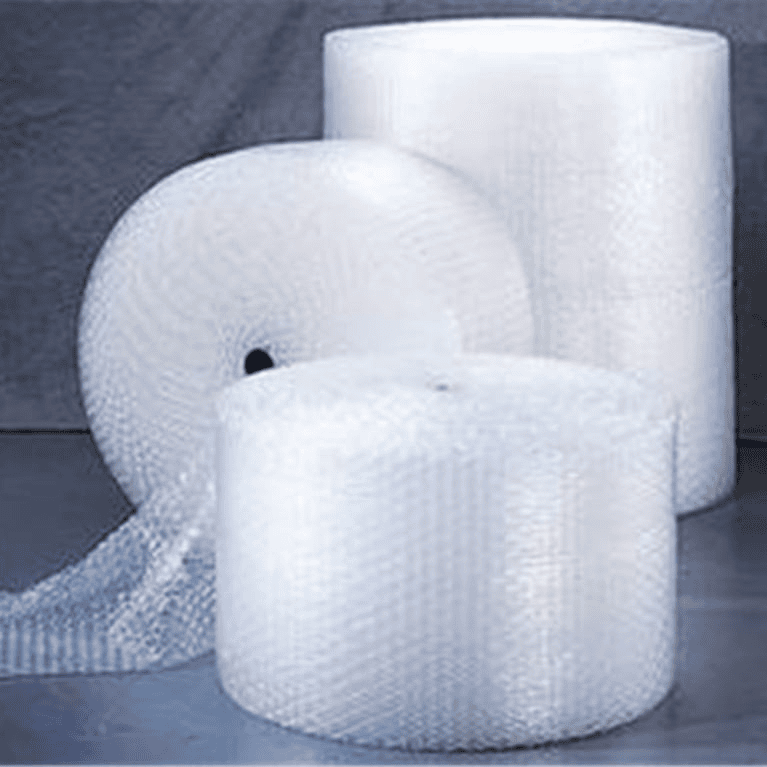
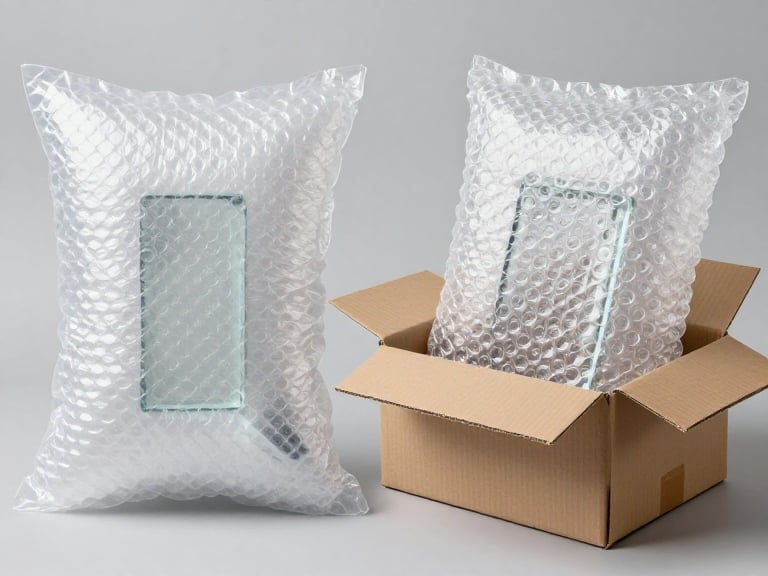
This is the baseline of the industry. Characterized by its continuous sheets of hemispherical air pockets, standard bubble wrap is incredibly versatile. It is typically manufactured in two primary cell diameters: 10mm (small bubble) for surface protection and scratch resistance on delicate items like smartphone screens, and 25mm (large bubble) for aggressive shock absorption on heavier items.
Instead of forcing your warehouse laborers to manually cut and tape massive rolls—which destroys your fulfillment velocity—we recommend transitioning to pre-cut Air Bubble Wrap & Pouch formats. These ready-to-use sleeves allow workers to simply slide the component inside, instantly reducing packaging labor time by up to 60%. This is the fundamental, everyday workhorse among the types of bubble wrap packaging.
2.2 Heavy-Duty Air Column Wrap
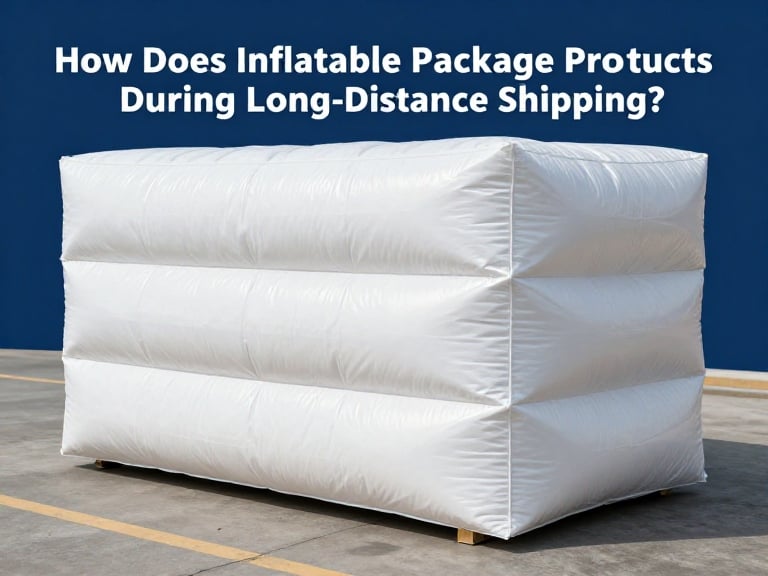
When protecting dense, high-value cylindrical objects like industrial optics, premium liquor, or specialized medical ceramics, standard hemispherical bubbles will completely collapse under the weight. You require extreme structural rigidity. The Air Column Wrap is a radical advancement in pneumatic defense.
This wrap utilizes continuous, parallel tubular chambers inflated to a high PSI. What separates this from inferior packaging is the implementation of independent check valves. If a careless courier punctures one specific column with a forklift tine, only that single column deflates; the rest of the array remains fully pressurized and structurally sound. It acts as an impenetrable pneumatic ribcage around your product.
2.3 Precision Pre-Formed Air Column Bags
Taking the column technology one step further, pre-formed bags eliminate the need to manually wrap and secure the film. A custom Air Column Bag is heat-sealed into a specific geometric shape (such as a laptop sleeve, a toner cartridge housing, or a wine bottle cradle). The item is inserted while the bag is flat, and a single air nozzle inflates the entire structure in three seconds, instantly locking the product into an immobilized state.
From our experience outfitting major electronics exporters, transitioning to these pre-formed bags drastically reduces the dimensional weight (DIM weight) of the final parcel compared to using massive, oversized boxes filled with styrofoam peanuts. It is one of the most financially efficient types of bubble wrap packaging for high-ticket consumer goods.
2.4 Eco-Friendly Compostable Bubble Wrap
In 2026, corporate sustainability is no longer a public relations talking point; it is a strict regulatory requirement in markets like the European Union and progressive North American states. Relying entirely on virgin petrochemical plastics will soon subject your operations to massive environmental taxation and outright import bans.
Integrating Compostable Bubble Wrap into your outbound fulfillment is a critical strategic pivot. Manufactured from advanced polylactic acid (PLA) and cornstarch derivatives (PBAT), these films maintain the kinetic shock absorption of standard plastics but fully break down into organic biomass in commercial composting facilities within 180 days. If your brand targets the premium or eco-conscious demographic, adopting this specific category among the types of bubble wrap packaging is an absolute necessity.
2.5 High-Volume Air Pillow Film
Not all packaging requires wrapping. When a product is already secured in a retail box but placed inside a larger master carton, the empty space (the void) allows the item to shift violently during transit. This kinetic shifting is the primary cause of corner crushing and internal component detachment.
To eliminate this, you must aggressively block and brace the cargo. Deploying Air Pillow Film is the ultimate solution for rapid void fill. These continuous chains of large, inflated polyethylene cushions are produced on-demand by desktop machines at the packing station. By shipping the film completely flat on rolls, you save massive amounts of warehouse storage space compared to storing pre-inflated materials.
2.6 Integrated Bubble Mailers
In the ultra-competitive landscape of direct-to-consumer e-commerce, fulfillment speed dictates survival. For non-fragile or semi-fragile items like apparel, books, or small cosmetics, utilizing a rigid corrugated box and separate internal void fill is a massive waste of both labor and postage costs.
Transitioning to an integrated Bubble Mailer combines a weather-resistant, tear-proof poly exterior with a continuous inner lining of protective bubble film. The self-sealing adhesive strip allows a warehouse worker to pack, seal, and label the unit in under ten seconds. It is the most streamlined, high-velocity format available within the various types of bubble wrap packaging.
3. Beyond the Bubble: Complementary Structural Defenses
While pneumatic films are exceptional at absorbing kinetic shock, they are entirely useless against crushing forces if the outer shell of the parcel collapses. You must build a comprehensive defense matrix. The foundational strength of your shipment relies heavily on the quality of the Corrugated Box & Rigid Boxes you select. We mandate the use of double-wall corrugated board for any international shipment exceeding 15 kilograms.
To secure these heavy-duty cartons against the immense shearing forces of automated sorting belts, you cannot use cheap, brittle adhesives. You must aggressively tape all seams utilizing high-tensile Packing Tape/BOPP Tape (Biaxially Oriented Polypropylene), which resists tearing even under extreme tension. Furthermore, if you are shipping massive industrial components or automotive parts, pneumatic air bags may puncture. In these heavy-industrial scenarios, we deploy dense, closed-cell polymer solutions. Surrounding the object with EPE FOAM (Expanded Polyethylene) provides a resilient, non-abrasive cradle, while custom-routed EVA FOAM (Ethylene-Vinyl Acetate) inserts completely immobilize heavy, asymmetrical tools inside their transit cases.
4. Summary Matrix: Choosing Your Packaging Arsenal
To assist your procurement and operations teams in selecting the exact types of bubble wrap packaging required for your supply chain, we have synthesized the core engineering attributes into an uncompromising reference matrix.
| Packaging Format | Core Engineering Strength | Optimal Deployment Profile | Logistical Advantage |
|---|---|---|---|
| Standard Bubble Pouches | Surface protection, rapid insertion. | Smartphones, cosmetics, small electronics. | Slashes manual cutting and taping labor. |
| Air Column Wrap / Bags | Independent air chambers, high PSI rigidity. | Wine bottles, hard drives, precision ceramics. | Prevents catastrophic failure if one chamber punctures. |
| Compostable Bubble Film | PLA/PBAT organic breakdown. | Eco-conscious retail, European markets. | Eliminates virgin plastic taxation and brand backlash. |
| Air Pillow Film | Massive volumetric expansion. | Blocking and bracing inside master cartons. | Stored flat on rolls, freeing up massive warehouse space. |
| Integrated Bubble Mailers | All-in-one shell and internal cushioning. | Apparel, books, semi-fragile retail goods. | Maximizes fulfillment velocity; drastically lowers DIM weight. |
5. Frequently Asked Questions (FAQs)
Why does my bubble wrap arrive flat or deflated after shipping overseas?
From our engineering experience, this is the classic failure of cheap, single-extrusion LDPE film. Without a nylon co-extruded barrier layer, the air physically permeates through the plastic structure over time. If you are shipping via ocean freight or air cargo, you must strictly specify barrier-retaining films to prevent “creep” and deflation during transit.
Are the different types of bubble wrap packaging completely anti-static?
No, standard clear bubble wrap generates a massive triboelectric charge when unwound or rubbed against materials, which will instantly destroy exposed motherboards or microchips. If you are shipping sensitive electronic components, you must specifically procure “Pink Anti-Static” (ESD) bubble wrap, which is chemically treated to safely dissipate static electricity.
Can I inflate air column bags using a standard warehouse air compressor?
While physically possible, we absolutely advise against it unless you are using a strictly regulated pressure gauge. Air column bags are engineered to hold a specific PSI to maintain their shock-absorbing properties. Blasting them with an unregulated, high-pressure industrial compressor will violently rupture the independent check valves, rendering the entire bag useless. You must use calibrated inflation machines.
6. Official Industry References
To ensure your logistics operations comply with verified global transit standards and environmental mandates, we strongly advise consulting the following authoritative bodies regarding the different types of bubble wrap packaging:
- ASTM International – Packaging Standards: The premier global organization detailing the rigorous mechanical drop-testing protocols, vibration tolerances, and barrier retention requirements for flexible pneumatic packaging materials.
- U.S. Environmental Protection Agency (EPA) – Plastics Data: Authoritative federal data on the life-cycle analysis of polyethylene packaging, recycling infrastructure limitations, and the critical regulatory shift toward compostable and bio-based polymer alternatives.
- International Safe Transit Association (ISTA): The definitive engineering body dictating how packaging structures must be designed, tested, and certified to survive the extreme kinetic violence of modern e-commerce delivery networks.