Choosing foam for electronics packaging is not simply a question of which material feels softer or looks more premium. The right insert must control movement, absorb the shocks your product is likely to experience, fit the product accurately and protect sensitive components without creating avoidable cost. In the comparison of EVA foam vs. EPE foam for electronics packaging, our practical position is clear: EPE is usually the better starting point for cost-effective protective packaging, while EVA is worth the upgrade when a product needs a precise, durable, presentation-focused insert or repeated-use protection.
Direct Answer: Should You Choose EVA or EPE Foam?
For most high-volume electronics shipments, we recommend evaluating EPE foam first. Expanded polyethylene is lightweight, resilient and available in different densities and thicknesses. It is well suited to cushioning electronic devices, accessories and components inside shipping cartons, especially when the insert design distributes impact loads and prevents movement.
Choose EVA foam when the packaging has to do more than protect a product during one shipment. EVA is often preferred for custom-cut presentation cases, reusable equipment kits, premium product packaging and applications that need a more refined surface or specific firmness. It can deliver a more finished appearance, but the added material and conversion cost must be justified by the product’s requirements.
Neither material is automatically anti-static or ESD-safe. If you are packaging circuit boards, memory modules, sensors or other electrostatic-discharge-sensitive devices, specify and validate the required ESD packaging system separately. A foam insert that cushions a product well may still be unsuitable for direct contact with sensitive electronics.
EPE foam is generally the more economical choice for lightweight, protective electronics packaging and larger production runs. EVA foam is often the stronger choice for precision-cut, reusable or premium inserts where appearance, shape retention and a controlled fit matter. Make the final decision using density, hardness, thickness, geometry, product weight, shock testing and ESD requirements—not material names alone.
- What Are EVA Foam and EPE Foam?
- 6 Key Aspects in the EVA vs. EPE Foam Comparison
- EVA Foam vs. EPE Foam Comparison Table
- Benefits and Limitations of Each Material
- Which Foam Is Better for Different Electronics?
- ESD Protection: A Critical Electronics Packaging Detail
- Common Foam Packaging Mistakes
- How to Choose a Foam Packaging Manufacturer
- Mailong Packaging’s Recommendation
- Frequently Asked Questions
- References
What Are EVA Foam and EPE Foam?
What is EPE foam?
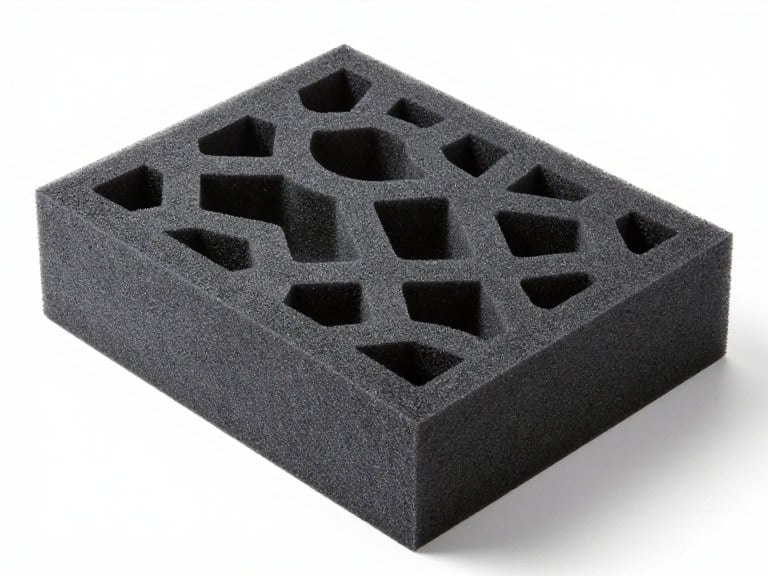
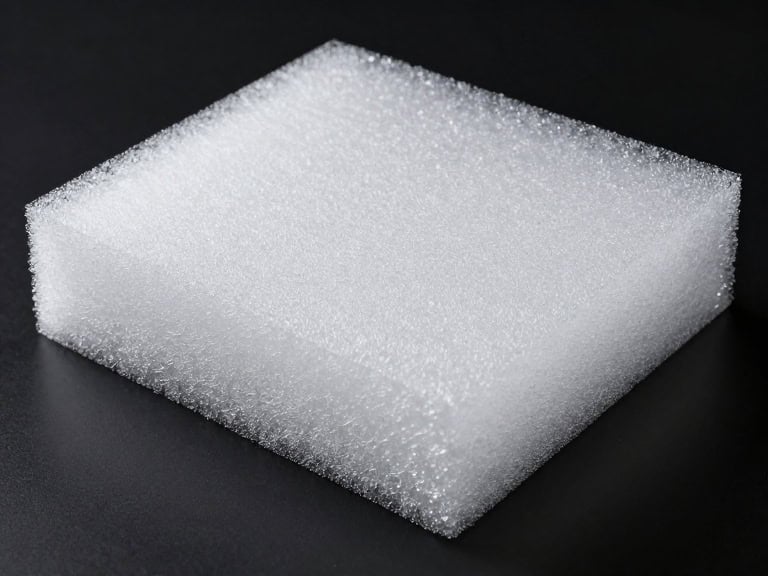
EPE stands for expanded polyethylene. It is a closed-cell foam made from polyethylene resin. Its cellular structure gives it a low weight and cushioning capability, making it common in protective packaging, appliance packaging, electronics inserts and industrial transit protection.
EPE is available in different densities, thicknesses and forms. It can be cut, laminated, shaped or fabricated into custom inserts. Its performance depends heavily on formulation and density. A low-density sheet and a higher-density engineered insert should not be treated as equivalent simply because both are called EPE.
For practical shipping protection, EPE is attractive because it can provide useful cushioning without adding much package weight. It is particularly suitable when a buyer needs repeatable protection at a controlled unit cost.
What is EVA foam?
EVA stands for ethylene-vinyl acetate. EVA foam is produced from a polymer blend that creates a flexible, closed-cell material. It is available in a range of hardness levels, densities, colors and surface finishes. It can be die-cut, CNC-cut, molded or laminated, depending on the design and production requirements.
In electronics packaging, EVA is often selected for custom-fit inserts, tool and equipment cases, premium presentation boxes and reusable storage solutions. It can hold a defined shape and provide a clean, professional appearance when properly specified and fabricated.
However, EVA is not automatically more protective than EPE. A firm EVA insert with poorly designed contact points can transfer excessive force to a fragile product. A correctly engineered EPE insert can outperform it in a particular drop scenario. Material selection and insert geometry must be considered together.
EVA Foam vs. EPE Foam for Electronics Packaging: 6 Key Aspects
1. Cushioning and Shock Absorption
Electronics packaging must manage the energy created when a parcel is dropped, struck or exposed to vibration. Foam cushioning works by deforming under load and spreading or absorbing part of that energy. The objective is not simply to choose the softest foam. The insert must compress enough to cushion the product without bottoming out or allowing the device to hit the outer carton.
EPE is a practical choice for many transit applications because it is lightweight and available in cushioning grades suitable for protective inserts. It can be engineered with shaped end caps, corner blocks or layered structures. For products with predictable shipping loads, this is often a cost-effective solution.
EVA can be useful when the insert needs a more controlled fit around a product, particularly in a case or reusable package. Its firmness can help locate equipment and prevent movement. But a very firm insert is not necessarily a better shock absorber. If it does not deform appropriately under the expected impact, it may transmit more force to the device.
Our recommendation: Compare candidate foams using the product’s weight, fragility, cushioning thickness and expected drop conditions. Ask for physical samples and test the complete packed product. Do not choose from a hand-squeeze test alone.
2. Density, Hardness and Compression Behavior
Density and hardness are related but different properties. Density describes mass per unit volume. Hardness describes resistance to indentation under a specified test method. Two foams with similar density can feel different, and two foams with similar hardness can behave differently under impact or repeated compression.
EPE is offered in multiple density grades, allowing packaging designers to balance cushioning, support and cost. EVA also comes in different densities and hardness levels, which makes it suitable for inserts requiring a particular feel or fit. In both cases, a supplier should provide technical specifications for the actual grade being quoted.
For electronics, the correct specification depends on the load placed on the foam. A heavy power supply, metal instrument or industrial controller needs different support from a lightweight plastic accessory. If a product has delicate screens, protruding connectors or fragile corners, the insert must prevent concentrated pressure at those points.
Practical advice: Provide the manufacturer with product dimensions, weight, center of gravity, fragile areas and packaging orientation. Request a proposed foam grade and insert drawing rather than asking for “soft foam” or “hard foam.”
3. Fit, Cutting Precision and Design Flexibility
Electronics packaging often contains more than one item: the main device, cables, power adapters, remote controls, manuals and accessories. Each item needs a defined position. Poor fit creates movement during transport, while an overly tight cavity can make removal difficult or place pressure on buttons, screens and connectors.
EVA is frequently chosen for precision-cut inserts and presentation cases because it can be fabricated into clean cavities and organized compartments. It is a strong option when the package is opened repeatedly or when the layout contributes to the perceived quality of the product.
EPE can also be converted into custom shapes, laminated layers and fitted end supports. It is often a better cost choice for protective transit packaging, particularly when the design can use simple blocks, profiles or die-cut components rather than intricate multi-level cavities.
From our experience, the most economical design is not necessarily the one with the fewest cutting operations. It is the one that achieves a secure fit with the least material and the simplest repeatable manufacturing process.
4. Durability and Repeated Use
Some electronics packaging is discarded after delivery. Other packaging becomes a storage case that is opened and closed hundreds of times. These are different design problems and should not use the same material specification by default.
EVA is often a good candidate for reusable equipment cases, field-service kits and premium product inserts. A suitable grade can maintain a defined cavity shape and provide a tidy interior over repeated handling. The actual service life still depends on foam formulation, compression, abrasion, cleaning chemicals and the way users remove the equipment.
EPE is useful for one-way shipping protection and can also be used in reusable packaging where the design and grade are appropriate. However, repeated compression, tearing at thin sections and damage around tight cavities should be evaluated if the insert will be used frequently.
Recommendation: If the packaging is used once for distribution, do not pay for reusable-case performance that the customer will never use. If the insert is part of a service kit or returnable transit system, test repeated insertion, removal and compression before approving production.
5. Weight, Cost and Total Packaging Value
Material price alone does not determine the cost of a packaging solution. The buyer should consider foam consumption, cutting time, scrap rate, assembly labor, outer carton size, freight weight, damage risk and the cost of replacing a damaged product.
EPE is commonly a cost-effective option for large-volume protective packaging. Its low weight can help keep shipping weight down, while straightforward profiles and blocks can be efficient to produce. This makes it attractive for electronics manufacturers shipping many units through distribution networks.
EVA may carry a higher material or fabrication cost depending on grade, thickness, color and cutting complexity. That additional cost can be worthwhile for a premium retail presentation, a reusable case or a product where precise organization improves the user’s experience. It is harder to justify if the only requirement is basic cushioning inside a shipping carton.
For commercial buyers, calculate cost per protected shipment rather than cost per sheet. A slightly more expensive insert can be the better investment if it reduces damage, packing labor or product movement. Equally, an expensive EVA insert is poor value if a properly designed EPE insert provides the same verified protection.
6. Surface Finish, Moisture and ESD Requirements
EVA is often selected when appearance matters. It is available in different colors and finishes and can create a more polished interior for product cases and presentation packaging. EPE generally has a more utilitarian appearance, which is often perfectly acceptable for internal transit protection.
Both materials are closed-cell foams, but that does not mean every grade has identical moisture resistance, chemical compatibility or surface behavior. Packaging designers should consider exposure to humidity, oils, cleaning agents, adhesives and other substances relevant to the product’s supply chain.
For electronics, the most important additional issue may be electrostatic discharge. Standard EVA or EPE foam should not be assumed to be conductive, dissipative or antistatic. If the device is ESD-sensitive, specify the required packaging properties and use a validated packaging system. Depending on the application, this may involve static-dissipative materials, conductive components, shielding bags and controlled handling procedures.
Our recommendation: Treat ESD protection as a separate engineering requirement. Ask for documented electrical properties and test evidence for the exact foam grade and finished packaging—not a general statement that the material is “anti-static.”
EVA Foam vs. EPE Foam: Comparison Table
| Comparison factor | EPE foam | EVA foam | Practical choice |
|---|---|---|---|
| Material type | Expanded polyethylene | Ethylene-vinyl acetate foam | Choose by required performance, not the name alone |
| Typical packaging role | Transit cushioning, protective blocks, end caps and inserts | Custom cavities, reusable cases and presentation inserts | EPE for many shipping applications; EVA for defined fit and presentation |
| Density options | Available in different density grades | Available in different density grades | Compare actual grade data and samples |
| Firmness | Varies by formulation and density | Varies by formulation and density | Specify hardness and compression behavior |
| Shock protection | Can provide effective cushioning when correctly engineered | Can provide effective cushioning when correctly engineered | Validate the complete package through testing |
| Precision inserts | Can be cut, shaped and laminated | Often used for detailed cavities and organized layouts | EVA may suit intricate reusable inserts; EPE can be more economical for simpler shapes |
| Appearance | Usually practical and functional | Often available in more presentation-oriented finishes | EVA for premium case interiors |
| Repeated use | Depends on grade and design | Often selected for reusable inserts and cases | Test compression and wear cycles |
| Cost position | Often economical for volume protective packaging | Can cost more, particularly with complex fabrication | Compare finished-part cost, not raw material price only |
| ESD suitability | Standard grade is not automatically ESD-safe | Standard grade is not automatically ESD-safe | Specify and verify ESD properties separately |
Quick Summary Table: Which Foam Should You Choose?
| Your packaging requirement | Starting recommendation | Reason |
|---|---|---|
| High-volume electronics shipping | EPE | Often offers a practical balance of cushioning, low weight and cost |
| Premium retail presentation case | EVA | Useful for defined cavities and a more finished interior |
| Reusable field-service kit | EVA, subject to testing | Can support repeated handling and organized tool layouts |
| Simple corner and edge protection | EPE | Often efficient to fabricate into blocks and profiles |
| Fragile electronic instrument | Either, after testing | Product weight, fragility and shock response determine the design |
| ESD-sensitive circuit board | Verified ESD packaging system | Neither standard EPE nor standard EVA guarantees ESD protection |
Pros and Cons of EVA and EPE Foam
| Material | Pros | Cons |
|---|---|---|
| EPE foam |
|
|
| EVA foam |
|
|
Which Foam Is Better for Different Electronics?
Laptops, tablets and monitors
For standard distribution packaging, EPE end supports or custom inserts can be an economical way to protect corners and edges while keeping the device away from the carton walls. The design should prevent the screen from bearing concentrated loads. EVA may be appropriate for a premium carrying case or reusable protective sleeve insert, but it is not automatically the best choice for a one-way shipping carton.
Printed circuit boards and electronic components
For bare PCBs, semiconductors and other ESD-sensitive components, prioritize electrostatic protection before choosing between ordinary foam grades. Use packaging materials with verified electrical properties and a system appropriate to the component’s ESD sensitivity. Foam can provide physical separation and cushioning, but it should not replace the required ESD shielding or handling controls.
Power supplies, adapters and industrial controllers
These products may be heavier than their size suggests. EPE blocks, end caps or shaped cavities can provide a cost-effective solution if the foam has sufficient support and the package is tested. EVA can be useful for service kits where the controller, cables and accessories must remain organized during repeated transport.
Precision instruments and premium equipment
For high-value instruments, a custom EVA insert may be worth the additional cost because it can hold the device and accessories in a defined layout. However, the insert must not put pressure on calibration controls, delicate connectors or protruding components. EPE remains a viable option where the goal is impact protection rather than presentation.
ESD Protection: A Critical Detail in Electronics Packaging
One of the most common misconceptions in electronics packaging is that any foam insert is safe for circuit boards because it is soft and non-metallic. That assumption is incorrect. Electrostatic discharge can damage sensitive electronic components, and the packaging system needs to be selected according to the device’s ESD sensitivity and the handling environment.
When a product requires ESD protection, buyers should identify whether the application calls for conductive, dissipative or shielding packaging. These terms describe different electrical behaviors and should not be used interchangeably. Ask the supplier for test methods, measured electrical properties and documentation for the exact material grade.
In many cases, foam is only one part of the solution. A static-shielding bag, appropriate tray or enclosure, controlled work area and correct handling process may also be required. Do not rely on a generic “anti-static foam” description without evidence that the finished package meets the applicable requirements.
Common Mistakes When Comparing EVA Foam vs. EPE Foam
- Choosing by softness. Softness alone does not predict protection. The foam must be matched to product weight, fragility, available thickness and expected shock conditions.
- Assuming EVA is always stronger. EVA may be firmer or more presentation-oriented, but it is not universally superior for impact protection. A well-designed EPE insert can be the better shipping solution.
- Buying by density without checking hardness. Density and indentation hardness are different properties. Ask for the relevant technical data for the exact grade.
- Ignoring the complete package. Foam, carton strength, internal clearance, product orientation and closure method work together. A good insert inside an unsuitable carton can still fail.
- Overlooking ESD requirements. Ordinary foam should not be assumed to protect sensitive circuit boards from electrostatic discharge.
- Skipping drop and vibration testing. A sample that looks suitable on a desk may not protect the product during actual distribution. Test the packed product under conditions representative of its supply chain.
- Comparing only material price. Cutting complexity, assembly time, scrap, freight, product damage and replacement costs all affect total packaging cost.
For broader protective packaging options, compare foam inserts with air column wrap, air pillow film and air bubble wrap and pouches. These materials serve different roles. Foam is useful for fitted support and separation; inflatable cushioning can help fill voids or protect products with different shapes. A combined solution may be more practical than forcing one material to do every job.
How to Choose an EVA or EPE Foam Packaging Manufacturer
For B2B buyers, choosing the right material is only half the decision. The manufacturer’s ability to translate a product drawing into a repeatable insert matters just as much. A supplier should ask about the product, the shipping route, the packaging line and the required protection level before recommending a grade.
1. Share a complete product specification
Provide dimensions, weight, fragile points, accessories, orientation and any restrictions on contact with the product. Photographs and a 3D drawing can help the manufacturer identify cavities, support points and assembly requirements. If the product is ESD-sensitive, include the ESD classification or packaging requirement at the start.
2. Ask for material data, not just a sample
Request the foam type, density, thickness, hardness or compression data where relevant, and any ESD test information required for the application. A physical sample is useful, but it should be traceable to a defined material grade. Otherwise, a sample approval may not guarantee that future production uses the same specification.
3. Evaluate converting capability
Ask how the manufacturer will make the insert: die cutting, CNC cutting, lamination, molding or another process. The right method depends on cavity complexity, tolerances, order volume and tooling cost. For repeat orders, confirm how drawings, tooling and approved samples are controlled.
4. Test the complete packaging system
Do not approve foam in isolation. Pack the actual product in the proposed outer carton and evaluate the full package. Depending on the distribution risk, testing may include drop, vibration, compression and handling simulations. Use recognized test methods where applicable and define acceptance criteria before mass production.
5. Compare total landed cost
Ask for a quotation that separates material, conversion, tooling, assembly and packaging costs where possible. Compare freight volume and weight as well as unit price. A supplier that can simplify the insert design or reduce scrap may deliver better value than one offering a lower raw-material price.
6. Check quality control and production consistency
Confirm how incoming material, dimensions, density, appearance and finished-part tolerances are checked. Ask how nonconforming products are handled and how the supplier keeps approved specifications consistent between batches. Packaging quality is a production process, not just a material selection exercise.
For related protective packaging projects, review our approach to packaging quality control. If your design also needs a rigid outer structure, compare corrugated boxes and rigid boxes as part of the complete packaging specification.
Mailong Packaging’s Expert Recommendation
Our recommendation is to start with the application, not a preferred foam name. For most cost-sensitive electronics shipping projects, EPE should be the first material evaluated. It can provide practical cushioning, custom shapes and lightweight protection without adding unnecessary premium material cost. If the product requires a reusable case, a carefully defined cavity layout or a more refined presentation, evaluate EVA and compare the finished insert cost against the benefits.
For fragile or high-value electronics, do not approve either material based on appearance or touch alone. Request a prototype, confirm the material grade and test the complete packed product. If ESD sensitivity is involved, specify the electrical performance separately and require evidence for the exact material and packaging configuration.
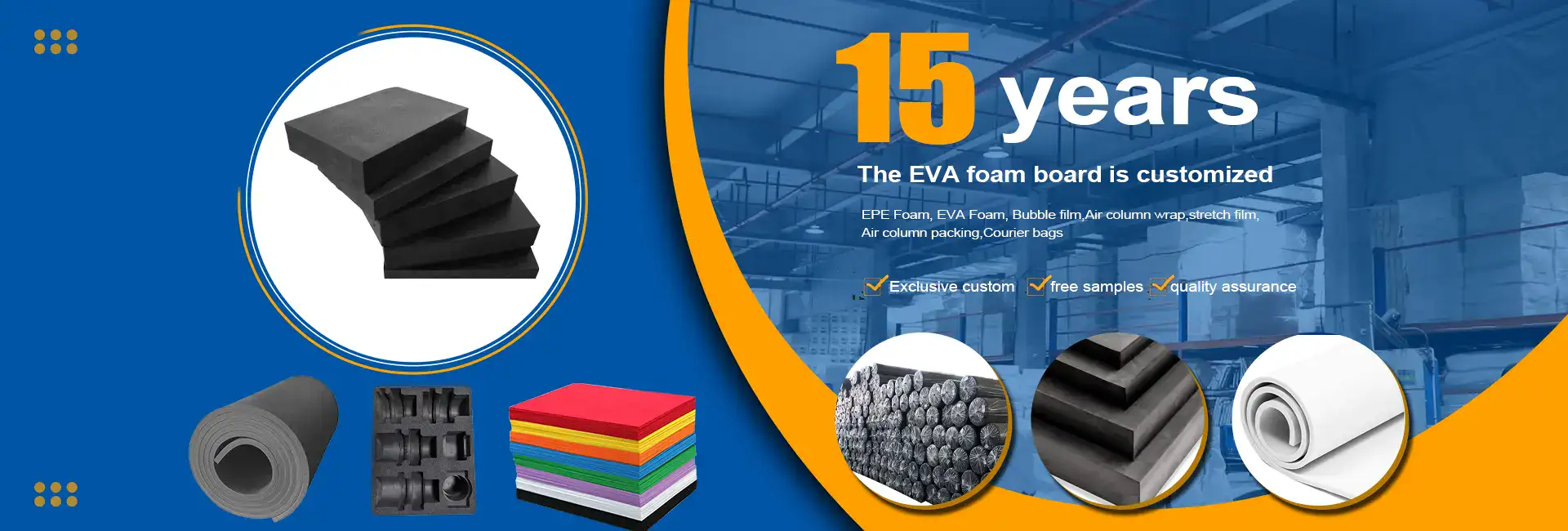
Mailong Packaging Co., Ltd. was established in 2009 and manufactures and exports protective packaging materials, including EPE and EVA foam, inflatable bubble and pillow film, air column rolls and bags, poly mailers, stretch wrap, bubble mailers, BOPP tape and corrugated boxes. The company serves overseas markets in more than 30 countries. For electronics packaging projects, this broader product range can be useful when a buyer needs foam inserts alongside outer cartons or complementary cushioning materials.
Explore Mailong Packaging Solutions
Discuss custom EPE or EVA foam inserts, protective packaging materials and coordinated packaging solutions for electronics and industrial products.
When requesting a quotation, send the product dimensions, weight, photographs or drawings, annual quantity, required packaging method and destination market. Include any ESD requirements, expected reuse cycles and relevant drop-test conditions. With those details, a manufacturer can recommend a material and insert design based on performance and cost rather than guesswork.
Frequently Asked Questions
1. Is EVA foam or EPE foam better for electronics packaging?
Neither is universally better. EPE is often the more economical starting point for protective shipping inserts, while EVA is frequently chosen for precision-cut, reusable or premium presentation inserts. The right choice depends on product weight, fragility, insert design, shipping conditions and budget.
2. Does EVA foam absorb shock better than EPE foam?
Not in every application. Shock performance depends on density, hardness, thickness, compression behavior and insert geometry. A properly designed EPE insert may protect a particular product better than an overly firm EVA insert. Test the complete package before approval.
3. Is EPE foam suitable for packaging circuit boards?
EPE can provide physical cushioning, but standard EPE should not be assumed to be ESD-safe. For bare circuit boards and sensitive electronic components, specify an appropriate ESD packaging system and request documented electrical properties for the exact material grade.
4. Is EVA foam more expensive than EPE foam?
EVA can cost more depending on its grade, thickness, color and fabrication complexity. EPE is often economical for high-volume protective packaging. Compare the total cost of the finished insert, including cutting, assembly, scrap, freight and potential product damage.
5. Can EVA and EPE foam be used together?
Yes. A packaging design can combine materials when each performs a defined function. For example, a design may use a shaped foam insert for product positioning and another cushioning material for outer protection. The combination should be tested as a complete package to confirm fit, impact performance and cost.
6. Which foam is better for reusable electronics cases?
EVA is often a strong candidate for reusable cases because it can be fabricated into organized cavities and a finished interior. However, the correct grade and thickness still depend on the equipment’s weight and handling conditions. Test wear, compression and removal cycles before selecting it for long-term use.
7. What information should I send a foam packaging manufacturer?
Provide product dimensions, weight, photographs or CAD drawings, fragile areas, annual quantity, shipping conditions, required insert layout and budget. State whether the packaging is single-use or reusable and identify any ESD requirements. These details help the manufacturer recommend a suitable foam grade and fabrication method.
8. How do I test foam packaging for electronics?
Test the complete product inside the intended insert and outer carton. Depending on the distribution environment, use suitable drop, vibration and compression tests, with acceptance criteria defined in advance. For ESD-sensitive products, separately verify the electrical performance of the packaging system.
References
- ASTM International – ASTM D3575, Standard Test Methods for Flexible Cellular Materials Made from Olefin Polymers. Relevant test-method reference for evaluating properties of flexible cellular olefin foams. Confirm the current edition and applicable test method when writing a procurement specification.
- ESD Association – ESD Standards. Standards resources for electrostatic-discharge control and packaging requirements. Select the applicable standard based on the product and packaging system.
- ASTM International – ASTM D5276, Standard Test Method for Drop Test of Loaded Containers by Free Fall. A recognized method relevant to evaluating the drop performance of a complete packaged product.
{
“@context”: “https://schema.org”,
“@type”: “Article”,
“headline”: “EVA Foam vs. EPE Foam for Electronics Packaging: 6 Key Aspects”,
“description”: “Compare EVA foam and EPE foam for electronics packaging across cushioning, density, fit, durability, cost and ESD requirements, with practical advice for choosing a packaging manufacturer.”,
“author”: {
“@type”: “Organization”,
“name”: “Mailong Packaging”
},
“publisher”: {
“@type”: “Organization”,
“name”: “Mailong Packaging”,
“url”: “https://mailongpak.com/”
},
“mainEntityOfPage”: “https://mailongpak.com/”
}
{
“@context”: “https://schema.org”,
“@type”: “FAQPage”,
“mainEntity”: [
{
“@type”: “Question”,
“name”: “Is EVA foam or EPE foam better for electronics packaging?”,
“acceptedAnswer”: {
“@type”: “Answer”,
“text”: “EPE is often the more economical starting point for protective shipping inserts, while EVA is frequently chosen for precision-cut, reusable or premium presentation inserts. The right choice depends on product weight, fragility, insert design, shipping conditions and budget.”
}
},
{
“@type”: “Question”,
“name”: “Does EVA foam absorb shock better than EPE foam?”,
“acceptedAnswer”: {
“@type”: “Answer”,
“text”: “Not in every application. Shock performance depends on density, hardness, thickness, compression behavior and insert geometry. Test the complete package before approval.”
}
},
{
“@type”: “Question”,
“name”: “Is EPE foam suitable for packaging circuit boards?”,
“acceptedAnswer”: {
“@type”: “Answer”,
“text”: “EPE can provide physical cushioning, but standard EPE should not be assumed to be ESD-safe. Specify an appropriate ESD packaging system and request documented electrical properties for the exact material grade.”
}
},
{
“@type”: “Question”,
“name”: “Is EVA foam more expensive than EPE foam?”,
“acceptedAnswer”: {
“@type”: “Answer”,
“text”: “EVA can cost more depending on its grade, thickness, color and fabrication complexity. EPE is often economical for high-volume protective packaging. Compare the total cost of the finished insert.”
}
},
{
“@type”: “Question”,
“name”: “Can EVA and EPE foam be used together?”,
“acceptedAnswer”: {
“@type”: “Answer”,
“text”: “Yes. A packaging design can combine materials when each performs a defined function. Test the combination as a complete package to confirm fit, impact performance and cost.”
}
},
{
“@type”: “Question”,
“name”: “Which foam is better for reusable electronics cases?”,
“acceptedAnswer”: {
“@type”: “Answer”,
“text”: “EVA is often a strong candidate for reusable cases because it can be fabricated into organized cavities and a finished interior. The correct grade and thickness still depend on equipment weight and handling conditions.”
}
},
{
“@type”: “Question”,
“name”: “What information should I send a foam packaging manufacturer?”,
“acceptedAnswer”: {
“@type”: “Answer”,
“text”: “Provide product dimensions, weight, photographs or CAD drawings, fragile areas, annual quantity, shipping conditions, required insert layout and budget. State whether the packaging is single-use or reusable and identify any ESD requirements.”
}
},
{
“@type”: “Question”,
“name”: “How do I test foam packaging for electronics?”,
“acceptedAnswer”: {
“@type”: “Answer”,
“text”: “Test the complete product inside the intended insert and outer carton. Depending on the distribution environment, use suitable drop, vibration and compression tests. For ESD-sensitive products, separately verify the electrical performance of the packaging system.”
}
}
]
}