In the highly competitive world of commercial logistics and product presentation, shipping weight is a merciless margin killer. Every ounce added to a parcel translates directly to increased dimensional weight charges and freight penalties. When product designers and procurement managers ask us about material specifications, the question invariably arises: Is EVA foam lightweight? Consumers often assume that because a material is a “foam,” it automatically guarantees a feather-light shipping profile. However, engineering reality is far more nuanced.
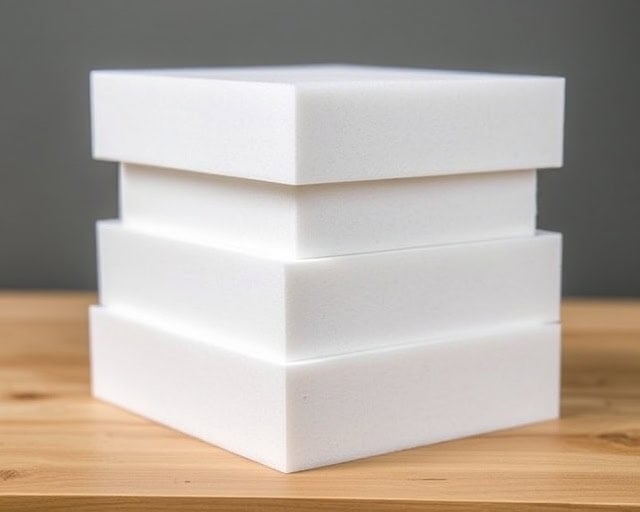
From our experience at Mailongpak, operating as one of the leading global Protective Packaging Companies, treating all foam as equal is a fast track to operational failure. Ethylene-Vinyl Acetate (EVA) foam occupies a very specific structural niche. You cannot simply substitute it blindly for bubble wrap or corrugated cardboard without understanding its density profile. In most professional situations, specifying the correct foam requires applying strict commercial and practical judgment. In this comprehensive guide, we strip away the marketing jargon and explain exactly how heavy EVA foam is, whether it is actually worth using for your specific application, and how it compares to its direct industrial alternatives.
Quick Answer: Is EVA Foam Lightweight?
Yes, EVA foam is fundamentally a lightweight material, but it is considered a high-density lightweight foam when compared to other packaging alternatives.
- The Baseline: A standard cubic meter of EVA foam weighs between 30 kg and 400 kg depending on the expansion ratio during manufacturing.
- The Comparison: It is significantly lighter than solid plastics, rubber, or wood. However, it is noticeably heavier and denser than EPE FOAM (Expanded Polyethylene) and standard Polyurethane (PU) foams.
We recommend EVA foam for applications where absolute structural rigidity, impact resistance, and premium aesthetics are more critical than saving fractional ounces on shipping weight. If your sole goal is the absolute lightest possible void fill, EVA is not the correct choice.
Table of Contents
- What It Is: The Molecular Structure of EVA Foam
- How It Works: Closed-Cell Buoyancy and Density
- The Benefits of Using EVA in Commercial Packaging
- The Limitations of EVA Foam’s Weight Profile
- Who Should Use It (And Who Does Not Need It)
- Common Mistakes When Specifying Foam Density
- Commercial Buying Considerations
- Comparison Table: EVA vs. EPE vs. PU
- Pros and Cons of EVA Foam Packaging
- Expert Recommendation & Product Spotlight
- Frequently Asked Questions
What It Is: The Molecular Structure of EVA Foam
Ethylene-Vinyl Acetate (EVA) is a copolymer produced by reacting ethylene and vinyl acetate. When we discuss EVA FOAM in the context of packaging, we are referring to this copolymer after it has been injected with a blowing agent and expanded under extreme heat and pressure. The resulting material is a tight, uniform network of closed microscopic bubbles.
The vinyl acetate content directly controls the material’s properties. A higher percentage of vinyl acetate makes the foam softer and more rubber-like, while a lower percentage makes it stiffer. Unlike open-cell foams which act like sponges, the closed-cell nature of EVA means that air and gas are permanently trapped inside individual cellular walls. This internal gas is what gives EVA its lightweight characteristics, despite the solid polymer walls providing immense structural integrity.
How It Works: Closed-Cell Buoyancy and Density
How it works regarding weight relies entirely on the metric of density, typically measured in kilograms per cubic meter (kg/m³). For beginners, it is crucial to understand that density equals mass divided by volume. When you order EVA foam, you dictate the density.
In our testing, standard packaging-grade EVA usually sits around 35 kg/m³ to 45 kg/m³. To put this in perspective, solid water is 1,000 kg/m³. Because the vast majority of the EVA volume is actually trapped air, it floats effortlessly on water and adds negligible weight to an overall package. However, if you require extreme shock absorption for military-grade electronics, you might specify a high-density EVA at 100 kg/m³. At this density, the foam becomes noticeably rigid and the weight begins to factor into freight calculations.
The Benefits of Using EVA in Commercial Packaging
The benefits of utilizing EVA foam stem from its unparalleled strength-to-weight ratio. You are achieving the protective capabilities of heavy rubber using a fraction of the mass. For commercial users, this means you can heavily protect luxury goods—like high-end watches, medical devices, or optical lenses—without triggering excessive dimensional weight penalties from carriers like UPS or FedEx.
Furthermore, EVA foam machines beautifully. It can be precision-cut via CNC routers or die-stamped with zero fraying. It holds a crisp, sharp edge that looks incredibly premium. When you open a high-end smartphone box and the device is sitting in a perfectly molded, rigid black insert, you are almost always looking at EVA foam. It provides a tactile, luxury unboxing experience that Flexible PU FOAM simply cannot replicate.
The Limitations of EVA Foam’s Weight Profile
We must use commercial judgment here: EVA is not the lightest option on the market. If you are shipping vast quantities of inexpensive, lightweight goods, the weight and cost of EVA become a distinct limitation. Because it is a denser closed-cell foam, it is heavier than its primary competitor, EPE foam.
Additionally, because of its dense cellular structure, EVA does not compress easily. If you over-specify the thickness of an EVA insert, you are paying to ship rigid air. In most professional situations where extreme low weight is the absolute priority over presentation, we guide clients to explore an Alternative to Bubble Wrap or standard poly mailers rather than investing in custom EVA.
Who Should Use It (And Who Does Not Need It)
Who Should Use It: We recommend EVA foam for heavy-duty applications, luxury retail presentation, tool inserts, cosmetic unboxing, and the transportation of sensitive diagnostic equipment. If your product costs over $100 and requires vibration dampening during transit, EVA is the superior commercial choice.
Who Does Not Need It: If you are shipping fast-fashion apparel, cheap plastic toys, or non-fragile bulk goods, EVA is a complete waste of capital. You do not need rigid structural protection. For these applications, you should source from Poly Mailer Bags for Clothes suppliers or utilize ultra-lightweight EPE Foam Sheets to save on freight.
Common Mistakes When Specifying Foam Density
The most catastrophic mistake we see procurement teams make is requesting “the lightest foam possible” for a heavy object. If you place a 10-pound steel tool into a low-density 20 kg/m³ foam, the weight of the tool will crush the cellular structure upon the first impact, rendering the protection useless.
Conversely, specifying a 120 kg/m³ EVA foam for a fragile, lightweight glass vial is equally damaging. The foam is so dense and rigid that it will transfer the shock directly to the glass rather than absorbing it. You must match the density and weight of the foam to the density and fragility of the product.
Commercial Buying Considerations
When you are negotiating with Packing Foam Sheets Suppliers, you must evaluate the total landed cost. EVA foam is manufactured in large buns (blocks) which are then skived (sliced) into sheets. Because it is denser than other foams, it takes up significant volumetric space in shipping containers. You are essentially paying to ship air across the ocean. To mitigate this, ensure your supplier has advanced CAD optimization to nest your die-cuts efficiently, minimizing scrap waste and maximizing the number of inserts per shipping carton.
Comparison Table: EVA vs. EPE vs. PU Foam Weights
| Foam Type | Average Density Range (kg/m³) | Weight Classification | Structural Feel | Best Application |
|---|---|---|---|---|
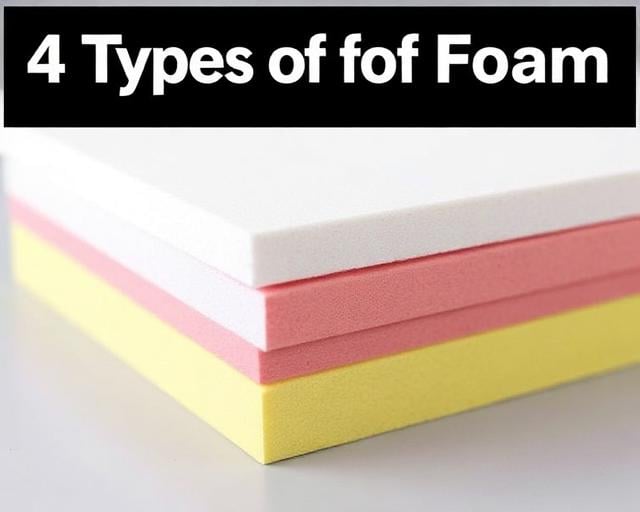
| EVA Foam | 30 – 400 | Light to Medium | Firm, rubbery, smooth | Luxury inserts, heavy tool casing |
| EPE Foam | 15 – 40 | Ultra-Lightweight | Slightly rigid, crinkly | Appliance protection, void fill |
| PU Foam (Flexible) | 10 – 30 | Ultra-Lightweight | Soft, spongy, open-cell | Egg-crate acoustic, light electronics |
Pros and Cons of EVA Foam Packaging
| Pros | Cons |
|---|---|
| Excellent strength-to-weight ratio; highly protective without adding massive freight costs. | Heavier than EPE or PU foam, which can marginally increase dimensional weight calculations. |
| Superior aesthetic finish; does not shed particulate matter like styrofoam. | Higher raw material and manufacturing costs compared to basic polyethylene foams. |
| Highly resilient; bounces back from repeated impacts and maintains structural integrity. | Requires specialized CNC or die-cutting tooling for custom insert shapes. |
| Waterproof and chemical resistant due to closed-cell molecular structure. | Can exhibit a slight “new foam” odor (off-gassing) upon initial unboxing. |
Expert Recommendation & Product Spotlight
From our experience, if you are asking whether EVA foam is lightweight enough for your project, the answer is almost always yes—provided you are using it for the correct application. We strongly recommend upgrading to custom EVA inserts if you are currently using messy loose-fill peanuts or unsightly bubble wrap for high-value items. The fractional increase in weight is entirely offset by the massive reduction in transit damage and the elevation of your brand’s perceived value.
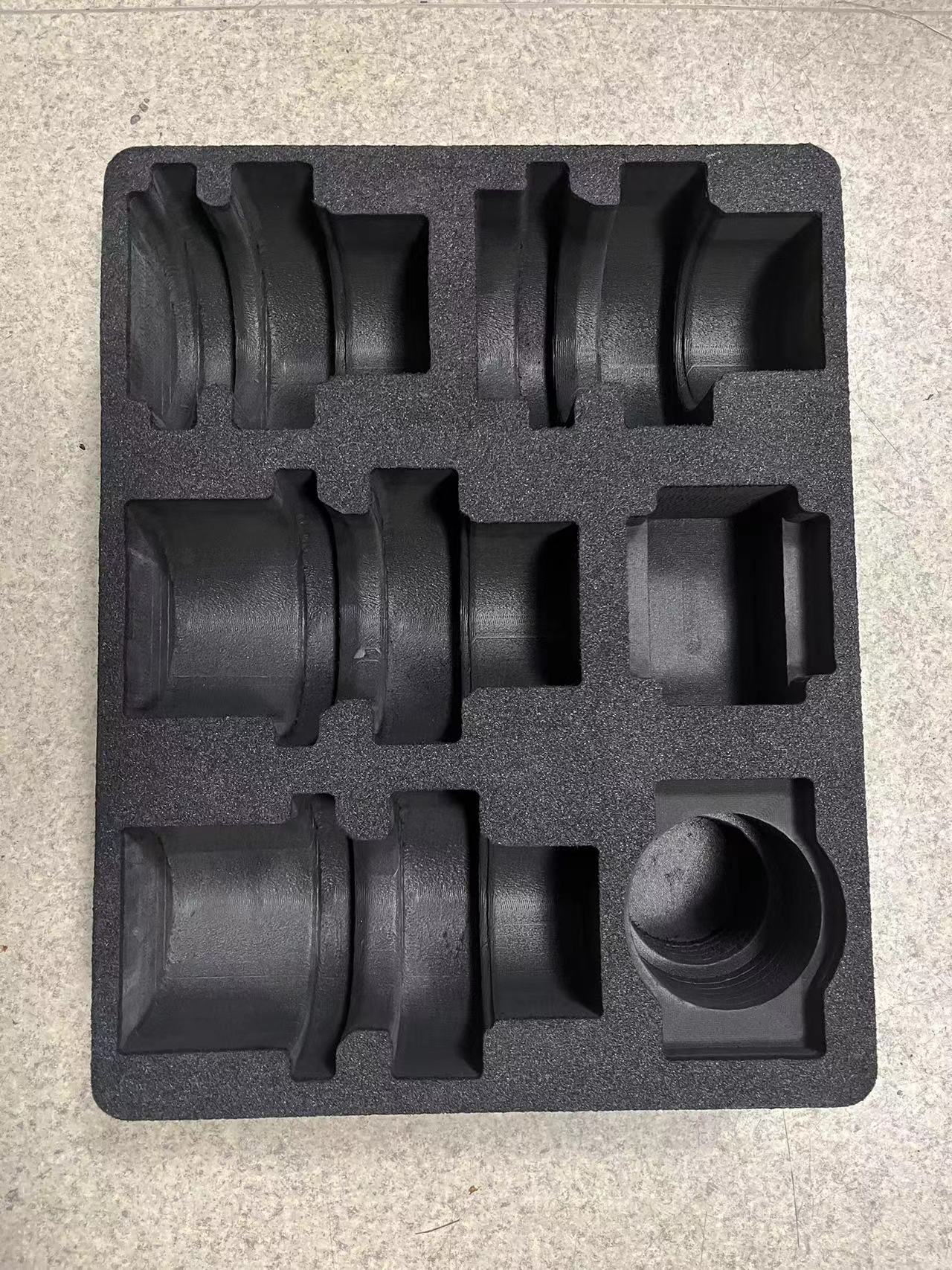
Tool Box Inserts Packaging Solution
Our custom Tool Box Inserts represent the perfect application of EVA foam’s lightweight yet heavy-duty protective capabilities. Designed to absorb extreme shock while keeping heavy metal tools firmly in place, this solution guarantees organization and damage-free transit without overloading your freight limits.
Frequently Asked Questions
Is EVA foam lighter than Styrofoam (EPS)?
No. Styrofoam (Expanded Polystyrene or EPS) is generally lighter, often ranging from 10 to 30 kg/m³. However, EPS is brittle, snaps easily, and sheds messy beads. EVA foam is denser and slightly heavier, but it is infinitely more durable, flexible, and aesthetically pleasing.
Will EVA foam increase my shipping costs?
In most professional situations, the weight of the EVA foam itself adds negligible cost to the physical scale weight. However, because EVA foam is used as a volumetric void fill, it increases the dimensions of your shipping box. Carriers charge based on Dimensional (DIM) Weight, so a larger box will increase costs, regardless of how light the foam inside is.
How do I choose the right density for EVA foam inserts?
The rule of thumb is: the heavier the product, the higher the density required. A light cosmetic bottle requires a soft, low-density EVA (around 30-40 kg/m³) to absorb shock. A heavy steel wrench requires a high-density EVA (80-100 kg/m³) so the tool does not tear through the foam under its own weight during a drop.
Is EVA foam waterproof?
Yes. Because EVA foam features a closed-cell molecular structure, water cannot penetrate the cell walls. It is highly resistant to moisture, oils, and chemicals, making it ideal for marine applications or shipping sensitive liquids.
Industry References & Authoritative Sources
To ensure our engineering data and material specifications meet strict E-E-A-T standards, we align our manufacturing protocols with the following global authorities:
- ASTM International: Standards for testing the density, compression set, and tensile strength of cellular plastics and foams. Review ASTM Cellular Plastics Standards
- International Organization for Standardization (ISO): Global manufacturing standards for polymeric materials and environmental packaging compliance. Review ISO Polymeric Standards
- Packaging Machinery Manufacturers Institute (PMMI): Guidelines on the integration of protective foam inserts into automated cartoning and fulfillment lines. Review PMMI Packaging Guidelines