Navigating the crafting aisle at a big-box retail store is often an exercise in frustration. You are presented with dozens of overpriced, thinly sliced foam sheets labeled with generic marketing terms that tell you absolutely nothing about their chemical makeup, density, or structural integrity. When you are building a full-scale cosplay armor set, constructing a massive floral installation, or designing custom upholstery, choosing the wrong polymer will ruin hundreds of hours of labor.
From our experience as a leading global manufacturer at Mailong Packaging, we know that the materials hobbyists use are exactly the same industrial polymers used in protective packaging and automotive insulation. The difference lies entirely in how they are marketed and priced. In most professional situations, treating crafting materials as industrial commodities rather than niche hobby supplies will save you thousands of dollars and drastically improve the quality of your finished projects. This guide will break down the exact chemical types of foam for crafting, how they perform under stress, and whether they are actually worth your investment.
Quick Answer: Which Types of Foam for Crafting Should You Use?
The best types of foam for crafting depend entirely on your project’s structural requirements:
- For Cosplay, Props, and Armor: Use EVA FOAM (Ethylene-Vinyl Acetate). It is closed-cell, heat-moldable, highly durable, and sands to a perfectly smooth finish.
- For Squishies, Upholstery, and Puppetry: Use Flexible PU FOAM (Polyurethane). It is open-cell, highly compressible, and rebounds quickly to its original shape.
- For Structural Dioramas, Faux Weapons, and Large Armatures: Use EPE Foam Sheets (Expanded Polyethylene). It is lightweight, non-abrasive, highly impact-resistant, and cost-effective for large-scale bulk.
We recommend skipping retail craft stores and purchasing high-density industrial sheets directly from Packing Foam Sheets Suppliers if you require anything larger than a basic 8×11-inch project.
Table of Contents
- What It Is: The Chemistry of Craft Foam
- How It Works: Open-Cell vs. Closed-Cell
- The 4 Primary Types of Foam for Crafting
- Benefits of Industrial-Grade Craft Foam
- Limitations and Safety Warnings
- Who Should Use It vs. Who Does Not Need It
- Common Mistakes in Foam Crafting
- Commercial Buying Considerations
- Comparison Table: Foam Types
- Pros and Cons Table: Bulk vs. Retail
- Expert Recommendation & Manufacturer Insight
- Frequently Asked Questions (FAQ)
What It Is: The Chemistry of Craft Foam
When you ask about the types of foam for crafting, you are fundamentally asking about plastic polymers that have been expanded using a blowing agent (a gas) to create a cellular structure. The base plastic dictates how the foam will behave when cut, heated, or painted.
For example, EVA is a copolymer of ethylene and vinyl acetate. The ratio of vinyl acetate determines how rubbery or rigid the final sheet becomes. Polyurethane (PU) is a polymer composed of organic units joined by carbamate links, resulting in a spongy, breathable material. Expanded Polyethylene (EPE) is a thermoplastic resin that is melted and extruded, making it highly shock-absorbent and impervious to water. Understanding these chemical definitions is crucial because they dictate which adhesives and paints will bond to the surface, and which chemicals will melt your project into a toxic puddle.
How It Works: Open-Cell vs. Closed-Cell Structure
To use commercial and practical judgment when selecting your materials, you must understand cell structure. All types of foam for crafting fall into two mechanical categories:
- Closed-Cell Foam: The gas bubbles inside the plastic are completely sealed off from one another. Imagine millions of microscopic balloons glued together. Because water and air cannot pass through, these foams (like EVA and EPE) are rigid, water-resistant, and can be sanded smooth. When you heat them, the trapped gas expands, allowing you to mold the sheet into permanent curves.
- Open-Cell Foam: The bubbles inside the plastic are broken and interconnected. Imagine a tangled web or a natural sea sponge. Because air passes freely through the material, open-cell foams (like Flexible PU) are highly compressible and soft. However, they act like sponges, soaking up paints and adhesives, making them terrible for rigid props but perfect for cushions and soft sculpts.
The 4 Primary Types of Foam for Crafting
1. EVA Foam (Ethylene-Vinyl Acetate)
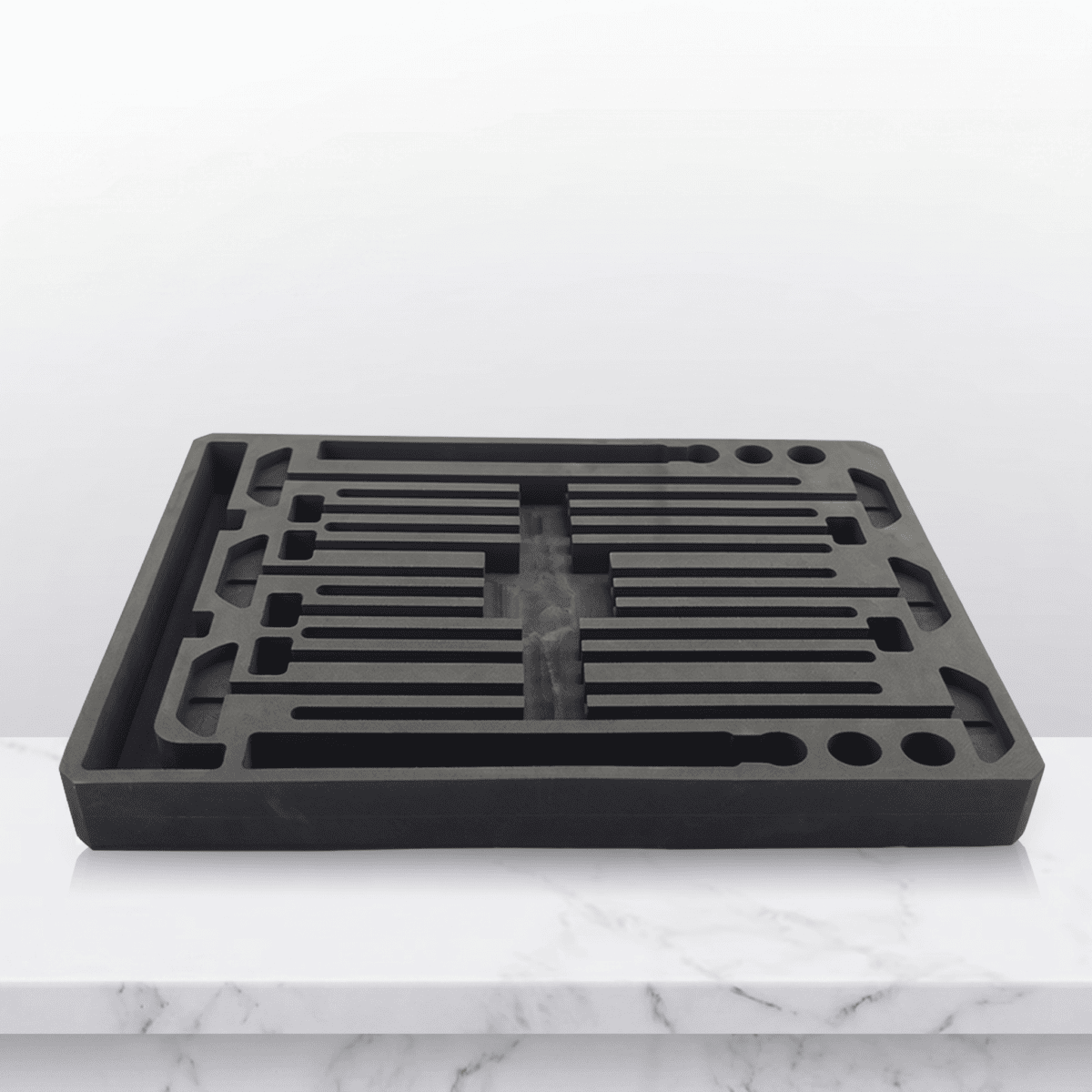
This is the undisputed king of the prop-making and cosplay industry. In our testing, high-density EVA foam outperforms almost every other thermoplastic material in terms of workability. It cuts easily with a utility knife, can be carved with a rotary tool, and when subjected to a heat gun, it becomes pliable enough to form complex organic shapes like breastplates or helmets.
Furthermore, because EVA is closed-cell, it accepts contact cement brilliantly and can be sealed with Plasti Dip or PVA glue before painting. If you are building wearable art, this is the only logical choice.
2. PU Foam (Flexible Polyurethane)
Often referred to as upholstery foam or cushion foam, PU is strictly open-cell. It is the material you find inside your couch cushions or mattresses. In the crafting world, it is utilized for mascot costumes, puppetry, and “squishy” toys. Because it is highly porous, you cannot spray paint it directly without the foam dissolving or absorbing the paint like a sponge. Instead, crafters use specialized rubberized coatings or cover the PU foam in fabric. We highly advise sourcing this directly from Flexible Polyurethane Foam Manufacturers if you are building large-scale mascots, as retail craft stores mark up PU foam exponentially.
3. EPE Foam (Expanded Polyethylene)
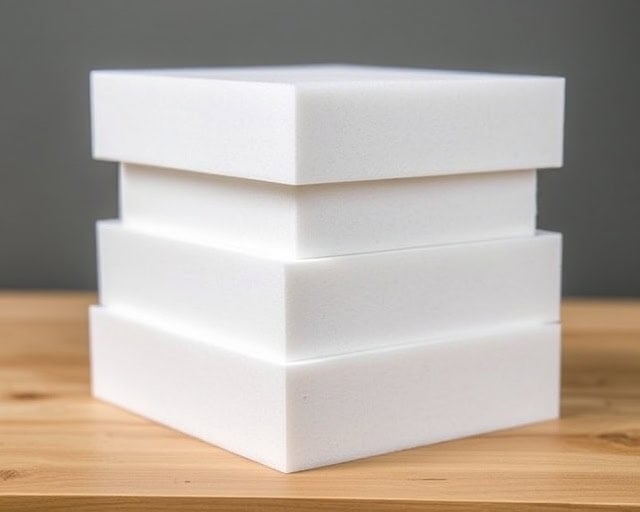
EPE foam is an unsung hero in the crafting space. Most people recognize EPE FOAM as the white, semi-rigid packaging material that protects electronics during shipping. However, for heavy-duty applications like theatrical set design, large diorama bases, or the core structure of oversized prop weapons, EPE is incredible. It is highly impact-resistant and incredibly lightweight. While it cannot hold fine etched details as crisply as EVA, it is the perfect bulk structural material. There are numerous EPE Foam Applications that crossover perfectly into large-scale prop making.
4. EPS (Expanded Polystyrene) and XPS (Extruded Polystyrene)
Commonly known as Styrofoam (EPS) or Pink/Blue Insulation Board (XPS). These are rigid, brittle foams. EPS is made of tiny compressed beads and is notoriously messy to cut, often used for cheap floral arrangements. XPS is denser and highly favored by tabletop gamers and architectural modelers for carving terrain, brickwork, and ruins. Note: Both EPS and XPS will instantly melt if exposed to aerosol spray paints (due to the propellants) or solvent-based glues.
Benefits of Industrial-Grade Craft Foam
When evaluating the types of foam for crafting, transitioning from consumer-grade to industrial-grade yields massive benefits. Industrial high-density EVA (commonly rated at 70kg/m3 or higher) provides a surface that requires significantly less priming and sealing before painting. It does not tear easily under tension, and the edges will not fray when dremeled. For commercial users producing props or theatrical sets for profit, buying directly from Protective Packaging Companies guarantees batch consistency—meaning sheet number 100 will perform exactly identically to sheet number one.
Limitations and Safety Warnings
Foam crafting is not without its hazards. The primary limitation of all thermoplastic foams is their sensitivity to extreme heat. Leaving an unsealed EVA prop in a hot car during a summer convention will cause the glue to fail and the foam to warp. Furthermore, safety is paramount. When heating, burning, or rotary-sanding EVA or PU foam, you are releasing microplastics and potentially hazardous Volatile Organic Compounds (VOCs) into the air. You must work in a ventilated area and wear a NIOSH-approved organic vapor respirator.
Who Should Use It vs. Who Does Not Need It
Who Should Use High-Density Craft Foam: Cosplayers, theatrical prop masters, architectural modelers, tabletop terrain builders, and puppeteers. If your project requires precise cutting, heat molding, and structural durability, high-density EVA, PU, or EPE is strictly necessary.
Who Does Not Need It: For beginners doing weekend crafts with children, such as simple cut-out shapes or scrapbooking, investing in high-density industrial foam is overkill. Standard 2mm craft foam sheets (commonly called “fun foam”) available in multi-color packs at local stores are perfectly adequate and much safer since they do not require heat guns or contact cement.
Common Mistakes in Foam Crafting
In our testing and observation of the craft industry, we see beginners make the same catastrophic errors repeatedly:
- Using Hot Glue on Everything: Hot glue is rigid and brittle when dry. When the foam flexes, the hot glue seam will crack and pop open. For EVA and EPE foam, you must use solvent-based contact cement for a flexible, permanent bond.
- Failing to Seal the Foam: Closed-cell foams still have micro-pores on the surface. If you apply acrylic paint directly to raw EVA foam, the foam will absorb the moisture, and the paint will crack and flake off when bent. Always seal with heat, followed by a flexible primer like Plasti Dip, Mod Podge, or specialized foam primers.
- Using Spray Paint on Polystyrene: As mentioned, the aerosol propellants in standard spray cans will aggressively melt EPS and XPS foam. You must coat the foam in a protective barrier (like a mix of PVA glue and water) before using any aerosol product.
Commercial Buying Considerations
When selecting your supplier for different types of foam for crafting, apply commercial judgment. Pay attention to the shore hardness rating (measured in Shore A, B, or C). For standard armor crafting, a Shore C hardness of 35-45 is ideal—it is firm enough to hold its shape but soft enough to wear comfortably. If you are building weapons or shields that need to withstand impact, look for Shore C 60+ (often sold as floor mats or industrial anti-fatigue mats). If you run an Etsy shop shipping fragile foam props, ensure you partner with a manufacturer who can also provide your E Commerce Packaging Solution to prevent transit damage.
Comparison Table: Primary Foam Types
| Foam Type | Cell Structure | Best Adhesives | Primary Crafting Use Case | Heat Moldable? |
|---|---|---|---|---|
| EVA Foam | Closed-Cell | Contact Cement, Superglue | Cosplay Armor, Props, Wearables | Yes (Excellent) |
| PU Foam (Flexible) | Open-Cell | Spray Adhesive (Super 77) | Mascots, Puppets, Upholstery | No (Will burn/melt) |
| EPE Foam | Closed-Cell | Specialty PE Adhesives, Heat Welding | Large Armatures, Theatrical Sets | Yes (Moderate) |
| XPS Foam | Closed-Cell | Foam-safe construction adhesive | Tabletop Terrain, Dioramas | No (Releases toxic fumes) |
Pros and Cons: Buying Industrial Bulk vs. Retail Craft Sheets
| Purchasing Strategy | Pros | Cons |
|---|---|---|
| Industrial/Wholesale (Mailong, etc.) | Massive cost savings per square foot. High density and batch consistency. Access to extremely thick sheets (up to 100mm). | High minimum order quantities (MOQs). High shipping costs for large dimensional weight. Limited vibrant color options (usually black, white, or gray). |
| Retail Craft Stores | Available immediately. Pre-cut into manageable sizes. Wide variety of bright colors and glitter finishes. | Exorbitant markup. Low density (tears easily). Very thin sheets rarely exceeding 10mm. |
Expert Recommendation & Manufacturer Insight
In most professional situations, we recommend bridging the gap between crafting and industrial packaging. If you are building a business around your crafts, stop paying retail premiums for raw materials. Source your base materials directly from the factories that engineer them. If you are shipping your finished, delicate foam crafts to customers, wrapping them in Bubble Cushioning Packaging or utilizing Clothing Shipping Packaging for soft mascot parts will ensure your hard work arrives safely.
About the Manufacturer: Dongguan Mailong Packaging Co., Ltd.
Dongguan Mailong Packaging Co., Ltd. was established in 2009. It is a reputed manufacturer and exporter of a wide range of world-class quality packaging materials, such as inflatable bubble and pillow film, air column rolls, air column bags, EPE and EVA FOAM, Poly Mailer, Stretch wrap, Bubble mailer, BOPP tape, and Corrugated box. These materials are engineered to prevent products from collision damage, attrition, and static in the process of logistics transportation.
With exports to over 30 countries, Mailong operates on strict quality management principles. To understand how our manufacturing standards translate into flawless foam production, read more about Packaging Quality Control. Whether you are using our EVA for high-end cosplay or our EPE for industrial shipping, you are receiving world-class polymer engineering.
Frequently Asked Questions (FAQ)
High-density EVA foam (Ethylene-Vinyl Acetate) is the absolute best material for cosplay armor. It is closed-cell, making it water-resistant and easy to sand. When heated with a heat gun, it becomes pliable and holds complex curves permanently once cooled.
It depends on the foam. You can use spray paint on EVA and EPE foam, but ONLY if you seal the foam first (using Plasti Dip or PVA glue), otherwise the foam absorbs the paint and looks dull. You CANNOT use standard aerosol spray paint on EPS or XPS (Styrofoam) because the aerosol propellants will aggressively melt the plastic.
EVA foam is a closed-cell, rigid, and heat-moldable thermoplastic used for structural props and armor. PU foam is an open-cell, highly porous, and compressible material used primarily for upholstery, cushions, and soft mascot suits. They serve completely different structural purposes.
Heating EVA foam to its molding temperature (around 250°F to 300°F) is generally safe in a well-ventilated area, though it can release mild odors. However, burning or laser-cutting EVA foam releases hazardous Volatile Organic Compounds (VOCs) and carbon monoxide. Always wear a respirator when burning, melting, or sanding foam.
Industry References & Authoritative Sources
To ensure our technical advice aligns with global manufacturing and safety standards, this guide references data from the following authoritative organizations:
- ASTM International: For standardized testing methods relating to the compressive strength, density, and thermal conductivity of cellular plastics and polymer foams. View ASTM Standards
- Polyurethane Foam Association (PFA): For technical documentation regarding the manufacturing, cell structure, and safe handling of flexible PU foams. View PFA Industry Resources
- U.S. Environmental Protection Agency (EPA): For guidelines regarding indoor air quality and the safe mitigation of Volatile Organic Compounds (VOCs) when heating or manufacturing thermoplastic materials. View EPA Safety Guidelines