
EPE Foam Vehicle Impact Test with Instrumented Dummy — Crash Protection Case Study
Case study: vehicle impact testing using EPE-wrapped instrumented dummies. Data on head/chest acceleration reduction, compression behavior and fatigue performance to guide interior and pedestrian protection designs.
EPE Foam-Wrapped Anthropomorphic Dummy Vehicle Impact Test — Energy Absorption & Injury Mitigation
Short description: Vehicle impact tests using instrumented anthropomorphic dummies wrapped in EPE (expanded polyethylene) foam to evaluate EPE’s effectiveness as interior/occupant/impact-protection padding for low- to mid-speed collisions.
Detailed case
Industry: automotive safety, interior component design, child/occupant protection systems
Objective: quantify EPE foam’s energy absorption and injury-metric reduction for head, chest and leg impacts under representative low- and mid-speed collision scenarios; assess residual deformation and performance after repeated impacts.
Test specimens
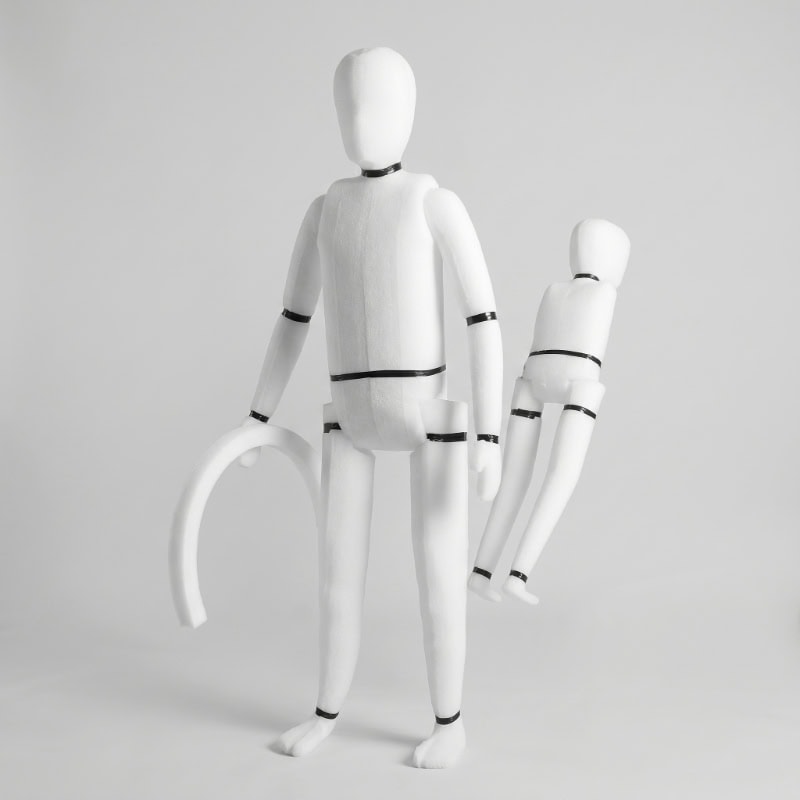
Dummies: instrumented crash test dummies (head accelerometers, chest sensors, neck/leg load cells) or biofidelic segmented human surrogates.
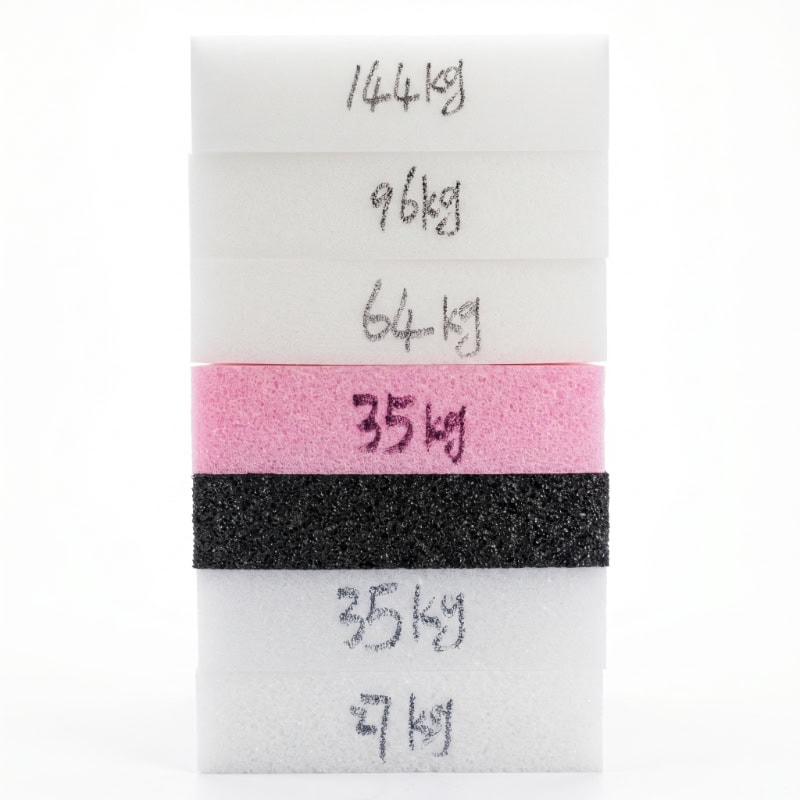
EPE variants: densities 20/30/40 kg/m3, thicknesses 6/12/20 mm, single-layer, multilayer and graded-density constructions, with geometric features (slots/honeycomb) for tunable absorption.
Installation: interior panels with embedded EPE pads, seat/headrest cushions with EPE cores, removable door/bumper liners, or EPE-wrapped dummy surface.
Test procedures
Low-/mid-speed sled or vehicle tests: simulate pedestrian/occupant contacts at 10–50 km/h; measure accelerations, forces and displacements.
Controlled impact rig: drop tests and impactor strikes on dummy regions (head, thorax, femur).
Static compression: force–displacement curves under incremental loading (e.g., 500–2000 N).
Repeated-impact fatigue: 10–100 cycles of representative impacts to assess degradation.
High-speed video synchronized with DAQ (≥10 kHz for sensors).
Representative results (example)
Head impact (30 km/h equivalent): baseline peak head acceleration 220 g → with 40 kg/m3 multilayer EPE (12+6 mm) reduced to ~120 g (45% reduction).
Thorax impact: peak chest acceleration reduced 30–40% depending on thickness/density.
Static load (1000 N): max compression 10–14 mm; residual set 2–4 mm (recovery 75–90%).
Fatigue (50 impacts): cushioning efficiency decline 5–12%; no cracking or delamination observed.
Analysis & conclusions
EPE provides effective short-duration energy absorption, significantly lowering peak accelerations for low- to mid-energy impacts.
Multilayer or graded-density constructions and engineered geometries outperform homogeneous single layers for the same mass.
For high-energy crashes or regulatory full-scale crash requirements, EPE should be combined with structural energy-absorbing elements.
Good cyclic resilience makes EPE suitable for replaceable interior pads, headrests, child-seat liners and pedestrian protection trims.
Design recommendations
Density selection: 30–60 kg/m3 for head/chest zones; 20–40 kg/m3 for limbs/edge protection.
Thickness: 12–20 mm for critical zones; 6–12 mm for secondary areas.
Structure: use gradient layers, local thickening, or slotted/honeycomb geometries to optimize absorption vs. mass.
Integration: mount EPE on a rigid backing plate or frame to control load path and limit excessive compression.
Compliance: verify flammability, VOC and automotive interior regulations (FMVSS/ECE/ISO) for direct-contact components.
Testing notes & safety
Use instrumented dummies and high-rate DAQ (≥10 kHz) for reliable impact metrics.
If intended for occupant contact, validate material smoke/toxicity and durability per automotive standards.