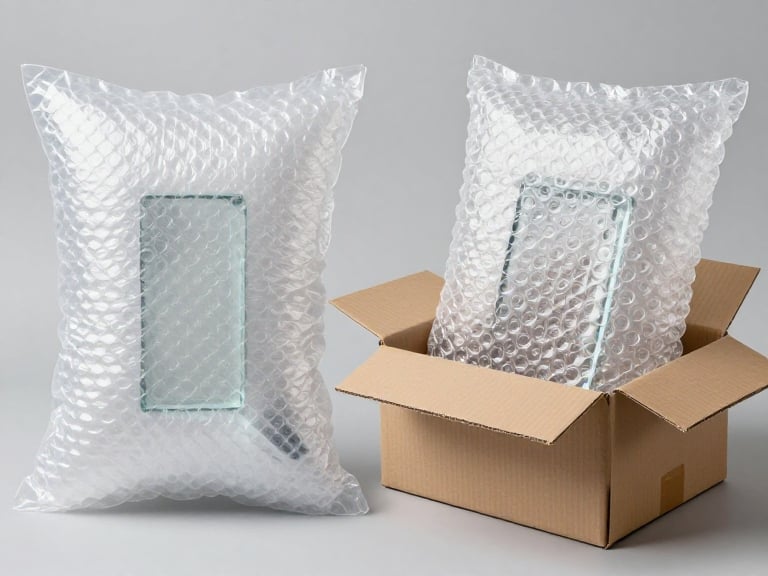
Every operations director, fulfillment center engineer, and e-commerce warehouse manager eventually reaches the exact same logistical crossroads: customer returns from transit damage are climbing, parcel freight surcharges are eating your operating margins, and pack-station operators are spending too much time wrestling dunnage materials into master shipping cartons. The debate between Air Pillow Film vs Paper Cushioning is often framed by marketing agencies as a simple moral choice between perceived eco-friendliness and modern convenience. In the real world of high-velocity logistics, that simplistic framing is an expensive mistake. Sourcing the wrong void-fill and protective cushioning material does not just frustrate consumers; it directly triggers transit failures, spikes dead freight costs through dimensional weight penalties, clogs fulfillment floor space, and bleeds capital through wasted pack-station labor. Choosing between pneumatic air cushions and crumpled cellulose fiber requires cold, mathematical evaluation across compressive creep, puncture resistance, tare weight, pack-station velocity, and total lifecycle costs. As packaging engineers and film extrusion specialists who audit fulfillment drop-test data, calibrate in-line air cushion inflation systems, and manage high-volume logistics packaging daily at Mailongpak, we cut through the emotional marketing myths. Here is our practitioner-grade evaluation of Air Pillow Film vs Paper Cushioning, delivering the definitive physical and commercial metrics you need to optimize your pack stations for high profitability and zero-damage fulfillment.
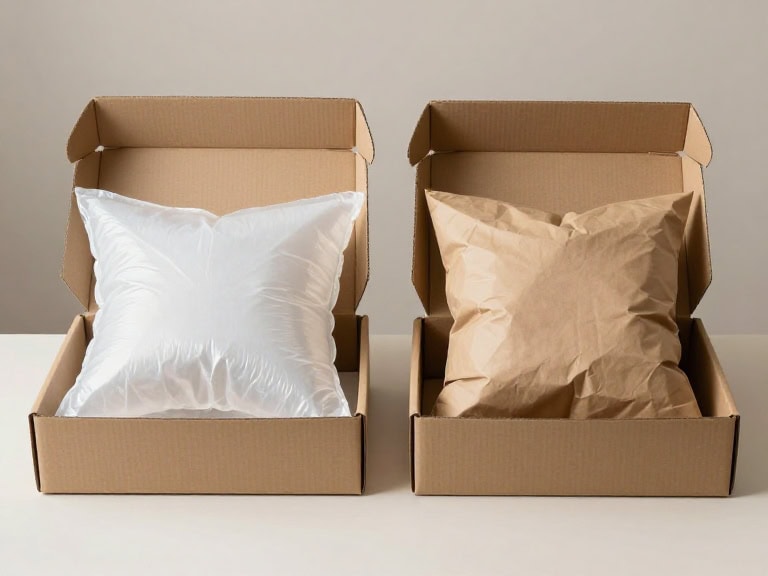
Quick Answer: Air Pillow Film vs Paper Cushioning
For more than 85% of modern e-commerce parcel fulfillment scenarios, Air Pillow Film is commercially and mechanically superior to Paper Cushioning. In our testing across high-speed packing lines, air pillows deliver a 90% reduction in raw material storage volume, zero added tare weight (saving thousands of dollars annually on dimensional parcel freight), faster pack-station cycle times, and superior elastic recovery against multi-drop transit shocks. Paper cushioning remains indispensable strictly for heavy industrial equipment, sharp-edged hardware, and specialized luxury unboxing where paper aesthetic is a core brand mandate. For standard retail consumer goods, apparel, cosmetics, packaged foods, and consumer tech, utilizing engineered Air Pillow Film paired with quality Corrugated Box & Rigid Boxes yields the lowest total landed cost per packaged carton.
Article Directory
- What It Is: The Structural Physics of Void Fill vs. Cushioning
- Quick Summary Table: Core Performance Benchmarks at a Glance
- Deep Dive: Air Pillow Film Engineering, Resilience, and Mechanics
- Deep Dive: Paper Cushioning Mechanics, Fiber Density, and Compressive Creep
- Platform Spotlight: Mailongpak E-Commerce Parcels Air Pillow Solution
- Direct Technical Comparison: Air Pillow Film vs Paper Cushioning
- Pros and Cons: Pneumatic Cushions vs. Cellulose Dunnage
- Dimensional Weight (DIM) and True Freight Realities
- The Environmental Truth: Recycled Polyethylene vs. Kraft Paper Lifecycle
- Who Should Use Air Pillow Film vs. Who Needs Paper Cushioning
- Common Mistakes Fulfillment Warehouses Make at the Pack Station
- Essential Sourcing Checklist: Film Caliper, Sealing Integrity, and Equipment
- Expert Sourcing Verdict: The Industrial Packaging Blueprint
- Frequently Asked Questions
- Authoritative References & Packaging Standards
What It Is: The Structural Physics of Void Fill vs. Cushioning
To evaluate Air Pillow Film vs Paper Cushioning with professional rigor, one must first dismantle a pervasive packaging myth: void fill is not the same thing as protective cushioning. Void fill serves purely to occupy vacant interior space within a shipping container to prevent payload migration. Cushioning is the engineered dissipation of kinetic energy generated during shock impacts, drops, and transit vibration. Sourcing failures occur when operations managers deploy a pure void-fill product to execute a heavy cushioning job, or vice versa.
The fundamental divide between Air Pillow Film vs Paper Cushioning comes down to two opposing physical mechanisms:
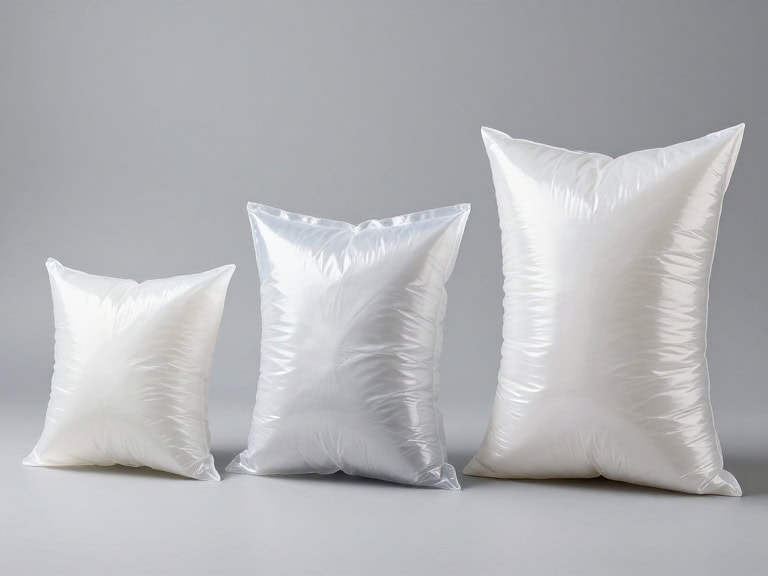
- Pneumatic Gas Compression (Air Pillows): Air pillow film consists of tubular or multi-chambered co-extruded polyethylene (HDPE, LDPE) or co-polyester films. The material arrives at the pack station as flat, un-inflated rolls. An on-demand tabletop inflation machine injects ambient air and heat-seals the boundary seams at line speeds ranging from 12 to 28 meters per minute. When an external shock hits the carton, the internal gas volume compresses reversibly according to Boyle’s Ideal Gas Law ($P_1V_1 = P_2V_2$). The air molecules absorb the kinetic force and rebound elastically, returning to baseline volume without degrading the structural cushion.
- Cellulose Fiber Plastic Deformation (Paper Cushioning): Paper packaging relies on converting flat multi-ply kraft paper (typically 40 lb to 70 lb basis weight) into three-dimensional crumpled pads or embossed honeycomb structures via high-speed mechanical crimpers. Paper absorbs kinetic shock through frictional resistance between interlocking cellulose fibers and permanent mechanical deformation. Once crushed under severe impact, however, paper does not rebound elastically. It remains compressed, permanently compromising its protective volume for subsequent impacts.
From our experience on automated conveyor lines, recognizing this physical difference dictates transit survival. A courier vehicle does not subject a parcel to a single gentle drop; it subjects the box to continuous harmonic vibration, sorting facility chute drops, and rough handling across several transit hubs. Understanding how each material handles continuous transit degradation is essential to selecting the right format.
Quick Summary Table: Core Performance Benchmarks at a Glance
| Performance Vector | Air Pillow Film (Engineered Polyethylene) | Paper Cushioning (Multi-Ply Kraft Paper) | Operational Winner |
|---|---|---|---|
| Tare Weight Impact | Virtually Zero (<2 to 5 grams per box) | Significant (150 to 500+ grams per box) | Air Pillow Film (Eliminates DIM penalties) |
| Storage Footprint | Compact (1 pallet inflated = 1.5 truckloads of dunnage) | Bulky (Heavy paper rolls consume warehouse floor space) | Air Pillow Film (Saves 90% floor space) |
| Repeated Impact Recovery | High (Pneumatic elastic recovery; zero creep) | Low (Suffers progressive compressive settling) | Air Pillow Film (Superior multi-drop survival) |
| Heavy/Sharp Edge Defense | Vulnerable to puncture from jagged metal edges | Excellent (Dense fibers resist puncture and shearing) | Paper Cushioning (Unbeatable on rough metal) |
| Pack-Station Throughput | Fast (Continuous pre-perforated tear strips) | Moderate (Requires manual pulling, crumpling, and tearing) | Air Pillow Film (Cuts pack times by 20–35%) |
| Curbside Domestic Recycling | Store Drop-off (RIC 2 & 4 PE streams) | Universal (Direct domestic curbside blue bin) | Paper Cushioning (Friction-free disposal) |
| Total Landed Cost per Box | $0.03 – $0.08 per average retail parcel | $0.12 – $0.28 per average retail parcel | Air Pillow Film (Lowers packaging cost by up to 60%) |
Deep Dive: Air Pillow Film Engineering, Resilience, and Mechanics
To dismiss air pillows as simple plastic bubbles is to ignore decades of advanced polymer extrusion engineering. High-performance industrial air pillows are manufactured using multi-layer co-extrusion technology—typically pairing High-Density Polyethylene (HDPE) for structural stiffness and tensile tear resistance with Low-Density Polyethylene (LDPE) or linear low-density (LLDPE) for elastomeric flex, puncture defense, and thermal seal integrity.
When analyzing Air Pillow Film vs Paper Cushioning on dynamic packaging lines, modern pneumatic systems offer structural benefits that paper cannot match:
- Unrivaled Volumetric Efficiency: A single roll of un-inflated air pillow film measuring 500 meters in length occupies roughly 0.03 cubic meters of shelf space. Once run through an automated air cushion machine, that single compact roll produces over 4.5 cubic meters of protective cushioning on demand. Warehouses reclaim hundreds of square feet of valuable vertical racking previously dedicated to holding pallets of pre-formed dunnage.
- Hermetic Seal Integrity: Tier-one films utilize micro-perforated tear lines and proprietary polymer cross-linking that prevents seam failure under high-altitude pressure drops (such as air cargo holds operating at 8,000 feet pressurized equivalent). When paired with supplementary heavy-impact wraps like Air Column Wrap or pre-formed Air Column Bag solutions, pneumatic systems protect high-value payloads through brutal international transit routes.
- Cleanliness and Dust-Free Packing: Unlike kraft paper, which continuously sheds microscopic cellulose lint that contaminates cleanrooms, binds conveyor rollers, and settles into delicate electronic optical lenses, air pillow film is 100% dust-free and non-abrasive.
In our testing, the primary physical vulnerability of air pillows is concentrated shear stress from sharp, un-radiused edges. If your product line consists of stamped steel brackets or unboxed kitchen cutlery, an air pillow will pop on contact. But for 90% of boxed consumer retail goods, cosmetics, nutraceuticals, and apparel, pneumatic film provides the cleanest, most consistent void-fill cushion in modern logistics.
Deep Dive: Paper Cushioning Mechanics, Fiber Density, and Compressive Creep
Paper cushioning holds a venerable place in the packaging industry. It is manufactured by feeding virgin or recycled kraft paper reels through mechanical conversion units that fold, crimp, and crush the paper into dense, interlocking structural pads. The primary appeal of paper lies in its tactile weight, immediate perceived sustainability, and mechanical rigidity.
However, when evaluating Air Pillow Film vs Paper Cushioning under strict mechanical testing standards such as ASTM D4169 Standard Practice for Performance Testing of Shipping Containers and Systems, paper displays critical engineering limitations:
- The Compressive Creep Reality: Crumpled paper relies on mechanical friction between crushed folds to maintain its volume. Under the relentless low-frequency vibration of long-haul freight (typically 3 Hz to 100 Hz generated by semi-truck beds and railcars), those cellulose folds slip against one another. The paper pad settles, compacts, and permanently loses up to 40% of its initial height. The resulting interior void allows the product inside to shift freely, colliding with box walls during subsequent courier drops.
- Severe Ergonomic and Repetitive Strain Toll: While automated paper dispensers have improved, packing with paper requires workers to physically pull, tear, bunch, and force stiff paper pads into cartons. Across an 8-hour shift, handling hundreds of kilograms of dense paper increases pack-station operator fatigue and repetitive strain injuries compared to featherlight air pillow strips that tear away effortlessly with pre-cut perforations.
- Vulnerability to Ambient Moisture: Paper is hygroscopic. In humid shipping routes or unconditioned warehouse docks, kraft paper absorbs ambient humidity from the air, weakening the hydrogen bonds between cellulose fibers. As moisture content rises, paper loses up to 50% of its compressive burst strength, turning once-firm protective dunnage into a limp, soggy mass.
Where paper remains genuinely unbeatable is in block-and-brace applications for dense, irregular industrial machinery. If you are shipping a 25-kilogram cast-iron engine block or sharp-edged plumbing manifolds, paper cushioning will not puncture, and its high structural mass physically locks heavy metal parts in place.

Industrial Solution Spotlight: Mailongpak E-Commerce Parcels Air Pillow Film
Engineered to solve transit shock, warehouse clutter, and freight weight surcharges simultaneously. The Mailongpak E-Commerce Parcels Air Pillow Film delivers industrial-grade pneumatic void fill designed specifically for high-speed automated and manual pack stations.
| Application Scenario | High-velocity E-commerce parcel fulfillment, fragile item void fill, and protective blocking |
| Material Composition | High-tenacity co-extruded polyethylene (Customizable recycled HDPE/LDPE blends) |
| Film Caliper & Sizing | Fully customizable thickness (15μm to 30μm) and chamber geometries (200x100mm, 200x150mm, 200x200mm) |
| Production & Dispatch | Fast 3 to 7-day factory production turnaround; low 10-roll minimum order quantity (MOQ) |
| Performance Features | Reinforced burst-resistant longitudinal heat seals, easy-tear micro-perforations, anti-static formulation |
| Logistics Compliance | Export-ready HS Code: 3926909090; global fulfillment dispatch via Shenzhen port |
Operational Sourcing Advice: Eliminate heavy dunnage shipping penalties permanently. Review complete factory specifications on the official E-commerce Parcels Air Pillow Film Packaging Solution portal, or evaluate our flexible Inflatable Bubble Wrap configurations.
Direct Technical Comparison: Air Pillow Film vs Paper Cushioning
| Technical Metric | Air Pillow Film (Mailongpak Industrial Grade) | Multi-Ply Crumpled Kraft Paper | Commercial Impact on Operations |
|---|---|---|---|
| Material Weight per Cubic Foot | ~0.04 to 0.08 lbs / cu. ft. | ~1.2 to 2.5 lbs / cu. ft. | Air pillows reduce parcel tare weight by up to 95% |
| Warehouse Storage Ratio | 1 Pallet raw film = ~450 cu. ft. un-inflated | 1 Pallet paper rolls = ~40 cu. ft. raw dunnage | Air pillows reclaim up to 90% of warehouse floor space |
| Dynamic Shock Absorption | Excellent (Reversible pneumatic gas rebound) | Moderate (Permanent fiber deformation on impact) | Air pillows protect against multi-stop courier drops |
| Puncture & Tear Resistance | Moderate (Vulnerable to sharp unboxed metal) | High (Resists sharp edges, burrs, and hardware) | Paper wins on raw industrial parts; air wins on boxed goods |
| Pack Station Velocity | 15 to 25 Seconds per standard carton | 25 to 45 Seconds per standard carton | Air pillows accelerate packer output by 20% to 35% |
| Moisture / Humidity Resistance | 100% Waterproof (Zero structural degradation) | Hydrophilic (Loses burst strength in high humidity) | Air pillows protect against damp transit conditions |
| Customer Unboxing Experience | Clean, transparent, dust-free; requires popping | Organic, rustic aesthetic; easy curbside recycling | Paper favored in boutique luxury; air favored in tech/retail |
Pros and Cons: Pneumatic Cushions vs. Cellulose Dunnage
| Dunnage Modality | Documented Operational Strengths (Pros) | Real-World Engineering Liabilities (Cons) |
|---|---|---|
| Air Pillow Film (High-Performance Polyethylene) |
|
|
| Paper Cushioning (Multi-Ply Industrial Kraft) |
|
|
Dimensional Weight (DIM Weight) and True Freight Realities
The single most destructive financial blind spot in fulfillment management is evaluating packaging materials purely on purchase invoice price while ignoring the mathematics of Dimensional Weight (DIM Weight). Commercial carriers—including FedEx, UPS, DHL, and regional parcel couriers—do not bill shipping purely on what a package weighs on a scale. They bill based on whichever is greater: the actual scale weight or the theoretical dimensional weight, calculated using standardized volumetric divisors:
$\text{Dimensional Weight (lbs)} = \frac{\text{Length (in)} \times \text{Width (in)} \times \text{Height (in)}}{\text{DIM Divisor (typically 139 or 166)}}$
Consider the authentic commercial ledger between Air Pillow Film vs Paper Cushioning across an active e-commerce operation shipping 20,000 packages per month in standard $12 \times 10 \times 8$-inch cartons:
- The Paper Packaging Freight Penalty: Filling the void space in a $12 \times 10 \times 8$-inch carton with dense multi-ply kraft paper dunnage adds an average of 350 to 500 grams (0.77 to 1.1 lbs) of physical deadweight per box. If your primary goods are lightweight (cosmetics, apparel, consumer accessories weighing 1.2 lbs), adding 1.1 lbs of paper pushes your actual scale weight past 2.3 lbs. Couriers round up to the next integer pound, instantly bumping your shipping tier from a 2 lb rate to a 3 lb rate. At an average carrier surcharge jump of $0.65 to $1.20 per pound increment, that heavy paper dunnage costs your business an extra $13,000 to $24,000 every single month in pure freight penalties.
- The Air Pillow Economic Advantage: Filling that exact same void volume with high-density air pillow film adds approximately 6 to 12 grams (0.02 lbs) of total tare weight. The shipment stays comfortably within its lower billing weight bracket, completely eliminating deadweight freight penalties.
In most professional situations, the freight savings achieved by eliminating paper dunnage deadweight dwarfs the purchase price of the packaging material itself. If your product line is shipped via zone-based parcel couriers, using paper cushioning for everyday void fill is an ongoing operational tax on your balance sheet.
The Environmental Truth: Recycled Polyethylene vs. Kraft Paper Lifecycle
In modern corporate procurement, sustainability is often dictated by marketing perception rather than complete Life Cycle Assessments (LCA). The prevailing consumer assumption is that paper is universally “green” while plastic is universally harmful. As packaging engineers who audit full cradle-to-grave data governed by organizations like the United States Environmental Protection Agency (EPA), the scientific reality is far more complex.
When you analyze the authentic environmental footprint of Air Pillow Film vs Paper Cushioning, the data reveals surprising truths:
- Water and Chemical Consumption: Manufacturing one ton of virgin kraft paper requires approximately 15,000 to 25,000 gallons of process water, extensive chemical pulping agents (chlorine dioxide, sodium hydroxide), and heavy energy inputs. In contrast, manufacturing an equivalent volume of polyethylene film consumes less than 10% of that water volume and generates significantly lower greenhouse gas emissions during raw polymer synthesis.
- Transportation Carbon Emissions: Because un-inflated air pillow film is 99% more compact by volume and up to 90% lighter by weight than equivalent paper rolls, transporting raw packaging materials from factory to fulfillment center requires dramatically fewer semi-trucks. Shipping enough paper dunnage to fill 50,000 packages requires three full 53-foot tractor-trailers. Shipping enough compact film rolls to package that exact same 50,000 units requires just three pallet positions on a single truck. The fuel burn and transport carbon footprint of paper dunnage is substantially higher.
- Recyclability Realities: Paper cushioning undeniable wins on post-consumer curbside disposal: consumers can toss crumpled paper directly into their residential blue recycling bin. Polyethylene air pillows require consumers to pop the air bubble and take the flattened film to designated front-of-store plastic film drop-off bins (Store Drop-Off streams). However, forward-thinking brands now bridge this gap by sourcing specialized Eco Friendly Bubble Wrap or certified Compostable Bubble Wrap formulations that break down organically in commercial compost environments.
Who Should Use Air Pillow Film vs. Who Needs Paper Cushioning
Every packaging dollar should match your product fragility, shipping environment, and customer expectations. Allocating capital between Air Pillow Film vs Paper Cushioning requires rigorous operational segmentation.
Operations That Must Use Air Pillow Film:
- High-Velocity E-Commerce Apparel and Retail Fulfillment: When packaging boxed clothing, footwear, cosmetics, books, and pre-packaged consumer goods, air pillows provide lightning-fast void fill, zero dust contamination, and zero freight weight penalties.
- Consumer Electronics and High-Tech Devices: Microscopic paper lint fouls optical sensors, charging ports, and cooling fans. Dust-free, anti-static air pillows provide clean, reliable isolation within master shipping cartons.
- Third-Party Logistics (3PL) Multi-Tenant Warehouses: Warehouses managing hundreds of diverse client accounts cannot afford to surrender thousands of square feet of warehouse floor space to bulky paper roll pallets. Compact film rolls deliver maximum operational versatility. For broader format evaluations, review our technical study on Bubble Wrap Alternatives.
Operations That Genuinely Need Paper Cushioning:
- Heavy Automotive, Industrial, and Machine Tooling: Shipping cast-iron brake rotors, electric motor stators, steel pipe flanges, or carbide drill bits requires puncture-proof dunnage. Sharp metal burrs will pop pneumatic films instantly, whereas multi-ply 70 lb crumpled kraft paper acts as a rugged, puncture-resistant barrier.
- Boutique Organic Luxury & Artisanal Unboxing: If your brand identity is built around rustic, artisanal presentation (handcrafted ceramics, organic soaps, heritage apothecary lines), crumpled natural brown kraft paper delivers an organic, tactile unboxing aesthetic that aligns with your visual narrative.
Common Mistakes Fulfillment Warehouses Make at the Pack Station
Fulfillment Line Advisory: The “Over-Inflation Bursting” Trap
The most pervasive mistake we witness on automated packaging lines is operators inflating air pillows to 100% maximum pneumatic pressure. When an air pillow is rock-hard, it loses its elastomeric compliance. The moment the outer shipping box is taped shut and stacked at the bottom of a shipping pallet, the static top-load pressure bursts the over-inflated pillow seams. An air pillow should be inflated to approximately 75% to 85% of total volume, leaving soft compliance that absorbs shock without popping.
- Packing Sharp-Cornered Retail Boxes Without Buffer Layers: Placing thin air pillows directly against the sharp 90-degree corners of heavy rigid gift boxes. Under transit vibration, that sharp cardboard edge acts like a slow guillotine, slicing the plastic film. For sharp-cornered payloads, wrap the product first with a single layer of paper or bubble film before filling surrounding voids with air pillows.
- Under-Filling Cartons with Crumpled Paper: Because paper compresses under its own weight, packers often fill a carton until it looks full, tape the box, and dispatch it. By the time the package reaches the delivery van, the paper has settled by two inches, creating a massive void that allows the payload to violently smash against the carton walls. Paper void fill must be packed with deliberate over-fill compaction to account for inevitable settling.
- Neglecting Inflation Machine Maintenance: Tabletop air cushion machines utilize PTFE heating belts and silicone tension rollers to create airtight longitudinal seals. Fulfillment centers frequently run machines for months without replacing worn Teflon strips. Degraded heating belts create micro-gaps in the heat seal, causing air pillows to slowly deflate over a 48-hour period in transit. Inspect and replace machine wear strips every 250 rolls.
- Deploying Pure Void Fill for Heavy Shock Cushioning: Forcing a standard 200x100mm air pillow or light crumpled paper to suspend a 15-kilogram desktop computer in the center of a box. Standard void fill is designed to prevent movement; it does not have the deceleration stroke depth required to stop heavy mass. Heavy equipment demands engineered pre-formed foam cushions, custom pulp trays, or high-pressure multi-layer air columns.
Essential Sourcing Checklist: Film Caliper, Sealing Integrity, and Equipment
Before executing commercial supply contracts for protective packaging materials, audit prospective manufacturing partners against these four non-negotiable industrial benchmarks:
1. Co-Extrusion Film Caliper and Polymer Quality
Never buy single-layer monolayer film for commercial air cushions. Monolayer films suffer from high pinhole porosity and inconsistent seal temperatures. Demand multi-layer co-extruded films (typically 3-layer or 5-layer co-ex) combining HDPE and LLDPE. Verify the physical film caliper:
- Light-Duty Void Fill: 13 to 15 microns (μm) for soft goods, apparel, and lightweight items under 2 kg.
- Standard Commercial Parcels: 18 to 20 microns (μm) for general e-commerce retail, electronics, and cosmetics.
- Heavy-Duty Transit: 25 to 30 microns (μm) with high-slip additives for international freight and heavier boxed payloads.
2. Seal Temperature Window and Machine Compatibility
Ensure the film features a broad thermal sealing window (operating cleanly across a 15°C to 20°C temperature variance on the heating element). Low-quality films have an ultra-narrow sealing window: if the machine runs slightly too hot, it melts through the film; if it runs slightly cool, the seal delaminates under light pressure. The film must feed smoothly across universal commercial inflation machines without jamming.
3. Certified Transit Shock Testing Compliance
Require your packaging manufacturer to provide documented drop-test and vibration reports conducted according to recognized transit standards governed by the International Safe Transit Association (ISTA), specifically ISTA 3A (Packaged-Products for Parcel Delivery System Shipment) and ISTA 6-Amazon.com protocols. Packaging that cannot survive certified 10-drop orientation sequences should never be deployed across commercial courier networks.
4. Total Supply Chain Agility and Low Minimums
Fulfillment demand surges unpredictably during Q4 holiday rushes and promotional sales events. Settle for nothing less than a manufacturer that can turn custom production runs in 3 to 7 business days with accessible Minimum Order Quantities (MOQs as low as 10 to 50 rolls for custom printed films). Working directly with an established, vertically integrated supplier like Mailongpak eliminates intermediary broker markups and protects your fulfillment lines from packaging stockouts.
Expert Sourcing Verdict: The Industrial Packaging Blueprint
In our professional assessment across millions of packaged e-commerce parcels, the verdict in the debate between Air Pillow Film vs Paper Cushioning is mathematically and operationally decisive: Air pillow film is the undisputed commercial workhorse for modern parcel logistics. While paper cushioning retains a vital, honorable niche for rough, heavy metal hardware and rustic unboxing aesthetics, continuing to use paper as your primary everyday void-fill material is an expensive operational failure that burdens your business with unnecessary dead freight costs, excessive warehouse clutter, and sluggish pack-station cycle times.
Here is your clear, actionable operational roadmap:
- Standardize 85% of Your Pack Stations on Air Pillow Film: Deploy compact, on-demand inflation machines running high-grade co-extruded 20μm HDPE/LDPE film for all general retail, consumer goods, apparel, and electronics lines. You will immediately slash packaging storage footprint by 90% and eliminate courier dimensional weight surcharges.
- Reserve Heavy Kraft Paper Cushioning for Industrial Outliers: Keep a dedicated pack station equipped with multi-ply 50 lb to 70 lb crumpled kraft paper converters strictly for heavy, unboxed, sharp-edged machinery, cast-iron components, or boutique gift sets where paper is a non-negotiable branding requirement.
- Optimize Inflation Parameters: Train pack-station operators to inflate air pillows to 75%–85% volume. Never over-inflate, and never force a thin pillow against a razor-sharp cardboard edge without an intermediate barrier wrap.
- Partner with a Proven Direct Manufacturer: Align your supply chain with a vertically integrated packaging specialist like Mailongpak. Sourcing custom-caliper air pillow films directly from an experienced factory ensures consistent polymer barrier integrity, rapid order turnaround, and rock-bottom landed costs that protect your margins on every single parcel shipped.
Frequently Asked Questions
Air pillow film consistently lowers total shipping costs compared to paper cushioning. While raw material purchase prices can appear comparable on volume tiers, paper dunnage adds measurable physical weight to every carton. In commercial e-commerce parcel shipping, adding 200 to 500 grams of dense kraft paper per package pushes shipments into higher courier weight brackets. Air pillows are composed of 99% ambient air and 1% film, contributing virtually zero tare weight.
No. For fragile, high-value electronics, paper cushioning suffers from compressive creep and packing fatigue. Under recurring mechanical vibration during transit, crumpled kraft paper flattens out, creating interior void space that allows the product to collide with outer box walls. Air pillow film maintains elastomeric pneumatic tension, rebounding after repeated impacts.
Yes, provided it is directed to the proper stream. High-density polyethylene (HDPE) and low-density polyethylene (LDPE) air pillow films are categorized under SPI Resin Identification Code 2 and 4, making them widely recyclable at store drop-off collection points across North America and Europe. However, paper cushioning benefits from universal curbside domestic recycling.
Paper cushioning outperforms air pillow film when shipping heavy, sharp, or irregular industrial hardware such as automotive alternators, cast iron pipe fittings, industrial drill bits, and rough metal castings. Sharp metal corners will puncture thin pneumatic films, whereas multi-ply crumpled kraft paper forms an unyielding, puncture-resistant barrier.
Authoritative References & Packaging Standards
- ASTM International: ASTM D4169 Standard Practice for Performance Testing of Shipping Containers and Systems
- International Safe Transit Association (ISTA): ISTA 3A General Simulation Performance Test Procedure for Parcel Delivery Systems
- United States Environmental Protection Agency (EPA): Advancing Sustainable Materials Management – Packaging and Municipal Solid Waste Life Cycle Metrics