Every e-commerce brand director, warehouse operations manager, and supply chain executive eventually hits the exact same packaging crossroad: your fulfillment volume is surging, your shipping bills are eating into net margins, and your customers are receiving their orders in plain, unbranded grey plastic bags that look identical to a hundred cheap commodity sellers. The cardboard box era for soft goods is officially dead; paying dimensional weight penalties to ship lightweight apparel inside bulky corrugated boxes is financial negligence. Shifting your operation to custom poly mailers wholesale is the single fastest way to transform fulfillment packaging into an active marketing vehicle while slicing parcel shipping expenses. However, stepping into factory-direct procurement without a technical production roadmap is a recipe for disaster. The packaging market is full of broker markups, misquoted film gauges, brittle single-layer plastics that burst on automated conveyor belts, and weak adhesives that pop open in humid transit hubs. Sourcing custom poly mailers wholesale successfully requires mastering polymer co-extrusion, film micron tolerances, gravure cylinder prep, and destructive adhesive chemistry. As extrusion engineers and flexible packaging manufacturers who blow poly film, calibrate multi-color gravure presses, and audit seam tensile strength daily, we present the definitive six-step commercial blueprint for ordering custom poly mailers wholesale with zero quality defects and maximum purchasing leverage.
Quick Answer: The 6 Steps to Sourcing Custom Poly Mailers Wholesale
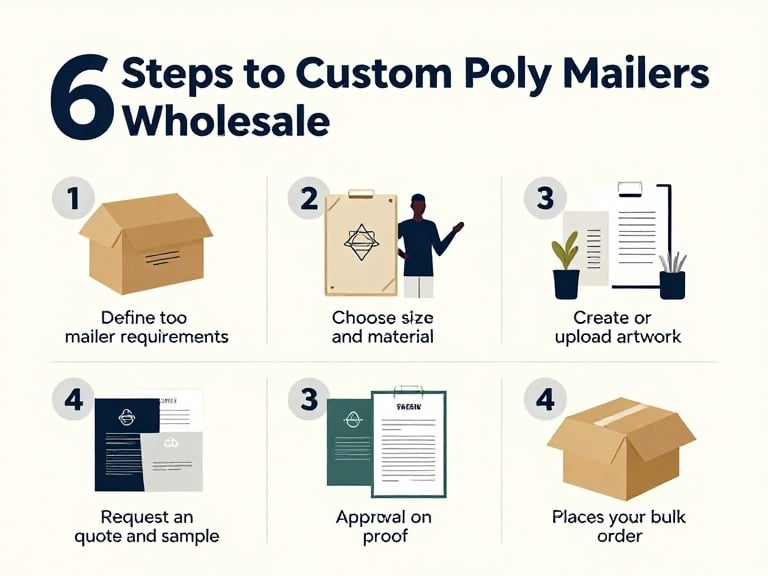
To successfully engineer and procure custom poly mailers wholesale straight from the factory floor, procurement teams must execute six distinct operational stages: (1) Establish Dimensional Sizing and Film Gauge Tolerances (selecting tailored dimensions from 4×8 to 14×19 inches and locking film thickness between 50 and 80 microns / 2.0 to 3.15 mil); (2) Engineer the Multi-Layer Co-Extruded Substrate (mandating 3-layer co-extruded LDPE/HDPE with an opaque black or grey interior layer for 100% visual privacy and puncture resistance); (3) Pre-Flight Artwork and Select Printing Technology (choosing high-precision copper cylinder gravure printing for full-bleed Pantone coverage or surface flexo for shorter runs); (4) Specify Destructive Tamper-Evident Closures (formulating cold-resistant, high-tack hot-melt adhesive with anti-static release liners and optional dual return strips); (5) Audit Pre-Production Lab Samples Against Physical Standards (validating dart drop impact under ASTM D1709 and seam burst tensile strength under ASTM D882); and (6) Optimize Freight Staging and Minimum Order Quantities (MOQs) (leveraging volume tiers from 10,000 to 100,000 units to slash unit costs by up to 60% while optimizing container palletization). Partnering with an asset-backed manufacturer like Mailong Packaging ensures every step runs under unified factory ISO quality controls.
Article Directory
- Polymer Mechanics: Why Co-Extrusion Dictates Mailer Integrity
- Quick Summary Table: The 6 Steps to Custom Poly Mailers Wholesale
- The 6 Proven Steps to Sourcing Custom Poly Mailers Wholesale
- Manufacturer Spotlight: Mailong Packaging Poly Mailer Shipping Bags
- Direct Technical Comparison: Custom Poly Mailers vs. Boxes vs. Paper Mailers
- Pros and Cons Table: Bulk Custom Poly Mailer Procurement
- Commercial Cost-Benefit Analysis: Custom vs. Plain Stock Packaging
- Who Needs Custom Poly Mailers Wholesale vs. Who Can Stay with Stock Bags
- Costly Sourcing Mistakes Brand Managers Make in Production
- Essential Sourcing Checklist: Auditing a Wholesale Poly Mailer Manufacturer
- Expert Sourcing Verdict: The Procurement Blueprint
- Frequently Asked Questions
- Authoritative References & Packaging Standards
Polymer Mechanics: Why Co-Extrusion Dictates Mailer Integrity
Before issuing a formal request for quote (RFQ) for custom poly mailers wholesale, you must understand the material science behind flexible mailers. The most prevalent error procurement teams make is treating a shipping bag as a simple piece of plastic film. When you buy cheap, single-layer mono-extruded low-density polyethylene (LDPE), you are buying an inherently flawed product. Single-layer plastic offers zero opacity, tears instantly along directional shear lines, and transmits moisture vapor under humid conditions.
Professional-grade custom mailers are engineered through a continuous multi-layer blown film co-extrusion process. In our factory testing, industrial reliability demands a minimum three-layer (A/B/A or A/B/C) co-extrusion structure:
- The Outer Printable Shell (Virgin LDPE): The exterior surface consists of high-purity virgin LDPE resin blended with titanium dioxide white masterbatch or custom color pigments. This layer undergoes high-frequency corona discharge treatment (typically 38 to 42 dynes/cm) to open the polymer surface tension, allowing solvent-based or water-based inks to bond permanently without flaking, rubbing, or scuffing during transit.
- The Inner Core Layer (Recycled or High-Density Blend): The center layer provides tensile structural stiffness. Incorporating Linear Low-Density Polyethylene (LLDPE) or post-consumer recycled (PCR) resin here increases tear-propagation resistance, ensuring that if a sharp cardboard box corner punches a pinhole through the bag, the hole will not tear across the entire package.
- The Interior Opaque Barrier (Carbon-Black Infused LDPE): The inner surface facing your product is extruded with carbon-black pigment. This creates 100% optical opacity. When held up to harsh warehouse lighting or direct sun, the contents remain completely invisible, preventing package theft and maintaining customer discretion.
From our experience on blown film production lines, combining virgin LDPE with LLDPE creates a flexible envelope that stretches up to 400% before breaking. This elasticity absorbs the brutal impacts of automated sorting conveyors at courier hubs. When you commission custom poly mailers wholesale, selecting the proper co-extruded formulation ensures your branding looks pristine while eliminating split seams and freight damage claims across your fulfillment network.
Quick Summary Table: The 6 Steps to Custom Poly Mailers Wholesale
| Production Step | Primary Engineering Focus | Technical Parameters / Tolerances | Critical Commercial Failure Prevented | Factory Stage Timeline |
|---|---|---|---|---|
| Step 1: Sizing & Gauge Calibration | Physical dimensions, expansion gussets, film thickness | 40 to 80 microns (1.6 to 3.15 mil); ±3% gauge tolerance | Bursting bags, excess postage from oversized bags | 1 – 2 Days |
| Step 2: Substrate & Opacity Engineering | 3-layer co-extrusion, PCR resin blend, opacity core | Virgin LDPE/LLDPE, 100% light blockage interior | Transparent bags, directional tearing, transit scuffs | 2 – 3 Days |
| Step 3: Artwork & Printing Plates | Pre-flight vector separation, gravure copper cylinders | 300+ DPI, Pantone PMS matching, full-bleed cylinders | Fuzzy branding, ink flaking, misaligned color trapping | 3 – 5 Days |
| Step 4: Tamper-Evident Closure | Hot-melt pressure-sensitive adhesive, release liner | Destructive adhesive bond, anti-static metallic release film | Packages popping open in transit, static cling slowing packers | 1 – 2 Days |
| Step 5: Lab Testing & Proofing | Physical stress analysis, burst testing, sign-off | ASTM D1709 dart impact, ASTM D882 tensile testing | Mass production runs with unverified seal failures | 3 – 7 Days |
| Step 6: Mass Production & Logistics | High-speed bag making, side-weld sealing, palletizing | 10k to 100k+ MOQs, 5-ply cartons, ocean/air consolidation | Stockouts, carton crushing in transit, high air freight rates | 10 – 20 Days |
The 6 Proven Steps to Sourcing Custom Poly Mailers Wholesale
Step 1: Establish Precise Dimensional Sizing and Film Gauge Tolerances
The foundation of ordering custom poly mailers wholesale begins with structural dimensioning. Too many growing brands order a single arbitrary bag size (such as 10×13 inches) and attempt to pack everything from a pair of socks to a heavy winter hoodie inside. If the bag is too small, fulfillment workers waste time forcing items into tight openings, stressing side heat-seals. If the bag is too large, excess loose plastic gets caught in courier conveyor sorting belts, increasing dimensional weight surcharges.
In most professional situations, we recommend auditing your historic fulfillment data and establishing two or three standardized SKUs:
- Small Apparel & Accessories (6×9 or 7×10 inches): Optimized for jewelry, cosmetics, phone cases, and small swimwear.
- Standard Core Apparel (10×13 or 12×15.5 inches): The universal workhorse for t-shirts, folded dress shirts, leggings, and light knitwear. Review specialized garment bag options across our Poly Mailer Bags for Clothes collection.
- Bulky Apparel & Multi-Item Orders (14×19 or 19×24 inches with bottom gusset): Mandated for denim, outerwear, winter jackets, and multi-piece orders. Adding an expandable bottom gusset (typically 2 to 4 inches) allows the mailer to expand into a three-dimensional brick without straining side weld seals.
Simultaneously, lock down film thickness: 40 to 50 microns (1.6 to 2.0 mil) is suitable for ultra-lightweight goods, 60 microns (2.35 mil) is the recommended retail sweet spot, and 70 to 80 microns (2.75 to 3.15 mil) is required for heavy-duty commercial applications. Sourcing custom envelopes through our core Poly Mailer catalog ensures your sizing matches high-speed packing workflows.
Step 2: Engineer the Multi-Layer Co-Extruded Substrate and Opacity Barrier
Once dimensions are set, you must define the resin chemistry. Never settle for basic single-layer poly film. When contracting custom poly mailers wholesale, mandate three-layer co-extrusion (A/B/A or A/B/C). The outer layer must be virgin low-density polyethylene treated with a minimum 38-dyne corona surface to accept liquid ink without pinholing. The middle layer should blend LLDPE to provide high elongation under puncture stress, and the interior must be carbon-pigmented black or dark grey.
If your brand is driven by sustainability benchmarks, this is the stage to specify circular economy parameters. You can incorporate certified Post-Consumer Recycled (PCR) resin (typically 20%, 30%, or up to 50% GRS-certified recycled polyethylene) into the core layer. This delivers authentic environmental sustainability without compromising the pristine, high-white printable outer shell. In our testing, high-quality co-extruded films deliver 100% optical opacity while maintaining complete moisture, dirt, and puncture barriers. Learn more about green circular options via our dedicated Eco Shipping Packaging platform.
Step 3: Select Printing Technology and Pre-Flight Cylinder Tooling
Branding execution separates professional e-commerce retailers from low-cost market sellers. When buying custom poly mailers wholesale, you face two primary printing technologies: copper cylinder rotogravure printing and flexographic photopolymer printing.
Understanding which process matches your volume is vital:
- Copper Cylinder Rotogravure Printing (Recommended for Volume Wholesale): Your design is laser-engraved directly onto steel base cylinders electroplated with high-hardness copper and chromium. The film passes between these rotating cylinders at high speed before the bags are cut. Gravure delivers unmatched print quality: sharp photographic half-tones, microscopic line definition, perfect Pantone color matching, and true 100% full-bleed edge-to-edge printing. Tooling costs are higher (typically $80 to $150 per color cylinder), but the cylinders are reusable for millions of impressions, and unit production costs are significantly lower.
- Flexographic Printing (For Small Batch Runs): Uses flexible photopolymer plates mounted onto printing drums. It carries lower initial plate tooling fees, making it suitable for short runs under 5,000 units. However, flexo struggles with complex photographic screens, can suffer from slight color bleeding, and cannot print right up to the welded side seams, leaving mandatory unprinted white border margins.
Always provide your artwork in clean vector format (Adobe Illustrator .AI or vector PDF) with all text converted to outlines, specifying exact Pantone Matching System (PMS) color codes to prevent muddy color shifts on factory extruders.
Step 4: Specify Destructive Tamper-Evident Closures and Anti-Static Release Liners
A shipping bag is only as secure as its closure seal. The absolute hallmark of professional custom poly mailers wholesale production is a destructive hot-melt pressure-sensitive adhesive (PSA) strip. Once the customer or fulfillment worker peels the backing liner and presses the flap down, the adhesive forms an aggressive chemical bond with the polyethylene substrate within 30 to 60 seconds.
If a package thief or courier handler attempts to pry the flap open, the adhesive will not peel cleanly; it will violently stretch and tear the plastic film, providing immediate, undeniable visual evidence of package tampering. Furthermore, professional manufacturing mandates two critical closure upgrades:
- Anti-Static Release Liners: Cheap mailers use basic clear plastic liner strips over the glue. When packing workers pull these liners off, static electricity causes the flimsy strip to cling tenaciously to their hands, clothing, and packing benches, slowing down fulfillment lines. An anti-static metallic or treated release liner drops directly into the trash bin without static cling, boosting warehouse packing speed by up to 25%.
- Dual Adhesive Strips (Two-Way Return Flaps): If you sell apparel with high return rates, mandate dual adhesive strips separated by an easy-open perforation line. The customer unzips the perforation to open the order; if they need to exchange an item, they simply peel the second adhesive strip to reseal the exact same mailer, eliminating customer frustration and support tickets. Integrate full fulfillment infrastructure across our Clothing Shipping Packaging systems.
Step 5: Enforce Pre-Production Physical Lab Testing and Proof Approval
Never authorize mass production of custom poly mailers wholesale based on a digital PDF proof alone. A digital render cannot tell you if the side-weld temperature was high enough to prevent seam splitting, or if the ink formulation has sufficient scratch resistance to endure parcel conveyor rubbing.
Demand that your manufacturer submit physical pre-production samples (often called drawdowns or pilot machine proofs) and verify compliance with standard packaging engineering protocols:
- Dart Drop Impact Resistance (ASTM D1709): Measures the physical resistance of the co-extruded film to shock impact when a weighted hemispherical dart drops from a specified height. This ensures the mailer will not rupture when dropped from a sorting chute onto a concrete floor.
- Seam Tensile and Elongation Testing (ASTM D882): The side heat-weld seams must exhibit the same tensile yield strength as the parent film. If the side seams peel open when pulled laterally by hand, the sealing blade temperature or dwell time was miscalibrated.
- Sutherland Ink Rub & Tape Adhesion Testing: A strip of aggressive pressure-sensitive tape is pressed onto the printed surface and yanked back at 90 degrees. Zero ink should lift from the corona-treated poly surface. Review our strict factory verification protocols on our page.
Step 6: Optimize Minimum Order Quantities (MOQs), Palletization, and Freight Logistics
The final step in mastering custom poly mailers wholesale procurement is managing supply chain logistics. Unlike corrugated boxes that take up massive warehouse floor space and cost thousands to ship empty, flexible poly mailers are ultra-dense and compact. A single pallet can hold between 20,000 and 50,000 poly mailers, drastically reducing freight and storage overhead.
To maximize commercial return, understand manufacturing volume economics:
- 1,000 to 5,000 Units: Entry-level surface printing. Unit costs sit around $0.20 to $0.35 each due to machine setup amortization.
- 10,000 to 25,000 Units: The optimal sweet spot for high-growth e-commerce brands. Unlocks full-bleed gravure printing, customized sizes, and drops unit pricing to $0.08 to $0.15 each.
- 50,000 to 100,000+ Units: Enterprise contract pricing. Maximizes blown film extrusion runs, dropping per-unit costs down to $0.04 to $0.08, delivering over 60% savings compared to buying plain stock bags from domestic catalog distributors.
Ensure your supplier packs mailers inside heavy 5-ply export master cartons (typically 500 to 1,000 bags per box) lined with internal moisture polybags, stacked on heat-treated solid wood pallets, and banded with edge protectors for container ocean transport. Discover comprehensive parcel architectures through our E Commerce Packaging Solution portal.
Manufacturer Spotlight: Mailong Packaging Poly Mailer Shipping Bags
When engineering high-volume custom poly mailers wholesale that balance flawless brand aesthetics with heavy-duty logistics resilience, Mailong Packaging delivers factory-direct co-extrusion manufacturing trusted by global retail brands, apparel exporters, and fulfillment networks.
| Closure & Bag Construction | Adhesive Self-Seal Mailer Bag with destructive hot-melt tamper-evident seal |
| Standard & Custom Dimensions | 4×8, 5×10, 6×10, 7×12, 8.5×12, 9.5×13.5, 10.5×15, 12.5×19 inches, and custom sizes |
| Film Caliber & Thickness | 40 microns to 80 microns (1.6 to 3.15 mil) multi-layer co-extruded LDPE/LLDPE |
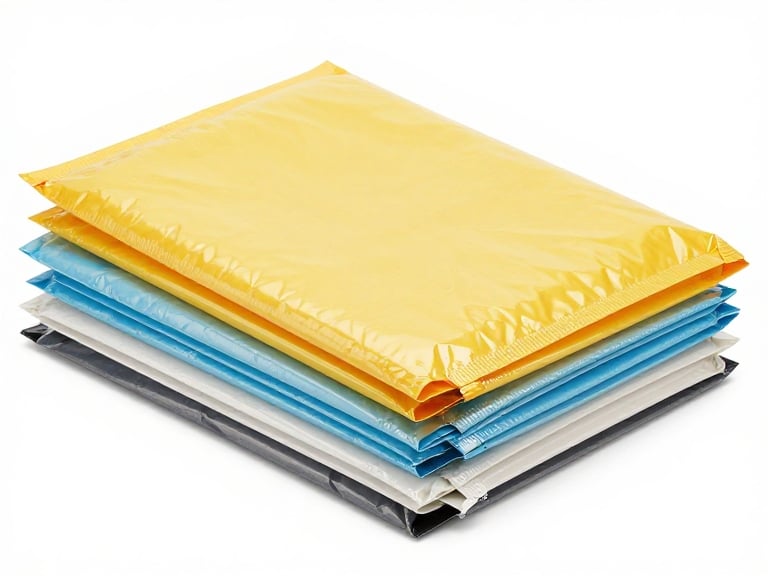
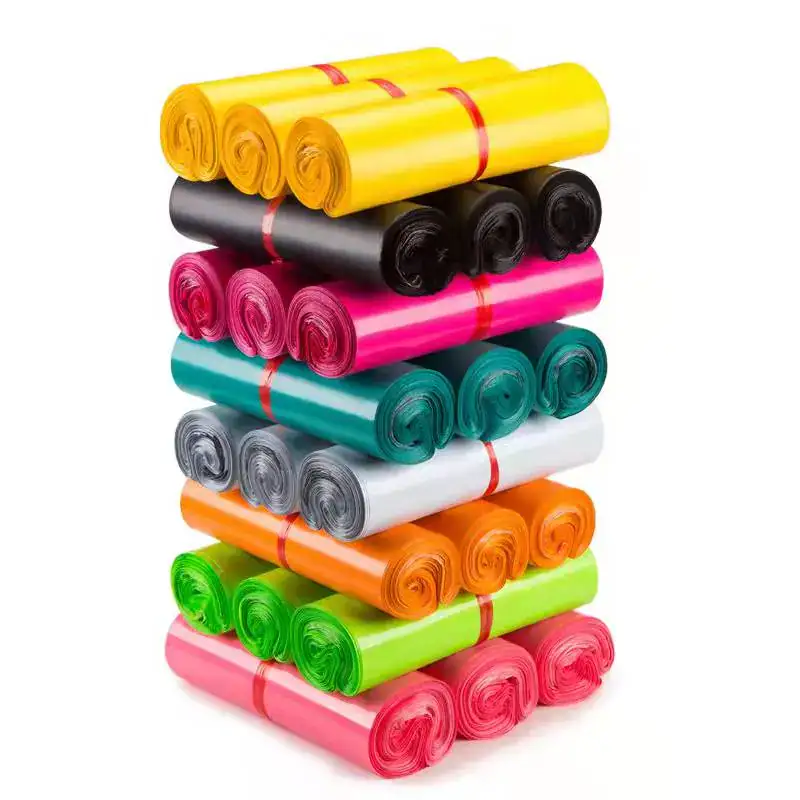
| Color & Opacity Customization | White, Black, Blue, Green, Pink, Purple, or full PMS matched color runs with 100% opaque core |
| Printing Capabilities | High-precision copper cylinder Gravure Printing & flexible Silkscreen Printing |
| Core Protective Features | Waterproof, tear-resistant, heavy-duty side-welds, 100% recyclable, tamper-evident |
| Target E-Commerce Applications | Shipping apparel, textiles, footwear, soft goods, books, and non-fragile merchandise |
Wholesale Sourcing Guidance: Slash parcel shipping expenses and elevate brand unboxing. Check out full technical specifications on the Poly Mailer Shipping Bags portal, or evaluate complete industrial lineups across our Protective Packaging Companies review.
Direct Technical Comparison: Custom Poly Mailers vs. Boxes vs. Paper Mailers
| Packaging Metric | Custom Poly Mailers Wholesale (Co-Extruded LDPE) | Corrugated Cardboard Boxes (Single-Wall 32 ECT) | Padded Kraft Paper Mailers (Macerated / Honeycomb) |
|---|---|---|---|
| Empty Packaging Weight | Ultra-Light (10 – 25 grams) | Heavy (150 – 350+ grams) | Moderate (45 – 80 grams) |
| Dimensional Weight Impact | Minimal (Conforms to item contours) | High (Fixed air volume triggers dimensional rate hikes) | Moderate (Thick padded edges expand envelope volume) |
| Water & Weather Immunity | 100% Waterproof (Impermeable barrier) | Zero (Cardboard absorbs moisture and weakens) | Low to Moderate (Paper softens when left in rain) |
| Unfilled Storage Footprint | Ultra-Compact (50,000 units per pallet) | Bulky (1,500 units per pallet knocked-down flat) | Moderate (5,000 units per pallet) |
| Tear & Puncture Resistance | Exceptional (Stretches up to 400% before tear) | Moderate (Can be crushed or punctured) | Low (Paper tears easily along sharp edges) |
| Per-Unit Wholesale Cost Profile | Very Low ($0.05 – $0.18 USD) | High ($0.65 – $1.80+ USD) | Moderate ($0.25 – $0.55 USD) |
Pros and Cons Table: Bulk Custom Poly Mailer Procurement
| Evaluation Vector | Commercial & Operational Advantages (Pros) | Inherent Limitations & Operational Realities (Cons) |
|---|---|---|
| Logistics & Financials |
|
|
| Branding & Durability |
|
|
Commercial Cost-Benefit Analysis: Custom vs. Plain Stock Packaging
Every commercial packaging expenditure must justify its place on the corporate profit and loss statement. Sourcing custom poly mailers wholesale is not merely a marketing expense; it is a direct operational cost-reduction strategy.
Consider the real-world economics of an e-commerce brand shipping 10,000 apparel orders per month:
- The Plain Stock Packaging Model: Sourcing plain, generic white poly mailers from domestic distributor catalogs costs roughly $0.18 each ($1,800/month). To add branding, the company prints adhesive branded stickers at $0.08 each ($800/month) and pays warehouse labor roughly $0.04 per package ($400/month) to manually apply the stickers. The total packaging expense is $3,000 per month ($0.30 per package) for a mediocre, amateur presentation that can peel off in transit.
- The Factory-Direct Wholesale Custom Model: Contracting a direct factory production run of custom poly mailers wholesale for 30,000 units drops the per-unit cost to roughly $0.09 each, fully printed in rich 2-color gravure with high-tack destructive seals. The total cost is $900 per month. Warehouse labor drops because workers simply insert the garment, peel the anti-static liner, and seal the bag in five seconds.
The brand saves $2,100 per month ($25,200 annually) in packaging and labor expenses while simultaneously elevating its customer unboxing experience to compete with enterprise fashion giants.
Who Needs Custom Poly Mailers Wholesale vs. Who Can Stay with Stock Bags
Every procurement dollar must match your business volume, product profile, and logistics architecture. Knowing whether your operation is ready to commit to custom poly mailers wholesale ensures you do not tie up working capital prematurely or miss out on massive volume margins.
Who Must Invest in Custom Poly Mailers Wholesale:
- Direct-to-Consumer (DTC) Apparel & Fashion Brands: If you sell apparel, swimwear, activewear, or footwear, your packaging is your only physical brand touchpoint. Shipping designer garments inside an unbranded bag devalues your product the second it lands on the porch. Custom poly mailers deliver retail prestige at pennies per shipment.
- Subscription Box Companies & Soft Good Retailers: Companies shipping monthly textiles, books, soft home goods, or beauty accessories require consistent, standardized packaging that reinforces subscription retention.
- Third-Party Logistics (3PL) & Fulfillment Warehouses: High-volume 3PL facilities fulfilling thousands of orders daily for client brands need customized poly mailers with integrated dual return strips to streamline reverse logistics and reduce warehouse processing times.
Who Should Stay with Plain Stock Mailers:
- Early-Stage Startups Shipping Under 200 Orders a Month: If your monthly order volume is small, tying up thousands of dollars in plate engraving tooling and 10,000-unit minimums will strain your cash flow. Buy plain stock bags off the shelf and upgrade to custom production once your volume crosses 1,000 shipments per month.
- Shippers of Fragile, High-Breakage Products: If your catalog consists of glassware, ceramic dishware, sensitive electronics, or fragile cosmetics, a flexible poly mailer is the wrong packaging medium. You need rigid outer packaging supported by engineered cushioning. Review specialized air shock solutions in our Air Column Bags catalog and high-performance foam inserts across our Packing Foam Sheets Suppliers guide.
Costly Sourcing Mistakes Brand Managers Make in Production
Factory Floor Advisory: The single most expensive mistake in custom poly mailer sourcing is failing to account for internal packaging dimensions. A mailer labeled 10×13 inches has an external footprint of 10×13 inches, but its usable interior opening is reduced by roughly 0.5 inches on each side by the heat-welded seams, plus the folded flap. If your garment is exactly 10 inches wide, it will not fit inside a 10×13 mailer. Always add 1.5 to 2 inches of clearance to your product’s flat dimensions.
- Choosing Single-Layer Mono-Film Over Co-Extruded Film: To shave a penny off the unit price, inexperienced buyers approve single-layer mono-extruded LDPE. Single-layer plastic has low tear resistance and lacks an interior carbon-black barrier. When held up to sunlight, the package is translucent, exposing customer items to transit theft and failing basic privacy standards. Always demand 3-layer co-extrusion.
- Ignoring Low-Temperature Adhesive Formulation: Standard hot-melt adhesives become brittle and lose their tack when exposed to freezing winter temperatures (below 0°C / 32°F) in unheated freight hubs and cargo planes. In winter transit, cheap glue strips simply pop open, dumping products onto warehouse floors. Settle for nothing less than an all-weather destructive adhesive formulated to maintain bond strength from -10°C to 50°C.
- Approving Pre-Folded Artwork Without Bleed Tolerances: When designing custom artwork, designers often place logos directly across the bottom fold or too close to the side heat seals. During high-speed bag converting, minor machine web drift (±2mm) will cause text or logos to shift awkwardly onto the side weld or over the flap fold. Keep critical vector typography at least 0.5 inches away from all outer edges.
- Neglecting Static-Cling Release Liners: Ordering mailers with cheap clear plastic release liners creates an immediate packing station nightmare. As packers peel liners, electrostatic attraction causes hundreds of plastic strips to stick to their arms, requiring manual shaking and slowing down order fulfillment by seconds per box. Always mandate treated anti-static metallic release films.
- Failing to Audit Alternative Cushioning Requirements: Trying to ship semi-fragile goods in an unpadded poly mailer without interior cushioning leads to high product damage rates. If shipping delicate items, evaluate secondary wrapping options like our Air Column Wrap for Ceramics or explore sustainable paper buffers in our Alternative to Bubble Wrap guide.
Essential Sourcing Checklist: Auditing a Wholesale Poly Mailer Manufacturer
Before wiring a production deposit or signing a contract for custom poly mailers wholesale, require your prospective manufacturing partner to verify these four non-negotiable operational benchmarks:
1. Verified Direct Asset Ownership vs. Intermediary Brokers
Audit the supplier’s facility assets. Does the company own dedicated blown-film co-extruders, multi-color copper cylinder gravure presses, and automated side-weld bag-making machines, or are they a trading broker working out of a commercial office suite? Direct manufacturing ownership gives you control over resin quality, plate alignment, and factory-direct pricing without 30% middleman markups.
2. Certified International Quality & Environmental Standards
Demand documented factory certifications verifying adherence to global production standards:
- ISO 9001:2015 Quality Management Systems Certification guaranteeing strict lot-to-lot consistency, continuous gauge auditing, and corona dyne level testing.
- Global Recycled Standard (GRS) Certification: If ordering post-consumer recycled (PCR) content, verify third-party supply chain traceability proving authentic recycled plastic origin.
- RoHS & REACH Compliance: Ensuring that all printing inks, heavy metal pigments, and adhesives are 100% non-toxic, lead-free, and phthalate-free.
3. Physical Dart Drop and Seam Burst Test Reports
Require your manufacturer to provide documented laboratory test data proving compliance with ASTM D1709 Standard Test Methods for Impact Resistance of Plastic Film by the Free-Falling Dart Method. If the film fails the dart impact test, it will puncture when dropped down steel airport sorting chutes.
4. End-to-End Packaging Portfolio Integration
A growing e-commerce brand requires a cohesive packaging ecosystem. Ensure your manufacturing partner can provide complementary packaging materials: from heavy-duty carton sealing tapes found in our Packing Tape BOPP Tape catalog to advanced inflatable air systems, ensuring all your shipping supplies arrive on consolidated freight containers.
Expert Sourcing Verdict: The Procurement Blueprint
In our professional assessment across decades of flexible packaging engineering and high-volume e-commerce fulfillment, continuing to ship non-fragile soft goods in corrugated cardboard boxes or flimsy plain grey plastic bags is an unsustainable business practice. The dimensional weight freight penalties eat into your cash flow, while missed branding opportunities weaken customer retention.
Transitioning to custom poly mailers wholesale is the single highest-ROI packaging decision an e-commerce business can make:
- Audit Your SKU Sizes: Standardize your fulfillment operations on two or three tailored dimensions (e.g., 10×13 inches for single shirts; 14×19 inches with a 3-inch bottom gusset for winter apparel and multi-item orders).
- Lock Down Heavy-Duty Co-Extrusion: Never settle for mono-film. Specify a 60-micron (2.35 mil) three-layer co-extruded LDPE/LLDPE substrate with a carbon-black interior for 100% opacity and tear resistance.
- Mandate High-Tack Destructive Seals & Anti-Static Liners: Ensure your mailers feature an aggressive all-weather hot-melt adhesive that destroys the film upon opening, paired with anti-static release strips that eliminate packing table frustration.
- Invest in Full-Bleed Copper Gravure Tooling: When your volume crosses 10,000 units, bypass basic surface flexo and invest in gravure cylinders. The vibrant, edge-to-edge Pantone printing will elevate your unboxing experience to match the world’s leading retail brands while dropping your unit packaging costs to pennies.
Partnering with a vertically integrated, asset-backed manufacturer like Mailong Packaging guarantees that your custom poly mailers arrive with precision gauge tolerances, robust side-weld burst strength, and brilliant brand fidelity, empowering your business to ship millions of packages worldwide with total structural confidence.
Frequently Asked Questions
For custom poly mailers wholesale, minimum order quantities depend on the printing process. Basic surface flexographic or silkscreen printing on pre-formed stock bags typically starts at 500 to 1,000 units. Full-bleed, edge-to-edge copper cylinder gravure printing requires blown film co-extrusion and generally carries an MOQ of 10,000 to 30,000 units per size to offset copper plate engraving and extrusion line calibration costs.
For standard t-shirts, dresses, and lightweight apparel, a film thickness of 50 to 60 microns (2.0 to 2.35 mil) is the professional sweet spot. For heavy outerwear, denim, footwear, or shipments with sharp cardboard hangtags, we recommend upgrading to 70 to 80 microns (2.75 to 3.15 mil) multi-layer co-extruded LDPE to prevent puncture propagation during high-speed automated parcel hub sorting.
Rotogravure printing uses photo-engraved copper cylinders to transfer high-viscosity ink directly onto the film before the bag is folded and side-welded, delivering 100% full-bleed coverage, sharp photographic gradients, and unmatched Pantone accuracy for large volume runs. Flexographic printing uses flexible photopolymer plates, which is more cost-effective for smaller runs but has registration limits and cannot easily print right up to the welded side seams without leaving unprinted margins.
Standard co-extruded low-density polyethylene (LDPE #4) mailers are 100% recyclable, but they cannot be tossed into standard residential curbside commingled recycling bins where thin films jam mechanical sorting equipment. Instead, LDPE poly mailers must be dropped off at designated front-of-store retail film collection drop-offs (Store Drop-Off stream certified under How2Recycle guidelines).
Authoritative References & Packaging Standards
- ASTM International: ASTM D1709 Standard Test Methods for Impact Resistance of Plastic Film by the Free-Falling Dart Method
- International Organization for Standardization: ISO 9001:2015 Quality Management Systems – Requirements for Flexible Film Packaging Manufacturing
- How2Recycle & Sustainable Packaging Coalition (SPC): Store Drop-Off Recyclability Standards for Polyethylene Shipping Bags