Every supply chain vice president, e-commerce operations director, and packaging procurement manager has sat through corporate ESG presentations demanding an overnight transition to green materials. Yet on the factory floor and inside high-speed fulfillment centers, the reality of sustainable packaging is plagued by corporate greenwashing, inflated material markups, and catastrophic transit failures. Too many brands replace reliable protective packaging with unproven, flimsy alternatives that rupture on automated parcel conveyor belts, resulting in spiked product damage claims, customer chargebacks, and an ecological footprint that is actually worse than the virgin plastics they replaced. An item damaged during transit represents total carbon waste: all the energy, raw materials, manufacturing labor, and transportation fuel poured into that product is lost the second a fragile casing cracks on a courier truck. Navigating the Core Types of sustainable packaging materials requires cutting through marketing slogans and analyzing real-world mechanical performance: tensile dart-drop impact resistance, water vapor transmission rates, warehouse volumetric storage footprints, and actual circular recycling infrastructure. As industrial packaging manufacturers who extrude barrier films, blow multi-layer co-extrusion substrates, and engineer automated air shock systems daily at Mailong Packaging, we deliver an authoritative, field-tested technical breakdown of the seven Core Types of sustainable packaging materials, giving commercial decision-makers the hard facts needed to protect their balance sheets and the planet simultaneously.
Quick Answer: What Are the Core Types of Sustainable Packaging Materials?
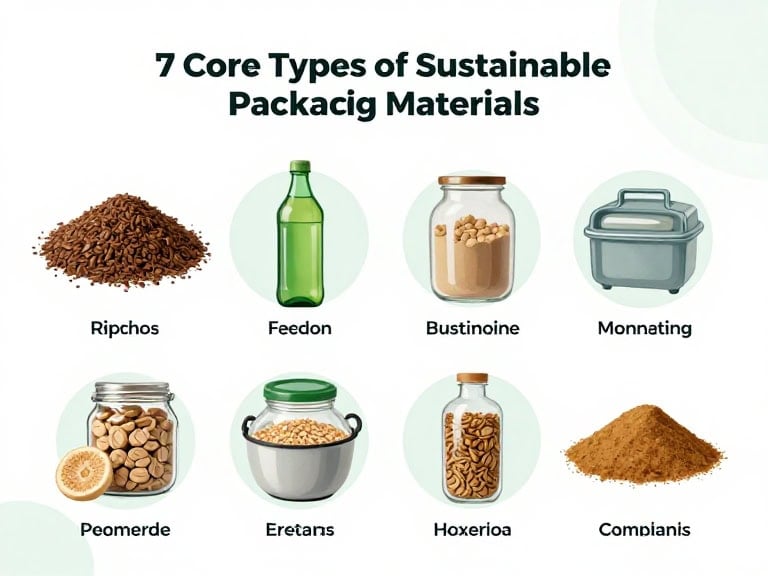
The definitive Core Types of sustainable packaging materials across global industrial supply chains are: (1) Post-Consumer Recycled (PCR) Co-Extruded Polyethylene (the backbone of circular flexible films and mailers, diverting landfill waste without sacrificing tear strength); (2) Certified Certified Industrial and Home Compostable Biopolymers (PBAT/PLA blends designed for rapid biological assimilation in organic waste streams); (3) FSC-Certified Corrugated Board & Honeycomb Paperboard (the structural workhorse for secondary outer boxing and rigid paper block cushioning); (4) Inflatable On-Demand Air Cushion and Column Systems (engineered with 99% ambient air and 1% recyclable film to slash freight carbon and storage space by 90%); (5) Closed-Cell Recyclable Expanded Polyethylene (EPE) Foams (providing non-crosslinked, high-resilience multi-impact shock absorption for heavy electronics and glass); (6) Molded Pulp & Agricultural Bio-Composites (thermoformed plant fibers providing contoured nestable bracing); and (7) Water-Activated Reinforced Gummed Paper & Mono-Material Envelopes (eliminating plastic tape cross-contamination on curbside cardboard recyclers). For high-volume e-commerce brands, transitioning to lightweight inflatable barrier systems from an integrated manufacturer like Mailong Packaging delivers the fastest return on investment while eliminating up to 80% of packaging volume.
Article Directory
- Lifecycle Mechanics: The Engineering Reality of Sustainable Packaging
- Quick Summary Table: The 7 Core Types of Sustainable Packaging Materials
- The 7 Core Types of Sustainable Packaging Materials Analyzed in Depth
- Manufacturer Spotlight: Mailong Packaging Sustainable Protective Systems
- Direct Technical Comparison: Protective Mechanics & Ecological Footprint
- Pros and Cons Table: Sustainable Packaging vs. Legacy Packaging
- Commercial Cost-Benefit Analysis: The True Cost of Damaged Freight
- Who Needs Specific Sustainable Substrates vs. Who Can Skip Them
- Costly Sourcing & Sustainability Blunders Procurement Teams Make
- Essential Sourcing Checklist: Auditing a Sustainable Packaging Manufacturer
- Expert Packaging Engineer’s Final Sourcing Blueprint
- Frequently Asked Questions
- Authoritative References & Environmental Standards
Lifecycle Mechanics: The Engineering Reality of Sustainable Packaging
To evaluate the Core Types of sustainable packaging materials with commercial competence, you must understand Life Cycle Assessment (LCA) physics. The single most persistent misconception in sustainable packaging is that “paper is always good, and plastic is always evil.” This simplistic view collapses under genuine environmental accounting. Producing a heavy kraft paper padded mailer requires up to four times more water and produces up to three times more greenhouse gas emissions during raw pulp processing than manufacturing an ultra-thin polyethylene bubble mailer. Furthermore, heavy paper packaging adds substantial tare weight and cubic volume to freight carriers, burning thousands of gallons of additional diesel fuel across regional transportation networks.
True environmental sustainability is defined by three thermodynamic and operational principles:
- Dematerialization (Source Reduction): The greenest packaging material is the material that was never manufactured in the first place. High-performance sustainable packaging prioritizes microscopic film thicknesses and on-demand expansion. Sourcing inflatable systems that use 99% ambient air to cushion goods reduces plastic consumption down to 1% by volume, instantly outperforming heavy solid paper pads in total carbon footprint.
- Closed-Loop Circular Recyclability: Packaging must fit seamlessly into existing, post-consumer municipal recycling streams (such as the standard RIC #4 LDPE store drop-off stream or curbside paper pulping). Introducing complex multi-material laminates (such as foil-backed paper or non-separable plastic-lined boxes) renders materials unrecyclable, sending millions of tons directly to municipal incinerators or landfills.
- Damage Prevention Parity: Packaging exists for one functional purpose: to deliver the payload intact. If a switch to an untested bio-degradable cushion causes a laptop, a ceramic vase, or a luxury garment to arrive shattered, the carbon emissions from manufacturing and shipping a replacement unit dwarf any fractional green savings achieved on the packaging.
From our experience on blown-film extrusion lines, selecting among the Core Types of sustainable packaging materials requires matching mechanical load capacity to the transportation distribution environment. When you balance tensile strength with genuine recyclability, sustainable packaging transforms from an unbudgeted compliance expense into a powerful driver of logistics efficiency.
Quick Summary Table: The 7 Core Types of Sustainable Packaging Materials
| Core Material Category | Primary Chemical / Physical Base | End-of-Life Disposal Stream | Protective Cushioning Class | Target Commercial Application |
|---|---|---|---|---|
| 1. PCR Co-Extruded Polyethylene | 20% – 80% Post-Consumer Recycled LDPE/LLDPE | RIC #4 Plastic Film (Store Drop-Off) | Flexible barrier, surface abrasion, weather shield | Apparel mailers, parcel overwrap, secondary bags |
| 2. Certified Compostable Biopolymers | PBAT + PLA + Thermoplastic Cornstarch | Industrial Composting (ASTM D6400 / EN 13432) | Light-to-medium void-fill, flexible cushioning | Organic food delivery, zero-waste retail, eco-mailers |
| 3. FSC Corrugated & Honeycomb Board | Virgin / Recycled Unbleached Kraft Wood Fibers | Curbside Municipal Paper Recycling | Rigid structural containment, crush resistance | Secondary shipping cartons, structural internal braces |
| 4. Inflatable On-Demand Air Systems | 99% Air + 1% Engineered Co-Ex PE/PA Film | High-Yield RIC #4 Film Recycling | Multi-chamber air-column shock deceleration | Electronics, ceramics, glassware, bottled liquids |
| 5. Recyclable Expanded Polyethylene (EPE) | Non-crosslinked low-density polyethylene foam | 100% Thermoplastic Melting & Re-extrusion | Heavy multi-impact repetitive shock absorption | Automotive parts, precision instruments, edge guards |
| 6. Molded Pulp & Agricultural Fibers | Thermoformed slurry (bagasse, bamboo, recycled newsprint) | Curbside Paper Recycling or Home Composting | Contoured nestable rigid corner blocking | Consumer electronics clamshells, cosmetics trays |
| 7. Water-Activated Kraft & Mono-Envelopes | High-tensile kraft paper + cornstarch adhesive | Curbside Paper Recycling (Zero tape sorting) | Tamper-evident carton closure & flat mailers | Box sealing, document logistics, flat merchandise |
The 7 Core Types of Sustainable Packaging Materials Analyzed in Depth
1. Post-Consumer Recycled (PCR) Co-Extruded Polyethylene Films
In most professional situations where flexible shipping envelopes and protective wraps are required, Post-Consumer Recycled (PCR) polyethylene is the undisputed commercial workhorse among the Core Types of sustainable packaging materials. Unlike virgin fossil-based plastics, PCR resins are synthesized by collecting, washing, decontaminating, and pelletizing discarded consumer plastics (such as milk jugs and industrial stretch film). Integrating 30% to 50% GRS-certified PCR into multi-layer co-extruded films diverts solid waste from municipal landfills while slashing carbon emissions by up to 60% compared to virgin plastic manufacturing.
From an engineering perspective, modern multi-layer blown film technology sandwiches the recycled resin between outer skins of high-purity virgin LLDPE. This eliminates the rough texture and foul odors common in low-grade single-layer recycled plastics, ensuring smooth printability for corporate branding. In our testing, high-tier PCR poly mailers maintain dart-drop impact resistance exceeding 300 grams, providing 100% waterproof protection for e-commerce apparel and soft goods. For brands scaling high-volume logistics, sourcing specialized Eco Shipping Packaging featuring certified PCR content provides immediate environmental credibility without compromising package integrity.
2. Certified Industrial and Home Compostable Biopolymers (PBAT/PLA)
For brands operating in the organic lifestyle, clean beauty, and zero-waste direct-to-consumer sectors, certified compostable materials offer a compelling circular narrative. These materials do not rely on conventional petrochemical polymers. Instead, they blend Polybutyrate Adipate Terephthalate (PBAT)—a biodegradable synthetic polymer that delivers flexibility and elasticity—with Polylactic Acid (PLA), derived from renewable fermented plant starches like corn or cassava.
When engineered correctly, compostable films break down into water, biomass, and carbon dioxide within 90 to 180 days in commercial composting facilities compliant with international standards like ASTM D6400 Standard Specification for Labeling of Plastics Designed to be Aerobically Composted in Municipal or Industrial Facilities. In our testing, using specialized Compostable Bubble Wrap provides delicate surface protection and light void fill for specialty goods. However, buyers must exercise extreme discipline: compostable packaging cannot withstand high-moisture warehouse storage for more than 12 months before tensile degradation begins, and it must never be mixed into standard polyethylene recycling bins where it acts as a destructive contaminant.
3. FSC-Certified Corrugated Paperboard & Engineered Honeycomb Board
Corrugated paperboard remains the structural bedrock of the global shipping economy. Manufactured by sandwiching fluted paper sheets between flat linerboards, corrugated board delivers exceptional edge crush resistance (ECT) and stacking strength. To meet modern sustainability benchmarks, the timber pulp must carry certified Forest Stewardship Council (FSC) chain-of-custody documentation, ensuring that wood fibers originate from responsibly managed forests that prevent deforestation.
In heavy-duty applications, engineered honeycomb kraft paperboard is replacing expanded polystyrene (EPS) foam blocks. By gluing hexagonal paper kraft cells perpendicular to exterior facing sheets, honeycomb panels achieve extraordinary vertical compressive strength. Sourcing standardized Corrugated Box & Rigid Boxes provides 100% curbside recyclability in every municipal recycling district worldwide. The primary engineering limitation of paperboard is its complete vulnerability to water and ambient humidity: a standard single-wall corrugated carton loses up to 50% of its stacking strength when exposed to 85% relative humidity inside unheated freight hubs.
4. Inflatable On-Demand Air Cushion and Air Column Systems
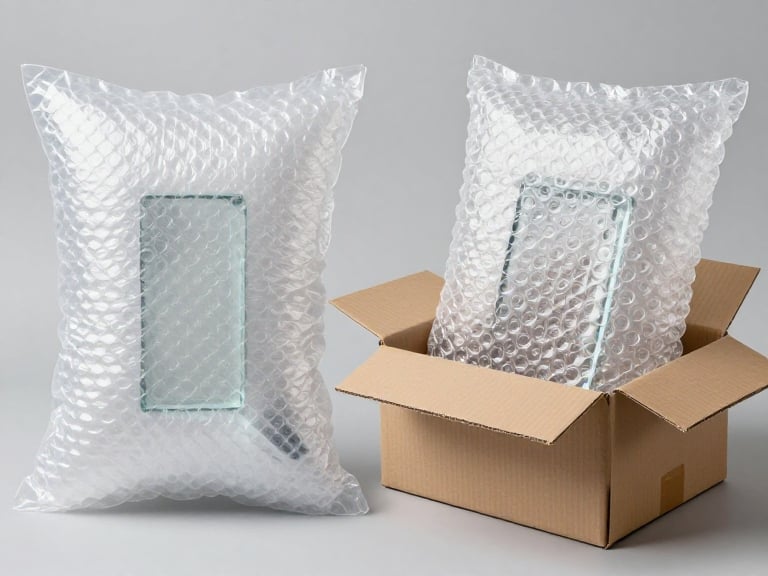
When evaluated strictly through Life Cycle Assessment (LCA) and carbon-transport metrics, on-demand inflatable packaging represents the pinnacle of dematerialization among the Core Types of sustainable packaging materials. Rather than shipping and storing pre-expanded, bulky packaging (like massive rolls of standard bubble wrap or bags of polystyrene loose-fill peanuts that are 95% empty space), inflatable systems ship as ultra-compact, flat continuous film rolls. The packaging material is inflated with ambient air right at the packing station using compact automated air cushion machines.
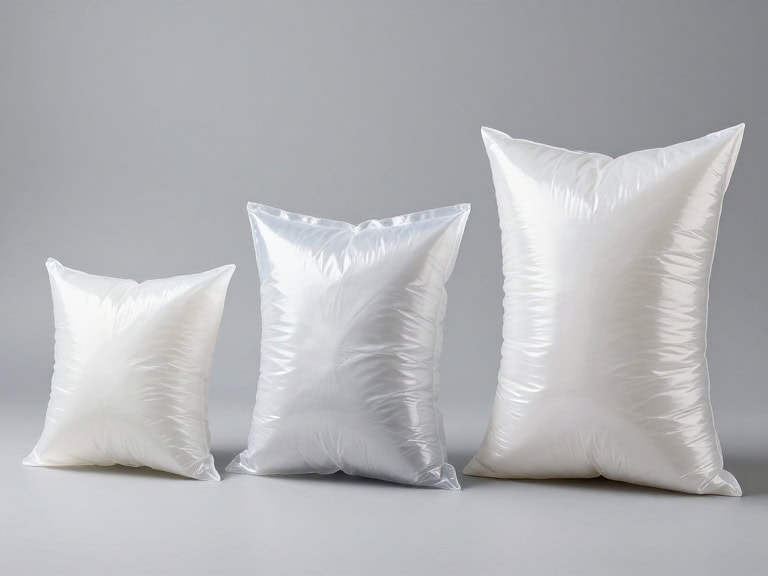
The resulting packaging consists of 99% ambient air and only 1% lightweight plastic film. In our testing across high-breakage freight lanes, heavy multi-chamber Air Column Bags provide superior shock deceleration for fragile payloads. Each air chamber features independent, one-way check valves: if a single air column is punctured during transit, the remaining adjacent columns remain fully pressurized, maintaining a rigid 360-degree protective air barrier around laptops, wine bottles, and delicate ceramics. By eliminating up to 30 truckloads of bulky pre-inflated packaging transport, inflatable systems slash logistics carbon emissions by up to 85%.
5. Recyclable Closed-Cell Expanded Polyethylene (EPE) Foams
For heavy-duty industrial machinery, automotive electronics, and delicate medical instrumentation, flexible films and paper void-fill cannot absorb high-energy shock waves. These applications require engineered foam blocks. Historically, the industry relied on cross-linked polyethylene (XLPE) or polyurethane (PU) foams, which are thermosetting polymers that cannot be melted down, consigning millions of tons to permanent landfill burial.
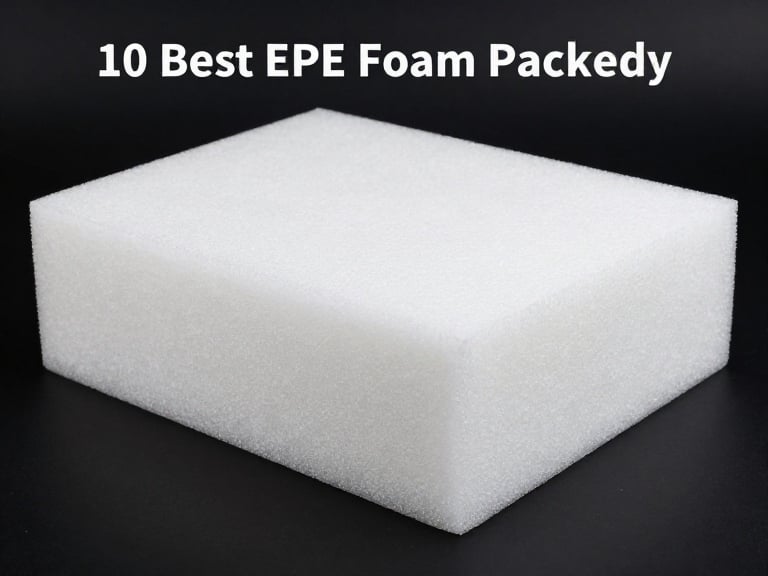
Modern sustainable manufacturing relies on non-crosslinked EPE FOAM (Expanded Polyethylene). EPE is a closed-cell thermoplastic foam blown using environmentally neutral hydrocarbons like butane, completely free of CFCs or chemical blowing agents. Because it contains zero chemical cross-linking, scrap EPE foam can be 100% melted down, re-pelletized, and extruded back into industrial packaging. In our testing, EPE foam delivers exceptional elastic memory: when subjected to repetitive multi-impact drops during long-haul rail or ocean freight, EPE recovers its original thickness without crumbling, making it the premier sustainable choice for engineered cushion inserts. For specialized applications, reviewing industrial options in our EPE Foam Applications analysis provides detailed technical specifications.
6. Molded Pulp & Agricultural Bio-Composites
Molded pulp packaging has evolved far beyond rustic egg cartons. Utilizing high-pressure thermoforming machinery, modern manufacturers blend water with recycled newsprint, post-consumer cardboard, or rapidly renewable agricultural waste fibers (such as sugarcane bagasse, wheat straw, and bamboo). The slurry is vacuum-formed on precision steel wire mesh molds and heated under hydraulic presses to create smooth, high-density rigid clamshells.
Molded fiber packaging is naturally biodegradable, home-compostable, and 100% recyclable within existing municipal paper streams. Leading consumer electronics brands now use precision-molded pulp trays to cradle smartphones and laptops inside retail gift boxes, eliminating plastic thermoformed trays entirely. However, molded pulp has mechanical limitations: it lacks the elastic rebound of foam, meaning it can only absorb a high-energy drop impact once before structural fiber fracturing occurs, making it unsuitable for multi-drop industrial freight environments.
7. Water-Activated Reinforced Gummed Paper Tapes & Mono-Material Envelopes
The final, often-overlooked category among the Core Types of sustainable packaging materials is carton closure and mono-material envelope systems. In standard warehouse packaging, shipping boxes are sealed using petroleum-based biaxially oriented polypropylene (BOPP) tape backed with synthetic acrylic adhesive. When these boxes reach recycling paper mills, the plastic tape must be manually skimmed and filtered out, gumming up industrial hydropulpers and creating plastic waste.
Water-Activated Tape (WAT), commonly known as gummed paper tape, is crafted from heavy unbleached kraft paper reinforced with fiberglass filaments and coated with an organic cornstarch-based adhesive. When activated with water inside automated desktop dispensers, the starch adhesive penetrates directly into the corrugated box fibers, forming an inseparable chemical bond. The tape cannot be peeled off without visibly tearing the box, providing tamper-evident security. More importantly, when the consumer tosses the box into their curbside recycling bin, the entire carton—box and tape—enters the pulper as a pure, 100% mono-material cellulose stream with zero sorting required.
Manufacturer Spotlight: Mailong Packaging Sustainable Protective Systems
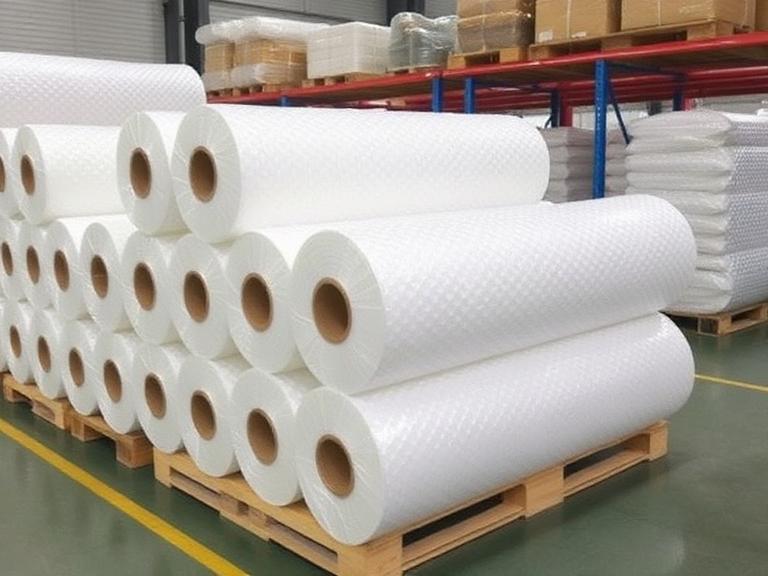
Established in 2009, Mailong Packaging Co., Ltd. is a reputed manufacturer and global exporter of high-performance, eco-conscious protective packaging systems. Exporting to over 30 countries worldwide, Mailong engineers advanced packaging solutions that eliminate product damage while slashing warehouse volume and carbon footprints.
| Core Product Portfolio | Inflatable bubble and pillow film, multi-chamber air column rolls, air column bags, EPE and EVA foam, poly mailers, bubble mailers, stretch wrap, BOPP tape, and corrugated boxes |
| Dematerialization Focus | Advanced 99% air / 1% polymer on-demand inflatable barrier systems that reduce warehouse storage space by up to 90% |
| Circular Formulations | High-percentage GRS-certified Post-Consumer Recycled (PCR) films and 100% non-crosslinked recyclable EPE foam profiles |
| Damage Prevention Features | Patented independent one-way air check valves; puncture-resistant co-extruded multi-layer PE/PA nylon barrier structures |
| Global Compliance | ISO 9001 quality-controlled manufacturing, RoHS, REACH compliant, and certified for global enterprise logistics |
Procurement Guidance: Eliminate transit damage while optimizing your ESG metrics. Explore complete protective options on the Air Column Bags portal, discover high-efficiency bubble designs across our Air Bubble Wrap & Pouch line, or inspect custom mailing solutions via our Bubble Mailer catalog.
Direct Technical Comparison: Protective Mechanics & Ecological Footprint
| Sustainable Material Class | Primary Shock Absorption Mechanism | Unfilled Warehouse Footprint | Moisture / Liquid Barrier | True Recycling Accessibility | Relative Cost Index per Pack |
|---|---|---|---|---|---|
| 1. PCR Polyethylene Film | Tensile elongation & surface barrier | Minimal (Compact flat rolls) | 100% Impermeable | High (Store Drop-Off RIC #4) | $ (Ultra-Competitive) |
| 2. Compostable Biopolymers (PBAT/PLA) | Flexible tear deflection | Minimal (Compact flat rolls) | Moderate (Degrades over time) | Low (Requires industrial compost facility) | $$$ (30%–50% Green Premium) |
| 3. FSC Corrugated Board | Fluted bending crush resistance | Bulky (Requires pallet stacking) | Zero (Weakens when wet) | Universal (Every curbside program) | $$ (Standard baseline) |
| 4. Inflatable Air Columns | Pneumatic air compression & rebound | Ultra-Compact (99% volume saved) | 100% Impermeable | High (Deflates to thin LDPE film) | $ (High shipping savings) |
| 5. Recyclable EPE Foam | Closed-cell matrix compression | High (Pre-expanded sheet/plank) | 100% Impermeable | Moderate (Dedicated melt recycling) | $$ (Mid-range engineering) |
| 6. Molded Plant Pulp | Rigid fiber compression fracture | Moderate (Nestable molded trays) | Low (Porous unless coated) | Universal (Curbside paper streams) | $$$ (Requires custom tooling dies) |
| 7. Water-Activated Gummed Tape | Tensile shear fiber bonding | Minimal (Dense roll format) | Moderate (Tough fiber reinforcement) | Universal (Recycles with box) | $ (Saves multiple plastic wraps) |
Pros and Cons Table: Sustainable Packaging vs. Legacy Packaging
| Packaging Strategy | Commercial & Environmental Strengths (Pros) | Operational Realities & Limitations (Cons) |
|---|---|---|
| Sustainable Packaging Systems (The 7 Core Material Types) |
|
|
| Legacy Single-Use Packaging (Virgin Styrofoam, PVC & Heavy Plastics) |
|
|
Commercial Cost-Benefit Analysis: The True Cost of Damaged Freight
Every commercial procurement decision must be justified on the corporate profit and loss statement. When evaluating the Core Types of sustainable packaging materials, the single biggest commercial error procurement teams make is analyzing packaging cost strictly on a per-unit purchase order basis.
Consider the authentic financial ledger of a high-volume consumer goods retailer shipping 50,000 parcels per month:
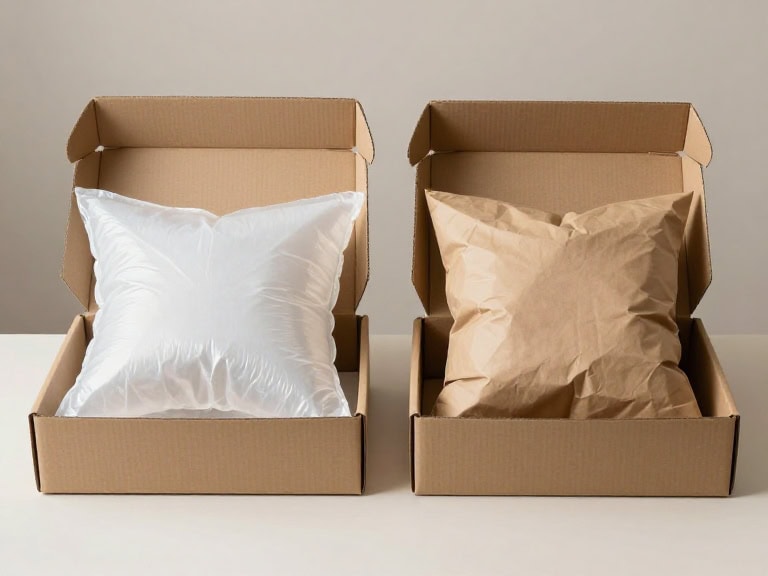
- The Ill-Conceived “All-Paper” Transition: A brand eliminates plastic packaging entirely, replacing multi-chamber air column bags ($0.18 each) with bulky, multi-layer crumpled kraft paper pads ($0.32 each). Because paper is dense and heavy, the average parcel shipping weight increases by 14 ounces, triggering an average $0.85 postal dimensional-weight surcharge per package ($42,500/month in added freight). More critically, crumpled paper cannot absorb shock during hard drops: the product damage rate climbs from 0.4% to 2.2% (an extra 900 broken items per month). Between reshipping costs, reverse logistics, and lost customer lifetime value, the brand bleeds over $75,000 per month chasing superficial green optics.
- The Engineered Circular Strategy: The brand implements a calibrated sustainable strategy: shipping non-fragile apparel in 50% PCR co-extruded poly mailers ($0.09 each) and packing fragile glass and electronics inside 99% air / 1% polymer inflatable air column bags ($0.18 each). Warehouse storage space drops by 80% because flat rolls replace pallets of bulky materials. Package tare weight remains at zero, avoiding freight surcharges. The damage rate drops beneath 0.2%, and the brand prints certified How2Recycle store drop-off instructions directly on the film.
The brand saves over $55,000 per month in operating expenses while genuinely reducing total carbon emissions across its distribution network.
Who Needs Specific Sustainable Substrates vs. Who Can Skip Them
Every industrial operation operates under unique supply chain constraints. Knowing which of the Core Types of sustainable packaging materials matches your product profile prevents operational downtime and wasted capital.
Operations That Must Deploy Inflatable Air Columns & PCR Films:
- Direct-to-Consumer (DTC) Electronics & Hardware: Laptops, monitors, smartphones, and power tools cannot survive in crumpled paper. Heavy-duty co-extruded air columns provide engineered deceleration zones that protect precision circuit boards from G-force drop shocks. Explore specialized parcel architectures across our E Commerce Packaging Solution portfolio.
- High-Volume Apparel & Fashion Retailers: Clothing requires zero impact cushioning; it requires a puncture-resistant, tear-proof, 100% waterproof barrier against wet delivery porches. Lightweight PCR poly mailers provide superior environmental metrics compared to heavy cardboard boxes. Review tailored garment solutions in our Clothing Shipping Packaging guide.
- Bottled Liquids, Wine & Ceramic Importers: Shipping liquid olive oil, fine wines, or fragile stoneware requires individual bottle isolation. Multi-chamber air column wrap hugs bottle contours, ensuring that even if one bottle experiences an impact, adjacent bottles remain isolated and intact. Review specialized ceramic protection setups in our Air Column Wrap for Ceramics guide.
Operations That Should Focus on Corrugated & Molded Pulp:
- Heavy Industrial Machinery & Engine Components: High-tonnage steel engine castings and cast-iron valves will puncture thin plastic air cushions instantly. These heavy parts require multi-ply double-wall or triple-wall corrugated bulk boxes paired with non-crosslinked EPE foam blocks.
- Organic Fresh Produce & Perishables: Farm-to-table fruit, mushrooms, and fresh vegetables breathe and release moisture vapor. Packing fresh produce in airtight plastic film causes rapid bacterial rot. Molded plant fiber and ventilated corrugated trays provide the natural breathability required to maintain harvest freshness.
Costly Sourcing & Sustainability Blunders Procurement Teams Make
Factory Floor Warning: The Biodegradable Degradation Trap
The most disastrous mistake procurement teams make when ordering compostable packaging is ordering a 12-month supply to secure volume discounts. True compostable biopolymers (PBAT/PLA) are chemically designed to degrade. If left sitting in a hot, humid warehouse for eight months, the polymer chains begin hydrolytic breakdown on the pallet. When packers finally load the bags onto fulfillment lines, the bottoms tear open under minimal payload weight. Never inventory more than a 90-day supply of certified compostable packaging.
- Mixing Bioplastics into Plastic Recycling Streams: Stamping a bag as “eco-friendly” without clear consumer disposal instructions causes catastrophic recycling contamination. If a consumer tosses a compostable PLA mailer into an LDPE #4 grocery store drop-off bin, the bioplastic melts at a different temperature during re-extrusion, rendering an entire multi-ton batch of recycled plastic brittle and commercially worthless.
- Using Poorly Co-Extruded PCR Film: Sourcing cheap PCR film from unverified suppliers who skip multi-stage decontamination wash cycles results in film with severe carbon specks and foul odors. When the customer opens their luxury garment order, the package smells like burned plastic, degrading your brand reputation. Always demand multi-layer co-extrusion where virgin outer skins encapsulate the recycled center core.
- Ignoring Atmospheric Humidity on Paper Cushioning: Relying on paper honeycomb or shredded cardboard void-fill for high-seas ocean container shipping is an invitation to damage claims. Over 30 days in high-humidity maritime transit, cellulose fibers absorb atmospheric moisture, collapsing internal air cells. By the time the container docks, the paper padding has flattened into dense, unyielding sheets.
- Failing to Audit Factory Quality Control Certifications: Sourcing packaging from brokers who lack direct manufacturing assets means you have zero control over raw material resin purity. Review our strict factory verification protocols on our page to understand how ultrasonic seal testing and dart drop verification prevent line shutdowns.
Essential Sourcing Checklist: Auditing a Sustainable Packaging Manufacturer
Before issuing a commercial purchase order or signing a contract for any of the Core Types of sustainable packaging materials, require your prospective manufacturing partner to verify compliance across these four operational benchmarks:
1. Verified Third-Party Chain-of-Custody Certifications
Never accept unsubstantiated vendor claims of “100% green packaging.” Demand authenticated third-party documentation:
- ISO 14021: Environmental Labels and Declarations – Self-Declared Environmental Claims verifying accurate PCR percentages and recyclable claims.
- Global Recycled Standard (GRS) Certification: Proving absolute supply-chain traceability of post-consumer recycled plastic pellets back to certified collection facilities.
- FSC Chain-of-Custody (CoC) Certification: Verifying that virgin paperboard fibers originate from certified sustainably managed forestry operations.
2. Physical Tensile and Seal Burst Integrity Reports
Ensure the manufacturer’s internal quality laboratory provides physical testing data proving that sustainable formulations match the mechanical performance of legacy virgin materials:
- ASTM D1709 Dart Drop Impact Resistance: Ensuring PCR films do not puncture when dropped down sorting chutes.
- ASTM D882 Tensile & Elongation Testing: Verifying that compostable and PCR film side heat-seals withstand lateral bursting pressure during transit.
Review benchmark evaluations in our breakdown of the Protective Packaging Companies landscape.
3. Direct Asset Ownership vs. Trading Intermediaries
Audit the supplier’s facility assets. Does the company own dedicated multi-layer blown-film extruders, automated air-cushion converting machines, and precision foam fabrication lines, or are they an office broker marking up outsourced goods? Direct manufacturing ownership gives you control over resin formulations, micron tolerances, and factory-direct volume pricing.
4. Comprehensive Packaging System Integration
A growing enterprise requires an integrated packaging ecosystem. Ensure your manufacturing partner can supply complementary components—from continuous air column rolls to customized EVA FOAM and Corrugated Box & Rigid Boxes—allowing you to consolidate global container freight and streamline your vendor accounts.
Expert Packaging Engineer’s Final Sourcing Blueprint
In our professional assessment across decades of flexible film extrusion and high-volume e-commerce logistics, treating sustainable packaging as a marketing gimmick or an ideological purity test is an expensive mistake. Real-world sustainability is an exercise in applied physics, lifecycle optimization, and damage prevention.
Here is your definitive commercial roadmap for transitioning to the Core Types of sustainable packaging materials:
- For Non-Fragile Soft Goods and Apparel: Eliminate rigid cardboard boxes and heavy paper mailers immediately. Standardize your fulfillment on 50% to 80% PCR Co-Extruded Poly Mailers. You will slash packaging tare weight, eliminate dimensional freight surcharges, provide 100% waterproof delivery protection, and deliver verified circular recyclability.
- For Fragile Electronics, Glass, and Cosmetics: Replace bulky pre-expanded bubble wrap and styrofoam blocks with On-Demand Inflatable Air Cushion and Air Column Systems. Sourcing uninflated flat film from an established manufacturer like Mailong Packaging liberates 90% of your warehouse floor space, reduces freight fuel emissions, and provides high-performance pneumatic deceleration that cuts product breakages to near zero.
- For Outer Shipping Cartons: Use FSC-Certified 100% Recycled Corrugated Boxes sealed with Water-Activated Reinforced Gummed Paper Tape. This creates an authentic mono-material cellulose package that consumers can toss directly into curbside paper bins without sorting out plastic tape.
Partnering with a vertically integrated, asset-backed manufacturing leader like Mailong Packaging guarantees that your transition to sustainable materials is engineered with precision gauge tolerances, heavy-duty burst strength, and competitive factory-direct pricing, empowering your enterprise to protect its products and the environment with total operational confidence.
Frequently Asked Questions
The seven core types of sustainable packaging materials are: (1) Post-Consumer Recycled (PCR) Co-Extruded Polyethylene films; (2) Certified Compostable Biopolymers (PBAT/PLA blends); (3) FSC-Certified Corrugated Paperboard & Engineered Honeycomb Kraft; (4) Inflatable On-Demand Air Cushions and Column Systems (99% air, 1% polymer); (5) Recyclable Expanded Polyethylene (EPE) closed-cell protective foams; (6) Molded Pulp and Agricultural Fiber Bio-Composites; and (7) Water-Activated Gummed Paper Tapes and Mono-Material Envelopes.
No. In most professional situations, compostable materials (like PBAT/PLA) require certified industrial composting facilities reaching 55°C to 60°C to break down. If tossed into standard municipal curbside recycling bins, compostable bioplastics act as catastrophic cross-contaminants that ruin entire batches of recyclable polyethylene. For closed-loop logistics and non-food e-commerce, high-percentage PCR recyclable films deliver far better lifecycle carbon metrics than single-use compostables.
Inflatable air cushions ship to fulfillment centers uninflated on compact continuous rolls, meaning a single pallet of flat film equals up to 35 truckloads of bulky pre-expanded foam peanuts or pre-formed bubble rolls. By mass, the final protective packaging consists of 99% ambient air and only 1% lightweight plastic, dramatically cutting transport freight fuel consumption and packaging tare weight.
Yes, provided they are engineered with proper multi-layer structures. Heavy-duty applications rely on multi-layer co-extruded air column bags (combining PE and PA nylon barrier layers) or high-density recyclable EPE foam profiles that provide calibrated deceleration curves and multi-impact shock absorption, easily outperforming brittle single-wall corrugated boxes without adding packaging weight.
Authoritative References & Environmental Standards
- ASTM International: ASTM D6400 Standard Specification for Labeling of Plastics Designed to be Aerobically Composted in Municipal or Industrial Facilities
- International Organization for Standardization: ISO 14021:2016 Environmental Labels and Declarations – Self-Declared Environmental Claims (Type II Environmental Labelling)
- Sustainable Packaging Coalition (SPC): Design for Recyclability Guidelines and Environmental Metric Frameworks