In the modern e-commerce landscape, dimensional weight pricing has fundamentally altered how businesses approach fulfillment. If you are shipping soft goods in corrugated cardboard boxes, you are bleeding capital on every single order. From our experience managing high-volume logistics packaging, making the transition from boxes to flexible poly envelopes for shipping is the single most effective strategy to reduce your dimensional footprint, lower your postage costs, and accelerate your warehouse packing speed.
However, navigating the packaging supply chain is fraught with pitfalls. The market is saturated with low-grade, ultra-thin plastics that puncture in transit, exposing your merchandise to the elements and destroying your brand reputation. In most professional situations, treating packaging as an afterthought is a catastrophic error. You must exercise commercial and practical judgment when selecting your materials. In this definitive guide, we will analyze the engineering behind these mailers, reveal the 7 best poly envelopes for shipping on the market today, and explain exactly whether it is actually worth using, buying, or upgrading your current fulfillment strategy.
Quick Answer: Which Poly Envelopes Should You Buy?
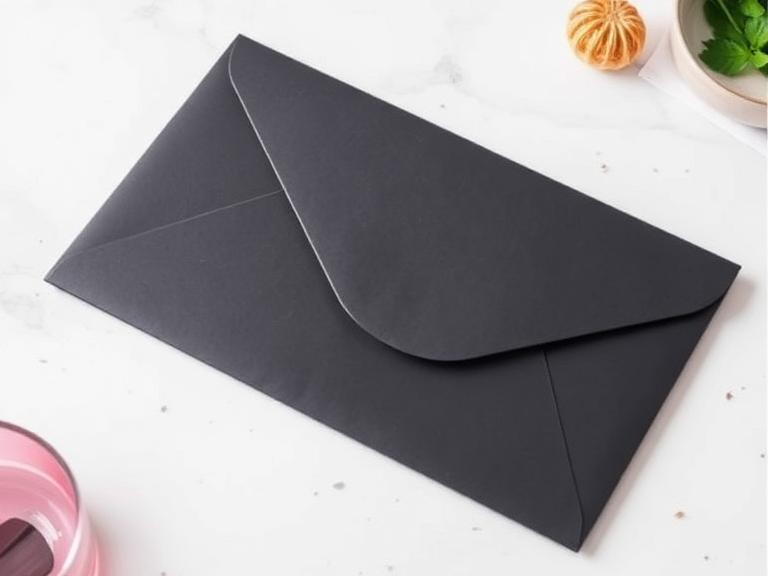
If you are shipping non-fragile items like clothing, textiles, or documents, poly envelopes for shipping are your absolute best option. For commercial users, we recommend Co-extruded Standard Poly Mailers (50-80 microns) for general apparel, and Dual-Seal Returnable Poly Envelopes for e-commerce brands with high return rates. If you need brand differentiation, invest in Custom Printed Branded Poly Envelopes. Avoid poly envelopes entirely if you are shipping fragile electronics, rigid plastics, or ceramics; those applications strictly require bubble mailers or corrugated boxes.
Table of Contents
- What Are Poly Envelopes for Shipping?
- How They Work in Logistics
- Benefits of Upgrading
- Limitations to Consider
- Who Should Use Them
- Who Does Not Need Them
- The 7 Best Poly Envelopes for Shipping
- Common Mistakes in Fulfillment
- Critical Buying Considerations
- Essential Reference Tables
- Expert Recommendation from Mailongpak
- The Bottom Line
- Frequently Asked Questions
- Authoritative References
What Are Poly Envelopes for Shipping?
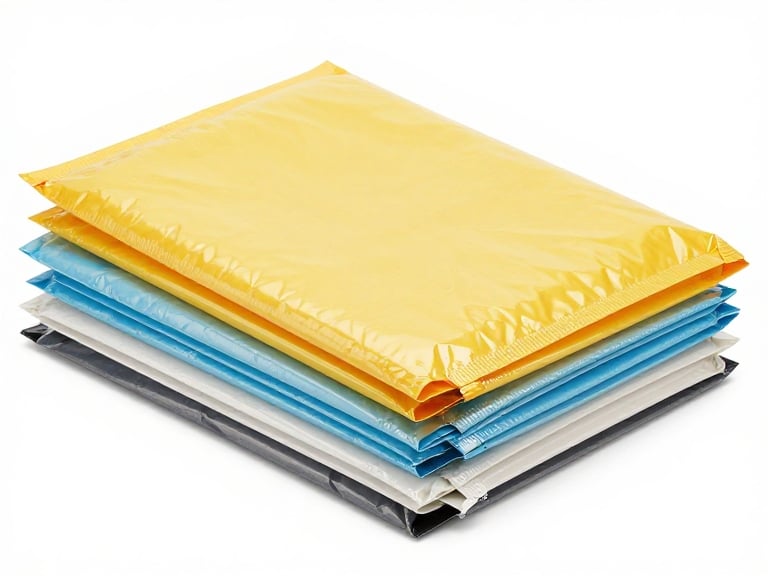
Poly envelopes for shipping, commonly referred to as Poly Mailer bags, are flexible packaging solutions manufactured from polyethylene film. They are designed exclusively for the transit of non-fragile goods through postal and courier networks. High-quality poly envelopes are created using a co-extrusion process. This means multiple layers of plastic are pressed together simultaneously—typically resulting in an envelope that is white on the outside (to reflect heat and highlight shipping labels) and gray or black on the inside (to provide 100% opacity and hide the contents from view).
How They Work in Logistics
The mechanics of poly envelopes for shipping are brilliantly simple. They utilize a peel-and-seal adhesive strip coated with a pressure-sensitive, hot-melt glue. Once the protective liner is removed and the flap is pressed down, the adhesive creates a destructive bond. This means the envelope cannot be opened without visibly tearing or cutting the plastic, providing built-in tamper evidence.
Because they are made of polyethylene, these envelopes are naturally waterproof and highly resistant to tearing and puncturing. In the logistics network, they flow effortlessly through automated sorting machines, taking up a fraction of the space that a rigid box would occupy in a delivery truck.
Benefits of Upgrading
We recommend transitioning to poly envelopes for shipping primarily for the devastating impact it will have on your overhead costs. First, you eliminate tape, void fill, and box assembly time, doubling your warehouse packing speed. Second, and most importantly, you defeat dimensional weight (DIM) pricing. Carriers like UPS and FedEx charge based on the physical space a package occupies, not just its actual weight. A poly envelope molds precisely to the shape of a t-shirt, ensuring you only pay for the exact volume of the product.
Furthermore, poly envelopes are incredibly lightweight. While a small corrugated box might weigh 4 to 6 ounces empty, a poly envelope weighs mere fractions of an ounce, often keeping your shipments under crucial USPS weight pricing thresholds.
Limitations to Consider
We believe in total transparency: poly envelopes provide zero impact protection. If you drop a poly envelope containing a glass mug, it will shatter. The polyethylene film protects against moisture, dirt, and tampering, but it cannot absorb kinetic shock. If you are shipping rigid, brittle, or highly sensitive items, a poly envelope is completely inappropriate.
Who Should Use Them
For commercial users: E-commerce apparel retailers, fast-fashion brands, bookstores, and suppliers of soft goods (like bedding, yarns, and plush toys) must use poly envelopes for shipping. If your entire catalog consists of items that will not break when dropped from a height of three feet, Shipping Bags for Clothes are your optimal solution.
Who Does Not Need Them
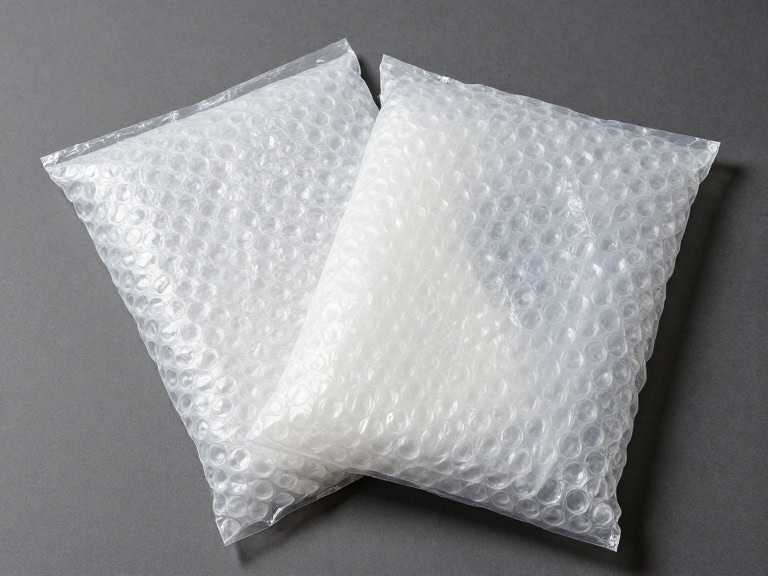
For heavy-duty applications or fragile goods: If you are shipping consumer electronics, cosmetics in glass bottles, or structured items that can be crushed in transit, you do not need flat poly envelopes. Instead, you should investigate a Bubble Mailer or traditional corrugated cartons paired with high-quality void fill to ensure kinetic absorption.
The 7 Best Poly Envelopes for Shipping
In our testing, not all polyethylene is created equal. Depending on your brand positioning and operational needs, here are the 7 best variations of poly envelopes for shipping available to commercial buyers today.
1. Standard Co-Extruded White Poly Envelopes
This is the workhorse of the e-commerce industry. Characterized by a white exterior and a silver/grey interior, these envelopes offer total opacity and excellent tear resistance. They are the most cost-effective option for high-volume sellers who prioritize function over aesthetics.
2. Heavy-Duty Poly Envelopes (80+ Microns)
For heavy-duty applications, such as shipping shoeboxes, heavy denim, or bulk hardware, standard 40-micron bags will stretch and snap. You must upgrade to heavy-duty poly envelopes for shipping that feature a thickness of 80 microns (approx. 3.15 mil) or higher. These resist severe puncture attempts and rough handling in courier facilities.
3. Eco-Friendly / Recycled Poly Envelopes
Consumer demand for sustainable practices is at an all-time high. Modern Eco Shipping Packaging includes poly envelopes manufactured from 50% to 100% Post-Consumer Recycled (PCR) plastics. While they often have a slightly grittier texture and a less vibrant white color, they drastically reduce your brand’s carbon footprint and appeal to eco-conscious demographics.
4. Dual-Seal Returnable Poly Envelopes
In the apparel industry, return rates can exceed 30%. Dual-seal poly envelopes feature two distinct adhesive strips separated by a perforated tear line. The customer opens the package using the tear line, and if they need to return the item, they simply place it back inside and use the second adhesive strip to seal it. This provides an exceptional unboxing and return experience.
5. Custom Printed Branded Poly Envelopes
If you want to elevate your brand identity without paying for custom printed boxes, Custom Mailer Bags with Logo are the answer. Utilizing high-quality gravure printing, manufacturers can print complex, multi-color logos and marketing messages directly onto the polyethylene film, turning a boring transit vessel into a moving billboard.
6. Colored and Boutique Poly Envelopes
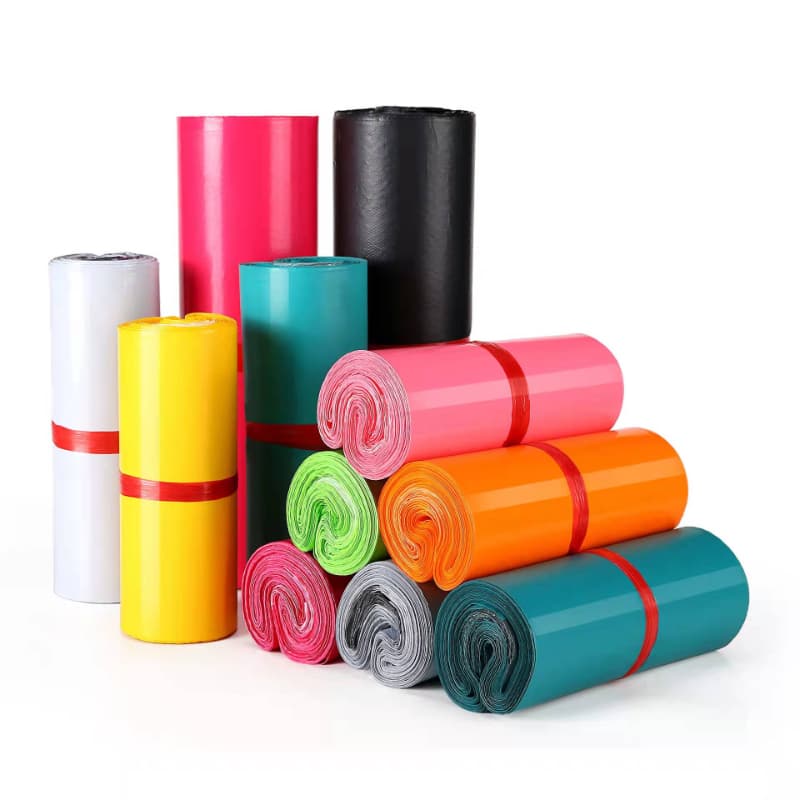
For smaller boutiques that want to stand out but cannot meet the Minimum Order Quantities (MOQ) for custom printing, purchasing solid-colored poly envelopes (pink, matte black, teal) is a fantastic alternative. It provides a premium feel at a fraction of the cost of custom rotogravure printing.
7. Clear View / Internal Logistics Poly Envelopes
Not all poly envelopes for shipping are meant for the end consumer. Clear poly envelopes are used extensively in B2B supply chains and internal warehouse transfers where barcode scanning and visual inventory verification are required without opening the bag. They lack the privacy layer but provide identical waterproof protection.
Common Mistakes in Fulfillment
From our experience, the most catastrophic mistake warehouse packers make is overstuffing. If you force a large winter coat into a 10×13 poly envelope, the seams are subjected to immense stress. The moment a courier tosses that package, the seams will blow out. Always choose an envelope that leaves at least one to two inches of clearance around the product.
Another common failure is ignoring adhesive curing times. During freezing winter months, hot-melt adhesives become rigid. If you pack and seal poly envelopes in a freezing warehouse, the glue will not bond properly to the plastic, causing the flaps to pop open in transit. Ensure your packing stations are kept at room temperature.
Critical Buying Considerations
When you sit down to procure an E Commerce Packaging Solution, you must apply strict commercial judgment. Do not buy poly envelopes for shipping based solely on the lowest price per unit.
- Micron / Mil Thickness: Standard shipping requires 50 to 60 microns (approx. 2 to 2.5 mil). Do not purchase 1-mil envelopes for commercial shipping; they are meant for internal bagging only.
- Opacity: Hold the envelope up to a harsh light. If you can see the silhouette of your hand through the plastic, it is not fully opaque. Your customers do not want their neighbors seeing what they ordered.
- Seam Welding: Look closely at the sides and bottom of the envelope. The heat welds should be wide and continuous. A narrow, hair-thin weld will rupture under pressure.
Essential Reference Tables
Quick Summary Table: Poly Envelope Variations
| Type | Primary Feature | Best For |
|---|---|---|
| Standard Co-Extruded | High Opacity, White/Grey | Everyday apparel & soft goods |
| Heavy-Duty (80+ Micron) | Extreme Puncture Resistance | Shoes in boxes, heavy textiles |
| Returnable Dual-Seal | Two Adhesive Strips | E-commerce with high return rates |
| Custom Printed | Brand Imagery | Premium retail brands |
Comparison Table: Poly Envelopes vs. Alternatives
| Packaging Type | Impact Protection | Water Resistance | Storage Space Required | Dimensional Weight Cost |
|---|---|---|---|---|
| Poly Envelopes | None | Excellent (100%) | Very Low | Very Low |
| Bubble Mailers | Moderate | Excellent | Medium | Low to Medium |
| Corrugated Boxes | High | Poor | High | High |
Pros and Cons Table: Using Poly Envelopes for Shipping
| Pros | Cons |
|---|---|
| Drastically reduces shipping costs via lower dimensional weight. | Provides absolutely zero protection against crushing or impact. |
| Naturally waterproof, protecting goods from rain and snow. | Difficult to recycle in standard municipal curbside bins (requires store drop-off). |
| Self-sealing adhesive eliminates the need to buy and apply Packing Tape BOPP Tape. | Thin, cheap variations can tear if snagged on conveyor belts. |
| Takes up minimal space in warehouse storage racks. | Can look “cheap” if low-quality materials are used for luxury items. |
Buying Guide Table: Matching Thickness to Payload
| Payload Description | Recommended Thickness | Why? |
|---|---|---|
| T-shirts, socks, documents | 40 – 50 Microns (1.5 – 2.0 Mil) | Lightweight goods place minimal stress on the plastic seams. |
| Sweaters, jeans, small boxes | 60 – 70 Microns (2.3 – 2.7 Mil) | Requires moderate puncture resistance against zippers or box corners. |
| Heavy boots, hardware, bulk textiles | 80+ Microns (3.15+ Mil) | Heavy weight shifts during transit; requires maximum tensile strength. |
Expert Recommendation from Mailongpak
In most professional situations, partnering with a reliable manufacturer is far more critical than shaving half a cent off a unit price. Mailong Packaging Co., Ltd. was established in 2009. We are a reputed manufacturer and exporter of a wide range of world-class quality packaging materials, such as inflatable bubble and pillow film, EPE and EVA FOAM, Poly Mailer, and Corrugated boxes, which prevent products from collision damage, attrition, and static in logistics transportation.
We strongly recommend integrating the Mailongpak Poly Mailer Shipping Bags into your fulfillment lines. They are engineered specifically for e-commerce rigors, ensuring that your apparel, textiles, and soft goods arrive in pristine condition.
The Bottom Line
Are poly envelopes for shipping actually worth using? Unequivocally, yes. For commercial operations dispatching non-fragile merchandise, continuing to use corrugated boxes is an operational and financial failure. By transitioning to high-quality, co-extruded poly envelopes ranging from 40 to 80 microns, you instantly slash your dimensional weight penalties, drastically improve your warehouse packing speeds, and ensure your products are protected from moisture and tampering. Stop over-packaging your soft goods. Invest in commercial-grade poly mailers, respect the payload limits, and watch your logistics margins expand.
Frequently Asked Questions
Can you ship poly envelopes through USPS?
Yes. Poly envelopes for shipping are fully approved by the United States Postal Service (USPS), as well as UPS, FedEx, and DHL. Because they are lightweight and flexible, they are ideal for USPS First Class Package service (for items under 16 oz) or Priority Mail, often resulting in the lowest possible postage rates.
Are poly shipping envelopes recyclable?
Yes, standard poly envelopes are made from Low-Density Polyethylene (LDPE), which is a recyclable #4 plastic. However, they generally cannot be placed in standard municipal curbside recycling bins, as thin films jam the sorting machinery. They must be dropped off at designated plastic film recycling locations, often found at local grocery stores.
Do poly mailers need to be a specific thickness?
For commercial shipping, your poly envelopes should be an absolute minimum of 2.0 mils (approx. 50 microns) thick. Anything thinner risks tearing on the automated conveyor belts used by major shipping carriers. For heavier items like denim or shoes, you should upgrade to 3.0 mil (approx. 75-80 microns) thickness.
Authoritative References & Standards
To ensure our operational advice aligns with global logistics and packaging standards, we reference data and guidelines from the following authoritative organizations: