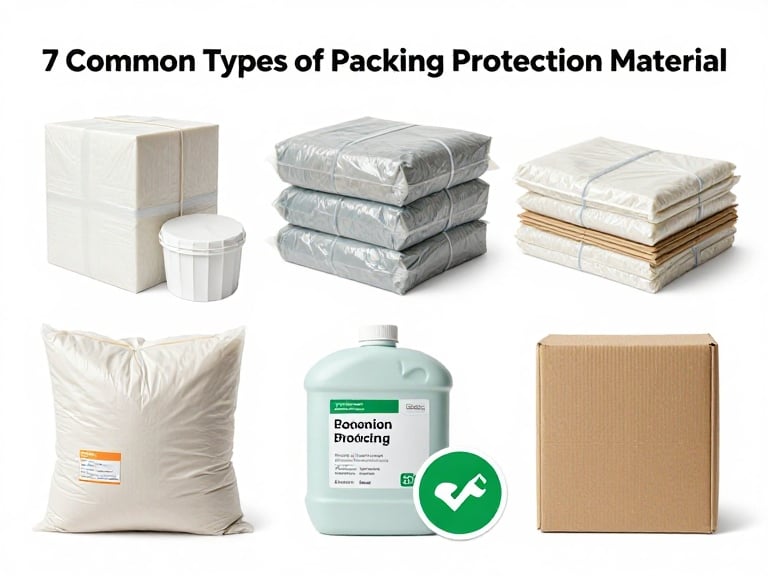
Global parcel delivery networks are unforgiving testing grounds for protective packaging. When a fragile item travels through long-distance intermodal logistics, it endures automated conveyor drops, high-frequency trailer vibrations, rough dock handling, and severe temperature fluctuations. Relying on loose paper fill, styrofoam peanuts, or thin bubble film regularly results in cracked casings, shattered glass, and broken internal components. Shipping managers who analyze return rates understand that parcel damage is rarely an unavoidable accident. It is almost always a failure of energy management inside the shipping carton. Understanding exactly how inflatable packaging protect products during long-distance shipping enables manufacturers to eliminate in-transit damage, reduce dimensional weight freight penalties, and free up critical warehouse space.
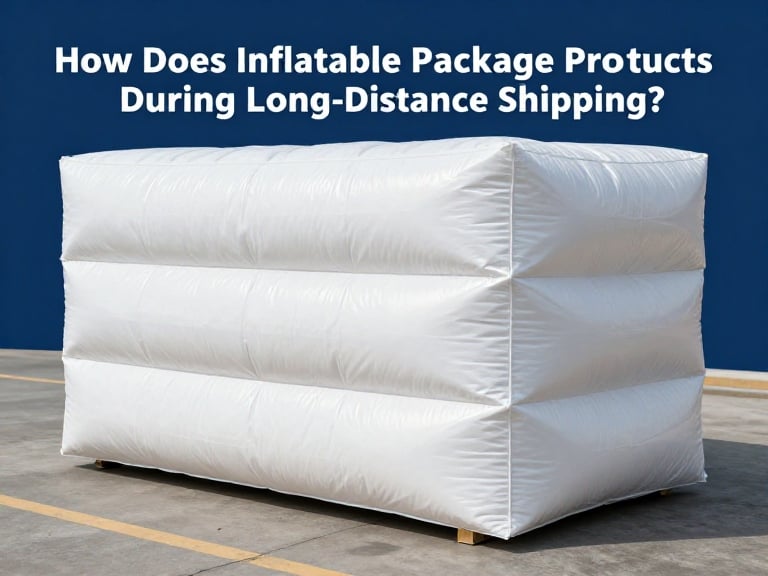
Quick Answer: How Inflatable Packaging Protects Products
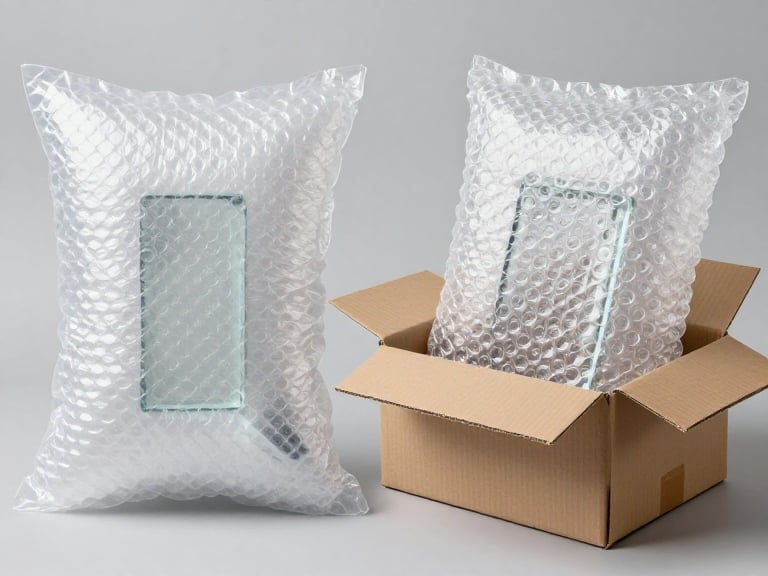
In long-distance logistics, inflatable packaging protect products by transforming dynamic kinetic shock into controlled pneumatic deceleration. Rather than depending on rigid material density, systems such as Air Column Bags and on-demand Inflatable Bubble Wrap suspend goods inside multi-layered, co-extruded polyethylene and polyamide (PE/PA) air bladders. When a shipping carton drops or shifts violently, the internal air volume compresses, absorbing peak impact forces and spreading the load across the entire surface area. Because these systems use independent one-way check valves, a puncture to one chamber leaves surrounding cushions fully pressurized. For electronics, bottled liquids, lighting, and precision instruments, switching to engineered air cushions cuts product damage rates to near zero while reducing uninflated packaging storage volume by up to 98%.
Article Directory
- The Physics of Shock: Deceleration, G-Force, and Pneumatics
- Quick Summary Table: Inflatable Packaging vs. Impact Variables
- The Engineering Mechanics: How Inflatable Packaging Protects Products
- Protective Solutions Spotlight: Mailong Packaging Custom Engineering
- Direct Technical Comparison: Inflatable Air vs. Traditional Cushioning
- Pros and Cons of Inflatable Packaging in Long-Distance Freight
- Who Should Use Inflatable Systems (And Who Should Avoid Them)
- Common Mistakes Shippers Make with Air Cushioning
- Essential Sourcing Considerations: Film Gauge, PA Content, and Valves
- Expert Engineering and Procurement Verdict
- Frequently Asked Questions
- Authoritative Industry References & Shipping Standards
The Physics of Shock: Deceleration, G-Force, and Pneumatics
Every dropped shipping carton obeys fundamental Newtonian mechanics. When a corrugated master carton strikes a concrete warehouse floor from a conveyor drop height of 36 inches, the box exterior stops almost instantly. The product inside, however, continues moving downward until it impacts the inner base of the carton. If the packaging material is rigid or bottomed-out, that stopping distance is less than a fraction of an inch, resulting in a severe spike in gravitational deceleration force (G-force). That brief shock wave fractures delicate circuit boards, misaligns laser optics, and cracks ceramic assemblies.
To safely protect high-value goods, protective packaging must increase the stopping distance ($d$) and extend the deceleration time ($\Delta t$). This is the core reason inflatable packaging protect products with higher consistency than traditional rigid foams. Air is naturally compressible. As an item forces itself into an inflated air column, the gas compresses according to Boyle’s law ($P_1V_1 = P_2V_2$), resisting the load with progressive firmness. The pneumatic cushion acts like a progressive air spring, smoothing out the deceleration curve and keeping shock levels well below the product’s fragility threshold.
In our testing across drop simulations, standard expanded polystyrene (EPS) fractures on its initial drop, leaving no residual cushioning for secondary impacts along a multi-stop courier route. In contrast, heavy-duty co-extruded air bladders rebound immediately to their initial shape, ready to absorb repeated impacts across cross-docking operations and last-mile parcel sorting.
Quick Summary Table: Inflatable Packaging vs. Impact Variables
| Dynamic Hazard | Physical Shipping Threat | How Inflatable Packaging Protects Products | Operational Protection Level |
|---|---|---|---|
| Free-Fall Drops | Severe impact spike up to 80G+ on concrete | Pneumatic compression dampens shock wave transmission | Exceptional; meets ISTA 3A criteria |
| Repetitive Vibration | Resonant loosening of solder joints & screws | Air chambers isolate frequency harmonics from truck beds | High; dampens 10 Hz – 200 Hz road noise |
| Side Compression | Crushed parcel walls under pallet stacking | High-pressure continuous air chambers support carton walls | Moderate to High (up to film tensile limits) |
| Altitude Shifts | Unpressurized air cargo pressure drop (depressurization) | Elastic polyamide (nylon) layers expand safely | Stable when inflated to 0.04–0.06 MPa |
| Moisture & Leaks | Fluid spills, ambient rain, sea spray humidity | Impermeable co-extruded barrier film repels liquids | 100% Waterproof moisture isolation |
The Engineering Mechanics: How Inflatable Packaging Protects Products
1. Co-Extruded Multi-Layer Film Barrier Integrity
Low-grade consumer air pillows rely on thin, single-layer low-density polyethylene (LDPE). These basic bubbles work fine for simple void-fill in lightweight apparel boxes, but they fail under heavy loads; the air slowly leaks out through the polymer matrix over a two-week ocean transit. True protective systems utilize co-extruded films blending low-density polyethylene with a core layer of polyamide (Nylon/PA). The PE layers provide strong heat-sealability and puncture resistance, while the internal PA layer creates a molecular gas barrier that holds internal pressure for over twelve months.
From our experience on automated packaging lines, maintaining a nylon ratio between 15% and 25% is essential for international freight. Without that structural nylon barrier, air cushions deflate when exposed to tropical heat and humidity inside shipping containers, leaving products loose and vulnerable inside their master cartons.
2. Independent Multi-Chamber One-Way Check Valves
A frequent misconception among shipping managers is that puncturing one bubble ruins the entire protective sleeve. Professional Inflatable Air Column Wrap uses parallel arrays of independent air columns connected to a single continuous inflation channel via micro-aperture one-way check valves. Compressed air flows in during initial inflation, but once pressurized, internal back-pressure forces each individual valve flat against the film wall, sealing every column separately.
If a product edge or rogue staple punctures Column 4 during rough transit, Columns 1 through 3 and 5 through 20 stay completely inflated at full operating pressure. This multi-chamber redundancy ensures inflatable packaging protect products even if the outer shipping carton is punctured during transit.
3. Total Surface Suspension and Corner Clamping
Traditional box packing requires workers to stuff crumpled kraft paper or wrap multiple layers of standard bubble sheet around an item, creating inconsistent packing thicknesses. Air column bags are engineered to match specific product shapes, creating a custom pneumatic suspension sleeve. Once the item is slid inside the sleeve and inflated, the air columns clamp securely around its perimeter, corners, and face.
This suspension setup locks the product in the exact geometric center of the shipping box. The product stays buffered by a continuous 360-degree air gap, completely isolated from exterior carton walls. When the outer box takes a direct hit or is crushed along an edge, the impact force distributes around the air columns rather than transferring into the product.
4. Thermal Insulation Buffering
Beyond physical drops, long-distance freight exposes shipments to extreme temperature swings. Cargo containers parked on tarmac can exceed 130°F (55°C), while unheated air cargo holds drop below freezing. Trapped, stagnant air is one of the most effective thermal insulators in physics, carrying a low thermal conductivity ($k \approx 0.026\text{ W/m}\cdot\text{K}$). The thick air envelope buffers temperature-sensitive items like medical reagents, specialty cosmetics, fine wines, and electronic displays from rapid thermal shocks during cross-country freight.
Integrated Protection Spotlight: Mailong Packaging Engineered Solutions
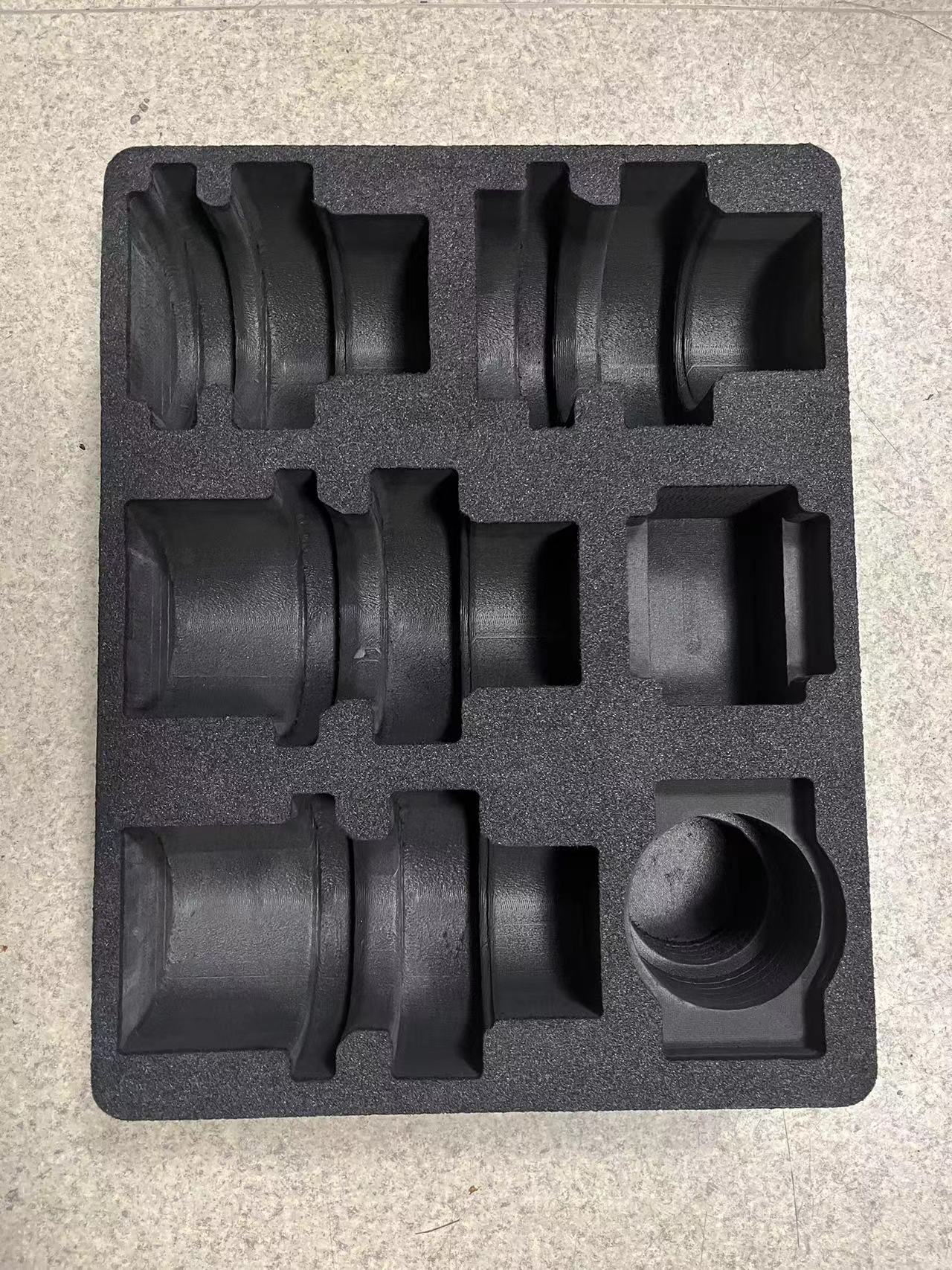
While air cushions deliver exceptional shock protection for general electronics, fragile glassware, and consumer goods, heavy hardware, diagnostic devices, and mission-critical tool assemblies often require hybrid protection combining pneumatic wraps with custom-machined structural inserts. Mailong Packaging designs tailored protective solutions built for demanding transit environments.
| Engineering Core | Custom high-density EVA FOAM, closed-cell EPE FOAM, and advanced Inflatable Bubble Wrap |
| Application Fit | Precision tool box inserts, industrial instrumentation trays, and heavy-duty logistics cushions |
| Production Flexibility | Accessible MOQ starting at 100 pieces with rapid 3-to-7 day custom production turnarounds |
| Manufacturing Provenance | Full-scale certified facility shipping through Shenzhen with integrated Packaging Quality Control |
Sourcing Recommendation: Review Mailong’s full line of Tool Box Inserts Packaging Solution options to see how custom-routed foam bases integrate with inflatable secondary cushioning to secure high-value industrial hardware.
Direct Technical Comparison: Inflatable Air vs. Traditional Cushioning
| Performance Metric | Co-Extruded Air Column Bags | Standard Pre-Popped Bubble Wrap | Molded Expanded Polystyrene (EPS) | Custom EPE / EVA Foam Inserts |
|---|---|---|---|---|
| Impact Shock Deceleration | Superior (Pneumatic progressive air compression) | Low to Moderate (Thin bubbles bottom out quickly) | High on first drop; fractures on second drop | Exceptional (High-density viscoelastic rebound) |
| Multiple Drop Rebound | 100% Elastic recovery (Does not crush) | Poor (Cell walls burst under high pressure) | Zero (Brittle micro-bead fracture) | Near 100% (Resilient closed-cell structure) |
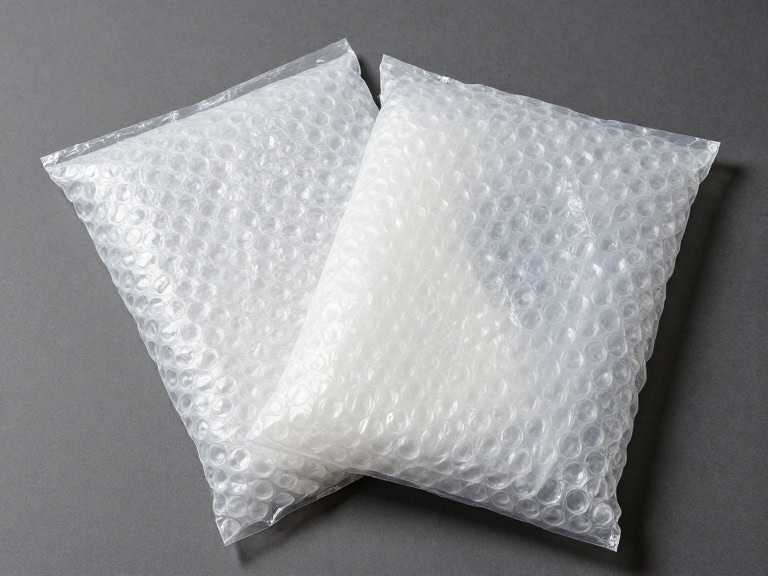
| Uninflated Storage Footprint | Ultra-compact (Consumes <2% warehouse space) | Massive (Shipped and stored fully expanded) | Bulky (Consumes immense floor and truck space) | High (Pre-cut dimensional blocks) |
| Material Puncture Resistance | High (Co-extruded PE + Polyamide nylon) | Low (Standard thin LDPE film) | Moderate (Can snap along shear lines) | Extreme (High shear tear resistance) |
| Environmental Tare Weight | Ultra-light (Roughly 98% air by volume) | Lightweight | Lightweight, but creates high disposal volume | Moderate to Heavy depending on density |
| Cleanroom Dust Generation | Zero (Completely non-dusting film) | Zero | Severe (White bead flaking and dust) | Zero (Clean non-particulating) |
Pros and Cons of Inflatable Packaging in Long-Distance Freight
| Packaging Architecture | Operational & Economic Pros | Logistical & Material Cons |
|---|---|---|
| Inflatable Air Packaging Systems (Columns, Cushions, Hybrid Sleeves) |
|
|
| Traditional Loose-Fill & Rigid Foams (EPS blocks, packing peanuts, paper) |
|
|
Who Should Use Inflatable Systems (And Who Should Avoid Them)
Selecting your protective packaging materials requires matching material physics to your product’s weight, geometry, and shipping profile. Inflatable air systems are unmatched in specific applications, but they are not the right fit for every category.
Who Must Invest in Inflatable Packaging:
- Consumer Electronics & IT Asset Logistics: Laptops, tablets, desktop towers, servers, and graphic cards contain fragile solder joints and glass panels. Air column bags absorb shipping drops, isolate shock, and eliminate static-cling dust.
- E-Commerce Wine, Beverage, and Glass Shippers: Liquid transit requires two things: shock absorption and leak containment. Inflatable bottle sleeves cushion glass against rough drops, and the tough PE/PA film acts as a secondary moisture barrier if a bottle cap leaks.
- Medical Diagnostic Devices & Lab Instruments: Fragile optical systems, centrifuges, and test kits cannot tolerate high G-force drops. Air cushions deliver smooth, predictable deceleration curves that keep delicate internal calibrations intact.
- High-Volume Fulfillment Operations with Tight Warehouse Space: If your fulfillment center is short on pallet storage, storing expanded bubble rolls or foam blocks wastes money. Inflatable rolls inflate on-demand right at the packing station, freeing up warehouse space for actual revenue-generating inventory.
Who Should Choose Alternative Materials:
- Sharp, Heavy Industrial Castings: Bare metal stamping dies, engine blocks, or sharp-cornered steel fabrications will puncture flexible polymer films under heavy vibration. Heavy components require dense EVA FOAM, thick EPE FOAM, or custom-routed wooden blocking.
- Flat Garments and Soft Goods: Clothing, shoes, and textiles do not require dynamic shock absorption. Shipping apparel in air columns wastes dimensional weight; soft goods are better served by lightweight Clothing Shipping Packaging such as standard Poly Mailer envelopes.
- Low-Value Commodity Items: If an item is non-fragile and retails for a few dollars, the cost of engineered air column bags will compress your profit margins. Budget items are better packaged with basic paper wrap or standard Bubble Cushioning Packaging.
Common Mistakes Shippers Make with Air Cushioning
Logistics Advisory: The most frequent mistake in fulfillment centers is inflating air cushions with uncalibrated shop-air lines. Over-pressurizing air columns stresses thermal seam welds, causing seams to split open under normal road vibration.
- Over-Inflating Beyond Recommended Operating Pressure: Operators often crank inflation pressures up to 0.1 MPa or higher, assuming firmer air columns provide better protection. In reality, over-inflated columns have no room left to compress under impact. They behave like rigid surfaces, transferring shock directly into the product and bursting seams during standard drops. Keep inflation pressure calibrated between 0.04 and 0.06 MPa.
- Failing to Shield Sharp Product Edges: Placing an unshielded sheet-metal bracket or sharp glass edge directly against an inflated air column is a recipe for flats. Under rough road vibrations, the sharp edge saws into the film wall, causing a slow leak. Always place corrugated edge-protectors, plastic corner caps, or thin foam wraps over sharp edges before sliding products into an air sleeve.
- Using Thin LDPE Air Pillows for Heavy Products: Using lightweight retail void-fill air pillows underneath a 25-pound printer or amplifier does not work. Under heavy static weight, thin air pillows pop or bottom out on the first bump, leaving the heavy item to bounce against the bare bottom of the carton. Reserve thin air pillows for top void-fill, and use heavy-duty Heavy Duty Bubble Wrap or structured air column bags for base cushioning.
- Neglecting Outer Carton Burst Strength: Putting an inflated air sleeve inside a flimsy, single-wall cardboard box with low edge crush test (ECT) ratings compromises protection. When external cartons crush inward under pallet loads, the air sleeve pushes outward, splitting weak box tape lines. Always seal cartons securely with commercial-grade Packing Tape BOPP Tape to maintain box structural integrity.
Essential Sourcing Considerations: Film Gauge, PA Content, and Valves
When issuing a Request for Quotation (RFQ) to protective packaging manufacturers, look past surface-level claims. Evaluate your air packaging suppliers against these four technical specifications:
1. Polyamide (Nylon) Ratio and Co-Extrusion Layers
Inquire about the exact layer structure of the barrier film. Quality protective packaging uses 7-layer or 9-layer co-extrusion technology containing at least 15% to 20% virgin Polyamide (PA/Nylon) paired with linear low-density polyethylene (LLDPE). Avoid cheap suppliers that blend low-grade calcium carbonate fillers or scrap regrind into their film; regrind weakens tear strength, increases pinhole rates, and causes air leaks within days of inflation.
2. Total Film Thickness (Microns vs. Mil)
Film thickness must match product weight. For lightweight cosmetics, electronic accessories, and small glass jars (under 3 lbs), a 45-to-50-micron film is adequate. For consumer electronics, laptops, monitors, and wine bottles (3 to 15 lbs), mandate heavy-duty 60-to-75-micron co-extruded film. For heavy industrial goods and sensitive laboratory hardware, step up to reinforced 100-micron air column material to guarantee high puncture resistance.
3. Valve Architecture and Inflation Consistency
Test the supplier’s one-way check valve design. In poorly engineered film rolls, the microscopic air channels frequently stick together, requiring high air pressures to open and slowing down the packing line. Look for reverse-stop valve channels that open smoothly under standard line pressure (0.04 to 0.06 MPa) and seal reliably without needing heat sealing after inflation.
4. Matching Inflatable Systems with Secondary Protective Materials
A dependable logistics program often pairs inflatable wraps with complementary secondary materials. If your inventory includes heavy machine components, combine air wraps with Flexible PU FOAM, resilient EPE Foam Sheets, or structured edge buffers. For wrapped pallets leaving your dock, secure cartons with high-tensile Pallet Film to prevent pallet shifting during long-distance transit.
Expert Engineering and Procurement Verdict
In our professional assessment, if your business ships fragile, high-value, or liquid-bearing products through regional parcel couriers or global freight networks, transitioning to engineered inflatable packaging is one of the most effective ways to reduce operating costs. Continuing to use messy packing peanuts, static-prone EPS blocks, or thin bubble wraps costs more in product damage, customer returns, and wasted warehouse space than the materials are worth.
To successfully help inflatable packaging protect products, follow these operational rules: (1) Settle on a co-extruded film with at least 15% nylon content to ensure air retention on long transits; (2) Size your air column sleeves to clamp around product corners, keeping items suspended in the center of the carton; (3) Set inflation stations with dedicated pressure regulators set strictly between 0.04 and 0.06 MPa; and (4) Partner with an established manufacturer like Mailong Packaging that provides verified, certified film formulations. Implementing these standards cuts transit damage, streamlines packing workflows, and protects your brand’s reputation for dependable product delivery.
Frequently Asked Questions
Inflatable packaging utilizes pressurized air trapped within multi-layered co-extruded polymer film chambers. Under sudden dynamic impact, the air compresses progressively, extending deceleration time and absorbing kinetic energy over a longer distance. This drastically reduces the peak G-force transmitted to the fragile product, whereas rigid polystyrene foam fractures permanently upon its first significant impact.
No. Commercial-grade air column bags feature independent multi-chamber one-way check valves. If one individual column is punctured by a sharp edge, the remaining parallel air chambers stay fully pressurized, maintaining 90% or more of the protective buffer throughout transit.
When properly inflated to recommended operating pressures (typically 0.04 to 0.06 MPa), high-grade co-extruded PE/PA films withstand standard unpressurized cargo hold decompression up to 30,000 feet without bursting. The polyamide (nylon) structural layer provides high tensile elongation to absorb volume expansion safely.
Deflated rolls of air column film or inflatable bubble wrap consume less than 2% of the physical warehouse volume required by pre-expanded materials like EPS peanuts, rigid foam blocks, or traditional bubble wrap. One single pallet of uninflated air cushion film replaces roughly 25 to 30 pallets of expanded bubble wrap.
Authoritative Industry References & Shipping Standards
- ASTM International: ASTM D4169 Standard Practice for Performance Testing of Shipping Containers and Systems
- International Safe Transit Association (ISTA): ISTA 3A Packaged-Products for Parcel Delivery System Shipment
- International Organization for Standardization: ISO 2247 Packaging – Complete, Filled Transport Packages: Vibration Tests