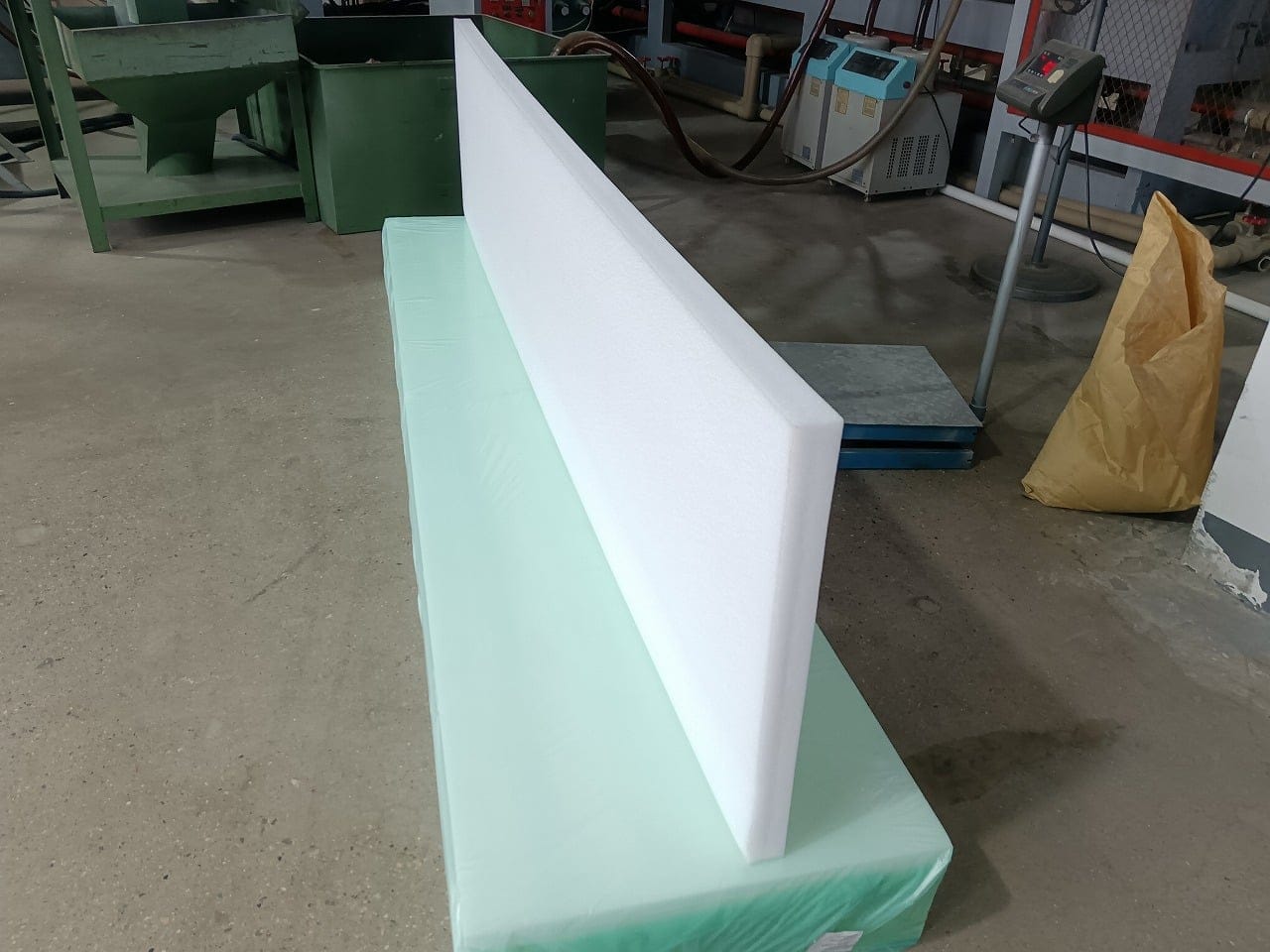
Custom white EPE foam strips supplied to a customer in Bangkok, Thailand, for protecting doors and windows during packaging, transportation, handling, and delivery.
- Thailand EPE Foam Project Overview
- Customer Requirements
- Project Specifications
- Why Use EPE Foam for Doors and Windows?
- How EPE Foam Strips Protect Door and Window Products
- Choosing EPE Foam Thickness
- Door and Window Packaging Process
- Advantages of White EPE Foam Sheets and Strips
- Custom EPE Foam Manufacturing
- EPE vs EVA and Flexible PU Foam
- Mailong Packaging Production Process
- Other EPE Foam Packaging Applications
- Frequently Asked Questions
- About Mailong Packaging
Thailand EPE Foam Project Overview
This project was supplied to a customer located in Bangkok 10250, Thailand. The customer’s application was straightforward but important: protecting finished doors and windows during packaging, transportation, storage, and handling.
Doors and windows can have relatively large surfaces and long edges, while certain finished surfaces may require separation from cartons, other components, straps, pallets, or adjacent products. For this type of packaging requirement, a suitable foam strip can provide a simple cushioning layer between the product and external contact points.
The customer selected white EPE foam sheets in strip form with a fixed width and length of 80 × 2000 mm. Three thicknesses were ordered to accommodate different protection requirements.
In most professional packaging situations, the advantage of supplying foam in a standardized strip size is that the packaging team can apply the material quickly without needing to process every piece from a large foam sheet.
Customer Requirements
The customer needed a practical protective foam component specifically for door and window packaging. The requested product dimensions were based on the customer’s existing packaging workflow.
White EPE Material
The customer required white EPE foam for a clean and professional packaging appearance while providing a lightweight protective layer around the products.
Long Strip Format
Each piece measured 80 × 2000 mm, providing a long protective strip suitable for the extended edges and surfaces of door and window products.
Multiple Thicknesses
The order included 20 mm, 25 mm, and 35 mm thicknesses, allowing the customer to match the foam thickness to different packaging positions or product configurations.
High-Volume Packaging
The project quantity was 10,000 pieces at 20 mm, 5,000 pieces at 25 mm, and 3,000 pieces at 35 mm, for a total of 18,000 pieces.
Project Specifications
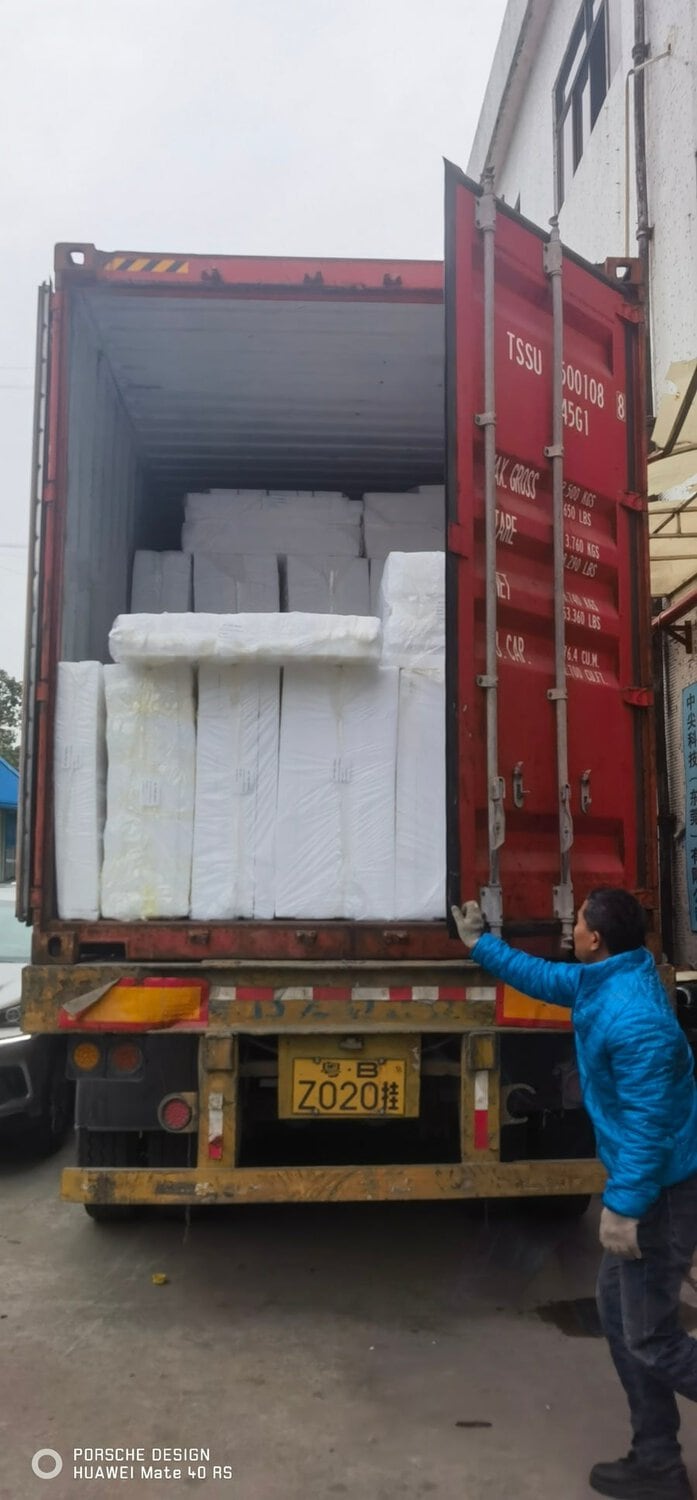
Mailong Packaging manufactured the EPE foam strips according to the customer’s requested dimensions and thicknesses. The project specifications were:
| Product | Color | Size | Thickness | Quantity | Application |
|---|---|---|---|---|---|
| White EPE Foam Strip | White | 80 × 2000 mm | 20 mm | 2,000 pcs | Door and window protection |
| White EPE Foam Strip | White | 80 × 2000 mm | 35 mm | 3,000 pcs | Door and window protection |
| White EPE Foam Strip | White | 80 × 2000 mm | 25 mm | 5,000 pcs | Door and window protection |
Why Use EPE Foam for Doors and Windows?
Door and window products often need protection at multiple stages after manufacturing. Even when the product itself is structurally strong, finished surfaces, corners, edges, frames, and contact areas can be vulnerable to rubbing or impact during loading, transportation, warehouse handling, and installation.
EPE foam is a practical material for these situations because it is lightweight, flexible, and available in different thicknesses. It can create a separation layer between the finished product and the surrounding packaging materials.
For door and window manufacturers, the goal is not simply to add more packaging material. The packaging needs to provide protection while remaining practical for workers to apply, store, transport, and remove.
How EPE Foam Strips Protect Door and Window Products
The 80 × 2000 mm EPE foam strips in this project can be positioned along product edges, surfaces, or contact areas according to the customer’s packaging design.
1. Edge Separation
Foam strips can be positioned between the door or window frame and the outer packaging material. This creates a cushioning layer and helps reduce direct contact during handling.
2. Surface Separation
Where finished surfaces need additional separation, EPE foam can be placed between the product and adjacent packaging components.
3. Protection During Transportation
During transportation, packaged doors and windows may experience vibration, movement, stacking pressure, or incidental contact. EPE foam can provide an additional cushioning layer within the packaging structure.
4. Protection During Warehouse Handling
The foam can also remain around the product while it is stored, moved, loaded, or unloaded, helping maintain separation between the finished product and external packaging surfaces.
Choosing EPE Foam Thickness
This Thailand project demonstrates the importance of choosing foam thickness according to the packaging position and product requirements. Mailong supplied three thicknesses rather than using one specification for every application.
| Thickness | Project Quantity | Packaging Consideration |
|---|---|---|
| 20 mm | 2,000 pcs | Suitable where a moderate foam layer is required within the packaging design. |
| 25 mm | 5,000 pcs | Provides a thicker separation layer for selected door and window packaging positions. |
| 35 mm | 3,000 pcs | Useful where additional foam thickness is required by the packaging configuration. |
Thickness should always be selected according to the product dimensions, weight, packaging structure, available clearance, handling conditions, and required protection level. More thickness does not automatically mean a better packaging design.
Door and Window Packaging Process
A typical door and window packaging workflow using EPE foam strips can be organized into several straightforward steps. The exact configuration depends on the customer’s product design and outer packaging.
Step 1 – Product Inspection
Inspect the finished door or window and identify surfaces, edges, corners, and contact areas that require additional protection.
Step 2 – Foam Placement
Position the 80 × 2000 mm EPE foam strips along the selected product areas according to the packaging design.
Step 3 – Outer Packaging
Add cartons, film, straps, protective boards, or other packaging materials as required by the customer’s transportation system.
Step 4 – Handling and Transportation
The EPE layer remains between selected contact surfaces and the outer packaging, helping provide cushioning and separation during normal handling.
Advantages of White EPE Foam Sheets and Strips
Lightweight Protection
EPE foam provides a lightweight protective layer, making it practical for large products such as doors and windows where excessive packaging weight can make handling more difficult.
Flexible Packaging Design
Foam strips can be positioned where protection is required rather than covering the entire product with a thick layer of material.
Different Thickness Options
The availability of 20 mm, 25 mm, and 35 mm thicknesses allows packaging engineers and production teams to adapt the protective layer to different areas of the product.
Clean White Appearance
White EPE foam provides a clean appearance that works well with finished building products and professional packaging systems.
Easy Integration
EPE foam strips can be incorporated into existing door and window packaging processes without requiring a complicated packaging structure.
Practical for Commercial Packaging
For manufacturers shipping high volumes of doors and windows, standardized foam strips can simplify the packaging workflow and help maintain consistency between packages.
Custom EPE Foam Manufacturing
Mailong Packaging manufactures EPE foam products in customized sizes and specifications for commercial packaging applications. The exact dimensions can be adjusted according to the product being protected and the customer’s packaging process.
| Parameter | Available Options |
|---|---|
| Material | EPE foam / expanded polyethylene foam |
| Color | White; other options may be available for specific projects |
| Density | Approximately 18–100 kg/m³ depending on project requirements |
| Thickness | 5, 10, 15, 20, 25, 30, 40, 50 mm or customized |
| Width | 30, 50, 80, 100, 120, 150 cm or customized |
| Format | Sheets, strips, rolls, pads, inserts, and customized components |
| MOQ | From 50 rolls for applicable EPE roll projects; custom cut products depend on specification |
Customers who require larger flat materials can also review our EPE Foam Sheets product range for sheet and roll solutions.
For a broader overview of our material range, visit the EPE FOAM category.
EPE vs EVA and Flexible PU Foam
EPE is not the only foam material available for product protection. Depending on the packaging requirements, customers may also consider EVA or flexible polyurethane foam.
| Material | Typical Characteristics | Common Packaging Consideration |
|---|---|---|
| EPE Foam | Lightweight, flexible, available in sheets, rolls, strips, and custom shapes | General product protection, separation, cushioning, and large-product packaging |
| EVA Foam | Available in different densities and customized forms | Precision packaging components, inserts, pads, and applications requiring specific material characteristics |
| Flexible PU Foam | Soft and conformable foam material available in sheets, rolls, pads, and inserts | Applications requiring soft cushioning or conformability |
You can compare our EVA FOAM and Flexible PU FOAM solutions when evaluating alternative foam materials for your packaging project.
Mailong Packaging Production Process
For customized EPE foam sheets and strips, production begins with confirmation of the customer’s required material specifications and final dimensions. This is particularly important for door and window packaging because the finished foam component needs to match the customer’s packaging workflow.
Material Specification
Density, thickness, width, length, color, and quantity are confirmed before production. The Thailand project required white EPE foam strips with a fixed 80 × 2000 mm format.
Foam Processing
The EPE material is processed according to the agreed thickness and dimensional requirements. Depending on the order, the material can be converted into sheets, strips, rolls, pads, or other customized formats.
Cutting and Dimension Control
The foam is cut to the required dimensions so the customer can use the finished pieces directly in the door and window packaging process.
Quality Inspection
Finished products are checked according to the agreed project requirements, including dimensions, thickness, appearance, quantity, and packaging condition.
For customers evaluating different foam suppliers, our guide to Packing Foam Sheets Suppliers provides additional information about sourcing foam packaging materials.
Other EPE Foam Packaging Applications
Although this Thailand project focused on doors and windows, the same EPE foam sheet and strip concept can be applied to many other products. Customers can select different dimensions and thicknesses according to their packaging design.
For additional ideas, see our detailed resource on EPE Foam Applications.
Why Choose Pre-Cut EPE Foam Strips?
A major consideration for commercial packaging operations is labor efficiency. When foam is delivered in a finished 80 × 2000 mm strip format, workers do not need to measure and cut every piece from a larger sheet during daily packaging operations.
Pre-cut foam strips can therefore make the packaging process more standardized. For high-volume door and window manufacturers, this can help packaging teams follow a repeatable process and maintain consistent material dimensions across large production runs.
For customers with frequently changing product dimensions, however, EPE foam rolls or larger sheets may provide greater flexibility. Our team can recommend the appropriate format based on the customer’s packaging workflow.
Frequently Asked Questions About EPE Foam for Door and Window Packaging
What is white EPE foam used for?
White EPE foam is commonly used for cushioning, separation, surface protection, wrapping, padding, and protective packaging. In this Thailand project, it was used specifically for protecting doors and windows.
What size were the EPE foam strips for this Thailand project?
The project used EPE foam strips measuring 80 × 2000 mm.
What thicknesses were supplied?
The customer ordered 20 mm, 25 mm, and 35 mm thicknesses. Each thickness was supplied in the same 80 × 2000 mm format.
How many EPE foam pieces were ordered?
The order included 2,000 pieces of 20 mm foam, 5,000 pieces of 25 mm foam, and 3,000 pieces of 35 mm foam, for a total of 10,000 pieces.
Can EPE foam protect doors and windows during transportation?
EPE foam can provide a cushioning and separation layer around doors and windows. It can help reduce direct contact, rubbing, and incidental impact during normal packaging, handling, storage, and transportation. The final protection level depends on the complete packaging design and transportation conditions.
Can Mailong customize EPE foam dimensions?
Yes. Mailong Packaging provides customized EPE foam sheets, strips, rolls, pads, and other components according to customer dimensions and packaging requirements.
Can EPE foam be supplied in rolls instead of strips?
Yes. For customers who prefer to cut the material locally, EPE foam rolls can be supplied in different widths, lengths, and thicknesses. This format is useful when multiple product sizes need to be packaged.
Can Mailong supply other foam materials?
Yes. Mailong Packaging also supplies EVA foam and flexible PU foam for applications where different material characteristics are required. Customers can review our Flexible Polyurethane Foam Manufacturers resource for additional information.
About Mailong Packaging
Established in 2009, Mailong Packaging is a professional manufacturer and exporter specializing in protective packaging materials for global industries.
Our main products include inflatable bubble and pillow film, air column rolls, air column bags, EPE and EVA foam, poly mailers, stretch wrap, bubble mailers, BOPP tape, and corrugated boxes.
Our packaging products have been exported to more than 30 countries and overseas markets. We work with international customers that require stable quality, competitive pricing, flexible customization, and practical packaging solutions.
| Mailong Packaging Advantage | Capability |
|---|---|
| Industry Experience | More than 15 years of packaging manufacturing experience |
| Fast Production | Production completed within 3–7 days for suitable projects |
| Flexible MOQ | Selected products available from low MOQ quantities |
| OEM & Customization | Custom packaging sizes, materials, specifications, and designs available |
| Global Export Service | Packaging products exported to more than 30 overseas markets |
Related EPE Foam Resources
- EPE FOAM – EPE foam products for protective packaging and industrial applications.
- EVA FOAM – Customized EVA foam for specialized packaging requirements.
- Flexible PU FOAM – Flexible polyurethane foam for cushioning applications.
- Packing Foam Sheets Suppliers – Guide to commercial foam sourcing.
- Flexible Polyurethane Foam Manufacturers – Information for PU foam sourcing.
- EPE Foam Sheets – EPE sheets and rolls for packaging applications.
- EPE Foam Applications – Practical EPE applications across packaging and industry.
Looking for Custom EPE Foam for Door and Window Packaging?
Mailong Packaging can manufacture white EPE foam sheets, strips, rolls, pads, and customized protective components for doors, windows, furniture, industrial products, and other applications.
Send us your required foam dimensions, thickness, density, quantity, product type, and packaging application. Our team can help you select a practical EPE foam format for your project.
Mailong Packaging – EPE Foam Manufacturer and Protective Packaging Supplier