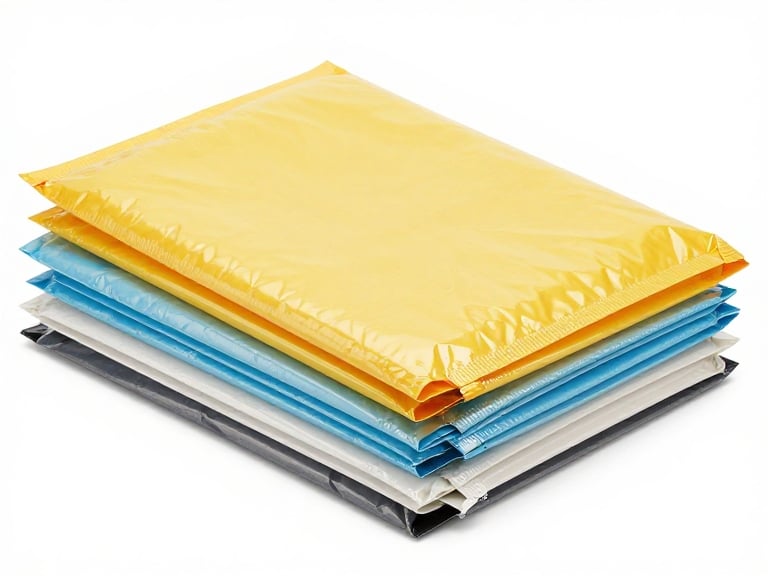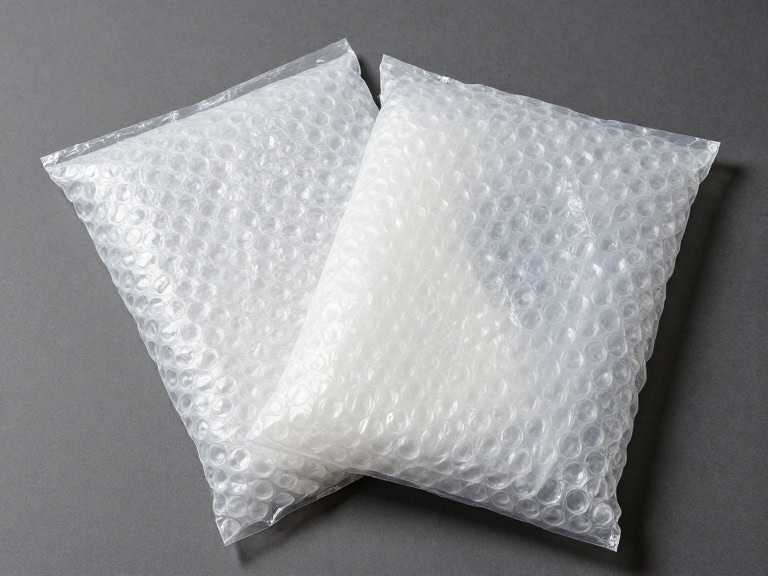
When glass bottles need to be shipped safely, the packaging insert must do more than simply fill empty space. It needs to hold the bottle securely, provide cushioning around vulnerable surfaces, and maintain consistent dimensions during packing and transportation. For one recent U.S. project, Mailong Packaging produced 5,000 custom white EPE foam inserts designed specifically to hold and protect glass bottles.
Project Overview
This project came from a customer located in Evergreen, Cedar Hills, UT 84062-8636, USA. The application required a custom-shaped foam insert capable of positioning a glass bottle inside protective packaging while reducing direct contact between the bottle and the outer carton.
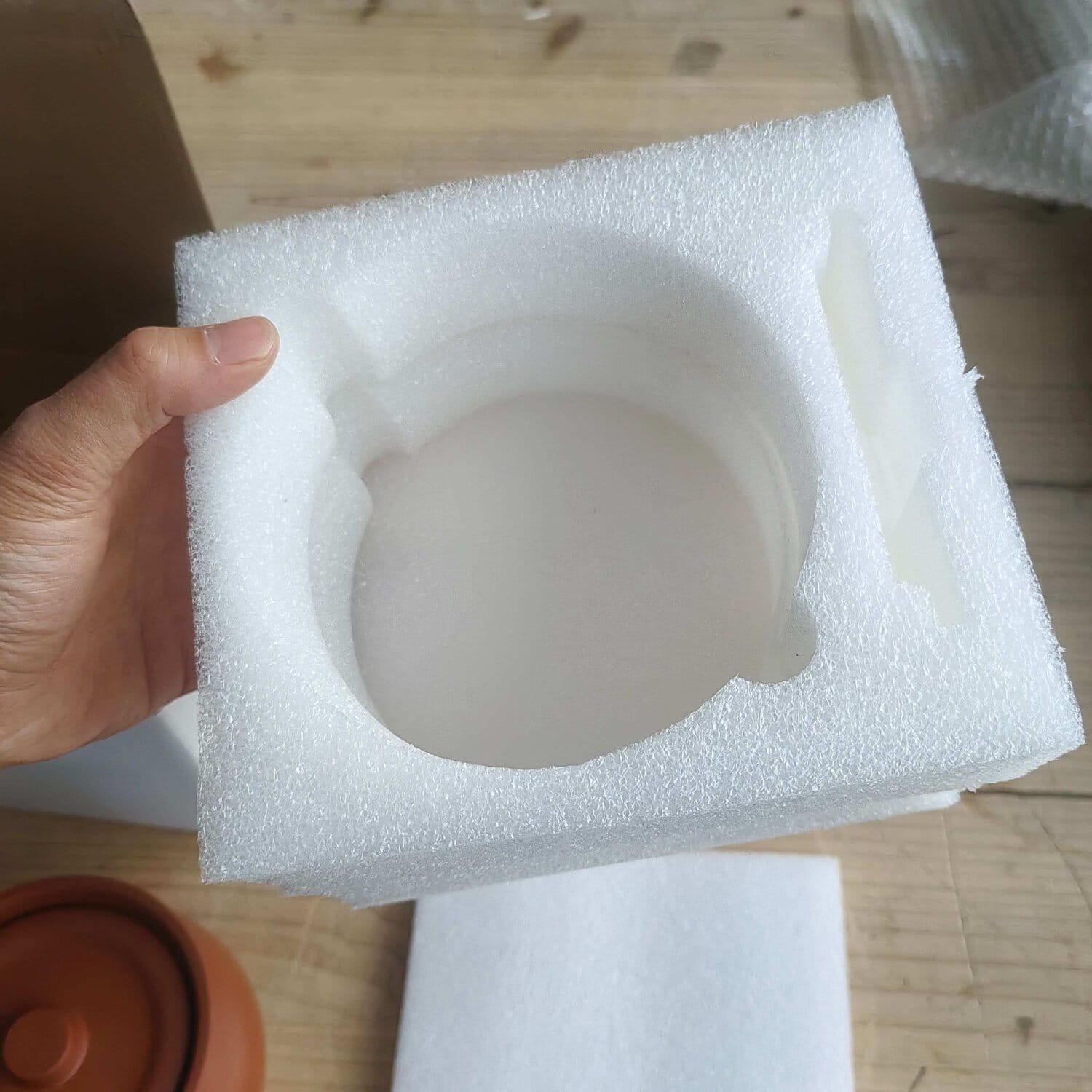
Unlike standard flat foam sheets, this product was manufactured as a three-dimensional EPE foam insert with a central cylindrical cavity. The cavity was sized around the customer’s glass bottle requirements, allowing the bottle to sit inside the insert rather than move freely inside the shipping package.
For fragile glass packaging, dimensional consistency is particularly important. If the opening is too large, the bottle may move excessively. If it is too small, packing becomes difficult and the foam may be compressed unnecessarily. This is why Mailong treated the cavity diameter, depth, bottom thickness, upper/lower alignment, and bonding quality as key production checkpoints.
Customer Requirements for White EPE Foam Inserts
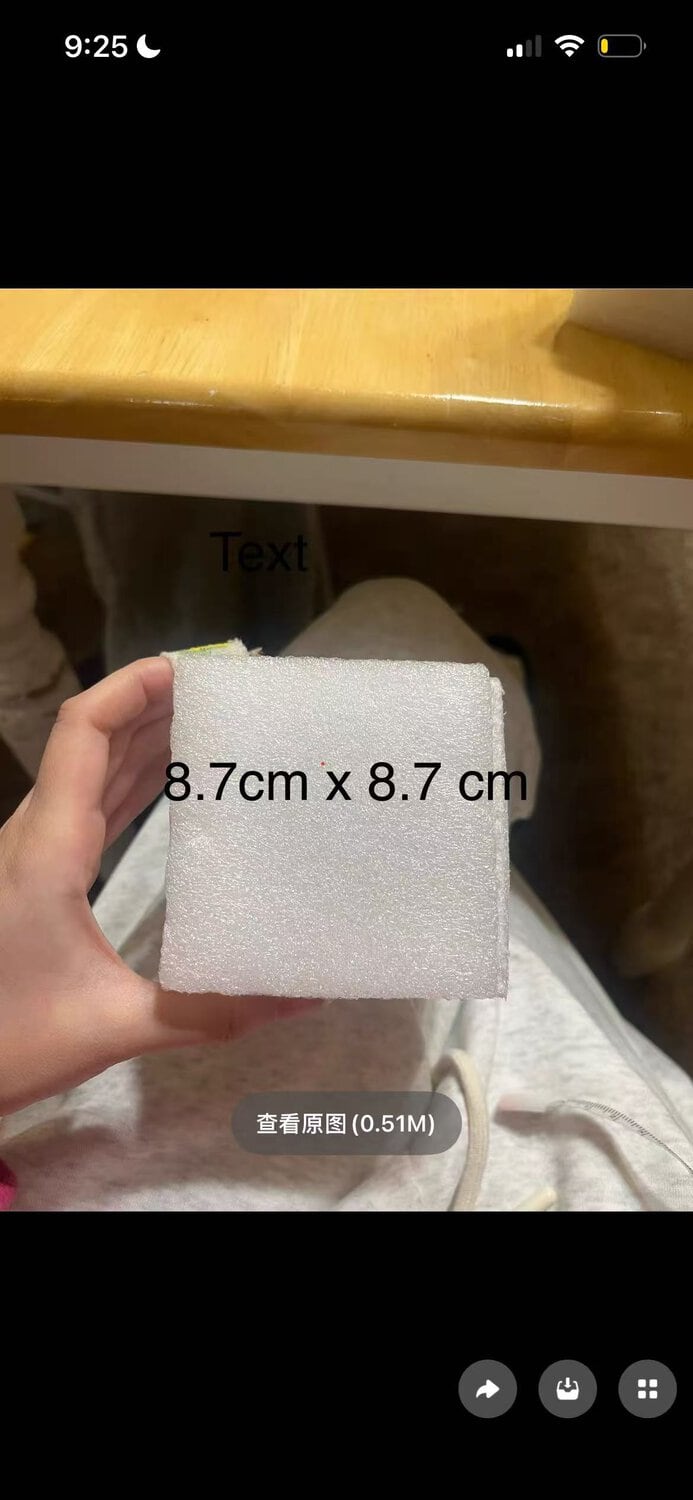
The customer needed a white EPE foam packaging component with a specific three-dimensional shape. The insert had to accommodate a glass bottle while maintaining sufficient material around the bottle for cushioning.
| Project Parameter | Customer Requirement |
|---|---|
| Customer Location | Evergreen, Cedar Hills, Utah, USA 84062-8636 |
| Product | Custom White EPE Foam Insert |
| Application | Glass Bottle Protection |
| Quantity | 5,000 pieces |
| External Size | Approximately 8.7 × 8.7 × 8.7 cm |
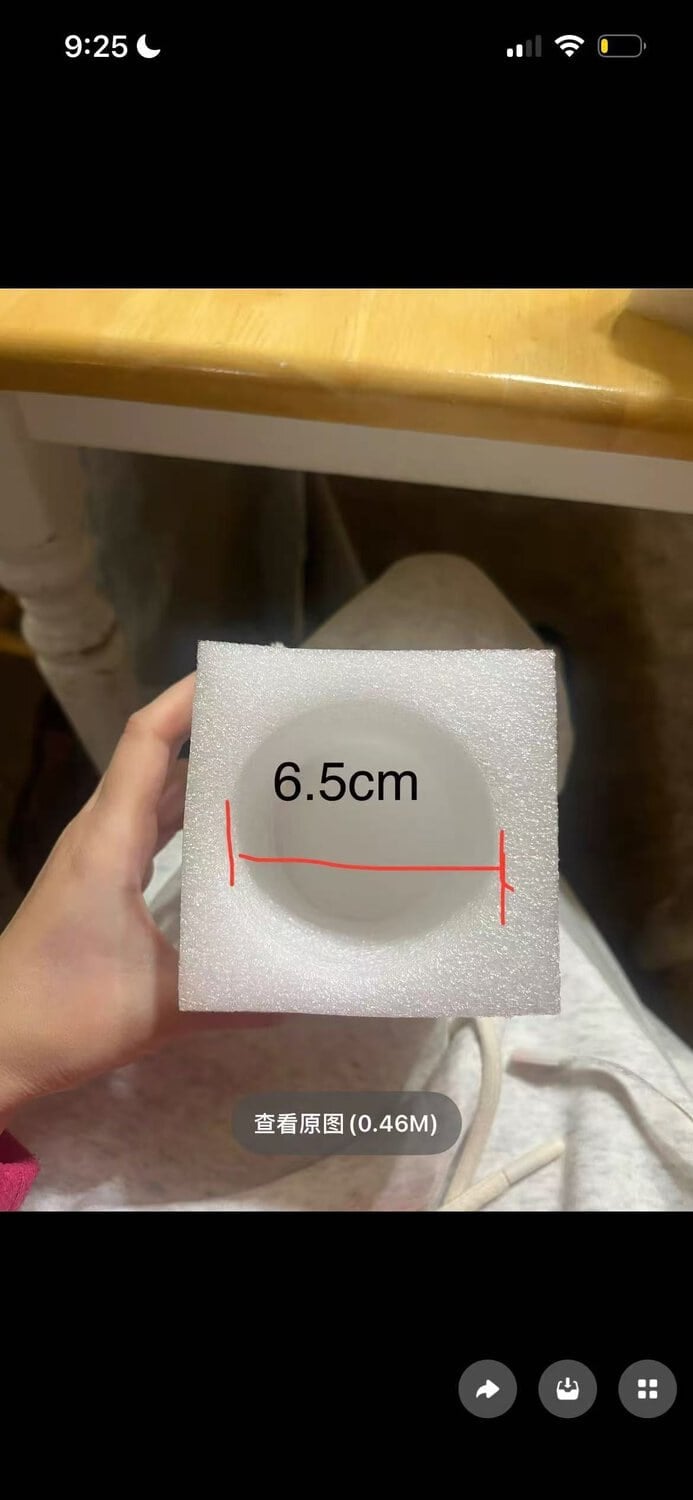
| Central Opening | 6.5 cm diameter |
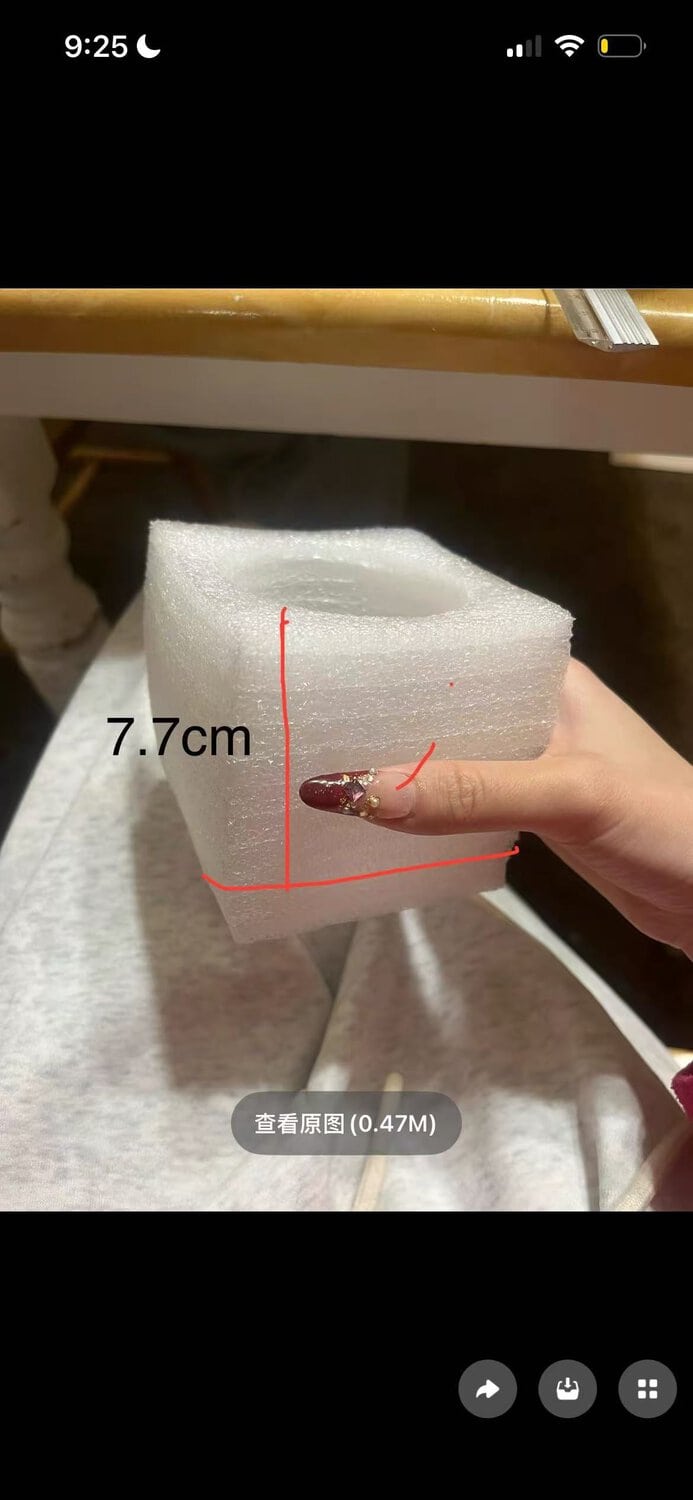
| Hole Depth | 7.7 cm |
| Bottom Base | 1 cm thick |
| Material Density | 18–20 kg/m³ |
| Color | White |
| Special Requirement | No glue leakage; upper and lower sections must remain aligned |
Why Use White EPE Foam Inserts for Glass Bottles?
Glass bottles are vulnerable to impact, vibration, compression, and movement during transportation. A bottle packed only with loose filling material may still shift inside the carton. A fitted foam insert provides a more controlled packaging structure.
EPE, or expanded polyethylene foam, is a closed-cell foam material commonly used for protective packaging. Its lightweight structure provides cushioning while adding relatively little packaging weight. For this project, the selected density range of 18–20 kg/m³ was matched to the customer’s application and shape requirements.
The custom cavity allows the bottle to sit inside the foam rather than directly against the outer packaging. This can help reduce movement and distribute contact forces around the protected product.
For customers looking for broader material options, Mailong also supplies EVA FOAM and Flexible PU FOAM, depending on the cushioning, flexibility, surface, and fabrication requirements of the project.
Custom 3D Structure for Bottle Packaging
8.7 × 8.7 × 8.7 cm Overall Size
The approximately 8.7 × 8.7 × 8.7 cm external dimensions were developed around the customer’s packaging requirements. Keeping the outer dimensions consistent helps the insert fit into the intended carton or secondary packaging system.
6.5 cm Diameter Central Hole
The 6.5 cm diameter central opening forms the main bottle-holding cavity. The diameter is an important dimension because it influences how securely the bottle sits inside the foam insert.
7.7 cm Cavity Depth
The 7.7 cm hole depth allows the bottle to be positioned deep inside the insert while retaining a 1 cm bottom section. The cavity geometry was therefore considered as a complete structure rather than simply machining a hole through a foam block.
1 cm Bottom Base
The 1 cm bottom base provides a foam layer beneath the cavity. This gives the bottle additional separation from the bottom of the packaging and contributes to the overall cushioning structure.
Precision Requirements: No Glue Leakage and Accurate Alignment
One of the most important requirements in this project was that the finished insert should have no visible glue leakage and that the upper and lower sections should remain properly aligned.
This matters for both packaging performance and presentation. Excess adhesive can interfere with the bottle cavity, create an uneven surface, or affect the appearance of the packaging. Misalignment between bonded foam sections can also change the internal geometry of the insert.
For this reason, production control focused on several points:
- Accurate cutting and forming of the individual EPE foam components.
- Consistent cavity positioning before bonding.
- Controlled adhesive application according to the product structure.
- Careful alignment of upper and lower sections.
- Inspection for visible glue leakage around bonding areas.
- Dimensional checking of finished inserts before packing.
From our experience, these details become especially important when producing thousands of identical custom foam inserts. A design that works for a small prototype must also remain repeatable throughout the production batch.
How the EPE Foam Insert Helps Protect Glass Bottles
The purpose of this insert is to create a protective interface between the glass bottle and the external packaging. When correctly matched to the bottle dimensions, the foam cavity helps keep the bottle positioned during handling and transportation.
The EPE structure can help absorb and distribute some of the forces generated by normal packaging handling. It also separates the bottle from harder packaging surfaces, reducing the likelihood of direct contact between the glass and carton or other rigid materials.
However, no foam insert should be treated as a guarantee against breakage. Packaging performance depends on bottle shape, bottle weight, carton construction, stacking conditions, transportation environment, and the complete packaging system. For commercial projects, we recommend evaluating the insert together with the actual bottle and outer carton.
White EPE Foam Insert Manufacturing Process
Custom three-dimensional foam inserts require more process control than standard flat sheets. For this project, the manufacturing workflow can be summarized as follows:
- Review the product dimensions: Confirm the outer dimensions, central cavity diameter, cavity depth, and bottom thickness.
- Select the material: Use the specified white EPE density range of 18–20 kg/m³.
- Prepare the foam: Process the EPE material into the required blocks or components.
- Shape the cavity: Form or cut the 6.5 cm diameter central opening to the required depth.
- Control the bottom base: Maintain the required 1 cm bottom section.
- Align components: Position upper and lower sections accurately before bonding.
- Control adhesive application: Apply adhesive in the required bonding areas while avoiding excessive glue.
- Inspect finished inserts: Check dimensions, cavity position, alignment, surface appearance, and glue leakage.
- Pack for shipment: Prepare the 5,000 finished inserts for export transportation.
Advantages of Custom EPE Foam Inserts
| Feature | Packaging Benefit |
|---|---|
| Custom 3D Shape | Designed around the geometry of the protected product |
| Central Bottle Cavity | Helps position the glass bottle inside the packaging |
| Lightweight EPE Material | Adds cushioning without substantially increasing packaging weight |
| Closed-Cell Structure | Provides moisture resistance and supports protective packaging applications |
| 18–20 kg/m³ Density | Selected according to the requirements of this specific project |
| Custom Dimensions | Suitable for bottles and other products with non-standard shapes |
| White Appearance | Creates a clean and professional packaging presentation |
Custom EPE Foam Inserts for Different Products
Although this project was developed for glass bottle protection, the same manufacturing approach can be adapted to many other products. Custom EPE inserts can be designed with holes, grooves, channels, slots, corners, profiles, and product-specific cavities.
Depending on the packaging application, Mailong can customize dimensions, thickness, density, color, shape, cavity geometry, and processing method. Customers can also choose between sheets, rolls, cut pieces, profiles, and shaped foam components.
Our broader EPE FOAM range covers protective packaging applications where lightweight cushioning and customized fabrication are required.
Applications for Custom White EPE Foam Inserts
- Glass bottle packaging
- Cosmetic bottle protection
- Perfume bottle packaging
- Wine and beverage bottle packaging
- Small glass container protection
- Fragile ceramic products
- Decorative glass products
- Electronic components
- Precision accessories
- Custom retail packaging
For larger protective packaging projects, our EPE Foam Sheets can also be converted into custom pads, liners, separators, and other protective components.
EPE Foam Inserts vs. Other Foam Packaging Materials
| Material | Typical Characteristics | Common Packaging Use |
|---|---|---|
| EPE Foam | Lightweight, flexible, closed-cell cushioning material | Bottle inserts, protective liners, separators, corners |
| EVA Foam | Available in different densities and surface structures; suitable for more rigid custom components | Premium inserts, precision packaging, protective trays |
| Flexible PU Foam | Soft, flexible foam available in various forms | Cushioning pads, protective inserts, soft packaging |
The appropriate material depends on the product weight, required cushioning, cavity geometry, appearance, processing method, and packaging budget. For additional material information, customers can review our guide to Packing Foam Sheets Suppliers and our comparison of Flexible Polyurethane Foam Manufacturers.
How to Customize EPE Foam Inserts
For a new custom insert project, we recommend providing the following information:
- Product name and application.
- Product length, width, and height.
- Product weight.
- Required foam density, if known.
- Outer dimensions of the insert.
- Hole or cavity diameter.
- Cavity depth.
- Required bottom or side wall thickness.
- Product quantity.
- Color requirements.
- Drawing, CAD file, sample, or product photographs if available.
When customers do not have a finished foam drawing, they can provide the actual product or detailed dimensions. Our team can then review the required foam structure and recommend a practical manufacturing configuration.
Our EPE Foam Applications guide also provides examples of how customized EPE can be used across packaging and industrial applications.
Why Work with Mailong Packaging?
Established in 2009, Mailong Packaging is a professional manufacturer and exporter specializing in protective packaging materials for global industries. We manufacture and supply EPE, EVA, flexible PU foam, inflatable packaging, air column products, mailers, stretch wrap, BOPP tape, and corrugated packaging.
Our products have been exported to more than 30 countries and overseas markets. This international experience helps us understand the importance of dimensional consistency, packaging efficiency, export preparation, and communication for customized B2B orders.
| Mailong Advantage | What It Means for Customers |
|---|---|
| More Than 15 Years of Experience | Established packaging manufacturing experience since 2009 |
| Fast Production | Suitable projects can be completed within approximately 3–7 days depending on specifications and order requirements |
| Flexible MOQ | Custom projects can start from 100 pieces for suitable products |
| OEM & Customization | Custom sizes, materials, densities, colors, and designs are available |
| Global Export Service | Products supplied to more than 30 overseas markets |
Frequently Asked Questions
Can you manufacture custom white EPE foam inserts for glass bottles?
Yes. Mailong can manufacture custom EPE foam inserts based on product dimensions, cavity size, thickness, density, and packaging requirements. The USA project described above used a custom cylindrical cavity for glass bottle protection.
Can the EPE insert have a custom hole diameter and depth?
Yes. Hole diameter and depth can be customized according to the product being packaged. This project used a 6.5 cm diameter cavity with a 7.7 cm depth and a 1 cm bottom base.
Can you manufacture different EPE foam densities?
Yes. Density can be selected according to the application and required cushioning characteristics. For this project, the specified density was 18–20 kg/m³.
Can the size and shape be customized?
Yes. Custom EPE foam can be produced in different dimensions and shapes, including inserts with circular holes, product cavities, grooves, channels, slots, corners, and other geometries.
Can you make EPE foam inserts in colors other than white?
Yes. White and black are commonly requested EPE colors, while other color options can be reviewed according to material availability and project requirements.
How do you control glue leakage on bonded foam inserts?
Glue application and component alignment are controlled during production. For projects with strict appearance requirements, we recommend defining the acceptable bonding area and appearance standard before mass production.
Can you produce 5,000 or more custom foam inserts?
Yes. Mailong supports volume OEM packaging projects. Production quantities are reviewed according to product structure, material requirements, tooling or processing method, and delivery schedule.
Conclusion
This U.S. project demonstrates how a standard foam material can be converted into a highly specific protective packaging component. The customer required 5,000 white EPE foam inserts with an approximately 8.7 × 8.7 × 8.7 cm structure, a 6.5 cm central opening, 7.7 cm cavity depth, 1 cm bottom base, and 18–20 kg/m³ density.
The key production requirements were not limited to dimensions. The insert also needed accurate upper and lower alignment and clean bonding without glue leakage. These details are important when the foam insert is used to package fragile glass bottles and when thousands of identical pieces are required.
From our experience, the most effective way to develop a custom foam insert is to start with the actual product dimensions, weight, packaging environment, and required protection level. Mailong can then evaluate the suitable EPE structure and customize the size, cavity, density, shape, and production configuration.
Need Custom EPE Foam Inserts?
Send us your product dimensions, drawings, samples, required quantity, and packaging application. Mailong Packaging can develop custom EPE foam inserts for glass bottles, fragile products, industrial components, and other packaging applications.
Custom size • Custom density • Custom shape • OEM packaging • Bulk production