Every year, commercial importers lose millions of dollars to supply chain inefficiencies, inconsistent quality control, and phantom middleman markups. The primary culprit? A fundamental misunderstanding of the Asian B2B marketplace. When you browse massive online sourcing directories, the digital landscape is deliberately opaque. You will encounter thousands of beautifully branded profiles, all claiming to be industry-leading factories. The harsh reality is that the vast majority of these profiles belong to trading companies—entities that do not own a single extrusion machine, slitter, or die-cutting press.
From our experience engineering and exporting industrial protective solutions, the debate between choosing a Packaging Material Manufacturer vs Trading Company is the most critical commercial decision a procurement manager will make. If you select the wrong partner, your custom packaging specifications will be lost in a game of translation telephone, your unit costs will be artificially inflated by up to 40%, and your supply chain will remain vulnerable to sudden factory shifts. In this comprehensive, practitioner-led guide, we will dissect the exact operational differences between these two entities, explain how to deploy practical commercial judgment during the vetting process, and help you determine whether upgrading to a direct factory partnership is necessary to protect your bottom line.
Quick Answer: The Procurement Verdict
In most professional situations, commercial buyers and scaled importers must partner directly with a Packaging Material Manufacturer. A direct factory controls the resin extrusion, the slitting processes, and the final quality assurance, allowing them to offer authentic factory-direct pricing (eliminating the typical 20-40% broker margin). Furthermore, direct manufacturers offer unparalleled structural customization and strict intellectual property protection. Trading companies should only be utilized by beginner buyers or dropshippers who require absolute minimum order quantities (MOQs) of mixed, generic, off-the-shelf retail items.
Table of Contents
- What It Is: Defining the Two Supply Chain Entities
- How It Works: The Flow of Goods and Communication
- Comparison Table: Manufacturer vs. Trading Company
- The Unmatched Benefits of Direct Manufacturing
- Limitations and Realistic Expectations
- Pros and Cons Table: Direct Factory Sourcing
- Who Should Use It & Who Does Not Need It
- Quick Summary Table: Decision Matrix
- Common Mistakes in Asian Procurement
- Buying Considerations & Factory Auditing
- Buying Guide Table: Audit Checklist
- Expert Recommendation from Mailong Packaging
- Frequently Asked Questions (FAQ)
What It Is: Defining the Two Supply Chain Entities
To accurately evaluate the Packaging Material Manufacturer vs Trading Company dynamic, you must understand their structural DNA.
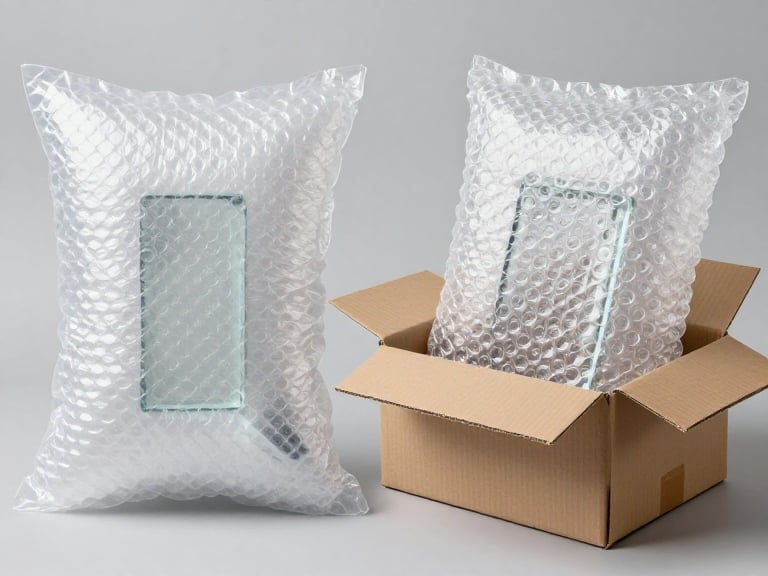
A Packaging Material Manufacturer is a physical industrial facility. They purchase raw polymer resins (like LDPE or polyurethane), operate heavy-duty extrusion lines, and employ the engineers who calibrate the machinery. When you browse top Bubble Wrap Manufacturers China, a true factory will have acres of floor space dedicated to film blowing, lamination, and automated cutting. They generate revenue strictly through the mass production of physical goods.
A Trading Company (or sourcing agent) is a commercial office, typically located in downtown business districts. They own no manufacturing assets. Their business model relies on leveraging local networks to find factories, negotiating a wholesale price, adding a significant margin, and reselling the product to foreign buyers. Their expertise lies in marketing and English communication, not polymer science or logistics engineering.
How It Works: The Flow of Goods and Communication
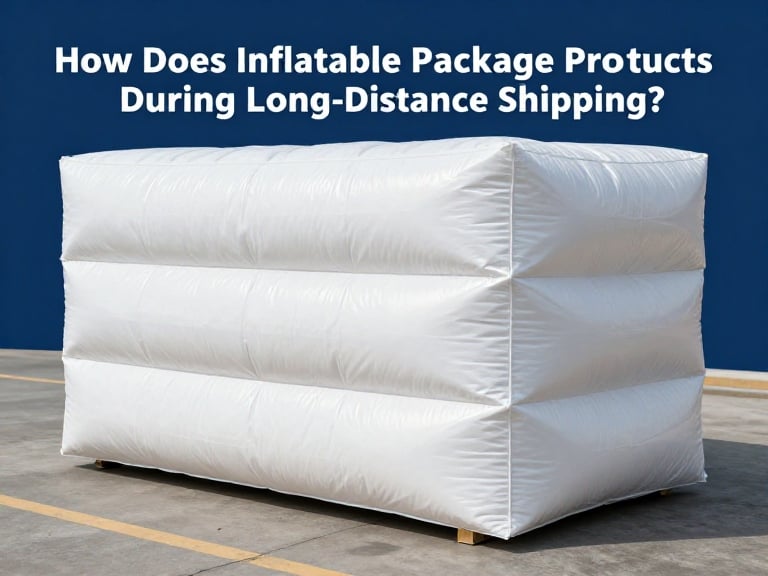
The operational mechanics of your supply chain dictate your product’s final quality. When you place an order with a trading company for Inflatable Air Column Wrap, your technical specifications (micron thickness, valve pressure limits) pass through a perilous communication chain. You speak to the trader, who translates your request and passes it to an anonymous factory manager, who then dictates instructions to the machine operator. In our testing and auditing of failed commercial orders, this layered communication is where critical tolerances are ignored.
Conversely, working directly with a manufacturer compresses the supply chain. If you need specific adhesive strengths on a batch of Poly Mailer Shipping Bags, you are speaking directly to the team formulating the glue. The feedback loop is immediate, precise, and financially transparent.
| Operational Feature | Direct Manufacturer | Trading Company (Broker) |
|---|---|---|
| Pricing Structure | Lowest (Direct base cost of resin and labor) | High (Includes 20-40% arbitrage margin) |
| Quality Consistency | High (Controlled internal environment and ISO SOPs) | Volatile (Frequently switch subcontractor factories to chase lower costs) |
| Customization Control | Unlimited (Direct access to molds and extrusion engineers) | Limited (Must relay complex requests through third parties) |
| Product Expertise | Deep technical knowledge of polymers and load bearing | Superficial sales knowledge across thousands of unrelated products |
The Unmatched Benefits of Direct Manufacturing
For commercial users scaling a brand or managing high-volume logistics, the advantages of bypassing the middleman are absolute.
1. Eradication of “Quality Fade”: Trading companies are notorious for a phenomenon known as “quality fade.” To increase their own margins, they will instruct their subcontractor factories to secretly reduce the micron thickness of your plastics or use recycled resin on your second and third orders. A direct manufacturer values long-term B2B relationships and maintains strict material consistency to protect their own factory reputation.
2. Maximum Profit Margins: Removing the broker immediately lowers your Cost of Goods Sold (COGS). When ordering bulky items like Corrugated Cardboard Rolls by the 40-foot container, a 30% reduction in unit price amounts to tens of thousands of dollars in retained capital.
3. Advanced R&D and Customization: If your logistics operation requires specialized protective solutions, such as anti-static EPE Foam Sheets for electronics, a factory has the laboratory equipment to test surface resistance and drop-shock thresholds. A trading company simply cannot provide this level of engineering assurance.
Limitations and Realistic Expectations
We apply commercial and practical judgment to every sourcing strategy: direct manufacturing is not without friction. The primary limitation is the Minimum Order Quantity (MOQ). Heavy-duty extrusion lines require hundreds of kilograms of raw polymer just to achieve thermal equilibrium during startup. Therefore, asking a factory to produce 50 units of a custom box is mathematically impossible without incurring severe financial losses.
Furthermore, navigating time zones and highly technical engineering jargon requires dedicated procurement staff on your end. While top-tier factories have robust English-speaking export teams, you must still possess a foundational understanding of your own packaging requirements.
| Advantages (Pros) | Disadvantages (Cons) |
|---|---|
| Protects your intellectual property (Custom molds remain secure). | Higher Minimum Order Quantities (MOQs) compared to retail brokers. |
| Optimizes unit economics by eliminating middleman markups. | Requires buyers to understand basic technical specifications. |
| Direct communication accelerates physical prototyping. | Requires thorough upfront due diligence and factory auditing. |
| Guaranteed compliance with ethical labor and raw material standards. | Cannot aggregate vastly different product categories (e.g., electronics and foam) into one container. |
Who Should Use It & Who Does Not Need It
For commercial users and heavy-duty applications: If you are managing fulfillment centers, e-commerce brands, or industrial parts shipping, you must use a direct manufacturer. You require strict compliance, exact dimensional tolerances for items like Heavy Duty Bubble Wrap, and the ability to scale to container loads efficiently. A trading company will become a dangerous financial bottleneck to your growth.
Who does not need it: For absolute beginners or boutique Etsy sellers who only want to buy 100 generic Bubble Wrap Pouches or a single box of Packing Tape BOPP Tape, navigating a direct factory relationship is unnecessary overkill. You are better off buying wholesale stock from a domestic trading company or local distributor who has already imported the goods.
| Buyer Profile | Volume Requirement | Recommended Sourcing Route |
|---|---|---|
| E-commerce Brand (Custom Prints) | Medium to High (Pallets/Containers) | Direct Manufacturer |
| Industrial Logistics / 3PL | Very High (Multiple Containers) | Direct Manufacturer |
| Dropshipper / Retail Arbitrage | Low (Mixed small batches) | Trading Company / Wholesaler |
| Local Mom-and-Pop Shop | Micro (Less than a pallet) | Domestic Distributor |
Common Mistakes in Asian Procurement
The most devastating mistake B2B buyers make is believing that a “Gold Supplier” or “Verified” badge on massive sourcing directories guarantees they are talking to a factory. Trading companies routinely rent factory floors for an afternoon to shoot marketing videos, tricking foreign buyers into believing they own the facility.
Another major error is failing to demand technical specifications. If you order EPE Foam from a broker without specifying the exact density (kg/m³) or cell structure, they will automatically source the cheapest, lowest-density foam available to maximize their profit spread. Your products will arrive damaged, and the broker will claim you never specified the density.
Buying Considerations & Factory Auditing
When selecting your supply chain partner among the top Flexible Polyurethane Foam Manufacturers, you must evaluate them like a forensic auditor.
First, demand a copy of their Chinese business license. A true factory’s license will explicitly list “manufacturing” or “production” (生产) within its registered business scope. A trading company’s license will only list “sales”, “trade”, or “technology” (贸易).
Second, request a live video audit. A reliable manufacturer will eagerly schedule a live video call via WeChat or Zoom. During this call, ask them to walk out onto the production floor, show you the raw resin silos, and zoom in on the extrusion dies. If they make excuses about “factory internet connections” or “confidentiality,” terminate the negotiation immediately.
| Audit Category | What to Request | Why It Matters |
|---|---|---|
| Legal Verification | Business License & Export License | Confirms manufacturing status and legal authority to export goods directly to you. |
| Quality Systems | ISO 9001 Certification | Ensures the factory operates under standardized, repeatable quality control procedures. |
| Production Capacity | Live Video Tour of Extrusion Lines | Proves physical assets exist and validates their claimed monthly container capacity. |
| Material Testing | SGS or RoHS Compliance Reports | Guarantees that the plastics and foams are free from heavy metals and toxic chemicals. |
Expert Recommendation from Mailong Packaging
In most professional situations, relinquishing control of your packaging procurement to an unverified third-party broker is a recipe for margin erosion and brand damage. We strongly recommend that serious B2B importers establish a direct, transparent relationship with a specialized manufacturer to secure long-term stability and pricing dominance.
Mailong Packaging Co., Ltd. was established in 2009. It is a reputed manufacturer and exporter of a wide range of world-class quality packaging materials, such as inflatable bubble and pillow film, air column rolls, air column bags, EPE and EVA FOAM, Poly Mailer, Stretch wrap, Bubble mailer, BOPP tape, and Corrugated box, which can prevent products from collision damage, attrition, and static in the process of logistics transportation, and have been exported to the oversea markets more than 30 countries.
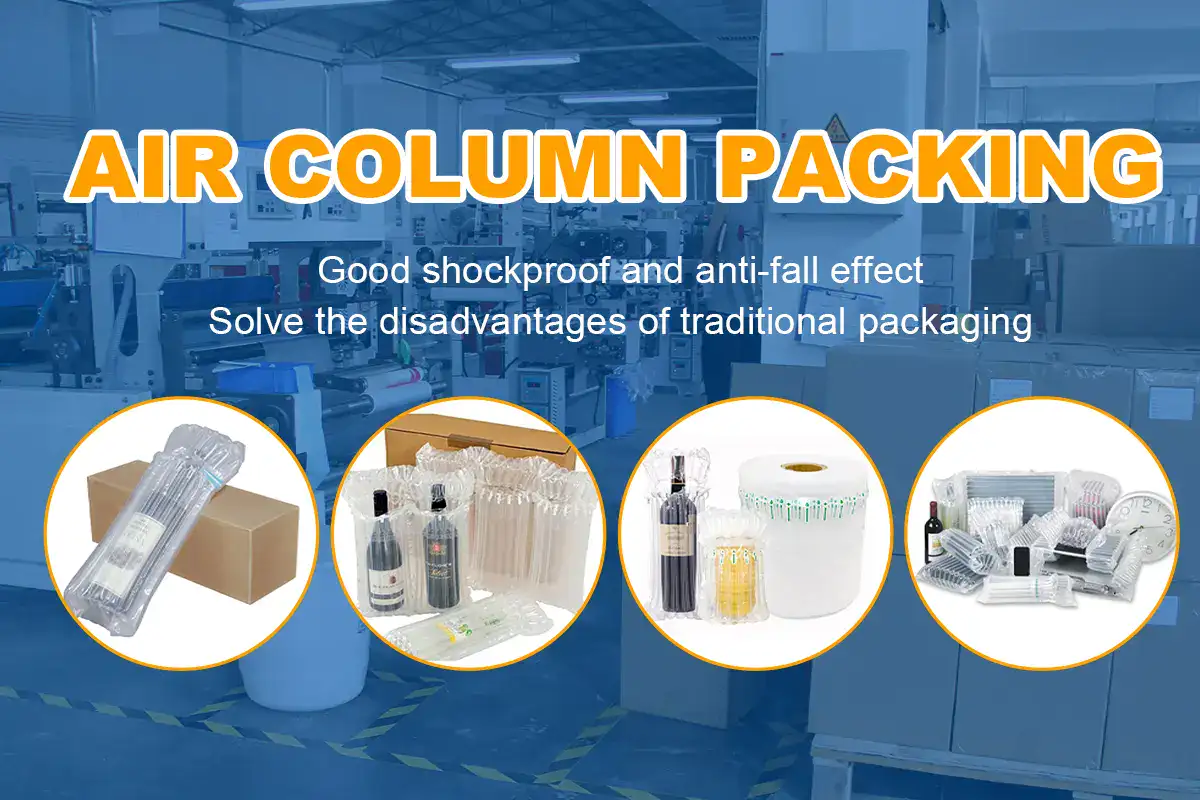
By partnering directly with Mailong Packaging, you bypass the opaque trading networks. You gain direct access to our production engineers, ensuring your packaging solutions are structurally optimized for your specific logistical challenges, manufactured consistently, and delivered at true factory-direct pricing.
Frequently Asked Questions (FAQ)
- International Organization for Standardization (ISO) – Standards for Quality Management Systems (ISO 9001) required for verifying legitimate manufacturing operations.
- U.S. Customs and Border Protection (CBP) – Official guidelines on commercial importing, compliance, and verifying foreign entities for international trade.
- ASTM International – The leading authority on standardized testing methods for packaging materials, drop-shock performance, and polymer strength.