Procurement directors and e-commerce managers routinely obsess over the quality of the product they are manufacturing. Yet, when it comes to the protective shell tasked with transporting that product across hostile global supply chains, they rely on digital mockups and blind faith. From our experience auditing shattered profit margins and analyzing reverse logistics nightmares, the failure to Evaluate Packaging Quality Before a Large Production run is commercial suicide. A poorly constructed box or a failed adhesive seal does not just result in a damaged item; it triggers a cascade of replacement costs, expedited shipping fees, devastating customer reviews, and severe brand dilution.
You cannot rely on a supplier’s verbal promise that a mailer is “durable.” You must apply brutal, real-world stress tests to physical prototypes before you sign a purchase order for fifty thousand units. Whether you are shipping fragile ceramics requiring precision-engineered internal voids or heavy industrial components demanding maximum edge crush resistance, your packaging is your first and final line of defense. In this practitioner’s guide, we will outline exactly how to Evaluate Packaging Quality Before a Large Production order, what metrics actually matter, and how to execute commercial judgment when selecting your material configurations.
Quick Answer: The Evaluation Framework
To successfully Evaluate Packaging Quality Before a Large Production run, you must demand unprinted, die-cut physical prototypes from your manufacturer. Subject these prototypes to a rigid series of tests: 1. Transit Simulation (drop testing from 3 to 6 feet on corners and faces), 2. Environmental Stress (exposing seals and adhesives to extreme heat and humidity), 3. Compression Testing (stacking weight on the package to measure crush thresholds), and 4. Real-World Dispatch (shipping the packaged prototype to yourself via a standard courier). Never authorize mass production based solely on a digital PDF or a flat material swatch.
Table of Contents
- What is Pre-Production Packaging Evaluation?
- How the Evaluation Process Works
- Commercial Benefits of Stringent Testing
- Limitations and Lead Time Realities
- Who Should Use This Protocol & Who Does Not Need It
- Common Mistakes in Procurement
- Strict Buying Considerations
- Summary & Comparison Tables
- Expert Recommendation from Mailong Packaging
- Frequently Asked Questions (FAQ)
What is Pre-Production Packaging Evaluation?
Pre-production packaging evaluation is the rigorous, empirical process of verifying that a proposed packaging solution can physically survive the supply chain environment before committing capital to a massive manufacturing run. It bridges the gap between theoretical material specifications and actual field performance. When you Evaluate Packaging Quality Before a Large Production, you are not simply looking at the print quality or the Pantone color match; you are investigating the burst strength of the polymer, the flute integrity of the cardboard, and the shear strength of the tape.
This phase demands physical interaction. It requires the procurement of structural prototypes—often created on a CAD cutting table—that accurately reflect the exact dimensions, material grade, and adhesive application that will be used in the mass-produced batch.
How the Evaluation Process Works
In most professional situations, evaluating packaging requires a systematic testing matrix. You must simulate the absolute worst conditions your package will encounter. Here is the operational protocol:
- The Edge Crush Test (ECT) and Mullen Burst Test: If you are sourcing Corrugated Box & Rigid Boxes, you must verify its ECT rating. This measures how much stacking weight the box can handle before the walls buckle. The Mullen Burst test measures the force required to puncture the side of the box. Request these certified metrics directly from the supplier, and then verify them physically by applying top-down weight in your facility.
- Vibration and Drop Testing (ISTA Standards): Place your actual product inside the prototype packaging. Drop it from varying heights (typically 36 to 48 inches) onto a hard concrete surface. Ensure you drop it on the flat base, the corners, and the edges. If your internal void fill is inadequate, the kinetic energy will transfer directly to the product.
- Cushioning Resilience Testing: Not all foams are created equal. If you are protecting heavy, high-value electronics, EPE FOAM (Expanded Polyethylene) offers rigid, shock-absorbing properties. If you are packing fragile glass or delicate contours, you might test a softer Flexible PU FOAM insert. You must test if the foam suffers from “compression set”—meaning it permanently flattens after one impact, leaving the product loose for the remainder of the journey.
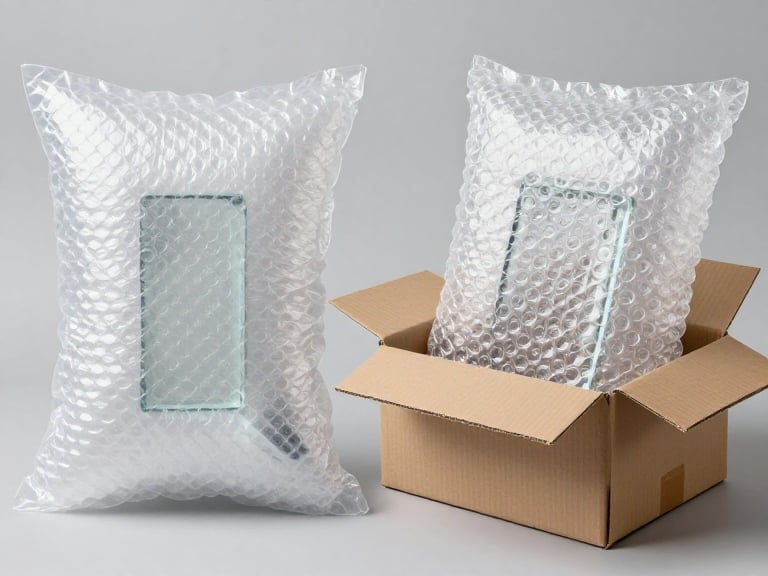
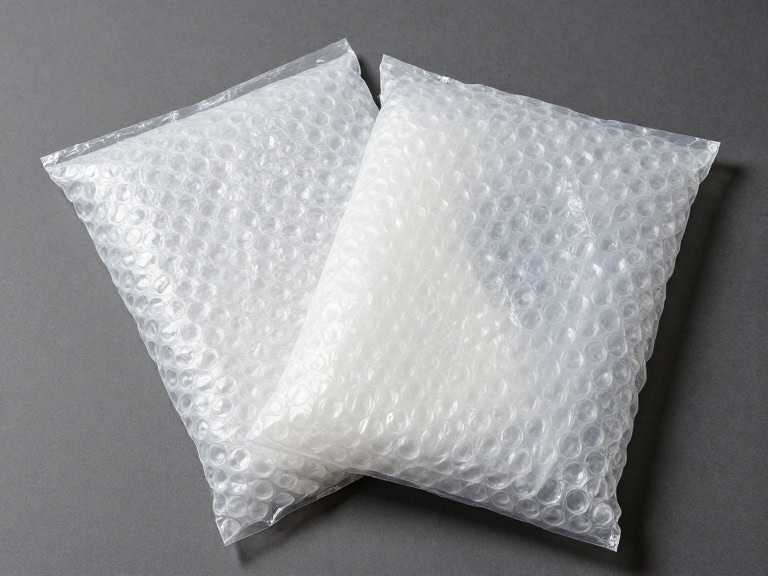
- Adhesive and Thermal Testing: A Bubble Mailer is only as good as its self-sealing adhesive strip. You must seal the prototype and leave it in a hot car or near a heating vent for 48 hours. Cheap adhesives will melt and pop open under thermal stress, inviting theft and damage during summer transit.
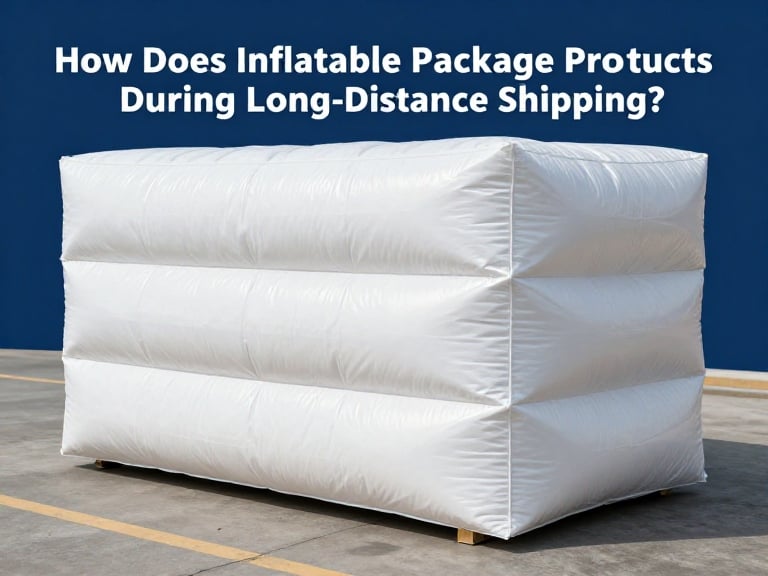
- Pneumatic Retention: If you utilize an Air Column Bag or Air Pillow Film, inflate the prototype and let it sit for seven days under a heavy book. If it slowly leaks air due to poor seam welding, your product will be unprotected by the time it reaches the customer.
Commercial Benefits of Stringent Testing
The primary benefit is absolute margin protection. The average cost of reverse logistics (processing a return, disposing of the damaged product, manufacturing a replacement, and shipping it twice) is often four to five times the retail price of the item itself. By spending a few hundred dollars to properly Evaluate Packaging Quality Before a Large Production run, you preemptively eliminate a devastating profit leak.
Furthermore, testing allows you to optimize material usage. You may discover through drop testing that an expensive, custom-molded EVA FOAM insert is overkill for your particular product, and that a significantly cheaper Air Column Wrap provides the exact same level of shock absorption. Testing drives lean procurement.
Limitations and Lead Time Realities
We must exercise commercial realism: thorough testing demands time. Requesting custom structural prototypes, putting them through a testing matrix, modifying the CAD files, and requesting a second round of prototypes can add 3 to 6 weeks to your procurement timeline. Additionally, manufacturers will charge sample fees and tooling setup fees for custom die-cuts during the prototype phase. You must build this buffer into your launch schedule.
Who Should Use This Protocol & Who Does Not Need It
For commercial users: Any enterprise shipping more than 1,000 units per month, dealing in fragile goods (electronics, cosmetics, glass), or operating in a low-margin environment where replacements are fatal to profitability, must execute this protocol rigorously. For heavy-duty applications, failing to test is gross negligence.
Who does not need it: For beginners shipping soft, indestructible goods—like t-shirts or basic apparel—obsessing over compression testing is a waste of resources. A standard, off-the-shelf poly mailer or basic Kraft box will suffice without the need for bespoke structural testing.
Common Mistakes in Procurement
The most catastrophic mistake is confusing a “print proof” with a “structural prototype.” A print proof verifies that your logo is the correct shade of blue. It tells you absolutely nothing about the board grade or the tensile strength of the materials. Never authorize a mass run based solely on a print proof.
Another profound error is ignoring environmental sustainability mandates in target markets. If you are shipping to jurisdictions with strict plastic bans, you might pivot to Compostable Bubble Wrap. However, compostable materials naturally have different tensile limits and shelf lives compared to traditional virgin plastics. You must test these alternative materials specifically to ensure they do not degrade prematurely in your warehouse before they are even used.
Strict Buying Considerations
When selecting a packaging supplier, their willingness to facilitate your testing phase is a major indicator of their overall quality. Do they push back when you ask for unprinted structural samples? Do they refuse to provide technical data sheets regarding polymer micron thickness or cardboard flute profiles? A reputable manufacturer expects and welcomes a rigorous testing phase because they know their product will pass.
Essential Procurement Tables
| Test Category | Action Required | Failure Consequence |
|---|---|---|
| Drop / Shock Test | Drop from 3-4 feet on edges and flat surfaces. | Internal product shattering; fractured corners. |
| Compression Test | Stack heavy weight on top of the packaged item. | Crushed outer shell leading to inventory loss in warehousing. |
| Adhesive / Thermal Test | Expose seals to extreme heat and cold for 48 hours. | Packages popping open in transit; high theft risk. |
| Air Retention Test | Inflate air cushions and wait 7 days under load. | Deflation in transit resulting in zero shock protection. |
| Metric | Blind Mass Production Order | Thorough Pre-Production Evaluation |
|---|---|---|
| Time to Procurement | Fast (Immediate mass production). | Slower (Adds 3-6 weeks for sample iteration). |
| Financial Risk | Extreme. You own 50,000 units of potentially useless packaging. | Minimal. Risk isolated to the cost of sample tooling. |
| Optimization Capability | Zero. What you order is what you get. | High. Ability to downgrade material thickness if over-engineered to save costs. |
| The Pros (Advantages) | The Cons (Disadvantages) |
|---|---|
| Eliminates catastrophic mass-scale structural failures. | Requires upfront capital for custom dies and shipping samples. |
| Allows verification of assembly time (how fast your staff can pack it). | Delays the final mass production launch date. |
| Provides physical proof of unboxing experience for marketing. | Requires dedicated personnel to execute standardized drop/crush tests. |
| Material Type | Best Use Case | Primary Testing Metric |
|---|---|---|
| EPE / EVA Foam | Heavy electronics, rigid tools, custom molded inserts. | Compression set (does it bounce back after impact?). |
| Air Column Bags | Wine bottles, toner cartridges, laptops. | Pneumatic retention and valve sealing strength. |
| Air Bubble Wrap / Pouch | General lightweight e-commerce goods, cosmetics. | Bubble burst threshold under sustained pressure. |
Expert Recommendation from Mailong Packaging
In most professional situations, the difference between a successful product launch and a logistical disaster comes down to the integrity of the manufacturing partner. You cannot effectively Evaluate Packaging Quality Before a Large Production run if your supplier lacks the technical machinery or the quality control discipline to replicate the prototype at a massive scale.
We highly recommend partnering with an established, globally certified manufacturer who understands the brutal realities of international logistics. Do not entrust your brand’s reputation to unverified trading companies.

Mailong Packaging – World-Class Manufacturing
Mailong Packaging Co., Ltd. was established in 2009. It is a reputed manufacturer and exporter of a wide range of world-class quality packaging materials, such as inflatable bubble and pillow film, air column rolls, air column bags, EPE and EVA FOAM, Poly Mailer, Stretch wrap, Bubble mailer, BOPP tape, and Corrugated box, which can prevent products from collision damage, attrition, and static in the process of logistics transportation, and have been exported to oversea markets in more than 30 countries.
Frequently Asked Questions (FAQ)
Authoritative Industry References
To further refine your testing protocols, we advise consulting the standardized methodologies established by global packaging authorities:
- International Safe Transit Association (ISTA) – The global authority on package performance testing and transit simulation standards.
- ASTM International – Comprehensive technical standards for evaluating paperboard, plastics, cushioning, and tape shear strength.
- International Organization for Standardization (ISO) – ISO TC 122 guidelines covering general packaging testing, environmental tolerances, and quality control systems.