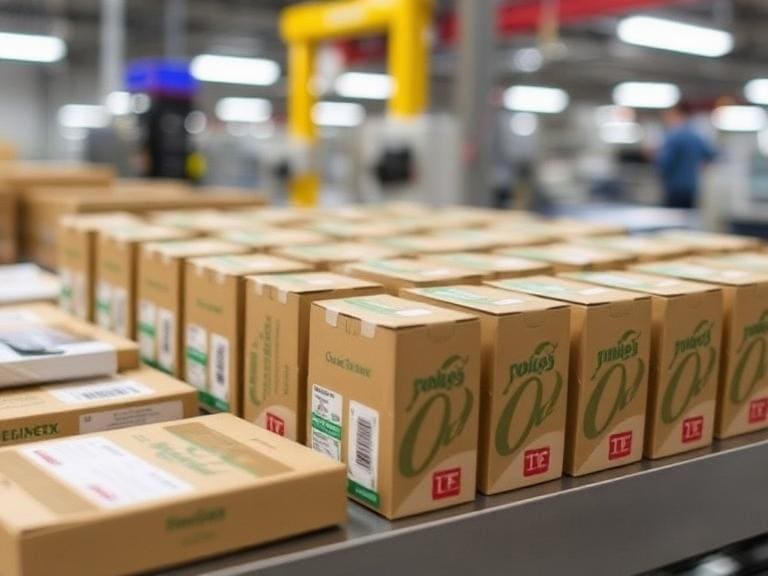
Choosing the wrong shipping envelope is a silent margin killer in e-commerce. If you over-package a durable item, you bleed profit through dimensional weight surcharges and wasted material costs. If you under-package a fragile item, you hemorrhage cash through return logistics, damaged inventory, and destroyed customer trust. The debate of Bubble Mailers vs. Poly Mailers is not a matter of preference; it is a strict commercial calculation based on product fragility, shipping distance, and fulfillment speed.
From our experience engineering high-volume shipping solutions at MailongPak, brand owners consistently mismatch their packaging to their product profiles. Relying on guesswork leads to bloated shipping manifests and angry customers. We evaluate the core mechanics of flexible packaging to provide you with an exact blueprint for determining which mailer will protect your product while maximizing your operational margins.
Quick Answer: Which Mailer Do You Need?
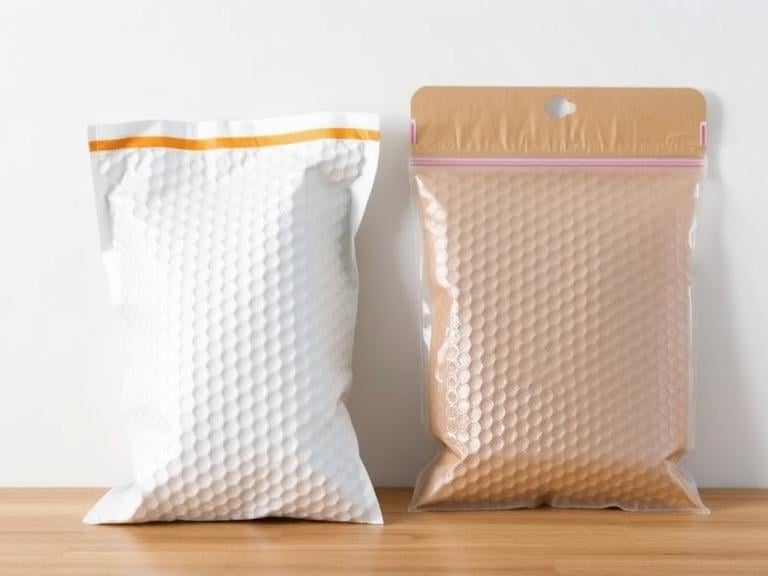
Choose a Poly Mailer if you are shipping soft, non-fragile, crushable goods like clothing, textiles, or plush items. They are ultra-lightweight, take up zero warehouse space, and offer the lowest possible shipping costs. Choose a Bubble Mailer if you are shipping semi-fragile items like jewelry, cosmetics, books, or electronics accessories. The internal air-cellular lining absorbs impact and prevents rigid edges from puncturing the outer envelope during transit.
Table of Contents
- What It Is
- How It Works
- Bubble Mailers vs. Poly Mailers: The 6 Aspects
- Benefits of Each Mailer Type
- Limitations and Operational Bottlenecks
- Who Should Use It (And Who Does Not Need It)
- Common Mistakes in E-commerce Packaging
- Buying Considerations for Commercial Operations
- Expert Recommendation
- Frequently Asked Questions
What It Is
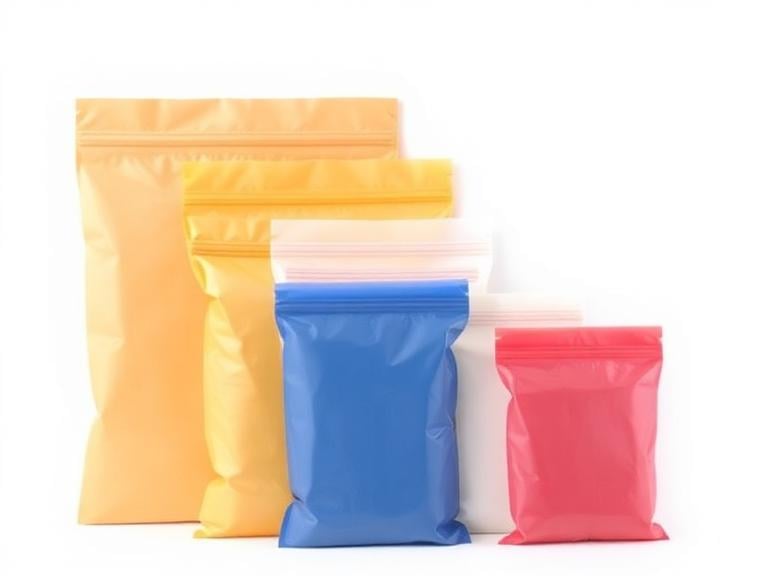
A Poly Mailer is a lightweight, flexible shipping envelope constructed from co-extruded polyethylene plastic. It is specifically engineered to be tear-resistant, puncture-resistant, and entirely waterproof. It contains no internal padding. A Bubble Mailer features the same waterproof polyethylene or kraft paper exterior but is lined on the inside with Bubble Cushioning Packaging. This internal cellular structure traps air to absorb shock and protect rigid or semi-fragile items from the blunt force impacts common in parcel sorting facilities.
How It Works
Both mailers function by utilizing a high-tack, pressure-sensitive self-sealing adhesive strip. Once a packer removes the release liner and folds the flap over, the mailer is securely sealed. Because the adhesive is tamper-evident, any attempt to open the package before delivery results in visible destruction of the plastic. The key mechanical difference lies in the drop-test performance. A poly mailer relies entirely on the product inside to retain its shape, while a bubble mailer utilizes pneumatic air suspension to dissipate kinetic energy away from the product during transit drops.
Bubble Mailers vs. Poly Mailers: A Comparison Across 6 Aspects
1. Protective Capabilities
In most professional situations, the level of protection dictates the packaging choice. Poly mailers offer zero crush or impact resistance. If you put a boxed skincare serum inside a poly bag, the retail box will be crushed by the time it reaches the customer. Conversely, bubble mailers excel at shock absorption. The air bladders protect rigid edges from piercing the outer bag and insulate the contents from direct impact.
2. Dimensional Weight and Shipping Costs
Shipping carriers (USPS, FedEx, UPS) calculate pricing based on Dimensional Weight (DIM pricing)—which means they charge you for the space a package occupies, not just its physical weight. Poly mailers conform tightly to the product inside, minimizing dead space and securing the lowest possible shipping tier. Bubble mailers possess inherent rigidity and thickness; they cannot be folded down as tightly. When evaluating Bubble Mailers vs. Poly Mailers for high-volume operations, upgrading to a bubble mailer can bump a package into a higher DIM weight class, instantly slicing your profit margin per unit.
3. Fulfillment Speed and Storage Footprint
For commercial users running tight warehouse spaces, inventory footprint matters. A case of 1,000 poly mailers takes up the space of a single shoebox. A case of 1,000 bubble mailers requires an entire shipping pallet. Furthermore, packing a poly mailer is generally faster because the smooth interior allows soft goods to slide in instantly. The friction of the internal bubble wrap in a padded mailer can slow down fulfillment speeds if items are not perfectly sized to the opening.
4. Branding and Aesthetic Customization
Both options accept custom printing, but they behave differently on the press. Because poly mailers are flat and smooth, they take high-resolution, full-color printing exceptionally well. Brands looking to create Custom Mailer Bags with Logo will find that unpadded poly offers the sharpest visual clarity. Printing on a bubble mailer is effective, but the textured internal bubbles can cause slight variations in complex, photo-realistic ink transfers.
5. Material and Procurement Cost
It requires more raw material and complex manufacturing machinery to extrude, line, and seal a bubble envelope. Therefore, bubble mailers command a higher per-unit cost than their unpadded counterparts. If your product does not strictly require shock absorption, paying a premium for bubble lining is a wasted operational expense.
6. Environmental Impact and Recyclability
Standard versions of both mailers are made from low-density polyethylene (LDPE – Plastic #4). While neither can be thrown into a standard curbside recycling bin, both can be recycled at dedicated store drop-off locations. However, poly mailers use significantly less plastic overall. For brands pivoting toward sustainability, investing in recyclable or compostable alternatives is becoming a mandatory commercial requirement.
Benefits
| Packaging Type | Primary Benefit | Secondary Benefit |
|---|---|---|
| Poly Mailers | Lowest shipping cost (DIM Weight). | Occupies minimal warehouse storage space. |
| Bubble Mailers | Superior shock and drop protection. | Maintains package structure for presentation. |
Limitations
Poly mailers cannot protect rigid items. If an item has sharp corners (like a book or a plastic blister pack), the friction during transit can cause the corner to slice through the unpadded polyethylene. Bubble mailers, while protective, are bulky. For heavy-duty applications, such as shipping high-value electronics or fragile ceramics, a bubble mailer is still insufficient; you must upgrade to rigid corrugated boxes paired with Packaging Quality Control standards.
Who Should Use It (And Who Does Not Need It)
Use Poly Mailers: If you run an apparel brand, use Poly Mailer Bags for Clothes or utilize dedicated Clothing Shipping Packaging. Textiles cannot be broken during drops, rendering bubble wrap useless and unnecessarily expensive.
Use Bubble Mailers: If you ship cosmetics, jewelry, nutritional supplements, books, or small hardware. These items require a barrier to prevent crushing and scratching.
Who Does Not Need Either: Shippers of highly fragile items like glassware or heavy mechanical parts. Neither flexible mailer provides the structural integrity required to prevent a heavy item from shattering under compression. These require rigid corrugated solutions.
Common Mistakes
The most devastating mistake we see is the “double-bagging” technique. A brand owner ships a t-shirt inside a clear polybag, and then places that into a bubble mailer “just to be safe.” This is operational sabotage. The shirt is already protected from water and dirt; adding the padded envelope adds weight, bulk, and zero functional protection. Another common error is choosing a mailer that is too large for the product. Excess plastic gets caught in carrier sorting belts, resulting in ripped packages and lost goods.
Buying Considerations
When executing a procurement strategy, do not buy the cheapest generic bag on the market. Weak seams split open during transit. Ensure your supplier guarantees a minimum thickness (usually 2.5 mil to 3 mil for reliable transit). Furthermore, assess the adhesive quality. A low-tack seal requires your fulfillment team to use additional clear tape to secure the flap, which drastically slows down your packing line and makes your brand look unprofessional.
| Feature | Poly Mailer | Bubble Mailer |
|---|---|---|
| Best For | Clothing, Soft Goods, Textiles | Jewelry, Books, Small Cosmetics |
| Cushioning | None | Excellent (Air-cellular lining) |
| Warehouse Footprint | Very Low | High (Bulky) |
| DIM Weight Impact | Minimal (Conforms to product) | Moderate (Adds thickness) |
| Cost per Unit | Lowest | Moderate to High |
| Mailer Type | Pros | Cons |
|---|---|---|
| Poly Mailers | Cheapest raw material; slashes shipping costs; highly water-resistant; fast fulfillment. | Zero drop protection; sharp product edges can pierce the bag. |
| Bubble Mailers | Prevents impact damage; protects retail boxes from scuffs; rigid structure looks premium. | Takes up massive warehouse space; higher material cost; may trigger higher shipping rates. |
Expert Recommendation
We recommend conducting a strict audit of your current shipping manifest. If you are shipping non-fragile items in bubble mailers, transition immediately to high-quality poly mailers to recapture lost shipping margins. If you are shipping semi-fragile items and experiencing a return rate higher than 2% due to transit damage, upgrading to a specialized padded solution is a financial necessity to protect your brand reputation.
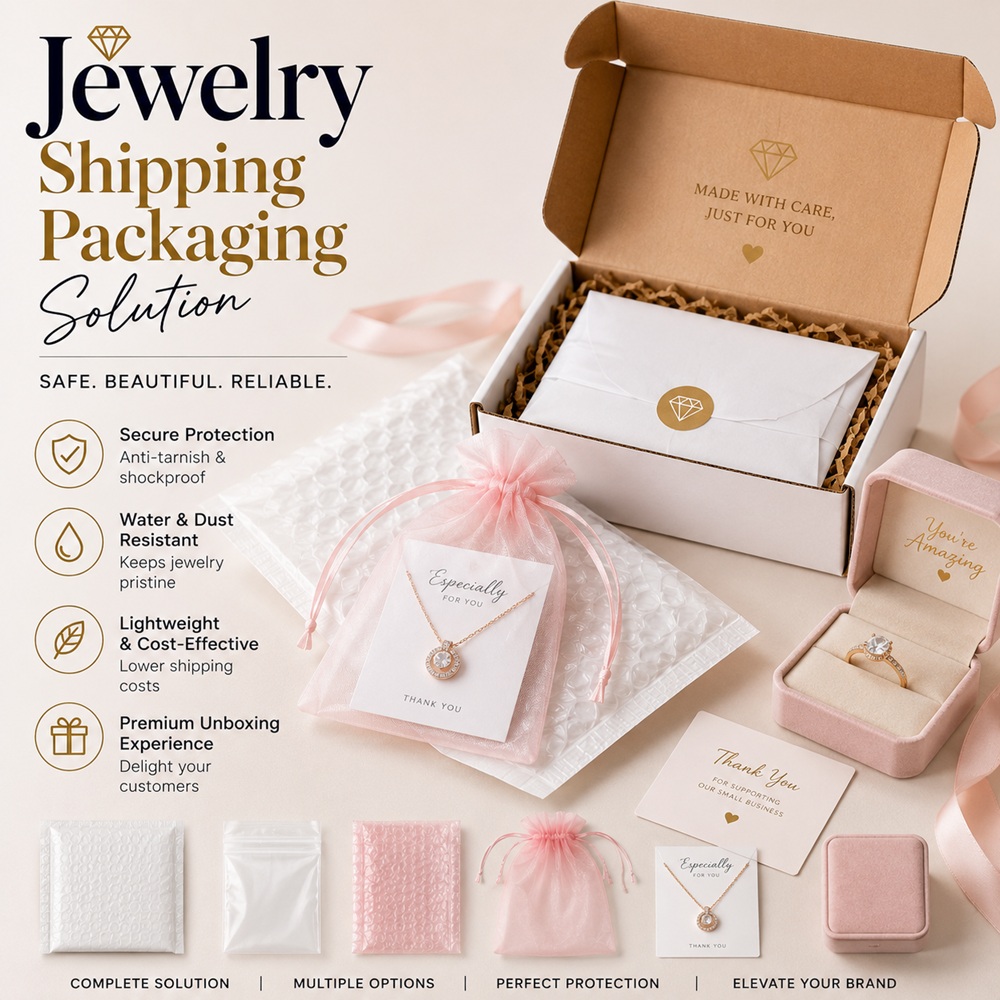
Jewelry Bubble Mailer Shipping Packaging Solution
For commercial users shipping delicate items where presentation and protection are equally critical, MailongPak engineers specific bubble mailer solutions that eliminate the need for heavy corrugated boxes.
- Application Scenario: Jewelry Shipping
- Material: Custom Material
- Key Features: Protective Packaging
- Size / Thickness: Custom
- Industry Use: Various Industries
- Customer Concerns: Durability and Protection
- MOQ: 200 PCS
- HS Code: 3923290000
- Production Time: 3–7 Days
- Port: Shenzhen
Stop risking your high-value inventory in substandard packaging. View the Jewelry Bubble Mailer Solution to upgrade your unboxing experience.
Frequently Asked Questions
Are poly mailers cheaper to ship than bubble mailers?
Yes. Because carriers calculate shipping costs using Dimensional (DIM) Weight, a poly mailer’s ability to compress flat against the product ensures it takes up less volumetric space than a thick, rigid bubble mailer, directly resulting in lower postage rates.
Can I ship electronics in a poly mailer?
Absolutely not. Poly mailers offer zero impact resistance. Electronics must be shipped in a bubble mailer or, for high-value items, a rigid corrugated box lined with internal void fill to prevent catastrophic shock damage during transit.
Are bubble mailers and poly mailers recyclable?
Standard versions of both are made from #4 LDPE plastic. They cannot go into your standard curbside recycling bin, as the flexible plastic jams municipal sorting machines. They must be dropped off at designated store collection bins. However, many manufacturers now offer fully compostable or 100% recycled-content alternatives.
Authoritative Industry References
To ensure our packaging guidelines align with strict commercial logistics and environmental standards, we reference the following authoritative organizations:
- United States Postal Service (USPS) – Guidelines on Dimensional Weight (DIM) pricing and physical packaging standards for parcel shipping.
- International Safe Transit Association (ISTA) – Global standards and testing protocols for packaging durability and drop-test performance.
- U.S. Environmental Protection Agency (EPA) – Federal guidelines on the proper recycling and disposal of LDPE flexible plastics and mailers.