In the ruthless world of high-volume e-commerce fulfillment, packaging logistics will systematically drain your profit margins if you do not strictly control your supply chain. We consistently see brands hemorrhage capital by overpaying for generic retail shipping supplies or relying on outdated corrugated box strategies. To protect your bottom line, you must aggressively evaluate your procurement channels.
From our experience engineering advanced packaging materials, knowing exactly how to buy Poly Bags for shipping dictates whether you dominate your fulfillment costs or surrender to them. The market is saturated with low-grade, single-layer films that tear in transit and expose customer goods to theft. In this comprehensive guide, we will cut through the intermediary noise, outline the six distinct procurement routes available to your business, and exercise commercial judgment to determine the most profitable sourcing strategy for your specific operational volume.
Direct Answer: Procurement Routes
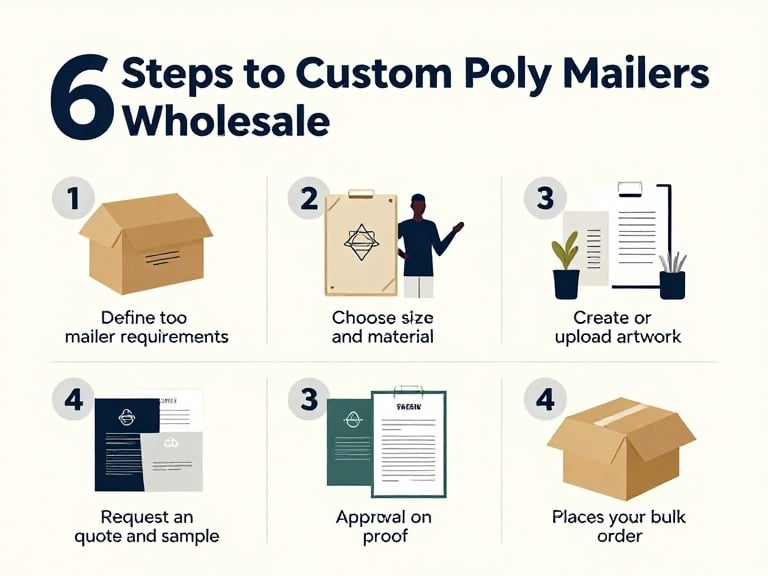
If you are looking to buy Poly Bags for shipping, you have six primary procurement routes: purchasing directly from overseas manufacturers (the most profitable for scale), buying from domestic wholesale packaging distributors (best for speed), utilizing online B2B marketplaces, hiring custom packaging brokers, sourcing from surplus liquidators, or buying from retail office supply stores. For commercial scale, buying directly from a tier-one manufacturer eliminates middleman markups and guarantees dimensional and material consistency.
Quick Answer: What You Must Know
- Is it worth upgrading from boxes to poly bags? Absolutely. Poly mailers weigh a fraction of an ounce and completely eliminate the dimensional weight (DIM) penalties imposed by FedEx, UPS, and USPS on rigid boxes.
- The Best Route for Scale: If you ship more than 5,000 orders monthly, you must source directly from Poly Mailer manufacturers.
- Non-Negotiable Specs: Never buy a bag with less than a 2.5 mil thickness. Demand co-extruded (multi-layer) films for complete opacity, and insist on hot-melt pressure-sensitive adhesives to prevent tampering.
Table of Contents
- What is a Poly Shipping Bag?
- How Co-Extruded Poly Bags Work
- Commercial Benefits of Poly Bags
- Limitations and Puncture Risks
- Who Should Use It & Who Does Not Need It
- The 6 Ways to Buy Poly Bags for Shipping
- Quick Summary Table: Sourcing Methods
- Pros and Cons Table: Poly Bags vs. Corrugated Boxes
- Comparison Table: Buying Direct vs. Distributors
- Common Mistakes in Procurement
- Buying Considerations
- Buying Guide Checklist
- Expert Recommendation
- Frequently Asked Questions
What is a Poly Shipping Bag?
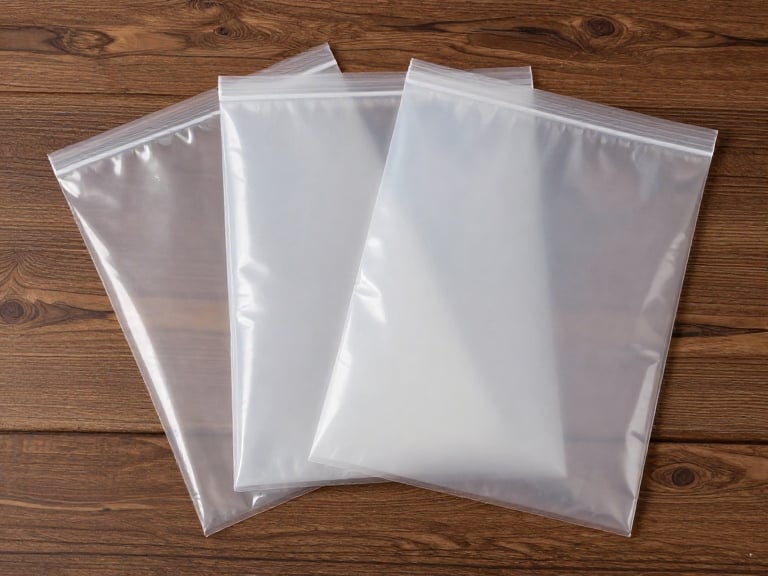
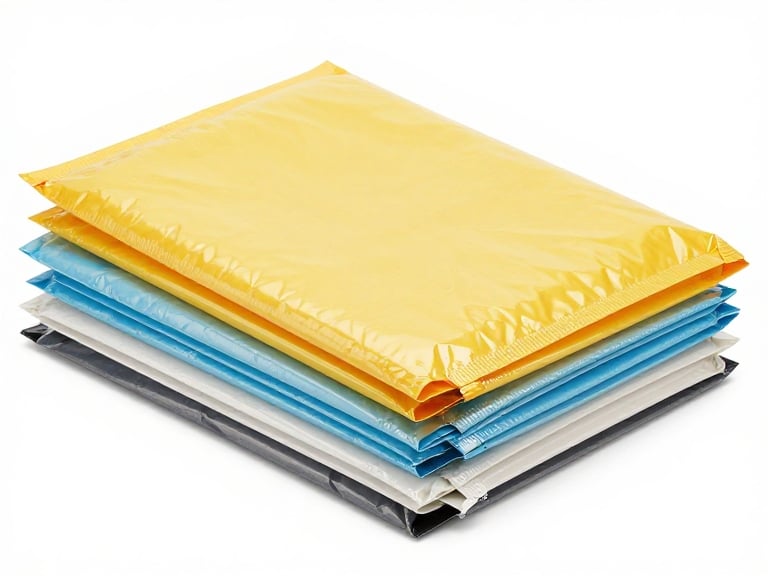
A poly shipping bag, commercially referred to as a poly mailer, is a lightweight, flexible shipping envelope constructed from polyethylene film. These are specifically engineered to transport non-fragile consumer goods—predominantly apparel, soft textiles, footwear, and boxed retail items—through the brutal environment of postal sorting facilities.
Unlike cheap retail plastic bags, industrial-grade Poly Mailer Shipping Bags are manufactured with self-sealing adhesive strips and tear-resistant polymer blends. They are the backbone of modern apparel e-commerce because they conform exactly to the shape of the product inside, leaving zero dead airspace.
How Co-Extruded Poly Bags Work
In most professional situations, tier-one manufacturers utilize a co-extrusion process. This means multiple layers of polyethylene are blown and fused together simultaneously. Typically, the outer layer is white (or custom printed) to accept shipping labels and branding, while the inner layer is silver or black. This internal dark layer serves a critical security function: total opacity. It prevents warehouse workers and logistics personnel from seeing the contents of the package, drastically reducing the risk of transit theft.
The closure mechanism relies on a pressure-sensitive hot-melt adhesive. Once the release liner is peeled and the flap is pressed down, the adhesive aggressively bonds with the plastic. The only way to open the bag is to physically destroy it, providing immediate tamper evidence.
Commercial Benefits of Poly Bags
The decision to transition your fulfillment line to flexible packaging yields immediate financial returns. The primary benefit is the eradication of dimensional weight pricing. Shipping carriers charge based on the amount of space a package occupies in their trucks, not just its actual weight. A corrugated box containing a t-shirt contains 80% empty air but incurs maximum shipping fees. A poly mailer eliminates that air.
Furthermore, poly bags drastically increase warehouse packing velocity. Assembling a cardboard box, taping the bottom, inserting void fill, and taping the top takes roughly 45 seconds. Slipping a shirt into a Poly Mailer Bags for Clothes and sealing the adhesive strip takes less than 10 seconds. When multiplying this across thousands of daily orders, your labor savings are astronomical.
Limitations and Puncture Risks
We apply commercial and practical judgment when advising clients; poly mailers are not invincible. They offer zero structural rigidity. If you ship a fragile glass bottle or a delicate electronic device in a standard poly bag, it will be annihilated in transit. Heavy-duty applications involving sharp objects or hard corners run the risk of puncturing the film if the mil thickness is insufficient.
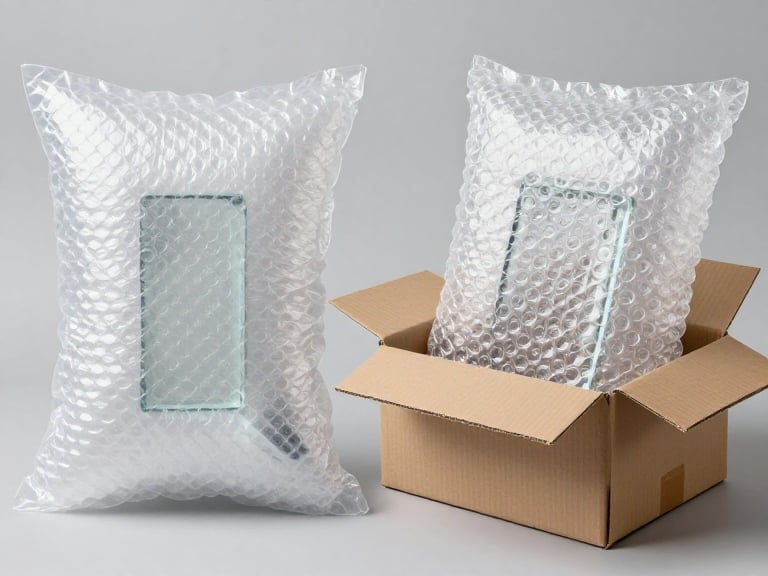
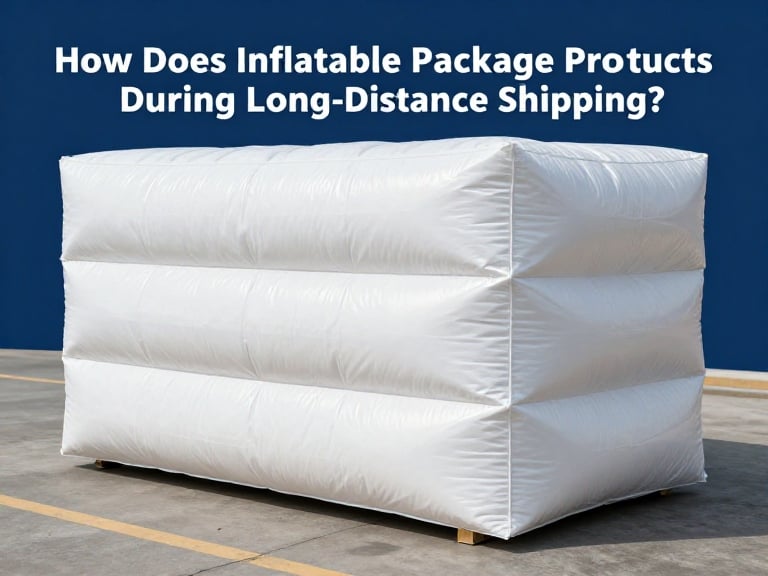
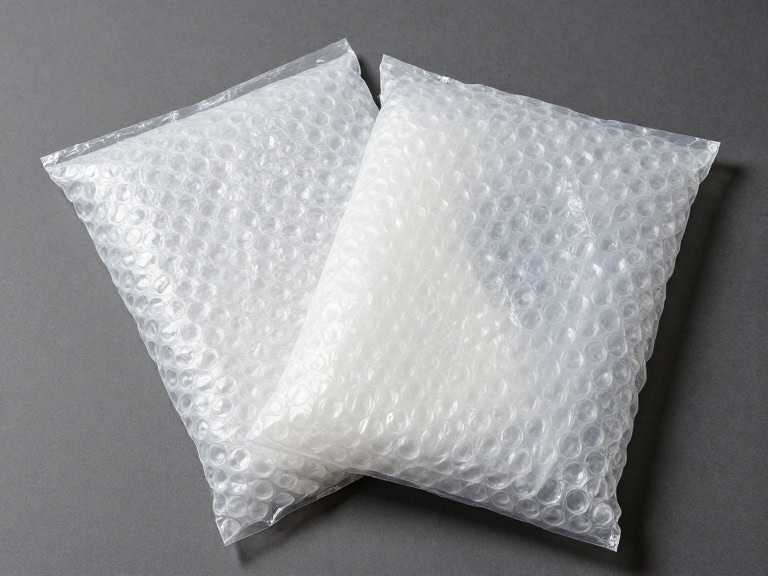
To mitigate this limitation while retaining the weight savings, shippers must pair flexible packaging with protective internals, such as Inflatable Bubble Wrap or robust Air Column Bags, to create a hybrid protective shell.
Who Should Use It & Who Does Not Need It
Who should use it: Apparel retailers, soft-goods manufacturers, subscription box companies, and fulfillment centers shipping pre-boxed items (like shoeboxes). For commercial users processing high volumes of non-fragile inventory, poly bags are non-negotiable.
Who does not need it: Businesses shipping high-value fragile electronics, glassware, heavy automotive parts, or liquids. If structural crush resistance is required, you must utilize heavy-duty corrugated cartons and Packing Tape BOPP Tape.
The 6 Ways to Buy Poly Bags for Shipping
1. Direct from Overseas Manufacturers (The Optimal Route)
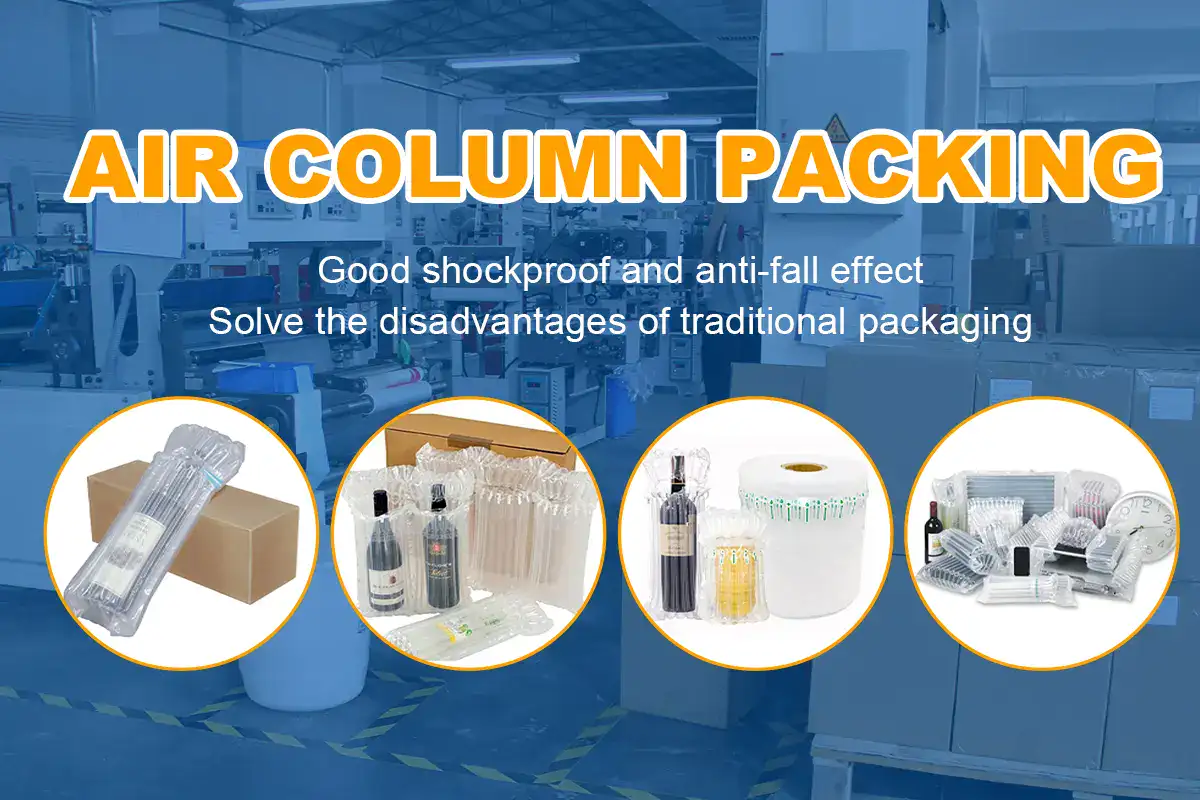
For brands operating at scale, contracting directly with global packaging manufacturers is the most aggressive cost-saving strategy. You eliminate domestic distributor markups, allowing you to secure custom dimensions, full CMYK flexographic printing, and specific polymer blends at a fraction of the domestic cost. Reputable factories, such as those ranking among the Bubble Wrap Manufacturers China hierarchy, offer comprehensive OEM services.
2. Domestic Wholesale B2B Distributors
Companies like Uline or Grainger hold massive domestic inventories. They offer next-day delivery and low minimum order quantities (MOQs). The trade-off is a severely inflated price per unit. This route is excellent for emergency inventory replenishment but financially toxic for long-term high-volume scaling.
3. Online B2B Marketplaces
Platforms like Alibaba or Global Sources allow you to connect with thousands of trading companies. While you can find cheap prices, the risk of “quality fade” is high. Many sellers are brokers, not actual factories, meaning your bag thickness and adhesive quality may vary wildly from batch to batch.
4. Custom Packaging Brokers
A broker acts as your outsourced procurement department. They have established relationships with factories and handle the quality control and logistics. They are excellent for complex, multi-component packaging designs, but you will pay a premium for their management services.
5. Overstock and Surplus Liquidators
You can buy Poly Bags for shipping through industrial liquidation auctions. This is the absolute cheapest domestic route, but supply is erratic. You cannot rely on liquidators for consistent sizing or custom branding. It is strictly a tactical play for budget-constrained operations.
6. Retail Office Supply Stores
Buying packs of 25 mailers from Staples, Office Depot, or the local post office is a consumer-level strategy. The cost per bag can easily exceed $1.00. For beginners shipping their very first order, it suffices. For any registered business, it is a catastrophic waste of money.
Quick Summary Table: Sourcing Methods
| Procurement Route | Best For | Cost Efficiency | Lead Time |
|---|---|---|---|
| Direct Manufacturer | Commercial scale, custom branding, lowest unit cost. | Maximum | 4-6 Weeks (Sea Freight) |
| Domestic Distributor | Fast turnaround, emergency stock, low MOQs. | Low | 1-2 Days |
| Packaging Broker | Complex supply chains without internal procurement teams. | Moderate | Variable |
| Retail Stores | Single-item consumer shipping. | Terrible | Immediate |
Pros and Cons Table: Poly Bags vs. Corrugated Boxes
| Packaging Type | Pros (Benefits) | Cons (Limitations) |
|---|---|---|
| Poly Shipping Bags | Eliminates dimensional weight fees; ultra-fast packing speed; waterproof exterior protects goods from rain. | Provides zero crush protection; difficult to recycle in standard curbside bins; looks less premium than a rigid box. |
| Corrugated Boxes | Superior crush resistance; high perceived brand value; easily stackable on pallets; universally recyclable. | Expensive to purchase; incurs heavy DIM weight carrier fees; requires tape and void fill; slow to assemble. |
Comparison Table: Buying Direct vs. Distributors
| Feature | Direct Manufacturer (e.g., Mailong) | Domestic Distributor |
|---|---|---|
| Price Per Unit | Lowest Factory-Gate Pricing | High (Includes Markup) |
| Customization | 100% Control (Size, Print, Mil-Thickness) | Limited to stock sizes |
| Minimum Order Quantity (MOQ) | High (Usually 10,000+ units) | Low (Often sold in cases of 100) |
| Warehousing Burden | You must store the bulk inventory | They store it until you need it |
Common Mistakes in Procurement
In our testing and consulting with e-commerce brands, the most disastrous mistake is under-specifying the mil thickness. Buying a 1.5 mil single-layer bag to save half a cent will result in the bag splitting open on postal conveyor belts, leading to massive inventory loss and angry customers. You must demand at least a 2.5 mil co-extruded film.
Another frequent error is ignoring the adhesive quality. Cheap bags use weak acrylic adhesives that pop open in freezing temperatures or extreme heat during transit. Always stipulate heavy-duty hot-melt adhesives. Finally, failing to factor in gussets is a classic rookie mistake. If you are shipping bulky items like hoodies, a flat bag will not seal properly; you must order a bottom-gusseted bag that expands to accommodate depth.
Buying Considerations
Before you issue a purchase order, exercise strict practical judgment. Evaluate your return rates. If your business experiences a 20% return rate (common in apparel), you should spec your poly bags with dual adhesive strips and a perforated tear-line. This allows the customer to open the package cleanly and use the second adhesive strip to seal the return, greatly improving the customer experience and ensuring your goods return safely.
Buying Guide Checklist
| Specification | What You Must Demand | Why It Matters |
|---|---|---|
| Film Architecture | Co-extruded (Multi-layer) | Ensures absolute opacity (security) and prevents easy tearing. |
| Thickness (Mil Rating) | 2.5 Mil Minimum | Prevents sharp corners of internal product packaging from slicing the bag. |
| Closure System | Hot-Melt Tamper-Evident Adhesive | Bonds aggressively to the plastic; clearly shows if the bag was tampered with. |
| Seam Strength | Reinforced Side-Weld Seams | Stops the bag from bursting open when dropped or compressed in transit cages. |
Expert Recommendation
Explain not only WHAT something is, but WHETHER it is actually worth using, buying, or upgrading. It is definitively worth upgrading your fulfillment operation to poly bags if you are shipping soft goods. The labor and freight savings are too massive to ignore. However, you must execute your procurement correctly.
We recommend bypassing middlemen and securing your supply chain through a vetted, direct manufacturer capable of stringent quality control. Mailong Packaging Co., Ltd. was established in 2009. It is a reputed manufacturer and exporter of a wide range of world-class quality packaging materials, such as inflatable bubble and pillow film, air column rolls, air column bags, EPE and EVA FOAM, Poly Mailer, Stretch wrap, Bubble mailer, BOPP tape, and Corrugated box, which can prevent products from collision damage, attrition, and static in the process of logistics transportation, and have been exported to the oversea markets in more than 30 countries.
By partnering with an industry leader like Mailong Packaging, you secure factory-direct pricing, uncompromising material strength, and the agility to scale your custom branding as your enterprise expands.
Frequently Asked Questions
What mil thickness do I need when I buy Poly Bags for shipping?
For standard apparel (t-shirts, socks), a 2.0 mil thickness is acceptable. However, for heavier garments like jeans, or items with rigid corners (like shoeboxes inside the poly bag), you must upgrade to a minimum of 2.5 mil to 3.0 mil to prevent punctures during automated postal sorting.
Can poly mailers be recycled?
Standard LDPE (Low-Density Polyethylene) mailers are 100% recyclable, but they cannot be thrown into standard residential curbside bins, as the thin film jams municipal sorting machines. They must be dropped off at designated store drop-off locations that handle plastic film recycling.
Are poly bags cheaper to ship than corrugated boxes?
Yes, significantly. Shipping carriers calculate costs based on dimensional (DIM) weight. A poly bag molds to the product, eliminating dead space. A cardboard box occupies a fixed, larger volume of space, resulting in much higher freight charges, even if the actual weight of the item is identical.
Authoritative References & Industry Standards
To ensure commercial compliance and optimal logistics practices, we align our procurement guidelines with the following authoritative bodies: