Navigating the complex landscape of industrial packaging procurement is fraught with costly pitfalls. Sourcing the right protective foam is not merely an administrative task; it is a critical engineering decision that directly dictates your product defect rates, shipping overhead, and ultimate brand perception. When supply chain managers realize they need premium shock absorption, they inevitably look to buy eva material. However, knowing that you need Ethylene-Vinyl Acetate (EVA) is only half the battle. Knowing how and where to procure it dictates whether you secure a competitive advantage or bleed capital through unnecessary middleman markups.
From our experience at Mailong Packaging, where we have spent over 15 years manufacturing and exporting world-class packaging materials to more than 30 countries, we routinely witness procurement teams making severe sourcing errors. Buyers often overpay for retail-grade foam when they need industrial volume, or they blindly purchase from generic trading companies on B2B portals without verifying density specifications, leading to catastrophic product damage during transit.
In this comprehensive guide, we will strip away the industry ambiguity. We will outline the exact 6 ways to buy eva material, evaluate whether each sourcing channel is actually worth using, and provide commercial judgment to help you make a definitive buying decision. We are not here to offer generic encyclopedia summaries; we are here to optimize your packaging supply chain.
Direct Answer: How Should You Buy EVA Material?
If you are procuring packaging for high-volume manufacturing or commercial shipping, the optimal way to buy eva material is directly from an established overseas or domestic manufacturer. This bypasses industrial distributors and foam brokers, securing wholesale pricing, custom die-cut capabilities, and strict density control.
Conversely, if you only require small batches for prototyping, utilizing a local custom fabricator or a specialized online retail supplier is the most practical route to avoid prohibitive Minimum Order Quantities (MOQs).
Table of Contents
- What is EVA Material and How Does it Work?
- The 6 Strategic Ways to Buy EVA Material
- Benefits and Limitations of EVA Foam
- Who Should Use It & Who Does Not Need It
- Common Mistakes in Foam Procurement
- Crucial Buying Considerations
- Summary, Comparison, and Buying Guide Tables
- Our Expert Recommendation
- Frequently Asked Questions (FAQ)
What is EVA Material and How Does it Work?
Before you execute a purchase order to buy eva material, you must understand the underlying polymer chemistry and structural mechanics of what you are paying for. EVA stands for Ethylene-Vinyl Acetate. It is an elastomeric polymer that produces materials which are “rubber-like” in softness and flexibility. In the packaging industry, it is predominantly processed into a closed-cell foam.
How it works is deeply tied to its cellular structure. Because EVA is a closed-cell foam, the gas pockets within the material are entirely sealed off from one another. When a heavy object impacts the foam, the cells compress to absorb the kinetic energy but do not burst or leak air. Once the pressure is removed, the foam exhibits excellent “memory,” returning to its original shape. This makes EVA FOAM fundamentally superior to open-cell alternatives when defending high-mass, high-value items against repeated transit shocks.
Unlike standard polystyrene (Styrofoam) which cracks under pressure, or standard polyethylene which can permanently crush, EVA provides a resilient, premium finish that does not generate abrasive dust. This is why it is the gold standard for luxury product inserts, heavy tool casing, and sensitive electronic packaging.
The 6 Strategic Ways to Buy EVA Material
Depending on your operational scale, budget constraints, and customization needs, there are six primary avenues to buy eva material in the modern market.
1. Factory-Direct Manufacturers (The Commercial Standard)
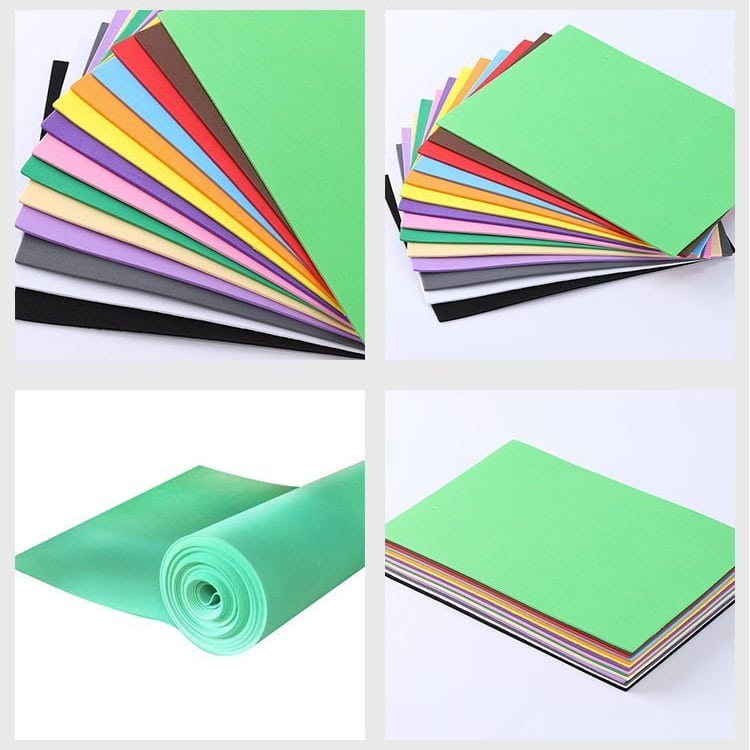
In most professional situations, bypassing middlemen and contracting directly with a manufacturer is the only way to achieve scalable unit economics. Companies like Mailong Packaging extrude, expand, and cut the foam in-house. When you buy eva material directly from the factory line, you unlock custom color matching, precise density manipulation, and complex die-cutting without retail markups.
Verdict: Absolutely worth using for enterprise commercial users, subscription box companies, and high-volume electronics manufacturers. The only limitation is the Minimum Order Quantity (MOQ).
2. Industrial Packaging Distributors
Distributors like Uline, Grainger, or regional packaging supply houses warehouse vast quantities of standardized EVA sheets and rolls. They purchase from factories and sell to end-users at a premium.
Verdict: Worth using only for emergency stock replenishment or when you need standard 4×8 foot sheets delivered next-day. We recommend avoiding this route for long-term production, as the 30% to 50% distributor markup will decimate your packaging budget over time.
3. B2B Wholesale Portals (Alibaba, Global Sources)
These global directories connect buyers with thousands of overseas suppliers. While it appears to be a direct-to-factory route, these portals are heavily saturated with trading companies posing as actual manufacturers.
Verdict: Proceed with extreme caution. While you can find excellent Packing Foam Sheets Suppliers, the risk of receiving sub-standard, low-density EVA mixed with cheap fillers is exceptionally high unless you employ third-party quality control inspections prior to shipment.
4. Custom Foam Fabricators and Die-Cutters
These are specialized machine shops that buy eva material in massive raw “buns” or blocks from manufacturers, and then use CNC routers, waterjets, or clicker presses to carve out intricate custom shapes for your specific product.
Verdict: Highly recommended for medium-volume businesses that require complex, multi-depth foam inserts (like camera cases or weapon cases) but lack the capital to invest in their own die-cutting machinery.
5. Specialty Foam Brokers
Brokers do not hold inventory. They leverage their industry connections to match your specific foam requirements with a network of factories, taking a commission on the transaction.
Verdict: Not worth using for standard EVA procurement. In 2026, the internet has made factory direct sourcing transparent enough that paying a broker’s premium is an unnecessary supply chain inefficiency.
6. Retail Outlets and Hobby Suppliers
Big-box craft stores and online consumer retailers sell EVA foam in small, thin, brightly colored sheets, commonly used for cosplay, crafts, or basic drawer lining.
Verdict: Strictly for beginners and individual consumers. Commercial users should never buy eva material from retail channels due to astronomical per-square-foot pricing and lack of technical density specifications.
Benefits and Limitations of EVA Foam
To determine if you should buy eva material instead of cheaper alternatives, you must weigh its physical realities.
The Benefits: EVA is chemically stable, non-toxic, and highly resistant to UV radiation, ozone, and water absorption. It provides a premium, velvet-like tactile feel that elevates the unboxing experience for luxury goods. For heavy-duty applications, its high tear resistance and load-bearing capacity outperform almost all other commercial packaging foams.
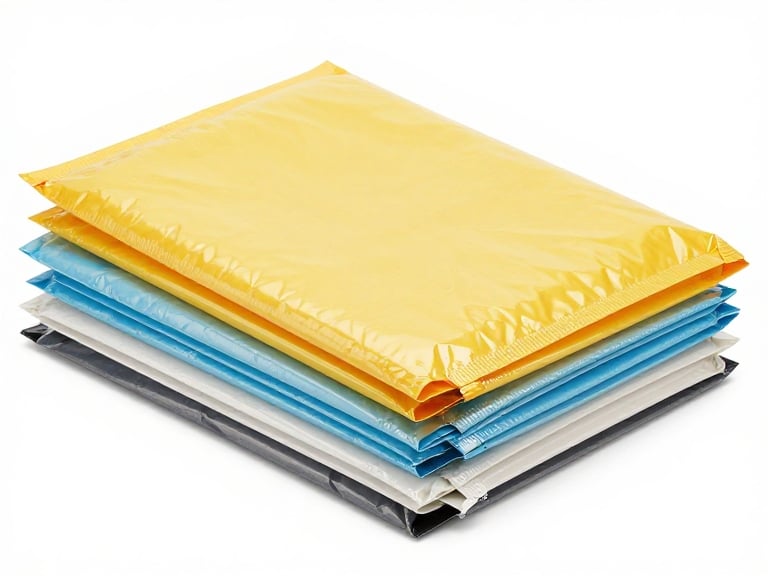
The Limitations: EVA is significantly more expensive than standard EPE (Expanded Polyethylene) or EPS (Expanded Polystyrene). Furthermore, because of its dense closed-cell structure, it adds more gross weight to shipping cartons than air-based solutions. If you are shipping lightweight, non-fragile items like apparel, EVA is severe overkill; you would be far better served utilizing a standard Poly Mailer.
Who Should Use It & Who Does Not Need It
For commercial users: You must buy eva material if you are shipping high-value electronics, medical devices, precision measuring tools, lithium-ion batteries, or heavy industrial automotive parts. Any application where a drop impact could result in thousands of dollars in liability requires the shock-absorption memory of EVA.
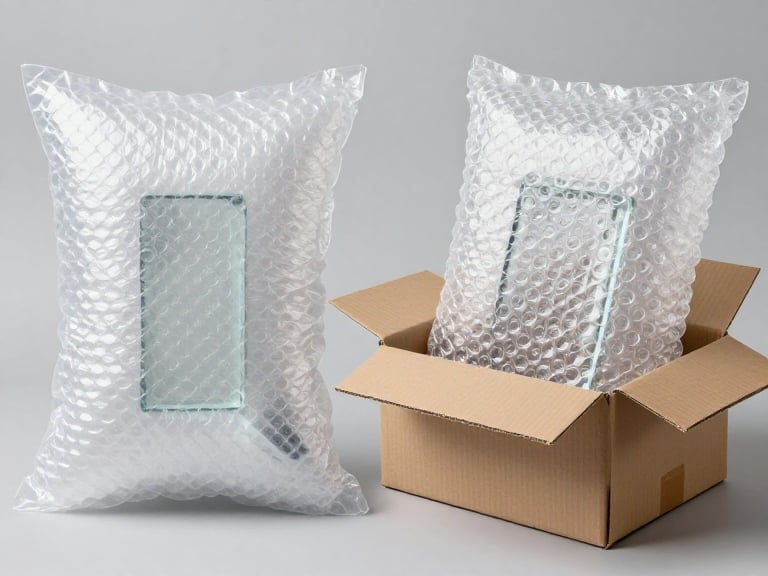
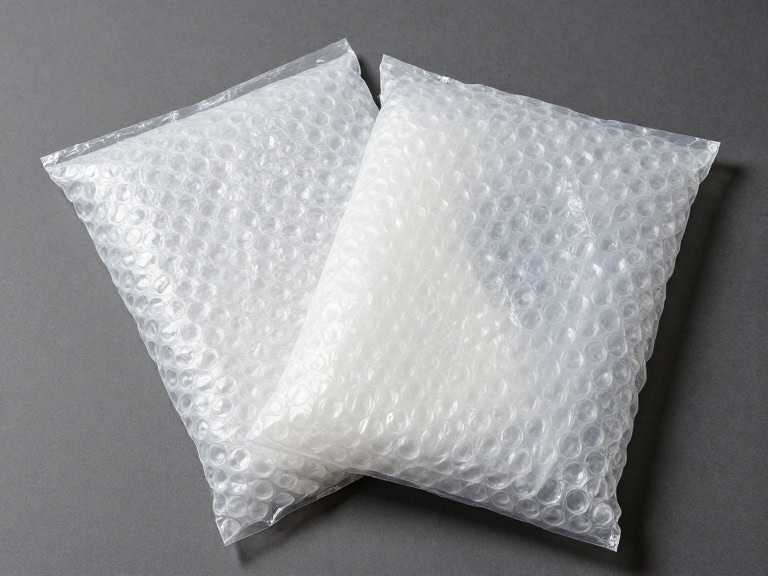
Who does not need it: If you are shipping fast-moving consumer goods (FMCG), basic cosmetics, or inexpensive plastic toys, do not buy eva material. The cost of the packaging will disproportionately eat into your profit margins. Instead, we recommend utilizing high-quality EPE Foam Sheets for basic surface protection, or heavy-duty air-filled solutions. For instance, evaluating the Heavy Duty Bubble Wrap options will yield a much lower cost-per-unit for void fill.
Common Mistakes in Foam Procurement
In our testing and client onboarding processes, we routinely correct several massive procurement errors.
The most egregious mistake is failing to specify density. EVA is not a uniform product. It ranges from ultra-soft (20 kg/m³) to extremely rigid (120+ kg/m³). If you buy eva material without specifying the density required for your product’s weight, the foam will either be too hard (transferring shock directly into your fragile product) or too soft (bottoming out upon impact).
The second common error is confusing EVA with PU (Polyurethane). While Flexible PU FOAM is excellent for lightweight, fragile items (like acoustic baffling or egg-crate foam for light electronics), it is an open-cell structure. It absorbs moisture and will permanently crush under heavy, concentrated loads where closed-cell EVA would survive.
Crucial Buying Considerations
When you prepare your RFQ (Request for Quote) to buy eva material, execute a strict cost-benefit analysis incorporating the following parameters:
- Fabrication Method: Do you need raw sheets, or do you need the factory to die-cut the foam? Tooling costs for die-cutting are usually a one-time fee, but CNC routing (which requires no tooling) is more expensive per unit.
- Adhesive Backing: Do you require PSA (Pressure Sensitive Adhesive) applied to one side of the EVA? This is vital if you are bonding the foam to the inside of a hard plastic carrying case.
- Anti-Static Properties (ESD): If you are packaging bare circuit boards, you must request Anti-Static EVA (usually pink or black). Standard EVA generates static electricity via friction, which will destroy sensitive microchips.
Summary, Comparison, and Buying Guide Tables
| Purchasing Channel | Cost Profile | Customization Level | Best For… |
|---|---|---|---|
| 1. Factory-Direct (Mailong) | Lowest (Wholesale) | Maximum (Density, Color, Cut) | High-volume commercial brands |
| 2. Industrial Distributors | High (Retail Markup) | Low (Standard sheets only) | Emergency, next-day stock replacement |
| 3. B2B Wholesale Portals | Low to Variable | Medium to High | Sourcing raw materials (High diligence required) |
| 4. Custom Fabricators | Medium-High | Maximum (Complex CNC shaping) | Mid-volume, highly complex insert geometries |
| 5. Foam Brokers | High (Commission added) | Variable | Companies lacking an internal procurement team |
| 6. Retail Outlets | Highest (Per square inch) | None | Hobbyists, prototyping, DIY projects |
| Foam Type | Cell Structure | Impact Resilience | Water Resistance | Primary Application |
|---|---|---|---|---|
| EVA Foam | Closed-Cell | Excellent (High Memory) | Excellent | Heavy tools, luxury inserts, medical devices |
| EPE Foam (Polyethylene) | Closed-Cell | Moderate | Excellent | Basic surface protection, appliance wrapping |
| PU Foam (Polyurethane) | Open-Cell | Poor under heavy loads | Poor (Absorbs water) | Lightweight electronics, acoustic dampening |
| EPS (Styrofoam) | Closed-Cell | None (Cracks/shatters) | Good | Cheap disposable coolers, basic block blocking |
| Method | Pros | Cons |
|---|---|---|
| Buying Factory-Direct | Lowest unit cost; complete control over raw material density; custom die-cutting included. | Higher Minimum Order Quantities (MOQs); longer lead times for international ocean freight. |
| Buying from Distributors | Immediate availability; low or zero MOQs; fast domestic shipping. | Severe pricing markups; limited to standardized sheet thicknesses; zero custom branding. |
| Target Density (kg/m³) | Firmness Profile | Ideal Commercial Use Case |
|---|---|---|
| 25 – 35 kg/m³ | Soft & Pliable | Cosmetic display inserts, lightweight consumer electronics. |
| 40 – 60 kg/m³ | Medium Firm (Industry Standard) | Camera cases, drone packaging, medium-weight industrial parts. |
| 70 – 100+ kg/m³ | Ultra Rigid (Wood-like) | Heavy automotive components, orthopedic shoe soles, load-bearing pallets. |
Expert Recommendation
From our extensive manufacturing experience at Mailong Packaging, the verdict is clear: if you are spending more than $5,000 annually on protective foam, you must stop buying from domestic retail distributors. We recommend that commercial users audit their current packaging bills and immediately transition to buying factory-direct.
To buy eva material correctly, establish a relationship with a manufacturer that controls the entire process—from chemical extrusion to final die-cutting. This not only guarantees that your density specs are honored, but it also consolidates your supply chain. Do not treat packaging foam as an afterthought; treating EVA as an engineered component is the secret to eliminating transit damage and protecting your bottom line.
Frequently Asked Questions (FAQ)
Authoritative References
- ASTM International – The globally recognized authority for testing standards, including ASTM D3575, the standard test methods for flexible cellular materials made from olefin polymers (like EVA).
- International Organization for Standardization (ISO) – Governing body for global manufacturing quality management (ISO 9001), critical when evaluating overseas foam manufacturers.
- Packaging Digest – Leading industry media publication providing rigorous analysis on commercial packaging materials, supply chain logistics, and protective foam innovations.