When you decide to build a suit of armor, craft a massive weapon prop, or fabricate intricate costume accessories, your primary material cost will dictate the trajectory of your project. If you are a novice walking into a big-box craft store to buy eva foam for cosplay, you are making a massive financial mistake. The retail craft market preys on beginners by rebranding standard industrial foam as “specialty cosplay material” and marking up the price by 300 percent.
From our experience manufacturing and exporting world-class packaging materials and foam products at Mailong Packaging, we see prop makers bleeding their budgets on improperly sourced materials. EVA (Ethylene-Vinyl Acetate) foam is an industrial commodity. It is produced by the ton for flooring, packaging, and automotive insulation. To maximize your budget, you must stop shopping like a hobbyist and start sourcing like a manufacturer. In this guide, we will break down the commercial reality of polymer sourcing, outline the six best places to buy eva foam for cosplay, and explain how density and Shore hardness dictate your final build quality.
Quick Answer: Where to Buy EVA Foam for Cosplay
If you need to buy eva foam for cosplay, your sourcing strategy depends on your volume. For beginners needing small, specialized cuts, dedicated cosplay retailers like TNT Cosplay Supply or SKS Props offer high-density, smooth-back sheets. For commercial users or heavy-duty prop makers requiring bulk rolls, purchasing directly from industrial manufacturers like Mailong Packaging is the most cost-effective route. We recommend avoiding big-box craft stores due to severe price gouging, and caution against hardware store anti-fatigue mats unless you are willing to spend hours sanding away the textured diamond plating.
Table of Contents
- What It Is: The Science of EVA Foam
- How It Works in Prop Fabrication
- The 6 Best Places to Buy EVA Foam for Cosplay
- Benefits of High-Density EVA
- Limitations and Structural Realities
- Who Should Use It
- Who Does Not Need It
- Common Mistakes We See
- Buying Considerations
- Expert Recommendation
- Frequently Asked Questions
What It Is: The Science of EVA Foam
EVA stands for Ethylene-Vinyl Acetate. It is a closed-cell elastomeric polymer that produces a material possessing rubber-like softness and flexibility. Unlike open-cell foams (like upholstery sponge), closed-cell EVA FOAM does not absorb water, making it inherently waterproof and resistant to chemical solvents. This is why it is used extensively in marine buoyancy, shock-absorbing shoe soles, and industrial packaging.
How It Works in Prop Fabrication
In most professional situations, cosplayers manipulate EVA foam using three primary techniques: thermal forming, abrasive shaping, and chemical bonding. Because it is a thermoplastic, heating EVA foam with an industrial heat gun temporarily softens the polymer chains. While hot, it can be stretched over a buck or curved by hand. As it cools, the foam retains its new shape permanently. Pieces are bonded using specialized contact cement, and the seams are sanded smooth using a rotary tool (Dremel). Finally, the porous surface must be heat-sealed and coated with a flexible primer (like Plasti Dip or specialized primers) before acrylic or automotive paints are applied.
| Source Type | Best Suited For | Price Point | Quality / Density |
|---|---|---|---|
| 1. Industrial Manufacturers | Bulk builds, commercial studios, large armor sets | Low (Wholesale) | Very High (Customizable) |
| 2. Dedicated Cosplay Retailers | Beginners, precise detail work, small projects | High | Very High |
| 3. Hardware Stores (Floor Mats) | Extreme budget builds, hidden structural layers | Low | Low to Medium (Textured back) |
| 4. Online Marketplaces (Amazon) | Prime shipping, rapid replacements | Moderate | Inconsistent (Verify reviews) |
| 5. Big Box Craft Stores | Emergency same-day purchases only | Very High | Low (Often too soft) |
| 6. Overseas Trade Platforms (Alibaba) | Resellers, massive studio productions | Very Low | High (But long shipping times) |
The 6 Best Places to Buy EVA Foam for Cosplay
1. Industrial Manufacturers and Packaging Suppliers
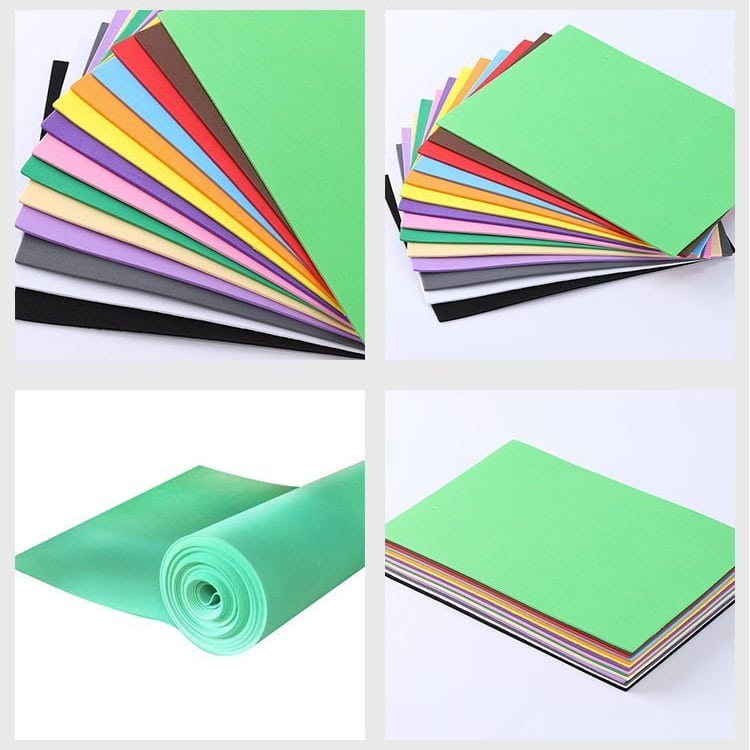
If you are serious about your craft, buying direct from the manufacturer is the ultimate tier of sourcing. When you buy eva foam for cosplay from a supplier that manufactures by the ton, you bypass retail markups entirely.
Mailong Packaging Co., Ltd. was established in 2009. It is a reputed manufacturer and exporter of a wide range of world-class quality packaging materials, such as inflatable bubble and pillow film, air column rolls, air column bags, EPE and EVA FOAM, Poly Mailer, Stretch wrap, Bubble mailer, BOPP tape, and Corrugated box, which can prevent products from collision damage, attrition, and static in the process of logistics transportation, and have been exported to the oversea markets more than 30 countries.
We routinely supply raw foam rolls and sheets to commercial fabrication studios. By looking beyond standard craft avenues and exploring Flexible Polyurethane Foam Manufacturers or EVA specialists, you unlock access to massive, unblemished rolls that do not require piecing together.
2. Dedicated Cosplay Retailers (TNT Cosplay Supply, SKS Props)
These retailers specialize specifically in the cosplay niche. They sell high-density, smooth-on-both-sides foam in precise thicknesses (from 1mm to 10mm). While you will pay a premium for the curation, this is the most reliable option for beginners who need perfectly smooth surfaces and do not want to wrestle with industrial quantities.
3. Hardware Stores (Anti-Fatigue Floor Mats)
The traditional rite of passage for every prop maker is buying a 4-pack of puzzle-piece floor mats from a hardware store. These are cheap and easily accessible. However, they have a major limitation: one side features a heavy diamond-plate or crosshatch texture. If your armor requires a smooth finish, you must spend hours grinding down the texture with a belt sander, which creates toxic dust and wastes time.
4. Online Marketplaces (Amazon, eBay)
Amazon is flooded with sellers offering EVA foam rolls. The benefit is two-day shipping. The drawback is extreme inconsistency. Many sellers incorrectly label their foam density, and you may end up with a roll that is too spongy to hold a crisp bevel when sanded. Always read the Q&A section to verify the Shore hardness before purchasing here.
5. Big Box Craft Stores (Michaels, JoAnn)
We recommend avoiding big-box craft stores unless it is a localized emergency. They frequently sell low-density “craft foam” that is too soft for structural armor, and they charge exorbitant prices for small 9×12 inch sheets. You are paying for the retail overhead, not the material quality.
6. Overseas Wholesale Platforms (Alibaba)
For commercial users running prop studios or manufacturing costume kits for resale, sourcing directly from overseas trade platforms offers incredible unit economics. The trade-off is the necessity of buying in bulk (high MOQs) and dealing with ocean freight logistics, which can take 30 to 60 days.
Benefits of High-Density EVA
Why do we insist on high-density EVA? In our testing, density dictates durability. Low-density foam (under 40 kg/m3) tears easily, absorbs paint heavily, and turns “fuzzy” when you attempt to sand it with a Dremel. High-density EVA (70 kg/m3 to 100 kg/m3) cuts like butter with a sharp utility knife, heat-forms rigidly, and sands to a perfectly smooth, leather-like finish. Furthermore, dense foam requires fewer coats of expensive primer to achieve a glass-like metallic paint finish.
Limitations and Structural Realities
We must apply commercial and practical judgment here: EVA foam is not invincible. For heavy-duty applications—such as a 6-foot buster sword or a massive mechanical wing harness—EVA foam lacks inherent structural rigidity. It will flop and buckle under its own weight. It must be reinforced with internal armatures, such as PVC pipes, aluminum rods, or fiberglass rods. Additionally, because it is a thermoplastic, leaving a finished EVA foam prop in a hot car during a summer convention will cause the glue seams to fail and the foam to warp back to its original flat state.
| Sourcing Method | Pros | Cons |
|---|---|---|
| Bulk Industrial (Mailong) | Lowest cost per square foot; massive continuous sheets (no seams); highly durable. | Requires storage space; higher upfront shipping costs. |
| Retail Pre-Cut (Craft Shop) | Instant access; convenient small sizes for detailing. | Astronomical markup; often low-density and too soft; limited sizes restrict large chest pieces. |
Who Should Use It
For commercial users building film props, escape room decor, or theater costuming, bulk EVA foam is the undisputed king of fabrication materials due to its weight-to-volume ratio and impact resistance. Cosplayers building full-body mecha suits, medieval plate armor, or large organic creature designs should make this their primary medium. If you are shipping fragile props to conventions, utilizing EPE Foam Sheets for packaging ensures your hard work survives transit.
Who Does Not Need It
Cosplayers executing highly intricate, rigid, filigree jewelry pieces or exact mechanical replicas requiring millimeter precision should utilize 3D printing (PLA or Resin) instead. EVA foam cannot replicate the crisp, hard edges of machined metal or injection-molded plastics perfectly.
Common Mistakes We See
The most egregious error we see is prop makers using dull blades. EVA foam instantly destroys the edge of a utility knife. If you do not snap off or sharpen your blade every 4 to 5 cuts, the dull blade will drag through the foam, leaving a jagged, torn edge that is impossible to glue cleanly.
The second mistake is failing to heat-seal the foam. Raw EVA foam is porous. If you spray paint directly onto unsealed foam, the paint will soak in, look dull, and crack when the foam flexes. You must blast the surface with a heat gun until it turns slightly glossy (closing the pores), and then apply a flexible rubberized primer.
| Material | Best Use Case | Cost | Weight |
|---|---|---|---|
| EVA Foam | Full body armor, large weapons, organic shapes | Low – Medium | Very Light |
| Worbla (Thermoplastic) | Complex curves, rigid breastplates, fine details | Very High | Heavy |
| 3D Printing (PLA) | Exact replicas, helmets, mechanical props | Medium (Equipment barrier) | Moderate |
| Cardboard / Pepakura | Prototypes, ultra-budget builds | Practically Free | Very Light |
Buying Considerations
When you prepare to buy eva foam for cosplay, you must evaluate thickness and Shore hardness (density). Use this matrix to dictate your purchasing:
| Thickness | Primary Application | Flexibility |
|---|---|---|
| 1mm – 2mm | Filigree, layered detailing, scales, trim work over thicker foam. | Extremely high (acts like fabric). |
| 4mm – 6mm | The standard for body armor, gauntlets, and helmets. | Moderate (holds curves well when heat formed). |
| 8mm – 10mm | Base layers for heavy weapons, shields, and structural rigid pieces. | Low (stiff, requires significant heat to bend). |
Expert Recommendation
In most professional situations, we recommend avoiding the hardware store floor mats and the overpriced retail craft aisles. The hours you spend sanding away diamond-plate textures from cheap mats negate any financial savings. For your base armor pieces, procure high-density (minimum 70 kg/m3), smooth-back EVA foam rolls directly from an industrial packaging and foam manufacturer like Mailong Packaging. You will secure commercial-grade material that cuts cleaner, sands smoother, and paints brilliantly, fundamentally elevating the structural integrity and aesthetic finish of your final cosplay.
Frequently Asked Questions
What kind of glue should I use for EVA foam?
You must use Contact Cement (such as Barge). Hot glue is structurally inferior and will melt if you leave your prop in the sun. Apply contact cement to both edges, let it dry until it is tacky (about 5-10 minutes), and then press the seams together for an unbreakable, permanent bond.
Is it toxic to heat and sand EVA foam?
Heating EVA foam with a heat gun releases minor VOCs, but the primary hazard is sanding. Sanding EVA foam creates fine particulate dust that is harmful if inhaled. Always wear an N95 or P100 respirator mask and safety goggles when operating a rotary tool or belt sander on foam.
Can I use normal spray paint on EVA foam?
If you use standard enamel or acrylic spray paint on raw EVA foam, it will crack and flake off the moment the foam bends. You must first seal the foam with a flexible primer (like Plasti Dip or Hexflex). Once the flexible rubberized primer is applied, you can safely use standard spray paints and acrylics over it.