
Custom HVAC Protective Foam for Equipment Packaging and Transportation
For HVAC manufacturers, equipment distributors, and industrial parts suppliers, effective packaging is essential for protecting metal housings, plastic components, fittings, control units, and other parts throughout the supply chain. Properly selected HVAC protective foam helps separate components, limit direct contact, and improve the fit between products and their outer packaging.
Mailong Packaging supplies protective packaging materials for industrial and commercial applications. Our EPE foam packaging options can be discussed according to your component dimensions, packaging design, and transportation requirements. Custom sizing is available for evaluation, making this material suitable for a range of HVAC equipment packaging projects.
Quick Answer: Why Use EPE Foam for HVAC Parts?
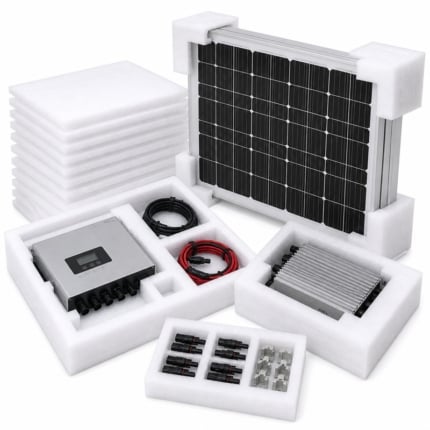
EPE foam is a lightweight cushioning material used to protect HVAC components against surface friction, minor impacts, and movement inside packaging. It can be designed as sheets, liners, separators, or inserts to fit different component shapes. For applications involving vibration during transportation, the foam thickness, density, compression behavior, and packaging structure should be selected together and validated through testing.
For heavy compressors, large metal assemblies, delicate electronic controls, or components with exposed connections, EPE foam may need to be combined with rigid supports, dedicated inserts, or other protective materials. Standard EPE foam should not be assumed to provide antistatic protection unless its properties are specifically confirmed.
Product Specifications
| Parameter | Specification |
|---|---|
| Product Category | EPE Foam |
| Product Name | EPE Foam for HVAC Parts |
| Primary Keyword | HVAC Protective Foam |
| Application Scenario | HVAC Equipment Packaging |
| Material | Expanded Polyethylene (EPE) |
| Key Features | Vibration absorption and cushioning support |
| Size / Thickness | Custom |
| Industry | HVAC Industry |
| Main Customer Concern | Transportation safety |
| Minimum Order Quantity (MOQ) | 100 pcs |
| HS Code | 3921199000 |
| Estimated Production Time | 5–10 days |
| Port of Shipment | Shenzhen, China |
| Customization | Discuss dimensions, thickness, shape, and packaging requirements |
Note: Confirm final dimensions, material specifications, order quantities, production schedules, and shipping arrangements with Mailong Packaging. HS code classification should be verified according to the actual product composition and applicable customs regulations.
What Is HVAC Protective Foam?
HVAC protective foam is cushioning material used to protect heating, ventilation, and air conditioning equipment or components during packaging and transportation. Expanded polyethylene foam is one option for this purpose because it is lightweight, flexible in format, and suitable for a variety of protective packaging designs.
HVAC products often contain a combination of metal panels, plastic housings, pipes, fittings, fasteners, motors, and electronic components. During transport, these parts may be exposed to vibration, repeated handling, stacking pressure, and contact with neighboring products or the packaging itself.
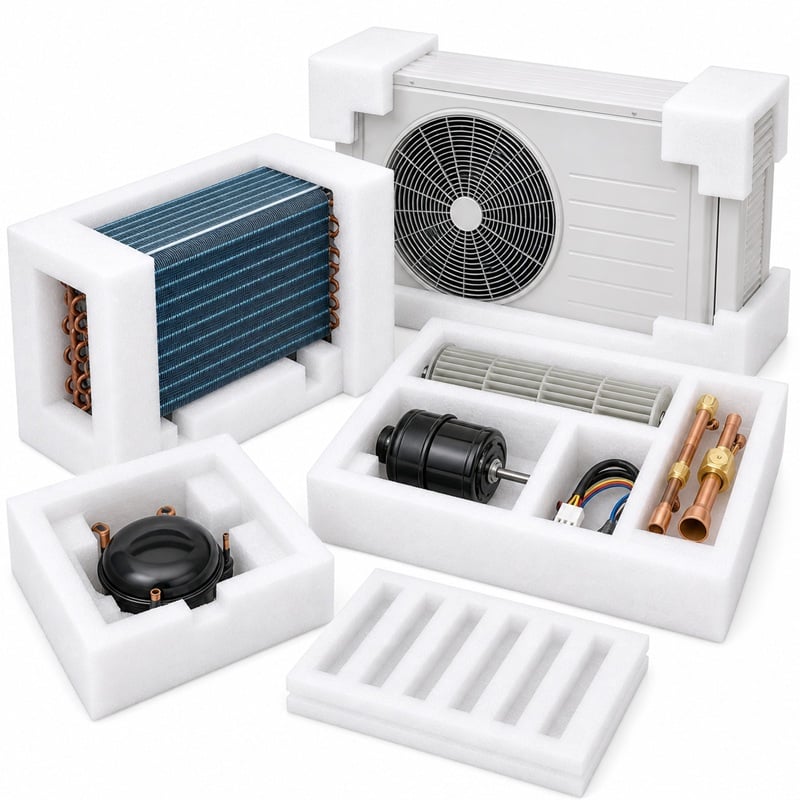
EPE foam can help create a buffer between a component and its surroundings. Depending on the design, it may be used to line a carton, separate multiple parts, fill selected gaps, or support a component at specific contact points.
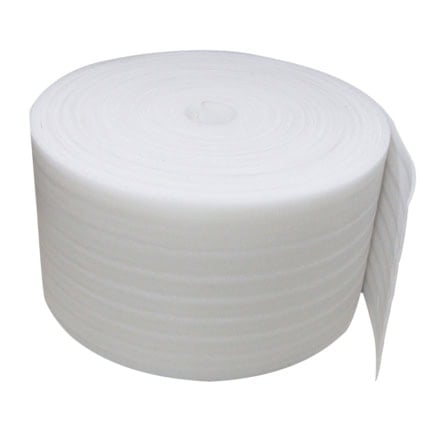
For buyers looking for sheet and roll formats, Mailong Packaging offers EPE foam sheets and foam rolls that can be considered for different industrial packaging applications.
Key Benefits of EPE Foam for HVAC Equipment Packaging
1. Helps Reduce Vibration-Related Damage
Vibration during road, sea, or air transportation can cause packaged components to move repeatedly against their surroundings. Properly selected EPE foam can help cushion contact points and reduce some movement-related impacts. Performance depends on foam properties, component weight, packaging geometry, and the intensity of the vibration.
For sensitive or heavy HVAC equipment, foam should be integrated into a packaging design that securely restrains the product rather than simply filling the surrounding space.
2. Protects Surfaces Against Scratches and Abrasion
Finished metal panels, coated housings, plastic covers, and decorative surfaces may become scratched when they rub against other components or the inside of a carton. A suitable foam liner or separator creates a protective layer that helps reduce direct surface contact.
This can be particularly useful when several compatible parts are packed together, provided the foam is clean, appropriately fitted, and suitable for the product’s surface finish.
3. Lightweight and Practical to Handle
Packaging materials contribute to the overall shipment weight and packing workload. EPE foam offers a lightweight cushioning option that can be incorporated into packaging without adding the weight of a comparable solid protective structure.
Its low weight can be useful for manufacturers shipping multiple components, replacement parts, and accessories. Actual freight savings depend on package dimensions, shipping method, and the design of the complete packaging system.
4. Customizable for Different Component Shapes
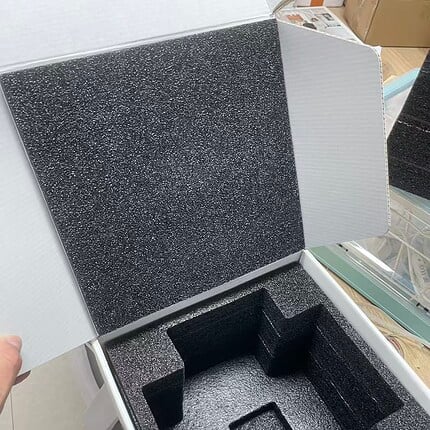
HVAC components vary considerably in size and geometry. A standard flat foam sheet may work for surface separation, while irregular or fragile components may require specially shaped inserts or cutouts.
Custom foam dimensions can help improve fit, reduce unnecessary gaps, and create more consistent packing arrangements. Buyers should provide drawings, measurements, or samples to confirm the required design.
5. Supports Organized Multi-Component Packaging
HVAC equipment shipments may contain several parts, such as brackets, fittings, covers, and accessories. Foam separators or inserts can help keep compatible items apart and reduce the chance of parts rubbing against each other during transit.
Organized packaging may also make unpacking and inventory handling easier for distributors, installers, and service teams.
6. Compatible with Layered Packaging Systems
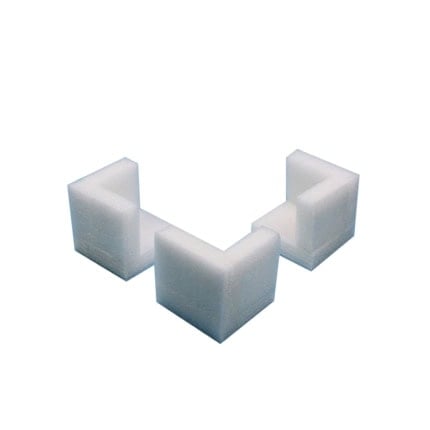
EPE foam can be used alongside corrugated cartons, reinforced boxes, rigid inserts, corner protectors, stretch film, and other protective packaging materials. This makes it possible to create a packaging system that addresses multiple risks rather than relying on a single cushioning layer.
Common Applications of EPE Foam for HVAC Parts
Air Conditioner Components
Air conditioner packaging may include metal housings, plastic panels, mounting brackets, pipes, and smaller accessories. EPE foam liners and separators can help reduce surface contact and provide cushioning around compatible components.
HVAC Control Units and Electrical Parts
Control housings, selected electrical assemblies, and accessories may require protection from movement and physical contact during transportation. Foam inserts can help hold compatible parts in position. Where electronic components have electrostatic-discharge requirements, specify the required material properties rather than assuming ordinary EPE foam is antistatic.
Ventilation Equipment and Duct Accessories
Ventilation products may include sheet-metal parts, grilles, brackets, connectors, and plastic accessories. Foam separators can help prevent metal-to-metal contact and reduce cosmetic damage to finished surfaces during shipment.
Heat Pump Components
Heat pump shipments may contain components with different weights and geometries. Suitable EPE foam supports can be incorporated around compatible parts, while heavier assemblies may require rigid restraints and load-bearing packaging features to prevent shifting.
Compressors and Mechanical Parts
Selected mechanical components may benefit from cushioning around non-load-bearing contact areas. However, compressors and other heavy parts can place substantial loads on packaging. Foam selection must account for compression, product weight, center of gravity, and the need to prevent movement.
HVAC Spare Parts and Installation Accessories
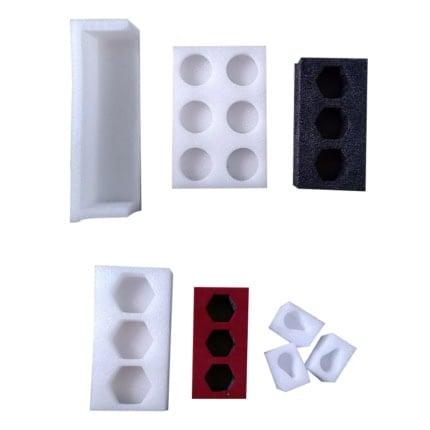
Small fittings, connectors, mounting accessories, and replacement parts can be organized with foam separators or inserts. Custom compartments may help keep different items separate and simplify packing for wholesale distribution and after-sales service.
Product Features and Packaging Benefits
| Feature | Potential Benefit | What Buyers Should Confirm |
|---|---|---|
| Lightweight EPE material | Helps provide cushioning without adding substantial weight | Material specifications and total package weight |
| Cushioning properties | Helps reduce minor impacts and contact-related damage | Foam density, thickness, and compression performance |
| Custom sizing | Supports better fit around different HVAC parts | Required dimensions, tolerances, and shape |
| Separator and insert formats | Helps organize multiple components | Number of compartments and contact locations |
| Protective liner applications | Helps reduce surface scratches and abrasion | Surface finish and compatibility with the foam |
| Combination with outer packaging | Supports a more complete protection system | Carton strength, restraints, stacking, and transport conditions |
How to Choose the Right HVAC Protective Foam
1. Identify the Part’s Material and Geometry
Begin by identifying whether the component is made of metal, plastic, glass, or a combination of materials. Record its dimensions, weight, shape, protrusions, connectors, and vulnerable surfaces.
Flat panels may need surface separation, while irregular parts may need custom inserts. Components with sharp edges may also require a design that prevents them from cutting into or puncturing the foam.
2. Define the Main Transportation Risks
Determine whether the primary concern is vibration, impact, scratching, compression, or movement inside the package. These risks require different design approaches.
For example, surface abrasion may be addressed with a suitable liner, while heavy components exposed to vibration may require a combination of cushioning and mechanical restraint.
3. Specify Foam Thickness and Density
Thickness and density should be selected according to the component’s weight and the required cushioning performance. Thicker foam does not automatically provide better protection, and foam that is too soft may compress excessively under load.
Discuss the available specifications with your supplier and evaluate samples under realistic conditions before approving a large order.
4. Check Compression and Recovery Requirements
For packaging applications exposed to repeated vibration or sustained loads, consider how the foam behaves when compressed. The packaging should maintain adequate separation and support throughout the expected shipping period.
Where protection is critical, testing the complete package can help identify whether the foam retains its intended function after loading and handling.
5. Design Around Contact Points
Foam should support the product at appropriate locations without placing unnecessary pressure on fragile connectors, control panels, pipes, or thin metal sections. Custom cutouts can help accommodate irregular shapes and keep vulnerable areas clear of concentrated loads.
6. Consider Outer Cartons and Restraints
Protective foam works best when the outer packaging is designed to match the product’s weight and transport conditions. Use an appropriate carton, reinforced box, or crate, and add internal restraints where needed to limit movement.
7. Validate the Packaging Before Bulk Production
Before confirming a packaging design, conduct practical packing trials. Depending on the equipment and shipping risks, evaluation may include vibration, drop, compression, and transit simulation tests. Use the results to adjust foam dimensions, density, insert geometry, and outer packaging strength.
EPE Foam vs. Other Packaging Materials for HVAC Parts
| Material | Main Function | Potential Use | Important Consideration |
|---|---|---|---|
| EPE Foam | Lightweight cushioning and separation | Housings, panels, accessories, and selected mechanical parts | Must be matched to component weight and compression requirements |
| EVA Foam | Cushioning and shaped protective inserts | Selected parts requiring a different firmness or fit | Material properties and cost should be compared for the application |
| Inflatable Air Column Packaging | Air-based cushioning around compatible products | Selected boxed equipment and irregular items | Requires suitable sizing, inflation, and restraint |
| Bubble Cushioning | Flexible cushioning and surface separation | Small parts, accessories, and secondary wrapping | May not provide enough support for heavy equipment |
| Corrugated Cartons | Outer containment and structural protection | HVAC parts and boxed accessories | Often need internal cushioning and suitable carton strength |
| Rigid Inserts and Supports | Positioning, restraint, and load distribution | Heavy or irregular mechanical assemblies | Must be designed around the part and shipping loads |
No single material is suitable for every HVAC packaging application. The best choice depends on the component’s weight, fragility, geometry, packaging volume, shipping route, and target cost. In many cases, a combination of foam, structural supports, and an appropriate outer carton offers a more balanced solution.
Recommended Packaging Process for HVAC Components
A practical packaging process can help reduce handling-related damage and improve consistency across shipments.
- Inspect the components: Identify fragile surfaces, sharp edges, protruding connectors, and other vulnerable areas.
- Apply surface protection: Use a suitable EPE foam liner or separator where direct contact could cause scratches or abrasion.
- Position the component: Use correctly fitted foam supports or inserts to help maintain the intended position inside the package.
- Secure loose accessories: Separate fittings, fasteners, and compatible accessories so they do not move freely or contact finished surfaces.
- Select the outer package: Choose a carton, reinforced box, or crate based on the weight, dimensions, stacking conditions, and shipping method.
- Close and stabilize the package: Use suitable sealing tape and, where appropriate, pallet wrapping or other load-securing methods.
- Test the finished design: Verify that the complete packaging system performs adequately under expected transport and handling conditions.
For additional protection options, consider Mailong Packaging’s air column bags and inflatable air column wrap. These may complement EPE foam in selected packaging configurations.
Custom EPE Foam Packaging Solutions for HVAC Manufacturers
HVAC manufacturers and industrial distributors often need packaging that fits specific product dimensions, production workflows, and shipping requirements. Custom EPE foam can be evaluated for protective liners, component separators, inserts, and other packaging formats.
Custom Dimensions and Shapes
Provide the component’s length, width, height, weight, and any critical contact points. For complex parts, technical drawings, dimensioned photographs, or physical samples can help clarify the required shape and fit.
Custom Foam Inserts and Separators
Where several parts are shipped together, inserts and separators can help organize the package and reduce direct contact. The design should account for each part’s weight, geometry, and handling requirements.
Packaging for Different Equipment Sizes
Small HVAC accessories and large mechanical assemblies require different levels of support. A suitable packaging design should avoid unnecessary voids while providing adequate clearance around fragile features and enough restraint to prevent excessive movement.
Bulk Supply and Production Planning
The stated MOQ for EPE Foam for HVAC Parts is 100 pieces, with an estimated production time of 5–10 days. Actual lead times may vary based on the order quantity, foam specifications, custom processing, material availability, and sample approval requirements.
Information to Include in a Quotation Request
- HVAC component name and intended application
- Product dimensions and weight
- Required foam format, thickness, and quantity
- Drawings, photographs, or reference samples, if available
- Outer packaging type and quantity per carton
- Transportation method and destination
- Main concerns, such as vibration, scratches, or impact damage
Providing these details helps the supplier evaluate the required format and clarify whether supplementary supports or additional packaging materials may be needed.
Why Choose Mailong Packaging?
Established in 2009, Mailong Packaging is a manufacturer and exporter of protective packaging materials for international customers. The company’s product range includes inflatable bubble and pillow film, air column rolls, air column bags, EPE and EVA foam, poly mailers, stretch wrap, bubble mailers, BOPP tape, and corrugated boxes.
These materials serve different protective packaging needs, including helping reduce collision damage, abrasion, and other handling-related risks during logistics transportation. Mailong Packaging has exported its products to overseas markets in more than 30 countries.
Related Protective Packaging Products
Buyers developing an HVAC packaging system may also consider the following products according to their specific requirements:
- EPE Foam Sheets and Foam Rolls – for cushioning liners and separators.
- Air Column Bags – inflatable protection for compatible products.
- Inflatable Air Column Wrap – for selected cushioning applications.
- Inflatable Bubble Wrap – lightweight cushioning for suitable items.
- Bubble Cushioning Packaging – for wrapping and separating compatible products.
- BOPP Packing Tape – for sealing shipping cartons.
- Pallet Wrap Stretch Film – for stabilizing suitable palletized shipments.
- E-Commerce Packaging Solutions – packaging materials for parcel shipping operations.
- Poly Mailer Shipping Bags – for compatible lightweight, non-fragile items.
- Eco Shipping Packaging – options for buyers evaluating material and sustainability requirements.
For other product categories, explore air column wrap for ceramics, clothing shipping packaging, and compostable bubble wrap. Confirm material suitability and any relevant environmental claims against the actual product specifications.
Ordering Information and Shipping
| Item | Details |
|---|---|
| Product | EPE Foam for HVAC Parts |
| MOQ | 100 pcs |
| Production Time | Estimated 5–10 days |
| Port | Shenzhen, China |
| Size and Thickness | Custom; confirm project specifications |
| Quotation Requirements | Dimensions, weight, foam requirements, quantity, and destination |
Production time refers to the estimated manufacturing period and may not include sample development, sample approval, international transit, customs clearance, or final delivery. Confirm the complete schedule with the supplier before placing your order.
Frequently Asked Questions
1. What is EPE foam used for in HVAC packaging?
EPE foam is used for cushioning, surface protection, separation, and selected insert applications in HVAC equipment packaging. It can help reduce scratches, minor impacts, and contact between components during handling and transportation.
2. Can EPE foam absorb vibration during transportation?
EPE foam can help cushion vibration-related contact and movement when correctly specified and integrated into the packaging design. Actual performance depends on the foam’s density, thickness, compression characteristics, component weight, and transport conditions. Critical applications should be validated through packaging tests.
3. Can HVAC protective foam be customized?
Custom dimensions and formats can be discussed according to the project requirements. Buyers should provide measurements, drawings or samples, product weight, and the desired packaging configuration to help determine feasibility.
4. Is EPE foam suitable for heavy HVAC components?
It may be suitable as part of a protective system, but heavy components often require additional structural support and restraint. Foam alone should not be relied upon to carry loads or prevent movement unless the packaging design has been evaluated for that purpose.
5. Does standard EPE foam provide antistatic protection?
Not necessarily. Standard EPE foam should not be assumed to be antistatic or static-dissipative. For sensitive electronic controls or electrical parts, specify the electrostatic-discharge requirements and confirm the material properties before ordering.
6. What is the MOQ for EPE Foam for HVAC Parts?
The stated minimum order quantity is 100 pieces. Confirm the final MOQ with Mailong Packaging if you require special dimensions, custom-cut inserts, or other processing.
7. How long is the production lead time?
The estimated production time is 5–10 days. The actual schedule depends on order volume, material specifications, customization requirements, and order confirmation.
8. Which information should I provide to get a quotation?
Provide the component dimensions, weight, required foam format, quantity, transportation method, destination, and primary damage concerns. Drawings or product photographs are useful for custom packaging projects.
9. Can EPE foam be used with corrugated cartons and stretch film?
Yes. EPE foam may be combined with corrugated cartons, suitable internal supports, sealing tape, and stretch film for palletized shipments. Each material serves a different function, so the complete package should be designed around the product and its transportation risks.
Request a Quote for HVAC Protective Foam
Looking for HVAC protective foam to improve the packaging of air conditioning parts, ventilation components, or other HVAC equipment? Mailong Packaging can discuss EPE foam options based on your component dimensions, protection requirements, and order quantity.
Send us your product measurements, preferred foam format, estimated order volume, and shipping destination to start a quotation request.
Mailong Packaging
Address: Building A, Tiantou Hongjing Industrial Zone, Hengli Town, Dongguan City, Guangdong, China
Email: daveyang@mailongpak.com
SEO Metadata
SEO Title: EPE Foam for HVAC Parts | Custom HVAC Protective Foam
Meta Description: Source EPE foam for HVAC parts from Mailong Packaging. Custom HVAC protective foam for cushioning, vibration-related protection, and safer equipment transportation. MOQ 100 pcs.
Primary Keyword: HVAC protective foam
Secondary Keywords: EPE foam for HVAC parts, HVAC equipment packaging, HVAC packaging foam, protective foam for air conditioner parts, custom EPE foam inserts, HVAC component protection
Suggested URL Slug: epe-foam-for-hvac-parts
Image ALT Text: Custom EPE foam for HVAC parts providing lightweight cushioning for equipment packaging